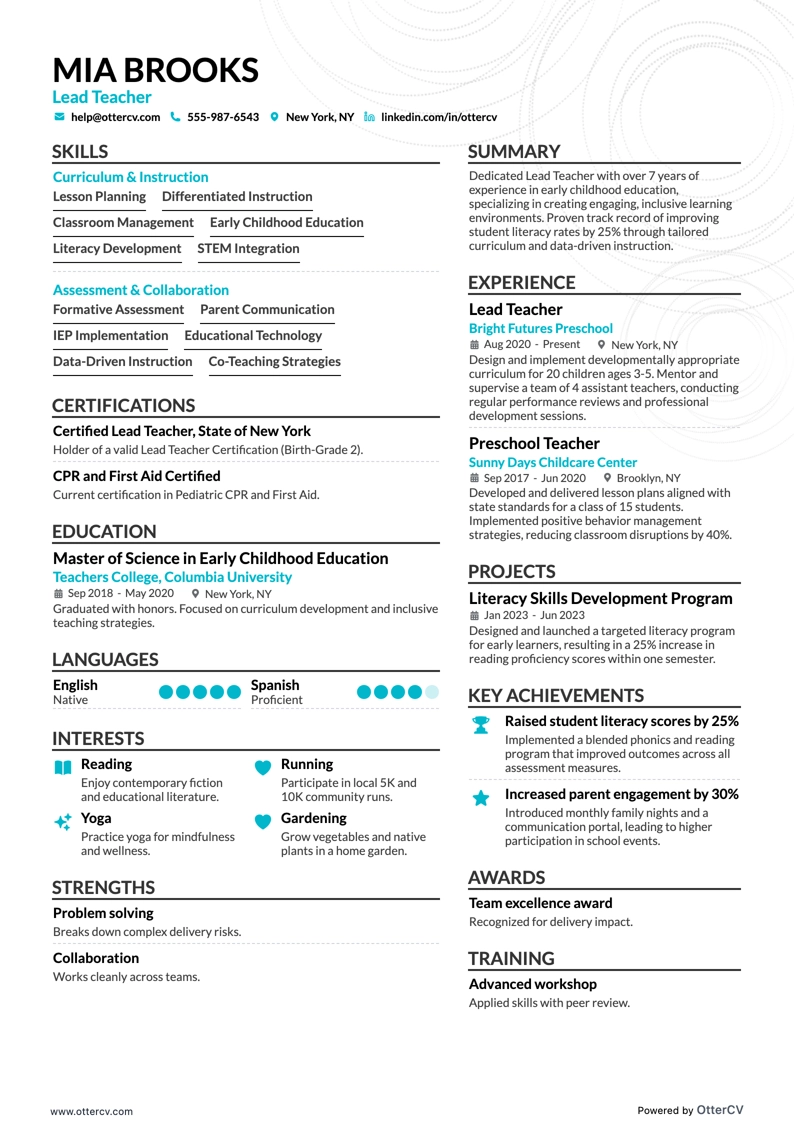
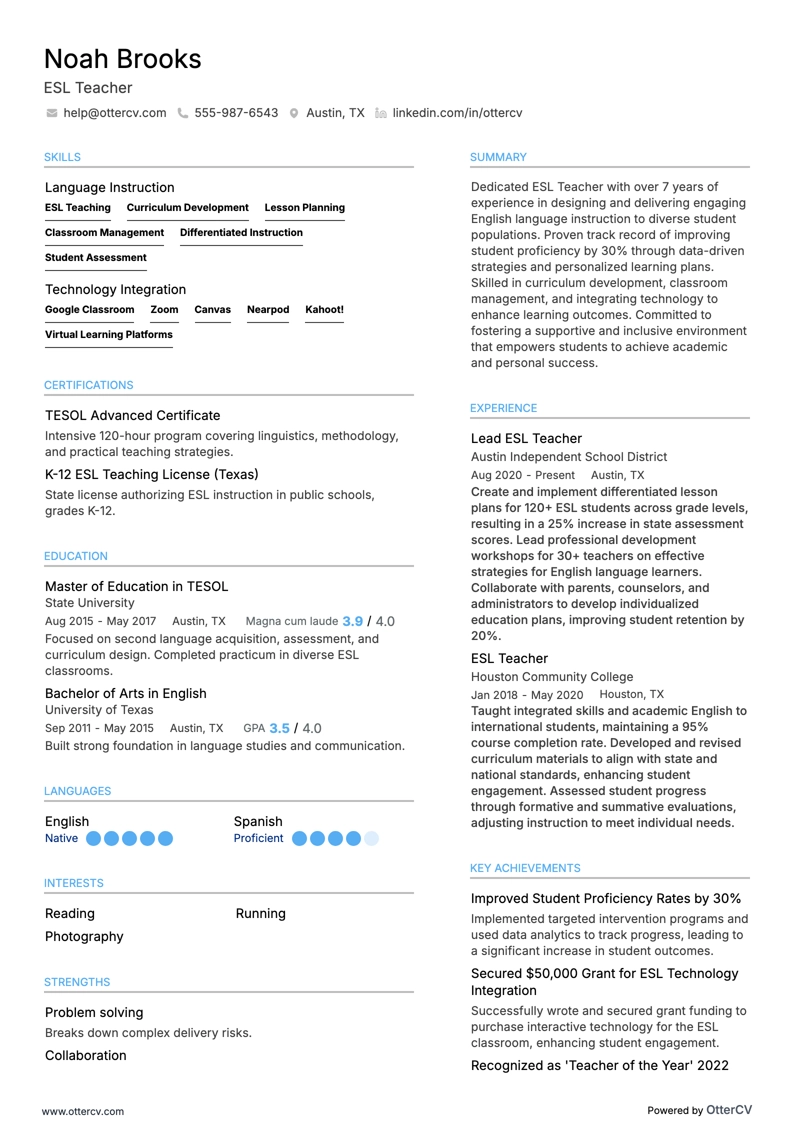
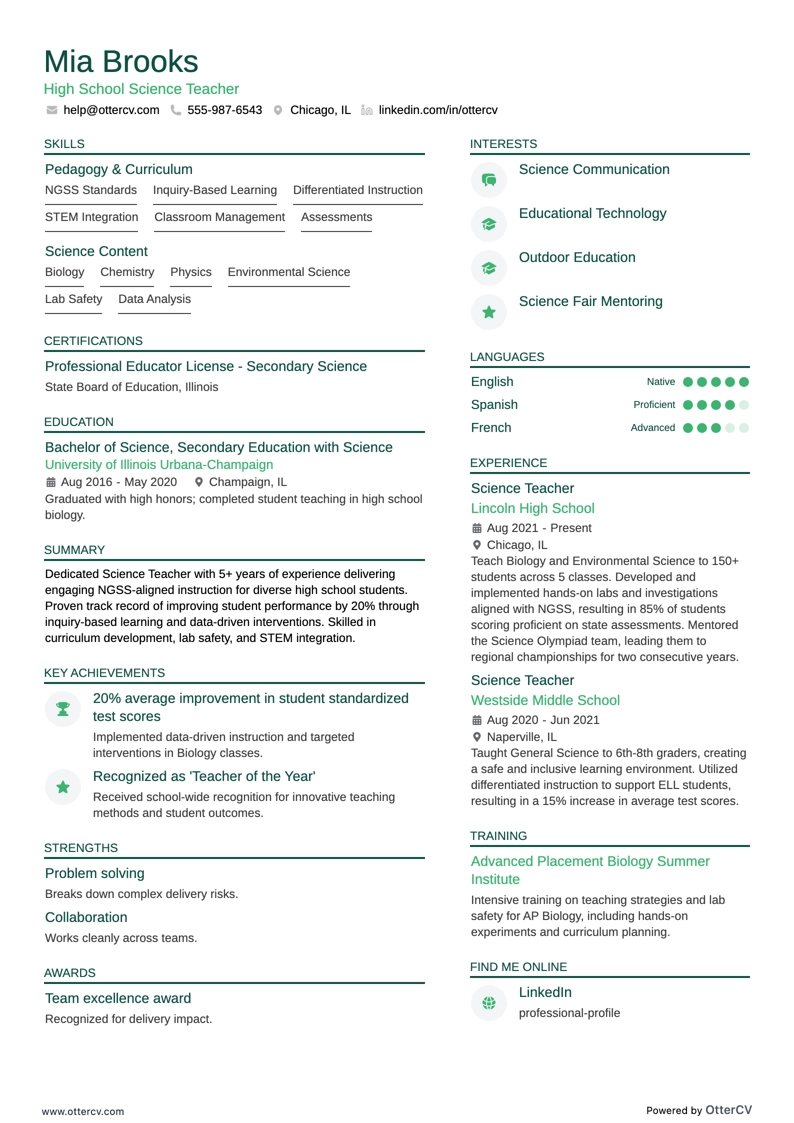
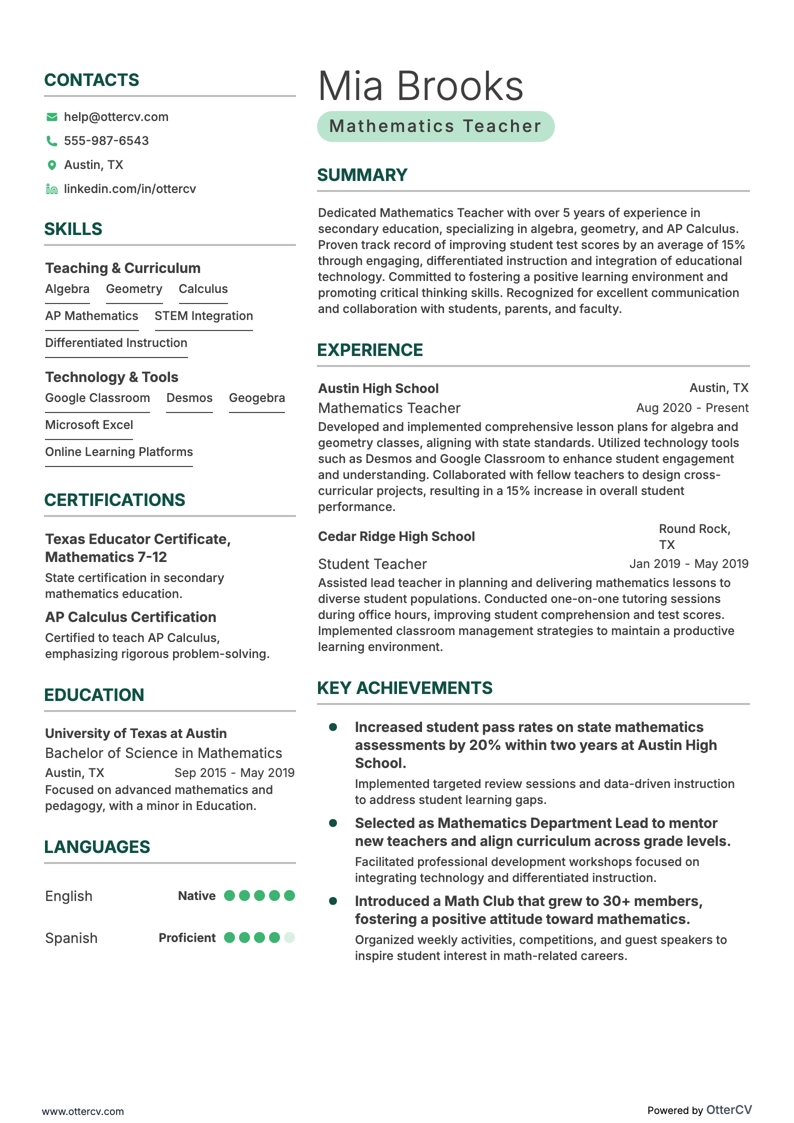
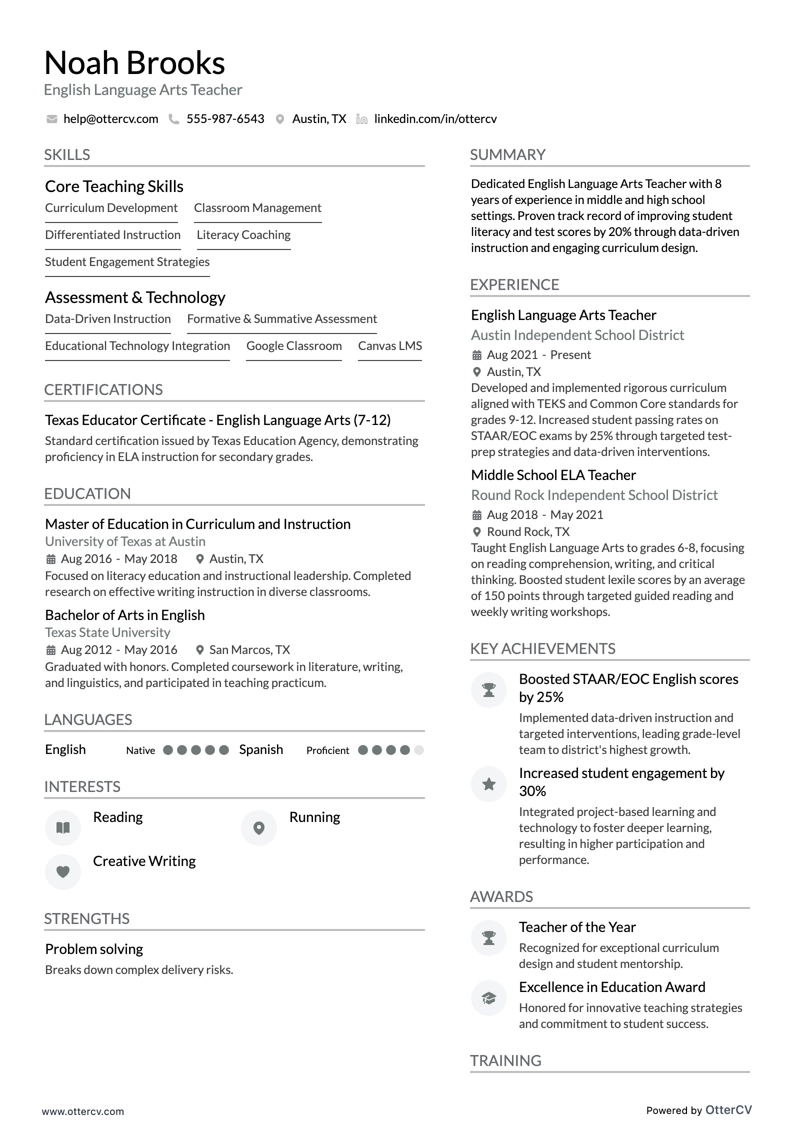
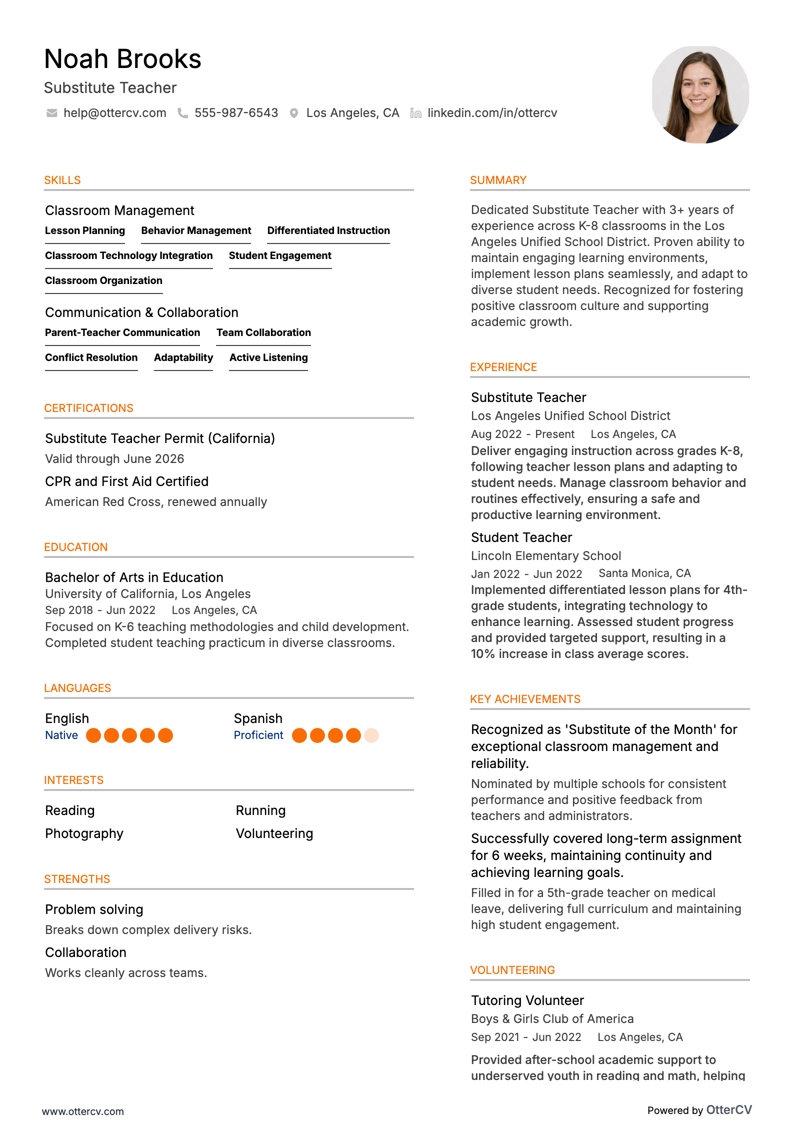
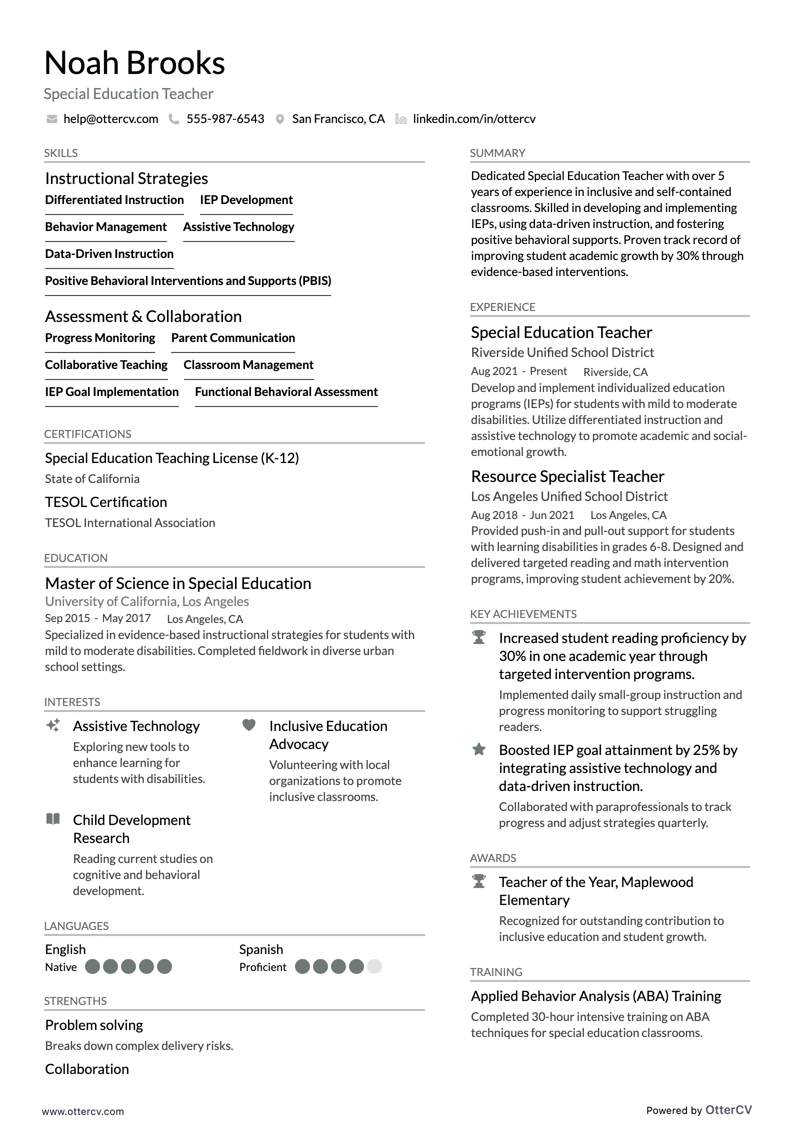
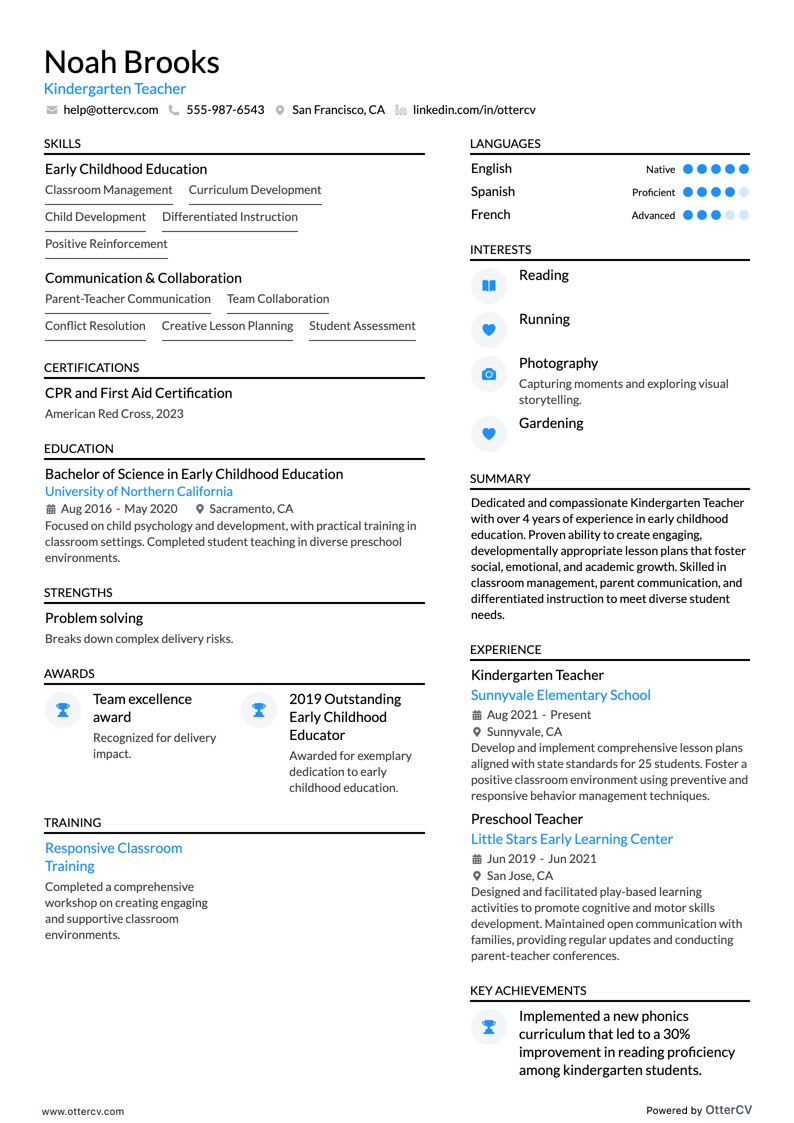
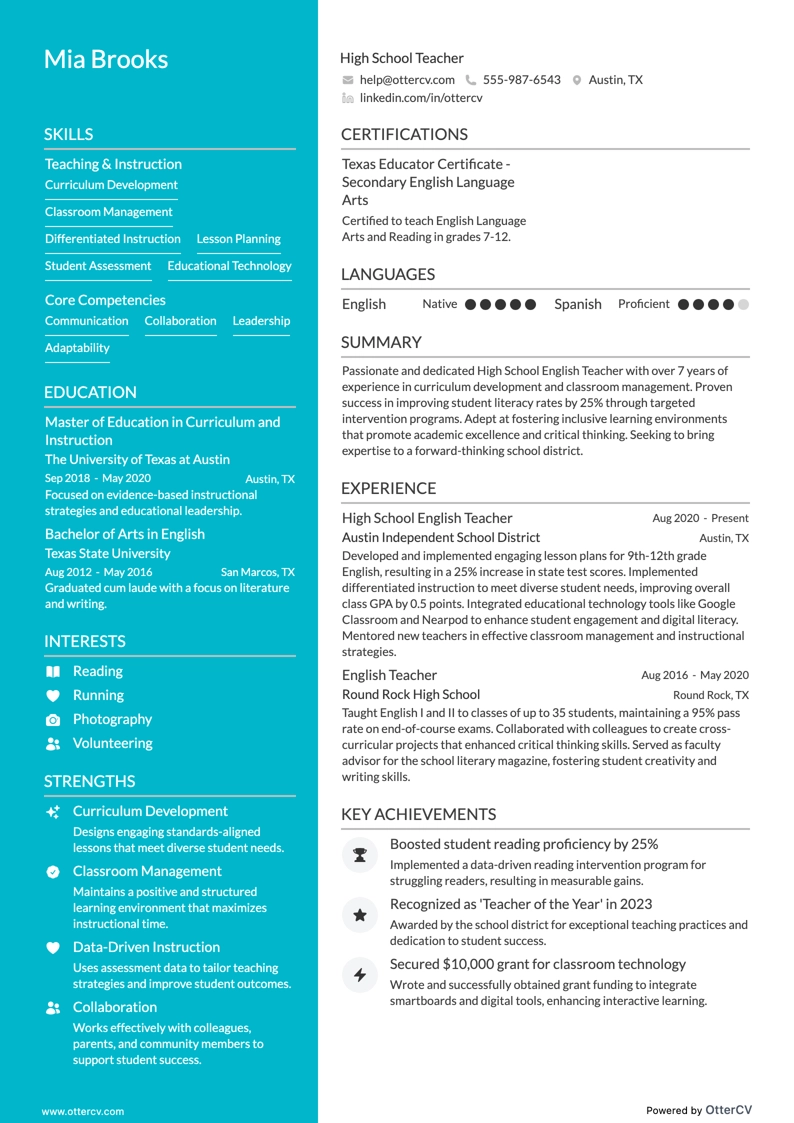
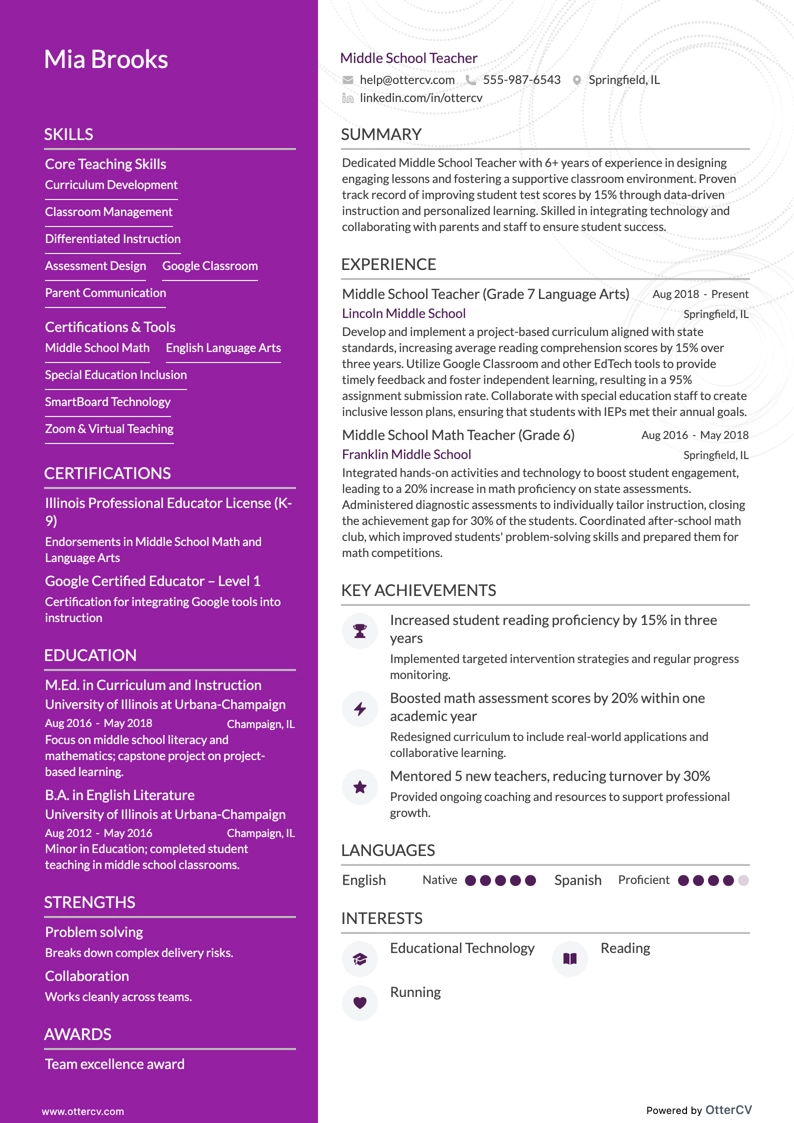
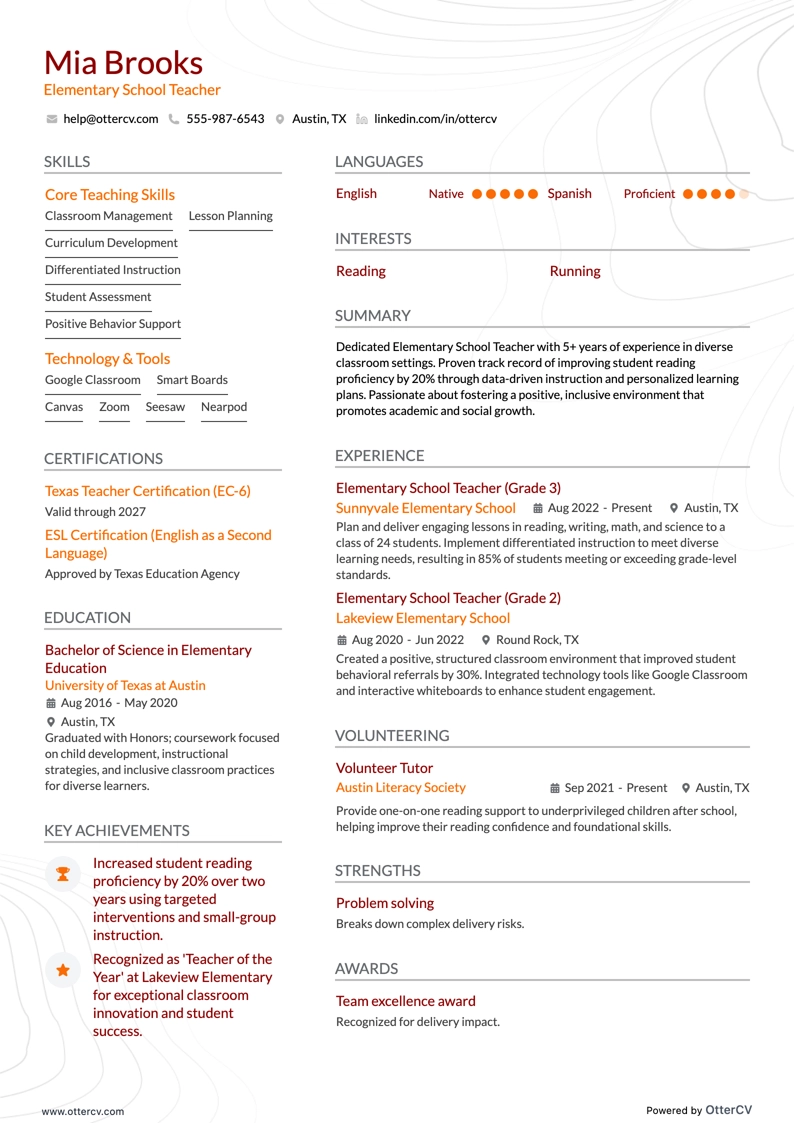
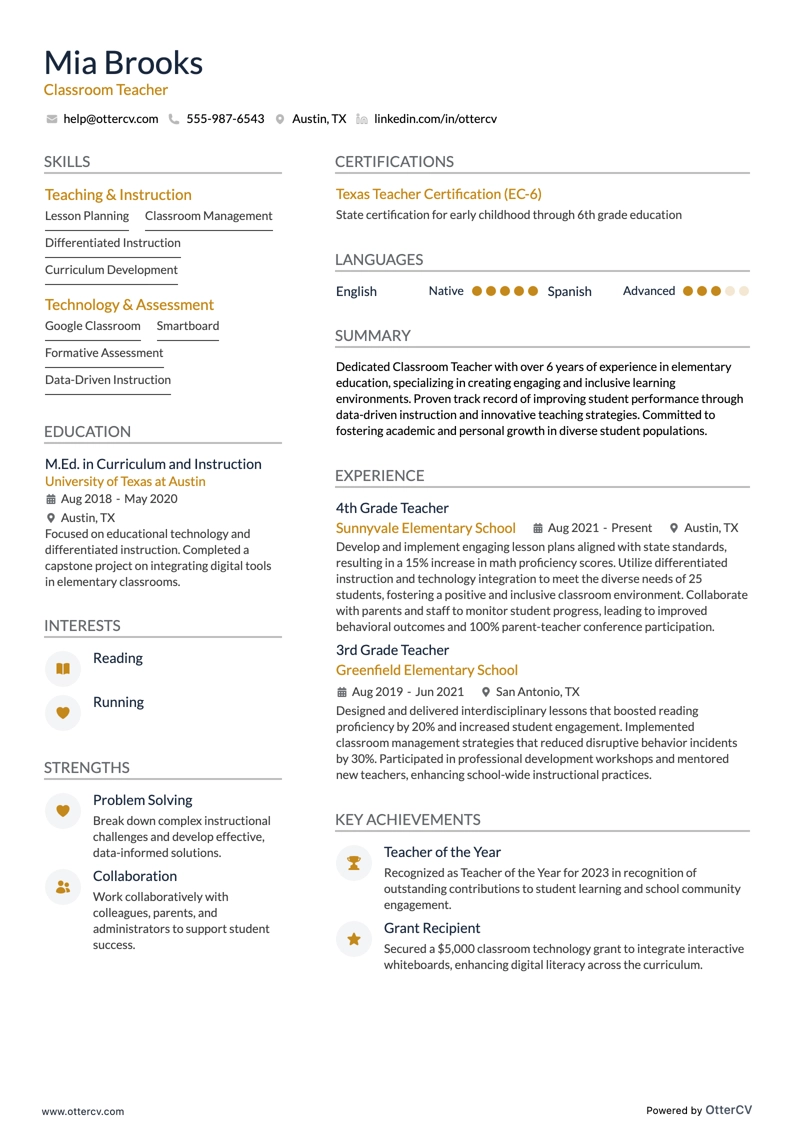
This is a strong example of a teacher resume. It presents the candidate as an experienced, effective, and dedicated educator.
Some of the reasons include:
- Extensive Teaching Experience: The candidate has taught for several years at multiple schools, showing the ability to work with diverse students and subjects.
- Track Record of Achievements: Specific, quantifiable accomplishments add credibility to the teacher's effectiveness and commitment to improving student outcomes.
- Education and Certification: The candidate holds a PhD in Educational Administration and other certifications, reflecting a commitment to ongoing professional development.
- Publications and Volunteering: Publications and volunteer work show dedication to academic research, community service, and making a positive impact beyond the classroom.
Resume format and sections
Formatting and design play an important role in a resume's readability and visual appeal, both of which help capture and hold a hiring committee's attention. A well-structured resume also communicates professionalism and can improve your chances of getting an interview.
Because teachers are trusted with significant responsibility, it is usually best to use a conventional resume format. Choose a traditional layout with one or two columns rather than a flashy or highly creative design.
The main exceptions are roles at art schools or other creative-oriented private schools, or positions in art, music, drama, or similar creative subjects. In those cases, a creative resume template may be appropriate.
Every teacher resume should be tailored to the specific job. For example, the skills you emphasize will differ for an art teacher versus a maths teacher, and also depending on whether you teach kindergarten, elementary, or high school.
Still, there are a few fundamentals to keep in mind.
Use reverse chronological order
Most resumes use reverse chronological order. That means listing your most recent work and education first, then moving backward to older experience.
This format helps employers quickly identify your most relevant and current qualifications. It also shows your career progression clearly.
Properly format the header and contact info
Your resume header is one of the most important parts of a teacher resume. It appears at the top of the page and includes your name and contact details, making it the first thing a recruiter is likely to see.
A good header should include:
- Full name
- Job title
- Phone number
- Email address
Additional, more optional details include your home address, which is more traditional and less commonly used now, and a link to your LinkedIn profile.
Be mindful of regional differences in resume formats. For example, a Canadian layout, for instance, might vary.
Key sections
Beyond the header, your resume should highlight your qualifications, experience, and relevant skills. Standard sections for a teacher resume include:
- Professional Summary or Objective: A brief statement highlighting your experience, teaching philosophy, or key strengths for the specific role.
- Work Experience & Achievements: Include the school name, the grade level or subject taught, your employment dates in reverse chronological order, and quantifiable results where possible.
- Skills: List relevant teaching and technical skills, especially those that are distinctive or supported by evidence.
- Education: Include your academic qualifications, such as degrees, certifications, and relevant coursework.
- Certifications and Licenses: List relevant teaching licenses or certifications, along with expiration dates if applicable.
Number of pages
There is an old rule that resumes should be limited to one page. While that may apply in some industries, it is not always true for teachers.
Your resume should be long enough to show that you are a strong fit for the job, but concise enough to stay readable and avoid unnecessary clutter.
As a rough guide, one page is usually enough if you have been teaching for less than 4 years and do not have much additional experience or professional development to include. Two pages may be appropriate if you have been teaching longer and want to add optional sections.
If you are a veteran teacher with many years of experience and continued professional development, three pages may be reasonable. For post-secondary teachers with extensive publications, conference presentations, or other major accomplishments, 4 or 5 pages may also be appropriate.
File format: doc or pdf?
When saving your resume, you typically have two options: .PDF or .Doc. A .PDF is generally the better choice unless the employer specifically asks for something else.
PDFs preserve the formatting you worked hard to create. Unlike a .Doc file, they are less likely to display or print incorrectly and undermine the professional image you want to present.
It is also worth considering that many employers use applicant tracking systems (ATS) as part of the hiring process. Fortunately, our resume templates are preformatted to work well with ATS and are available as .PDFs, so you do not have to worry about that.