How to write a healthcare resume
Here’s a step-by-step guide to creating an industry-relevant resume that healthcare hiring decision-makers look for and that helps prompt interview invitations.
1. Pick the right resume format
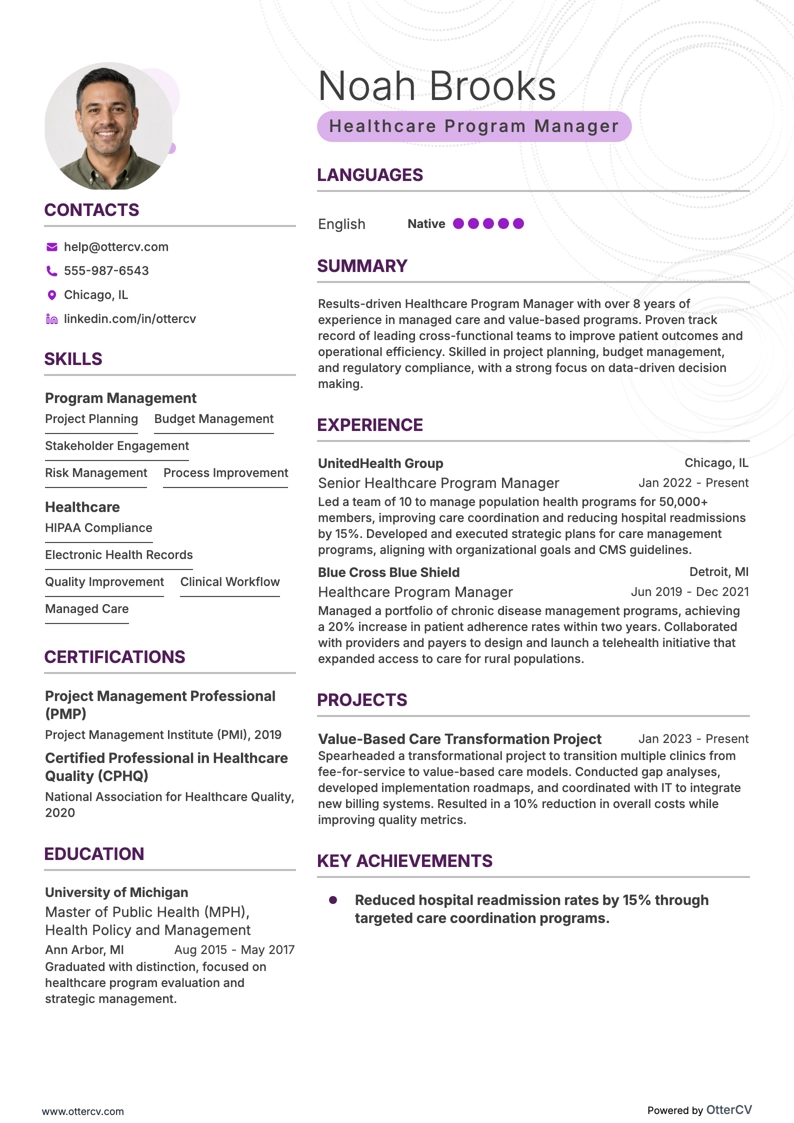
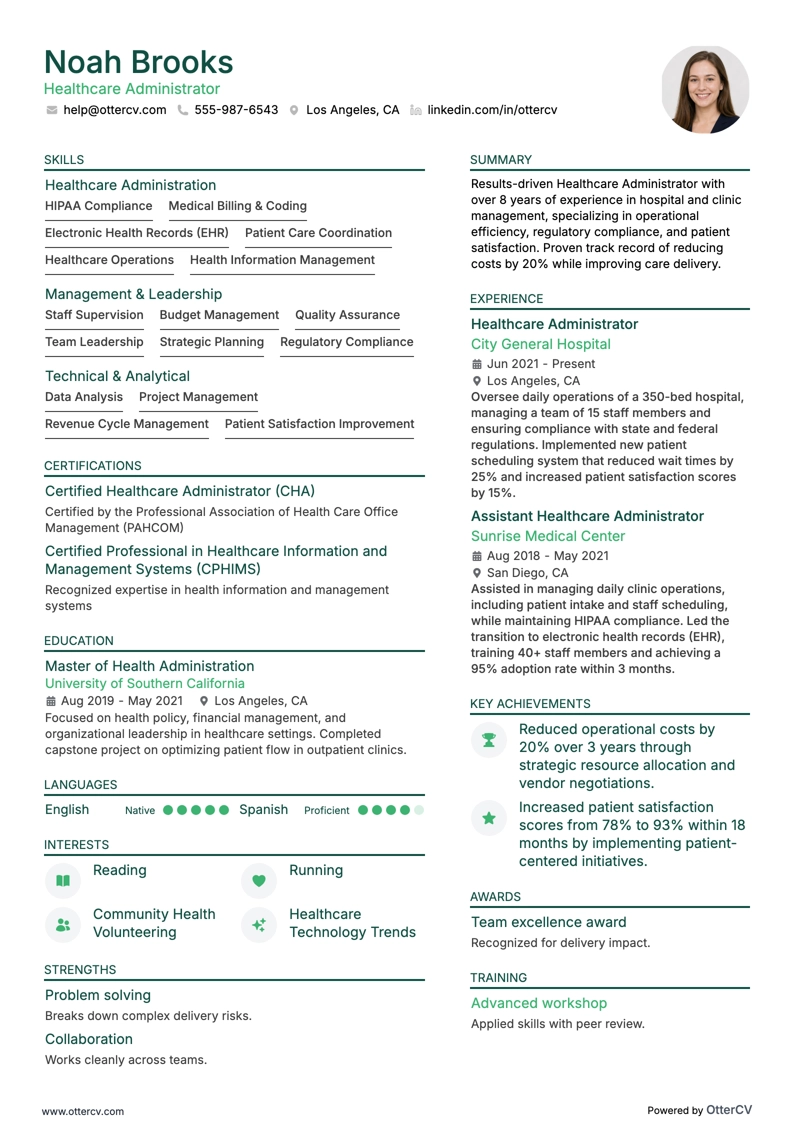
The way you structure your resume matters because it shapes how you present your patient care achievements, clinical expertise, and professional qualifications. Choosing the best resume format depends on your experience level and the specific healthcare role you want.
Here are the main options:
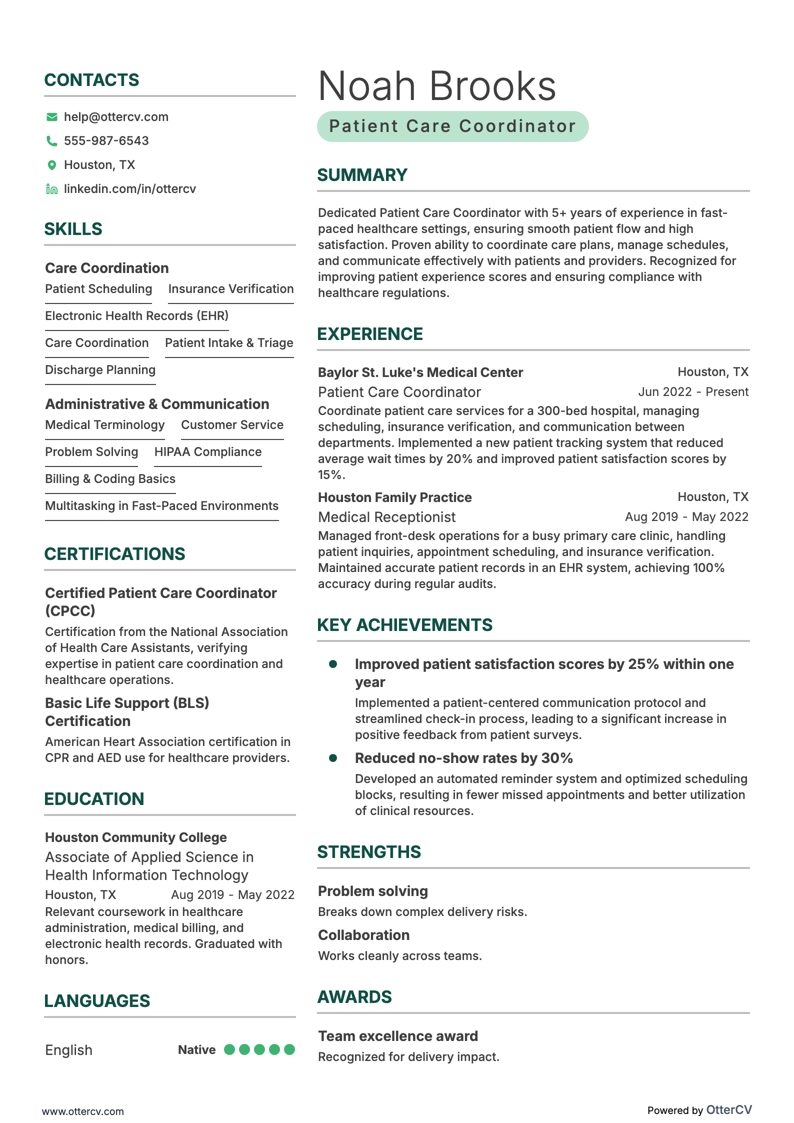
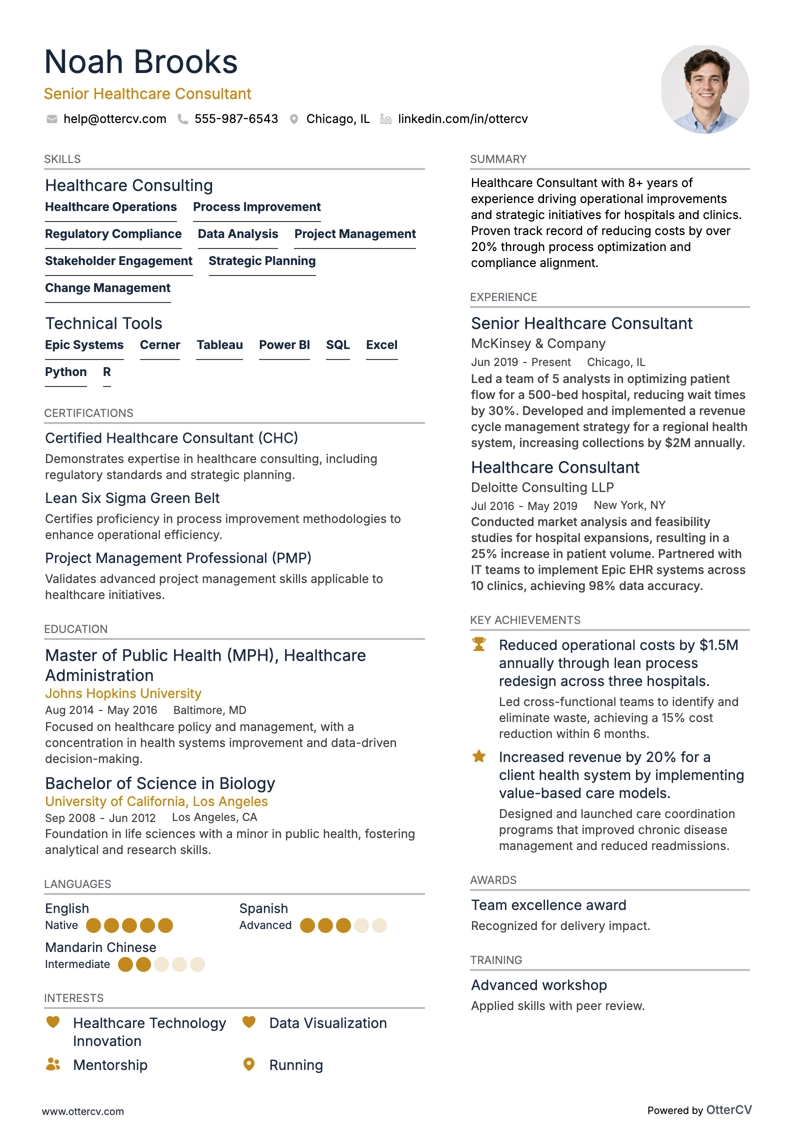
Reverse-chronological resume format
In a reverse-chronological resume, the focus is on your direct experience, beginning with your most recent role and moving backward. This format helps hiring managers quickly understand your career progression and clinical impact.
Use this format if you’re a:
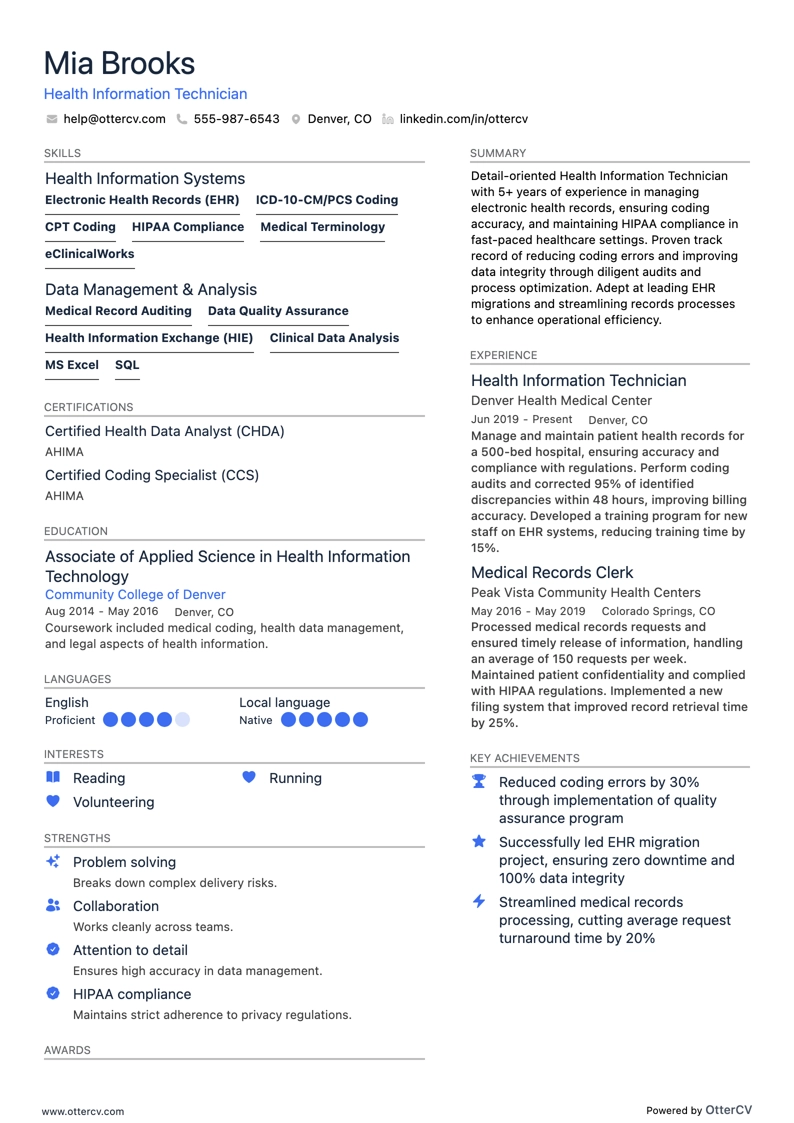
Functional resume format
If you have the right healthcare qualifications and abilities for the role but no hands-on work experience, a functional resume may be the best fit. It emphasizes your training, skills, and even your motivation.
Use this format if you’re a:
- Volunteer transitioning into paid roles
- Certified professional without hands-on experience
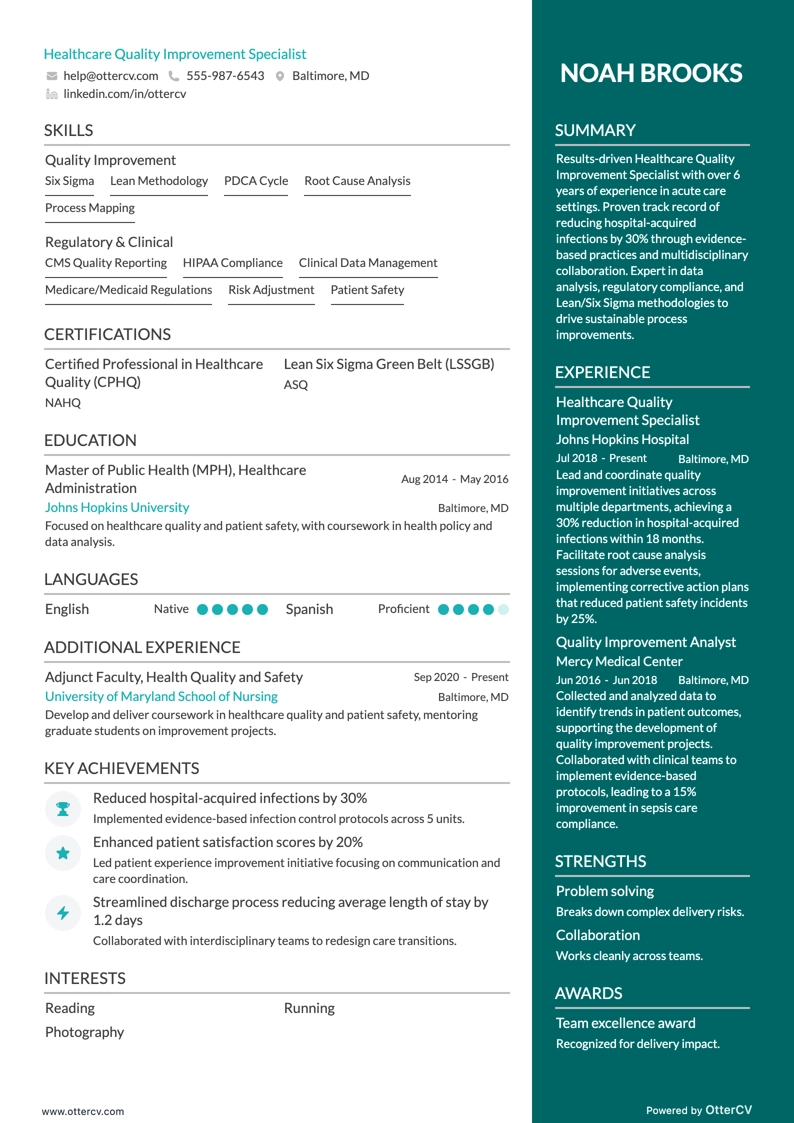
Hybrid resume format
A hybrid resume combines elements of the other two formats. It works well if you have relevant work history but need to highlight specific skills or achievements more clearly.
Use this format if you’re:
Healthcare resume length
Ideally, a healthcare application should be one to two pages long. If you’re early in your career or changing paths, you should usually be able to fit your most relevant information into a one-page resume.
If you have over 10 years of experience and a longer work history supports your application, you can confidently use a two-page resume.