If you're reading this, chances are you already know what it takes to earn $5,000 a month as a writer. Reaching that level often means handling a mix of copywriting, proofreading, and content repurposing, all of which are core freelance writing tasks. One of the biggest advantages of freelance writing is the freedom to choose when, where, and for whom you work. The toughest part is usually pitching and selling your services to potential clients.
This guide is designed to help you market your skills effectively. If you already have a portfolio, your next step is to create a resume. A strong resume should never be underestimated. In most professional settings, a portfolio and a resume work together to show what you can do and tell your story persuasively.
In this freelance writer resume guide, we'll cover:
- The best resume format for passing ATS scans and recruiter review.
- How to tailor your experience section to the job description and market needs.
- How to show the range of your skills across styles, formats, and subjects.
- Which technologies and certifications can strengthen your application.
- What to include in your resume summary so employers can assess your achievements, tone, and fit.
- Which extra resume sections can strengthen your pitch and help you land a job.
If you need more targeted advice, these specialized writer resume guides may help:
- Content Marketing Resumes
- Copywriter Resumes
- Technical Writer Resume
- Writer Resume
- Content Editor Resume
- Editor Resume
- Freelance writer Cover Letter
Let's dive in.
How to format a freelance writer resume
Your resume structure reflects not only your organizational skills but also your ability to adapt to different roles. Whether you're applying for a niche writing role or a broader position, your resume should show clarity, organization, and strong storytelling.
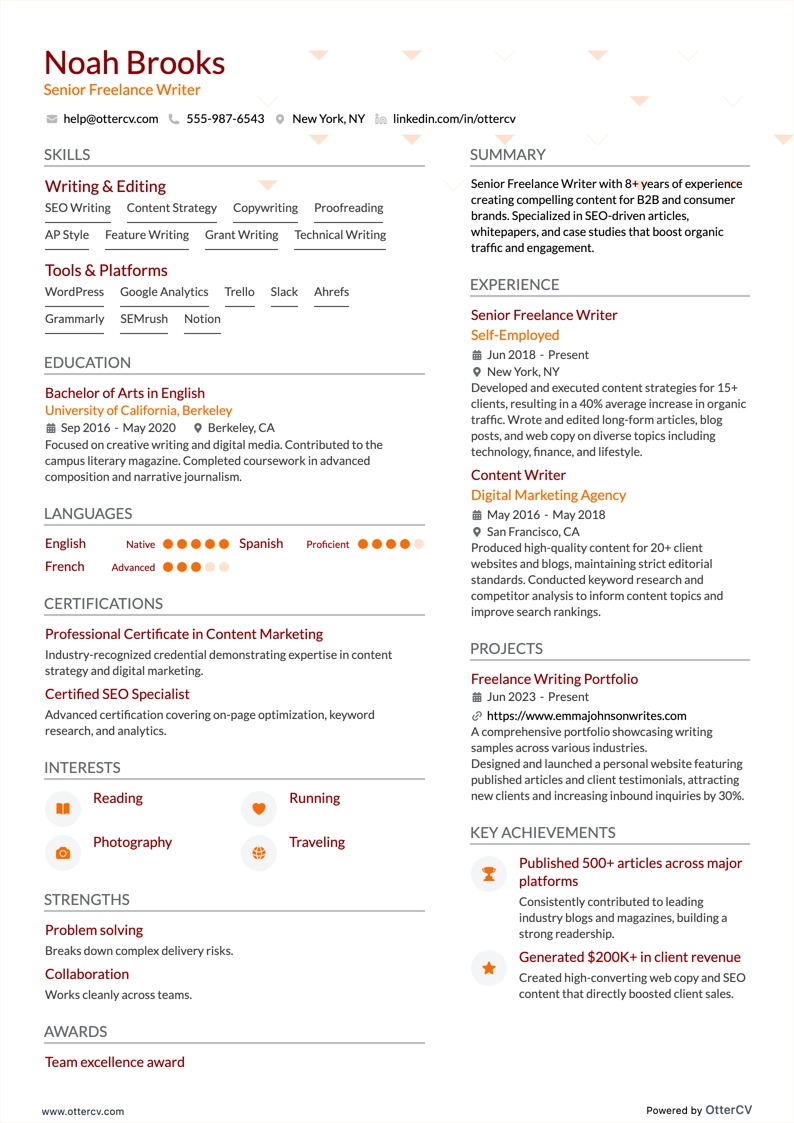
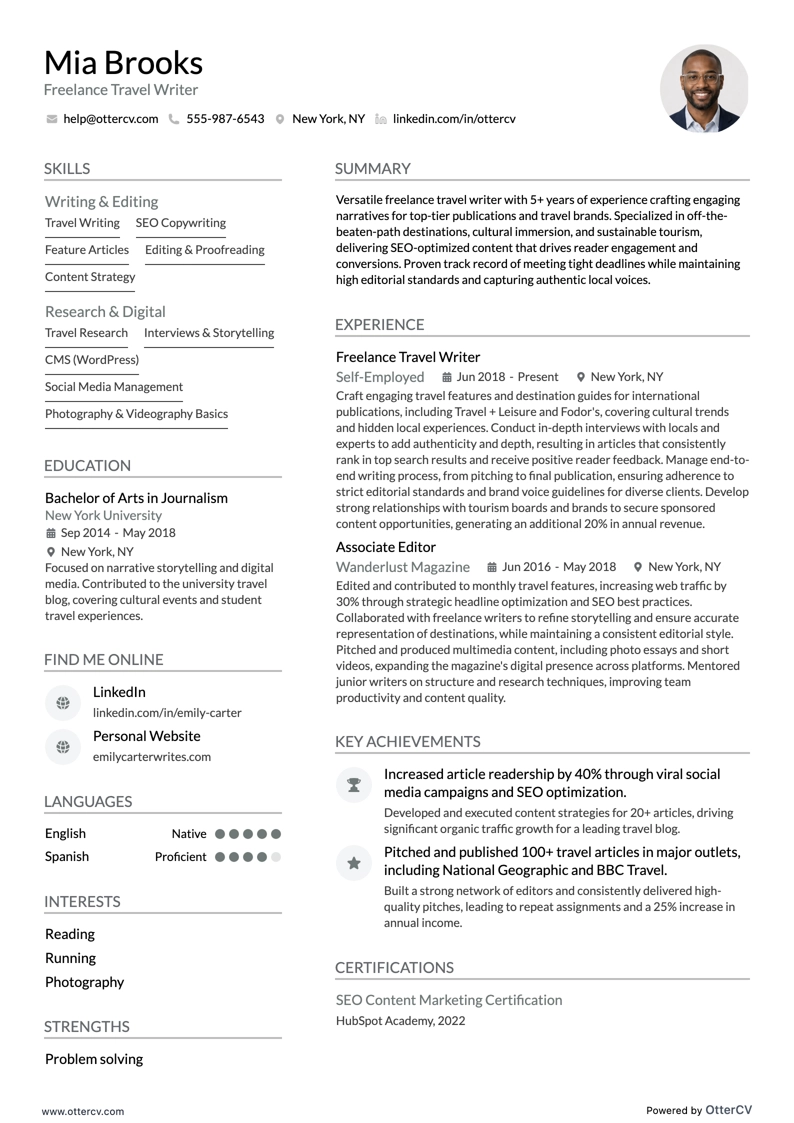
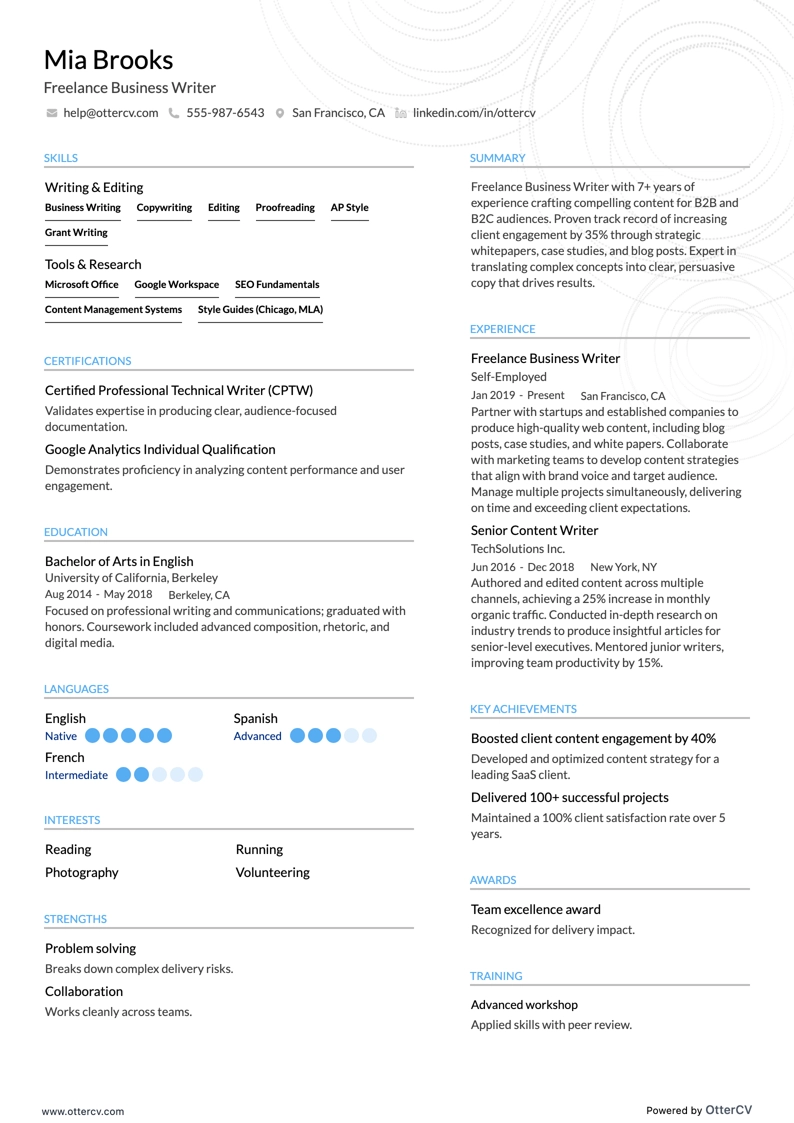
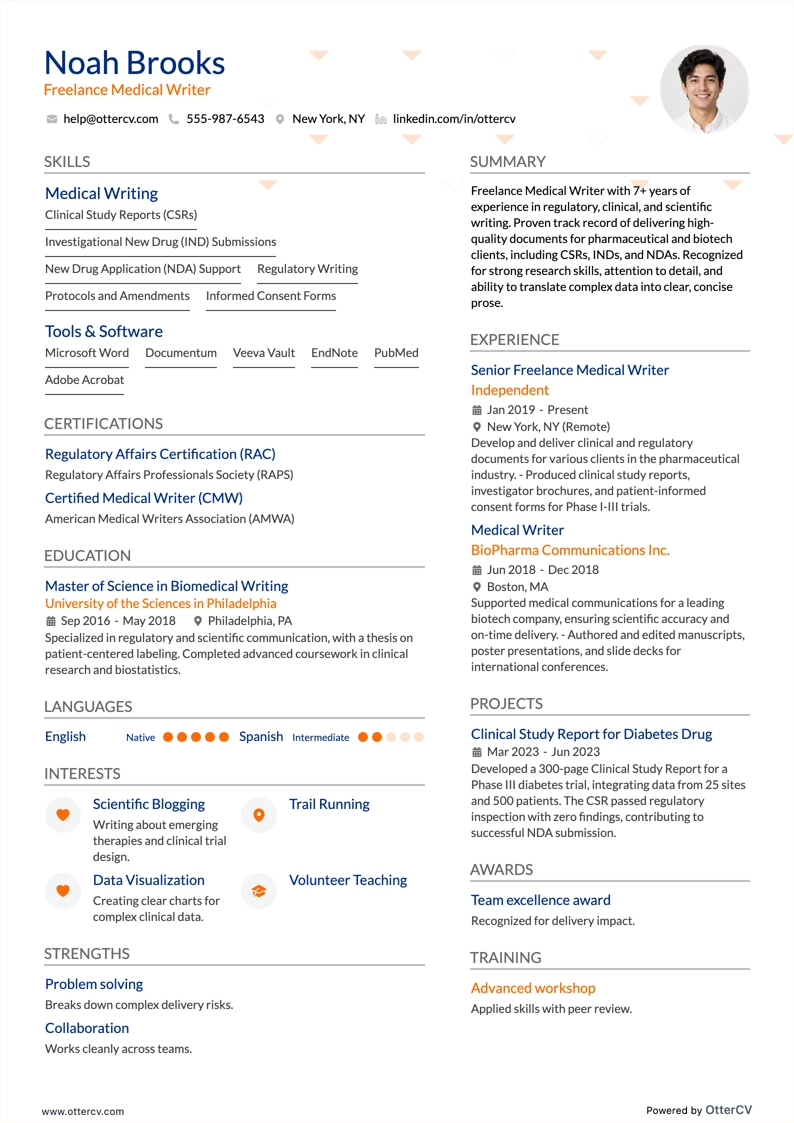
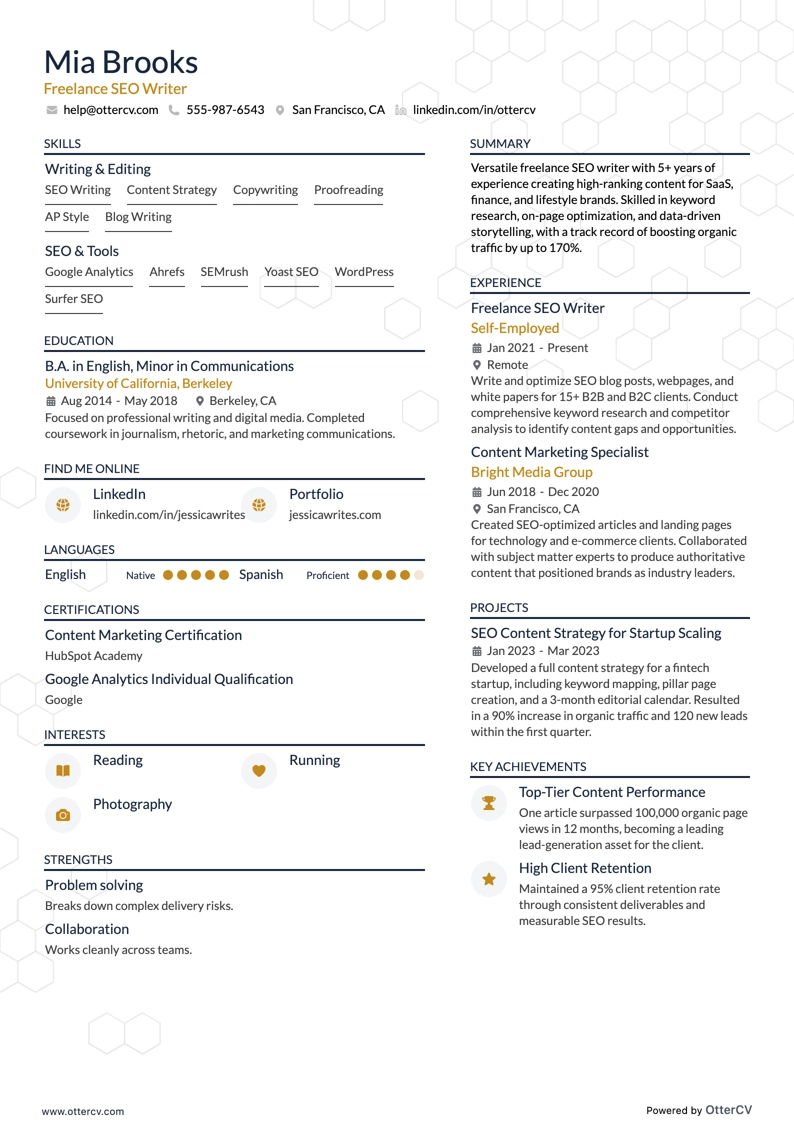
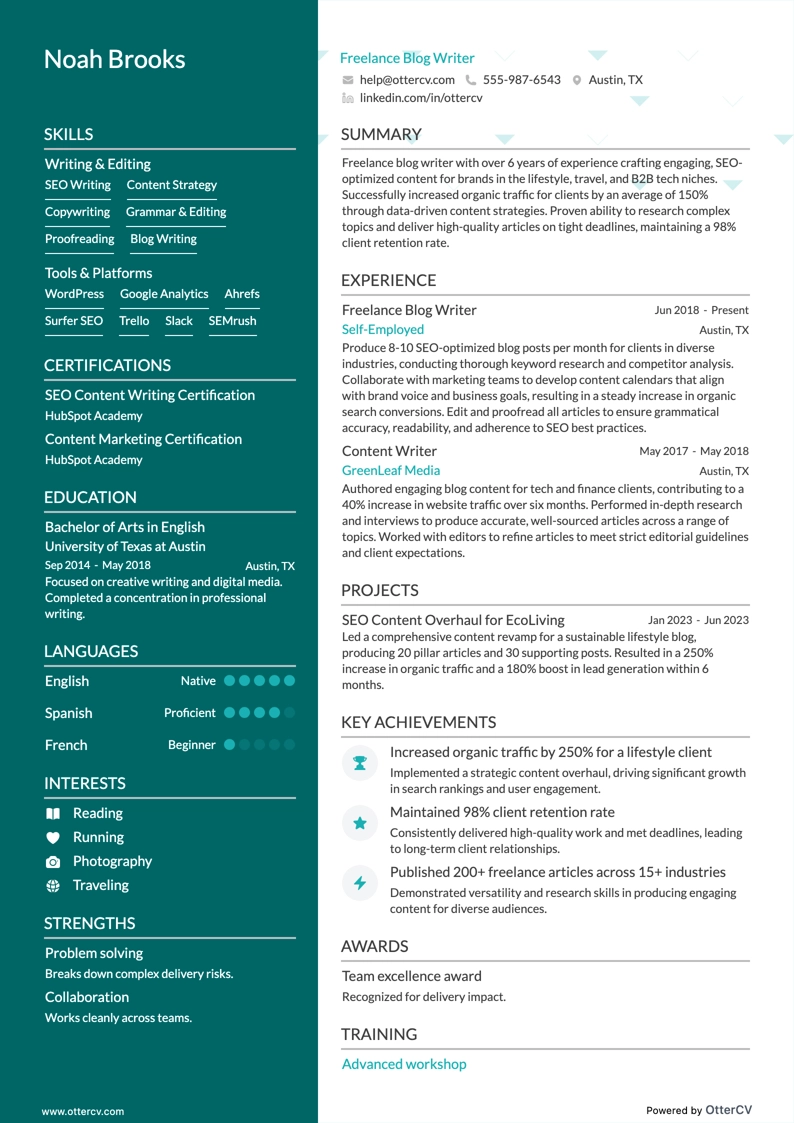
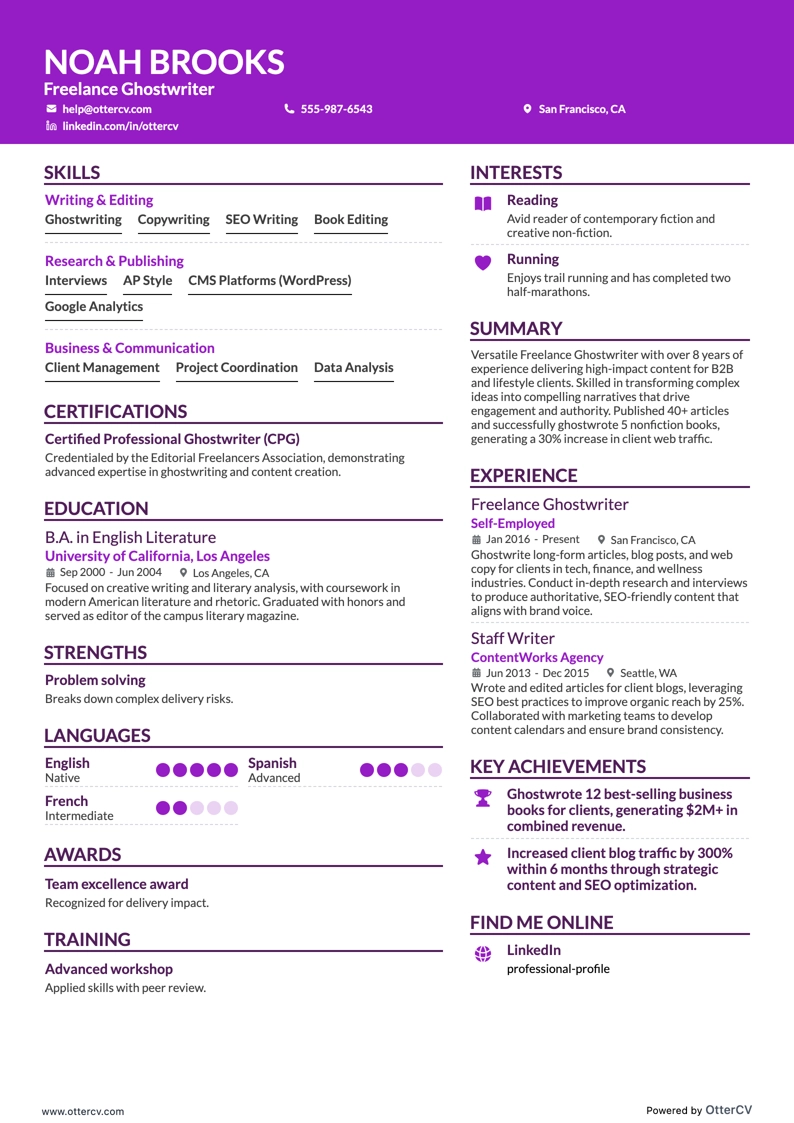
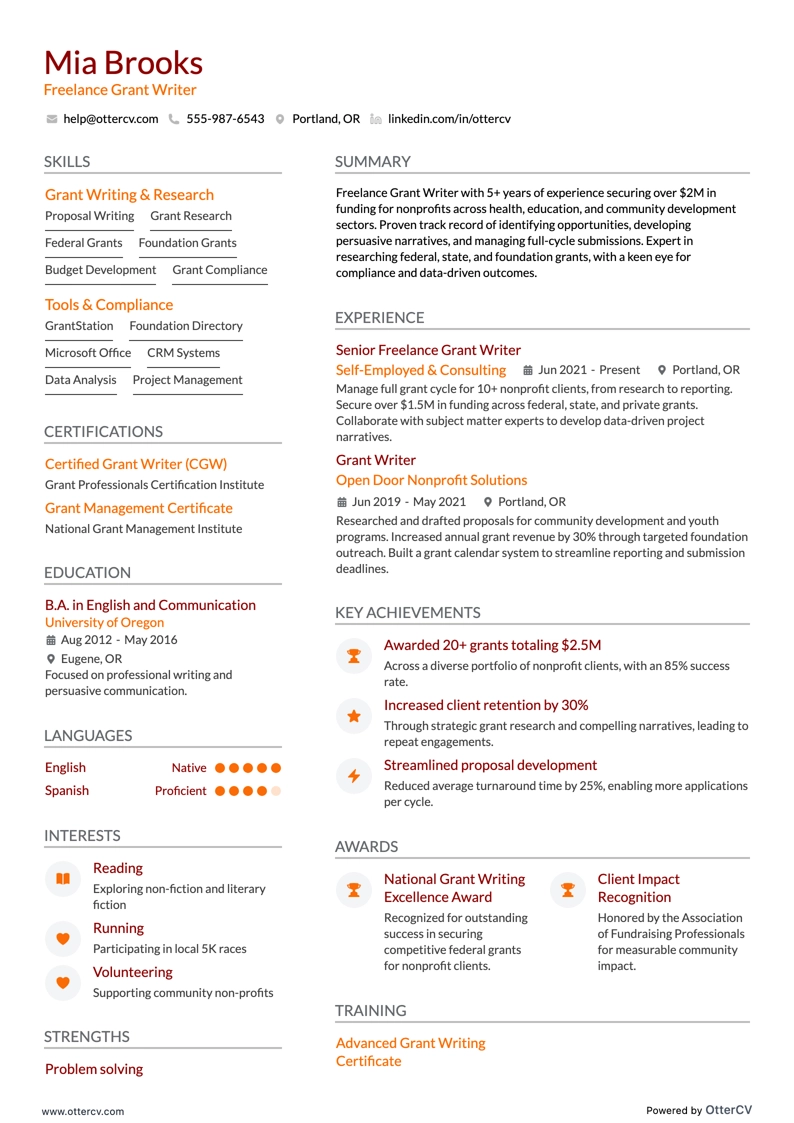
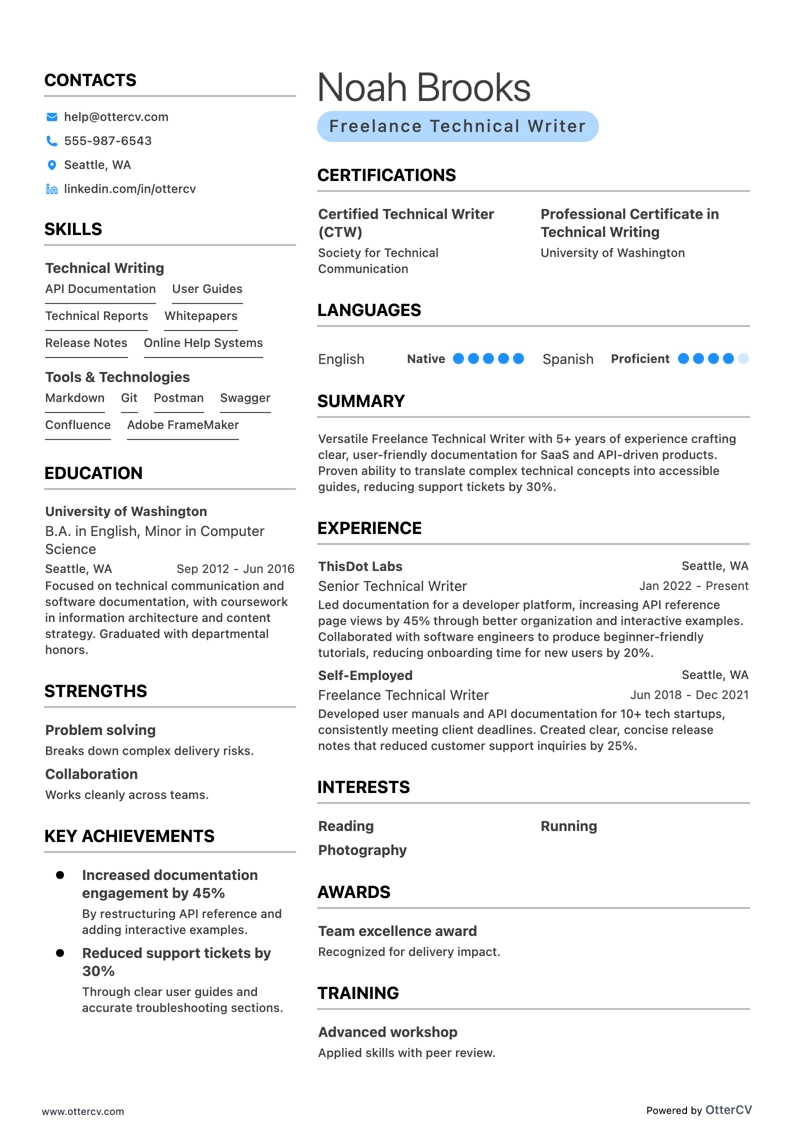
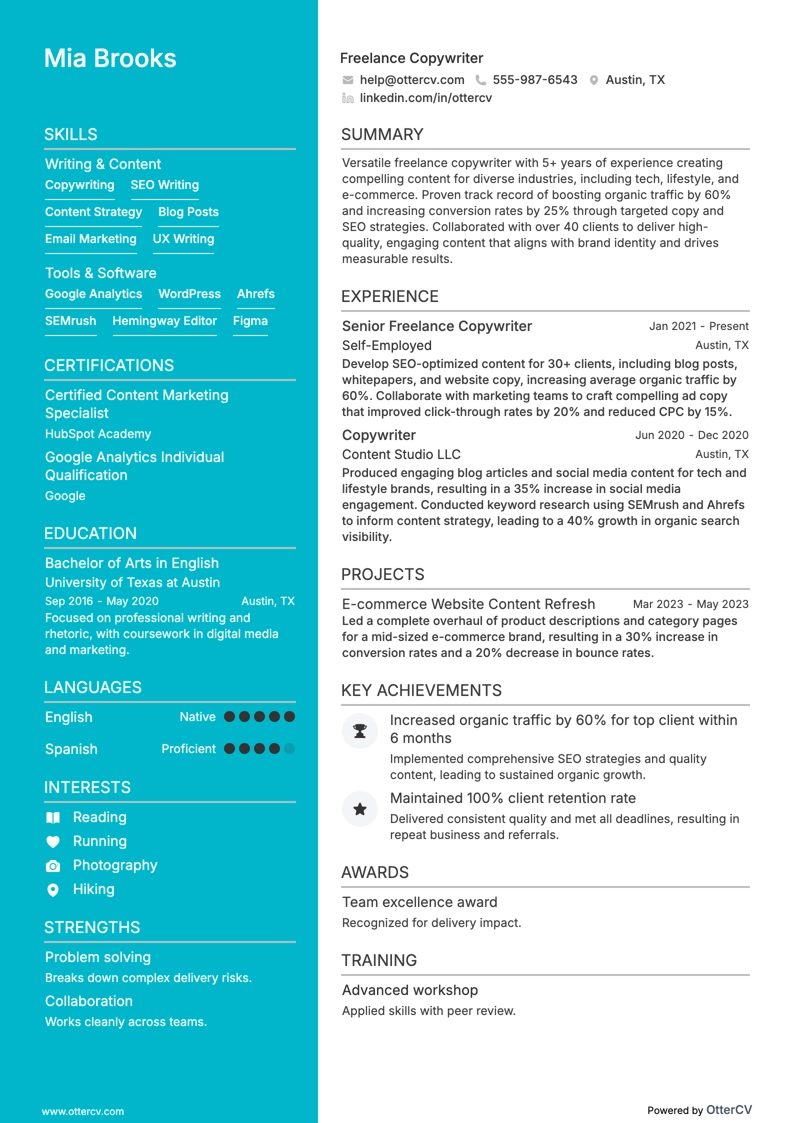
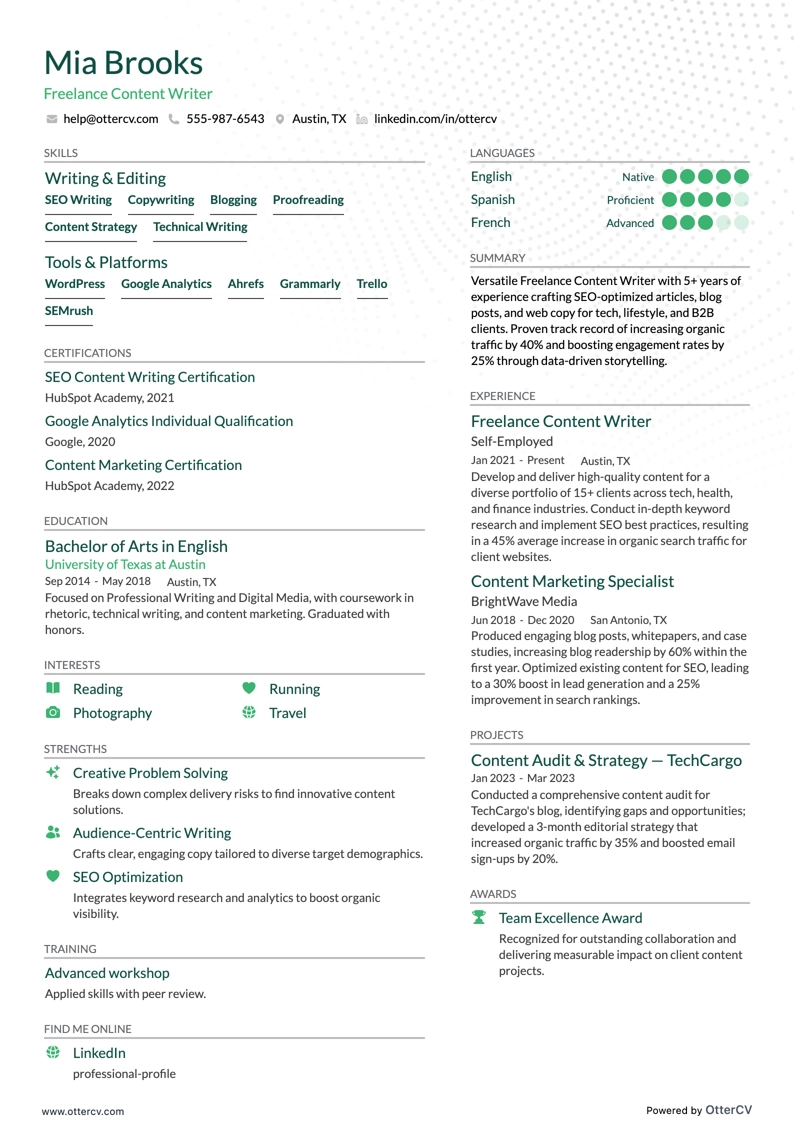
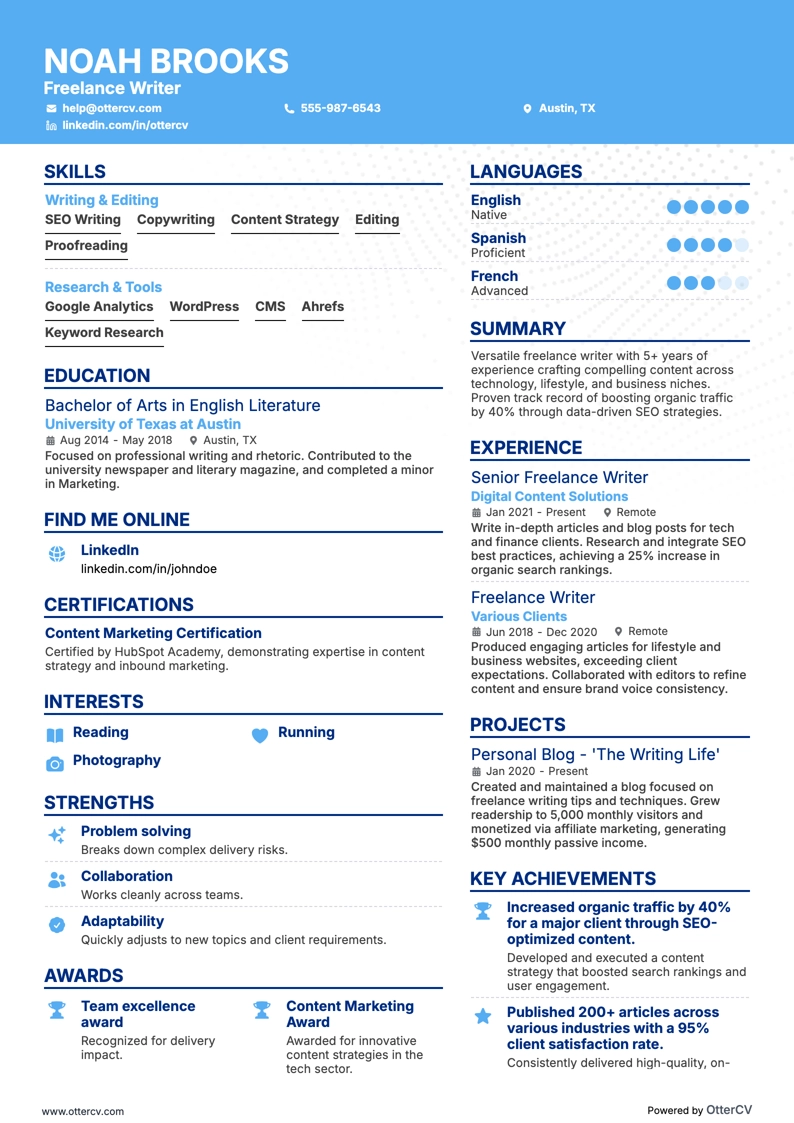
There are three common resume formats. A reverse-chronological resume lists your experience from most recent to oldest. A functional (or skill-based) resume works well for candidates with limited or no experience. For freelance writers, though, the best option is usually the combination, or hybrid, resume. It combines chronological and functional elements, giving equal weight to your work history and your skills.
Here are the advantages of using a hybrid resume:
- Showcases diverse skills: Freelance writers often work across technical writing, creative storytelling, and more. A hybrid format lets you highlight this variety in a dedicated skills section near the top.
- Highlights specific achievements: You can connect your skills to concrete results by listing accomplishments under each role or project, such as increased blog engagement.
- Flexibility in presenting experience: This format works especially well if you manage multiple projects, since you can group work by client or under categories like "Freelance projects."
- Address gaps clearly: A hybrid resume can make employment gaps easier to explain by focusing attention on achievements rather than only on dates.
- Tailor for different audiences: It's also ideal for adapting your resume to different industries or media types by emphasizing the most relevant skills and experience each time.
Choosing the right header for your freelance writer resume
As a writer, choosing the right words and presenting accurate information should come naturally. The same is true for your resume header. You have limited space, so make it count and use it to capture a hiring manager's attention.
Your resume header is a strong place to use your copywriting skills and customize your title. For example, using "Marketing freelance writer" instead of simply "freelance writer" can make a meaningful difference.
Your header should also include your name, location, email address, and a link to your personal website or portfolio.
Keep in mind that expectations can vary by region. For example, Canadian resumes may follow a different format.