The U.S. Bureau of Labor Statistics projects 9.1% employment growth for estheticians and skincare specialists between 2022 and 2032, which is much faster than the average for all occupations. The field can also offer flexibility, since part-time work is common and schedules may include evenings and weekends.
That said, esthetics can be demanding. The work requires both skill and resilience, especially when you are working closely with clients’ skin and addressing issues such as poor hygiene or long-neglected skin concerns. Even with those challenges, estheticians make a meaningful impact by helping clients manage concerns like acne and rashes.
If you’re looking for a job in esthetics, a strong resume can help you stand out to recruiters and move forward in your career. This guide will show you how to build that resume.
Here’s what you’ll learn:
- Which resume format works best for an esthetician resume
- How to structure your resume when you have minimal or no esthetician experience
- What details recruiters want to see on an esthetician’s resume
- How to highlight both hard and soft skills
- How to feature your esthetician license and any additional certifications
Before getting started, you may also want to explore other beauty and wellness resume guides:
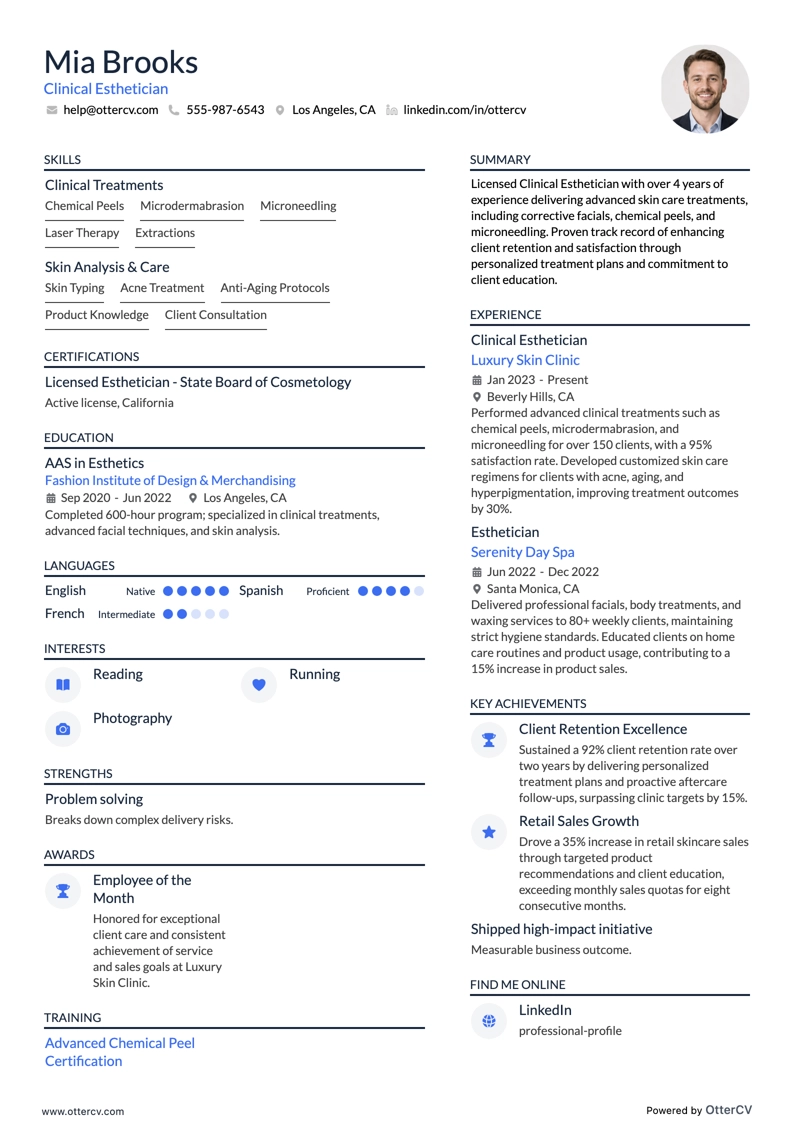
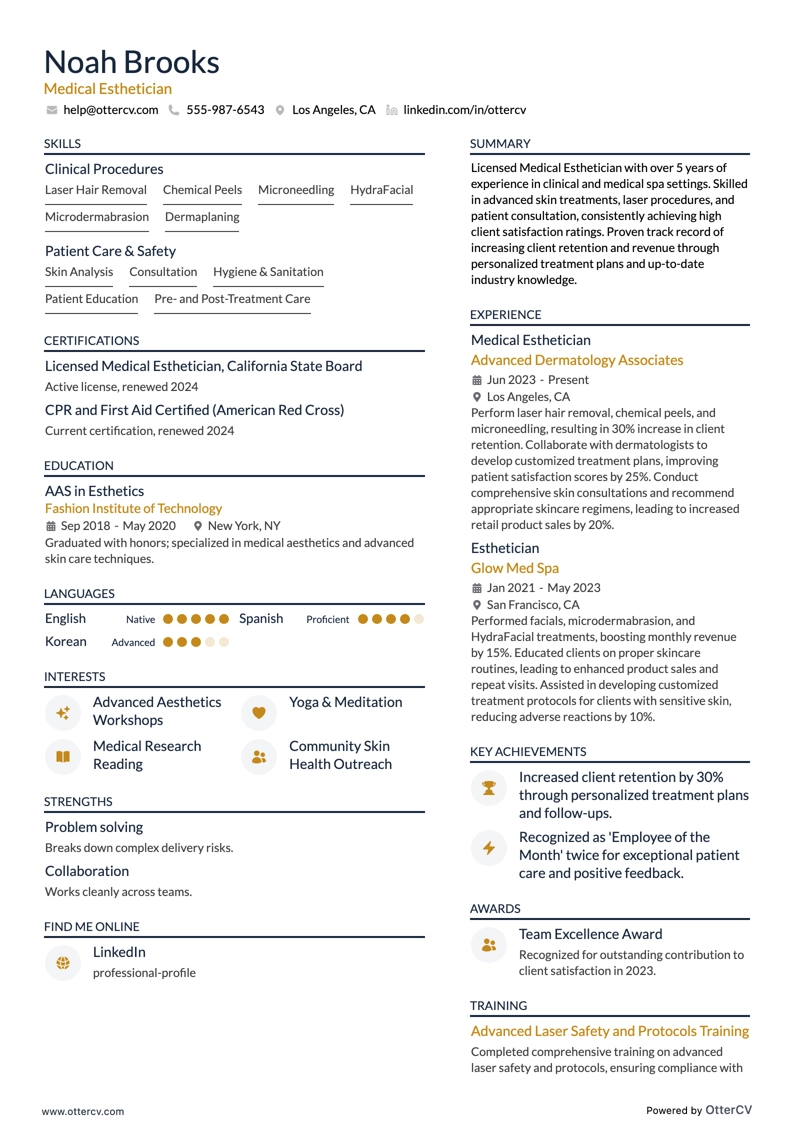
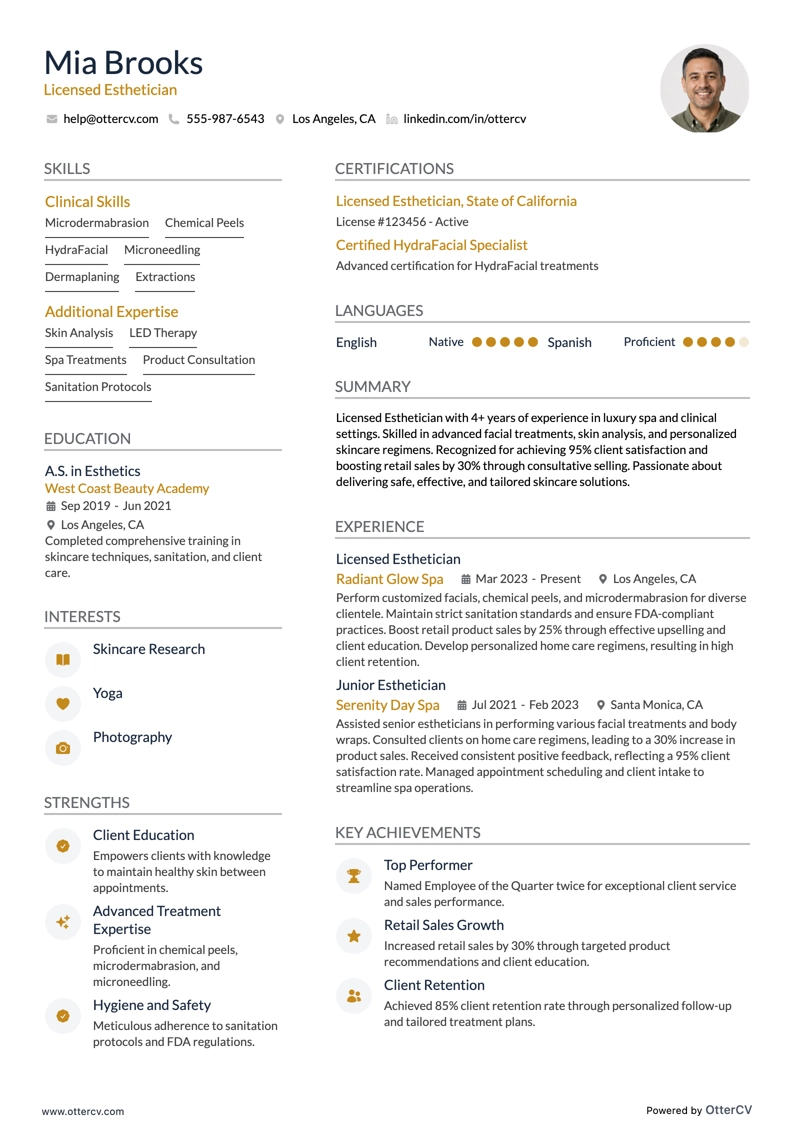
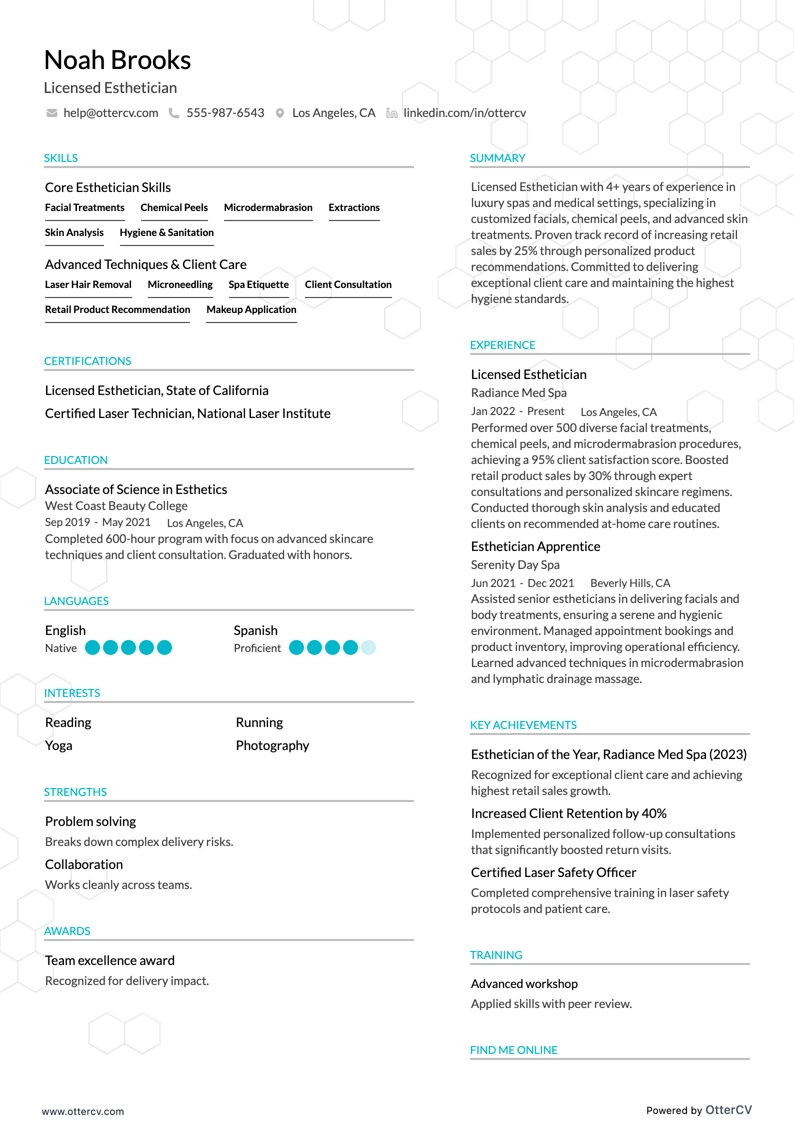
How to format an esthetician resume
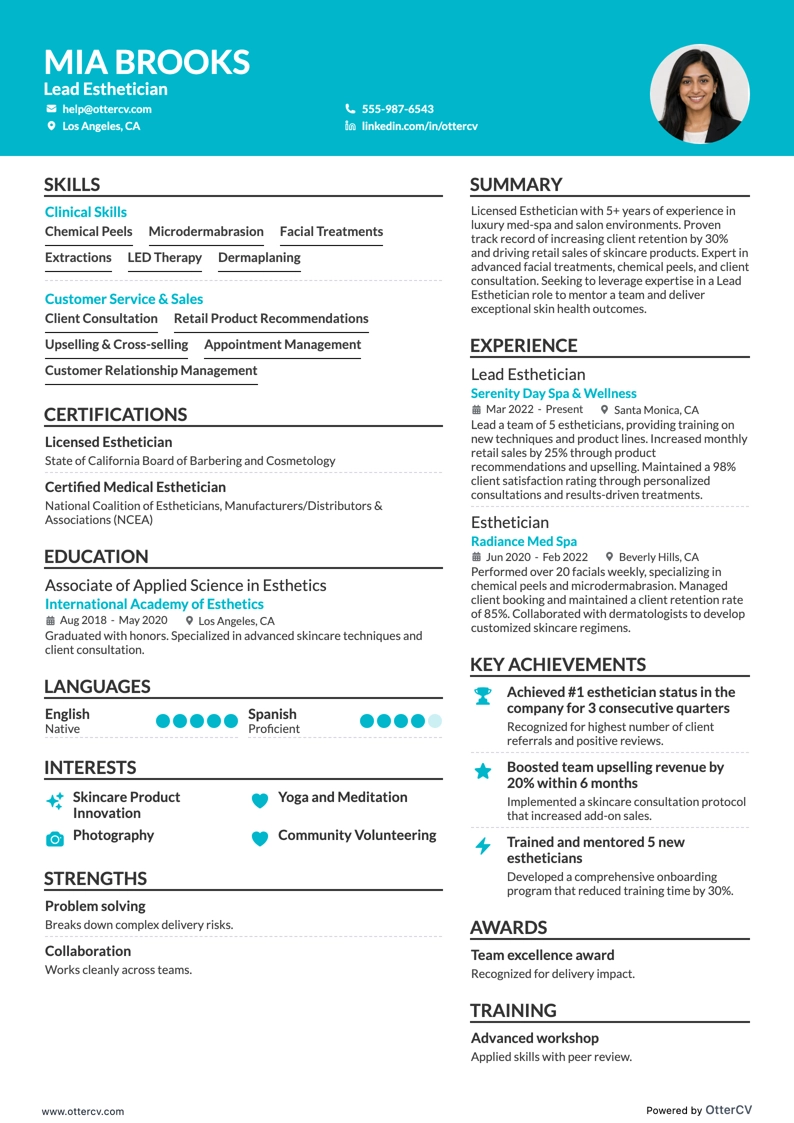
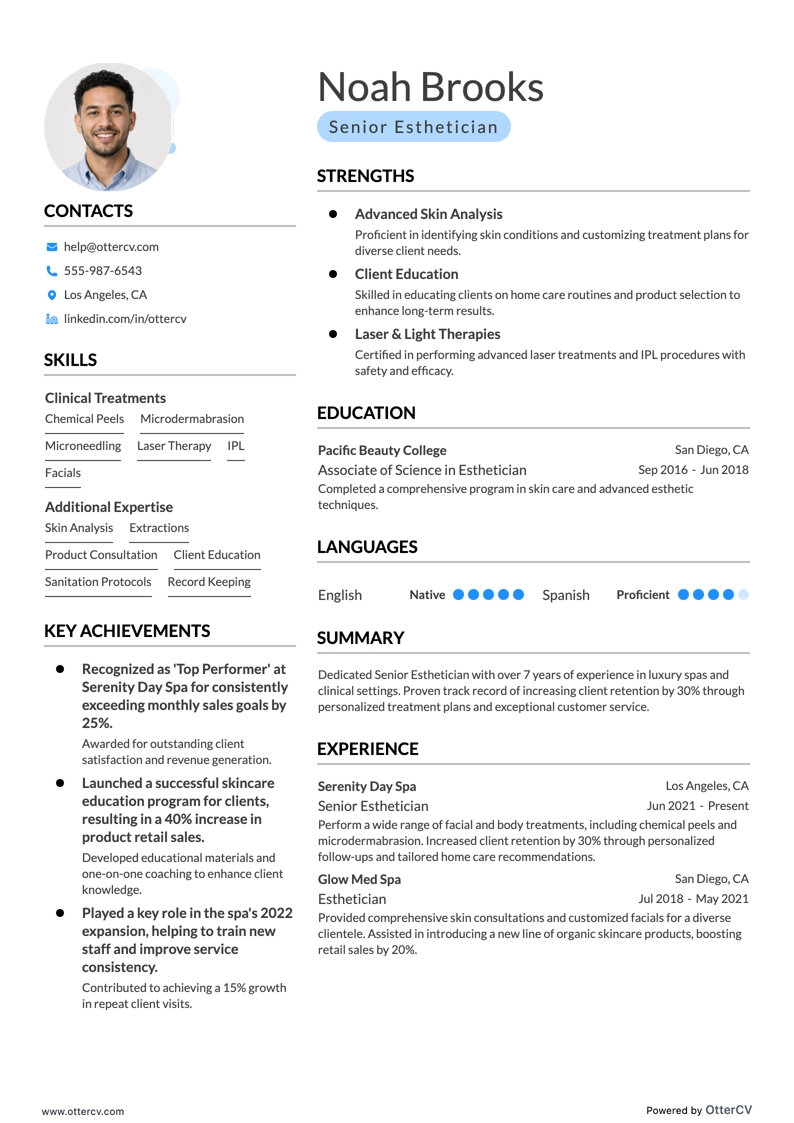
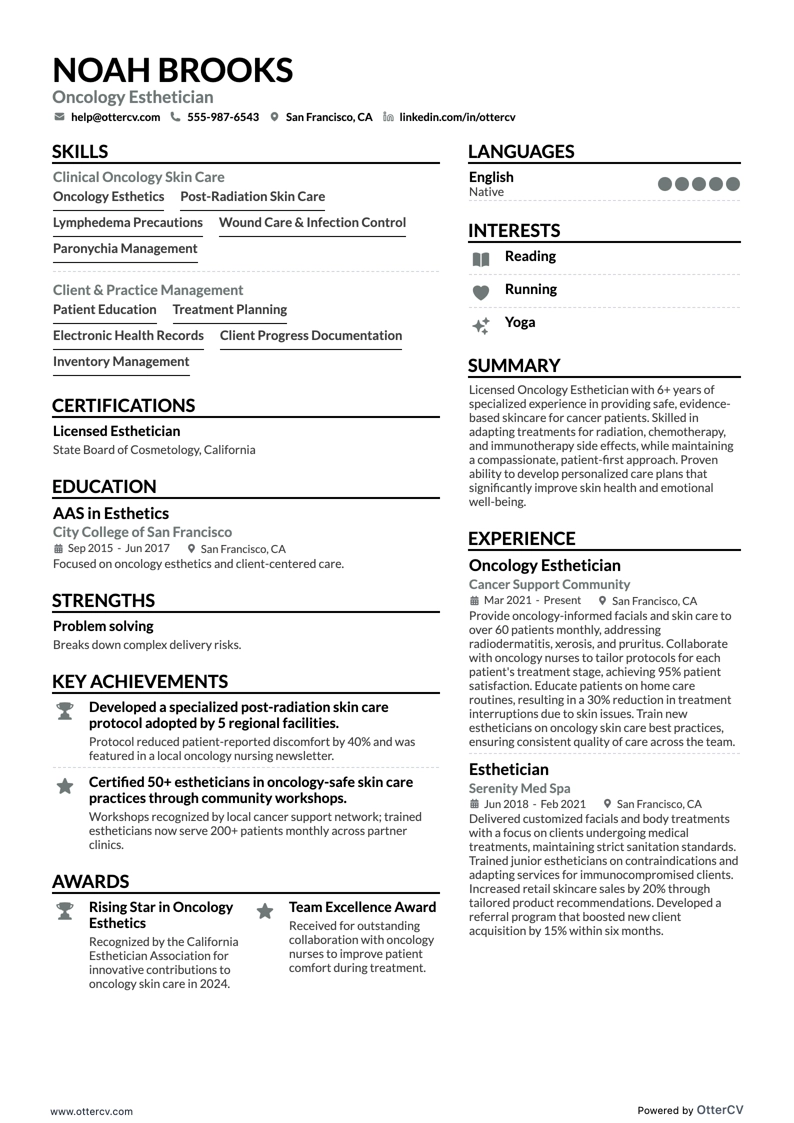
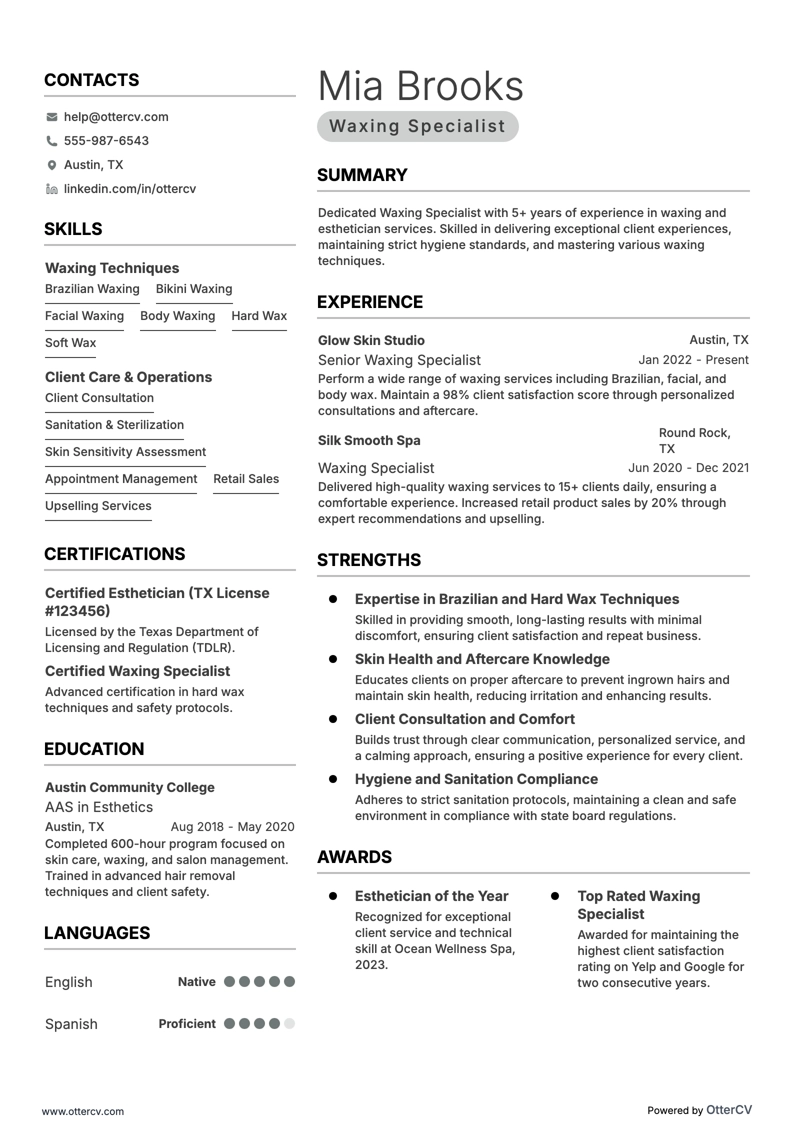
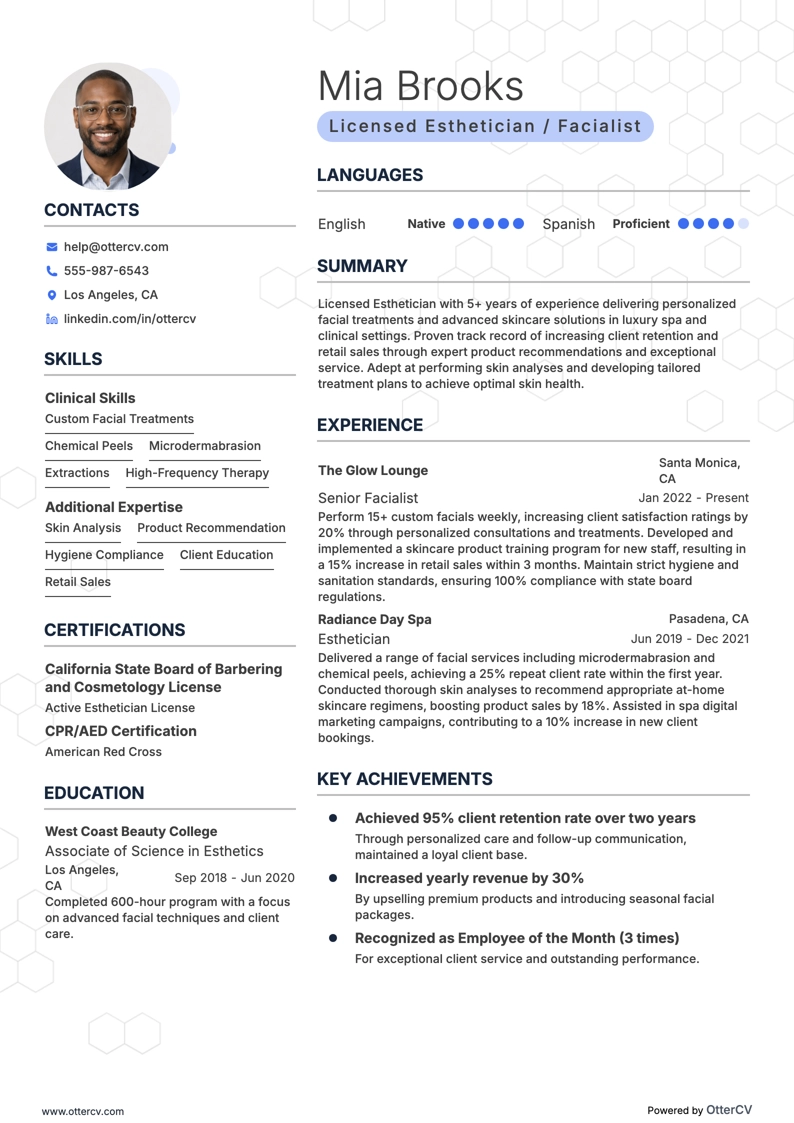
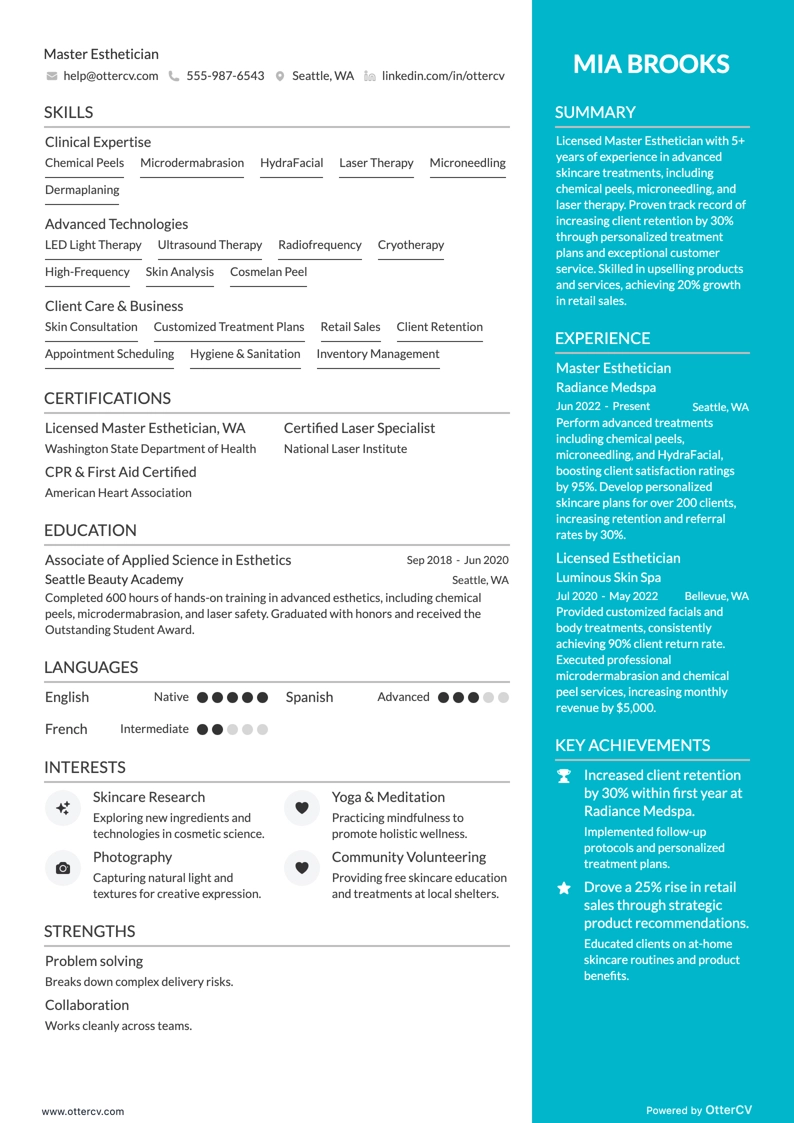
If you’re an experienced esthetician, a reverse-chronological resume is a strong choice for showing your career progression and achievements across spas or beauty salons.
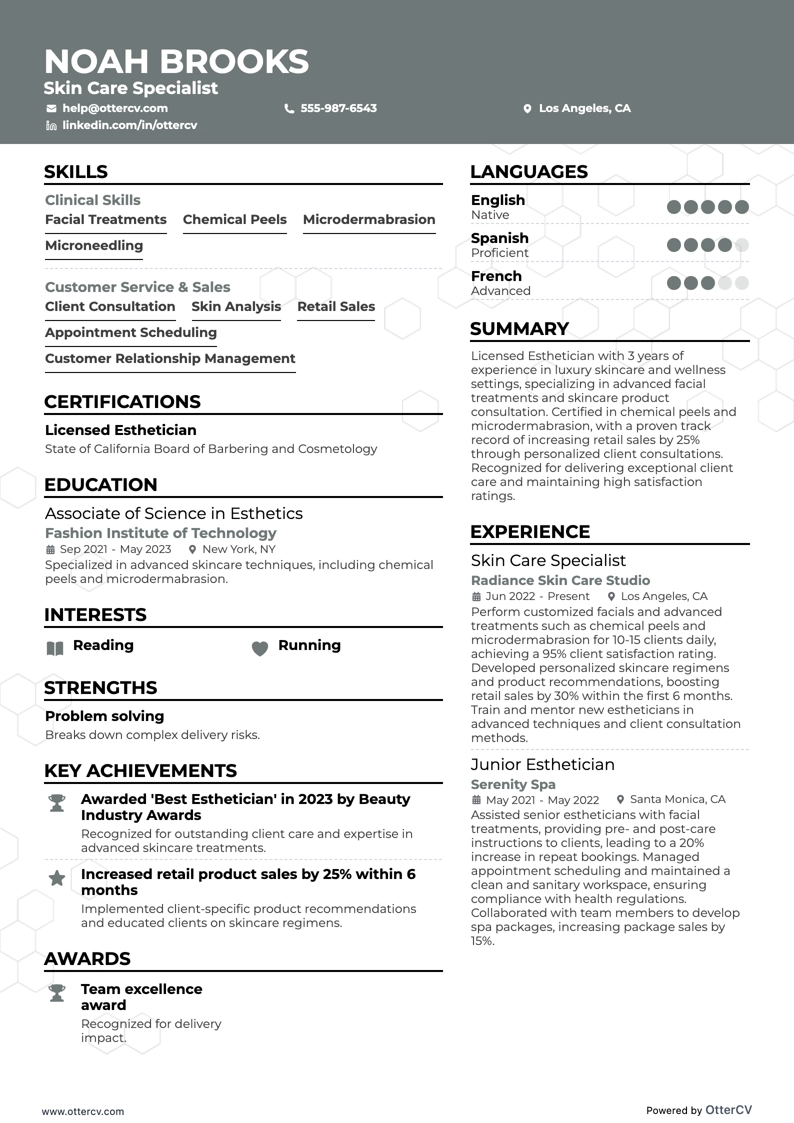
If you’re new to aesthetics, a functional or hybrid layout may be a better fit. These formats emphasize your skills and potential over your work history, which can help demonstrate your readiness to work in the field.
Here are some resume tips and tricks tailored to estheticians:
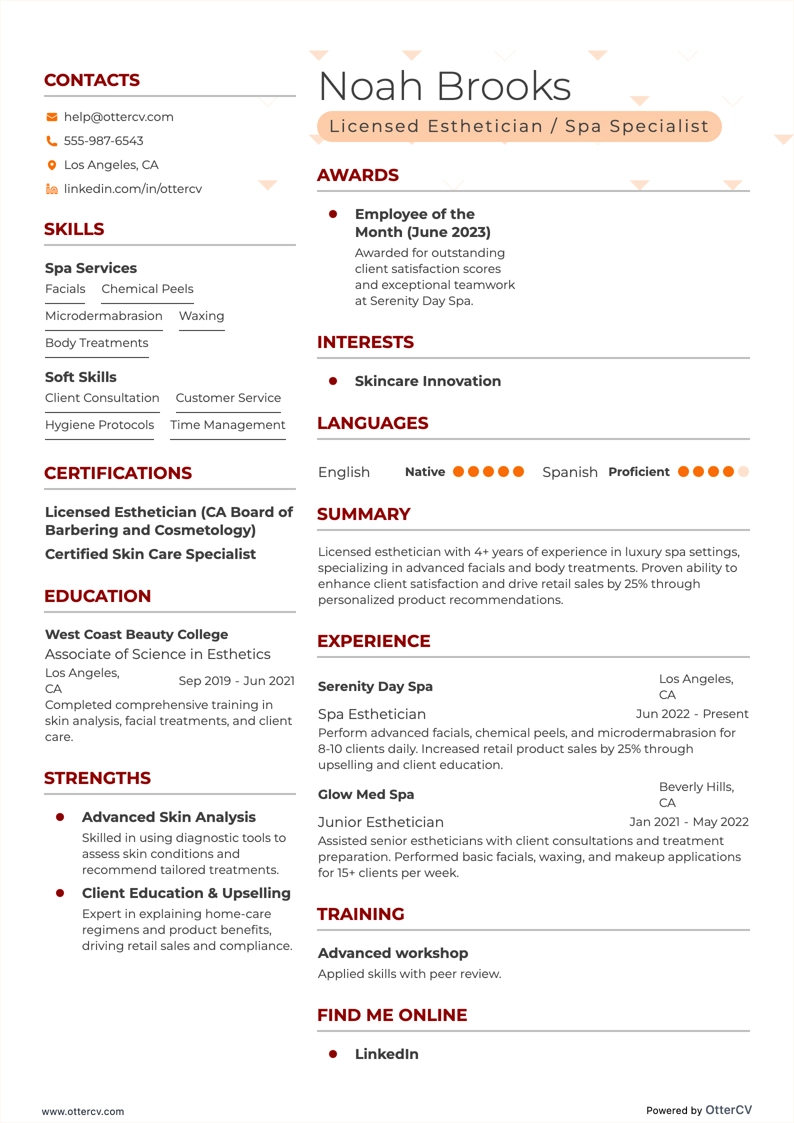
- Choose a resume template that matches your sense of aesthetics. A single-column layout gives you enough space and is easy to scan.
- Select clear, professional fonts. In addition to Arial, Calibri, and Times New Roman, ATS-friendly options include Lato, Rubik, and Volkhov. Keep the main text between 10 and 12 points for readability.
- Use 1-inch margins to keep your resume neat and visually balanced.
- Try to keep your resume to one page, as this is often more effective than a longer document.
- Include a header with your name, professional title, contact information, and LinkedIn profile link.
- Save your resume in PDF format so the layout stays consistent across devices and platforms.
Keep in mind that resume conventions can vary by market. For example, a Canadian resume could vary in layout.