Principal Biologist full preview

5 Biology Resume Examples

OtterCV

Written by The OtterCV Team

Updated: 11/25/2023•8 min read

See all resume examples in this guide, or generate your own resume example with your personalized prompt

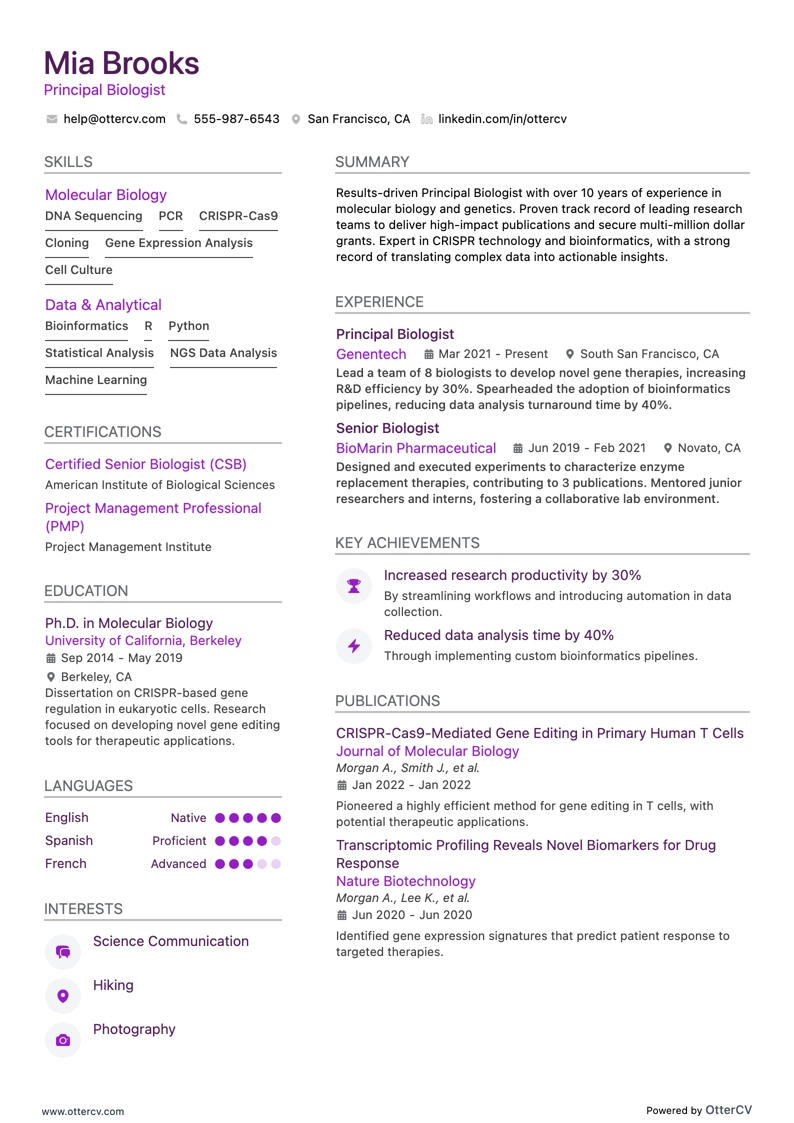
Principal Biologist resume example

Principal Biologist

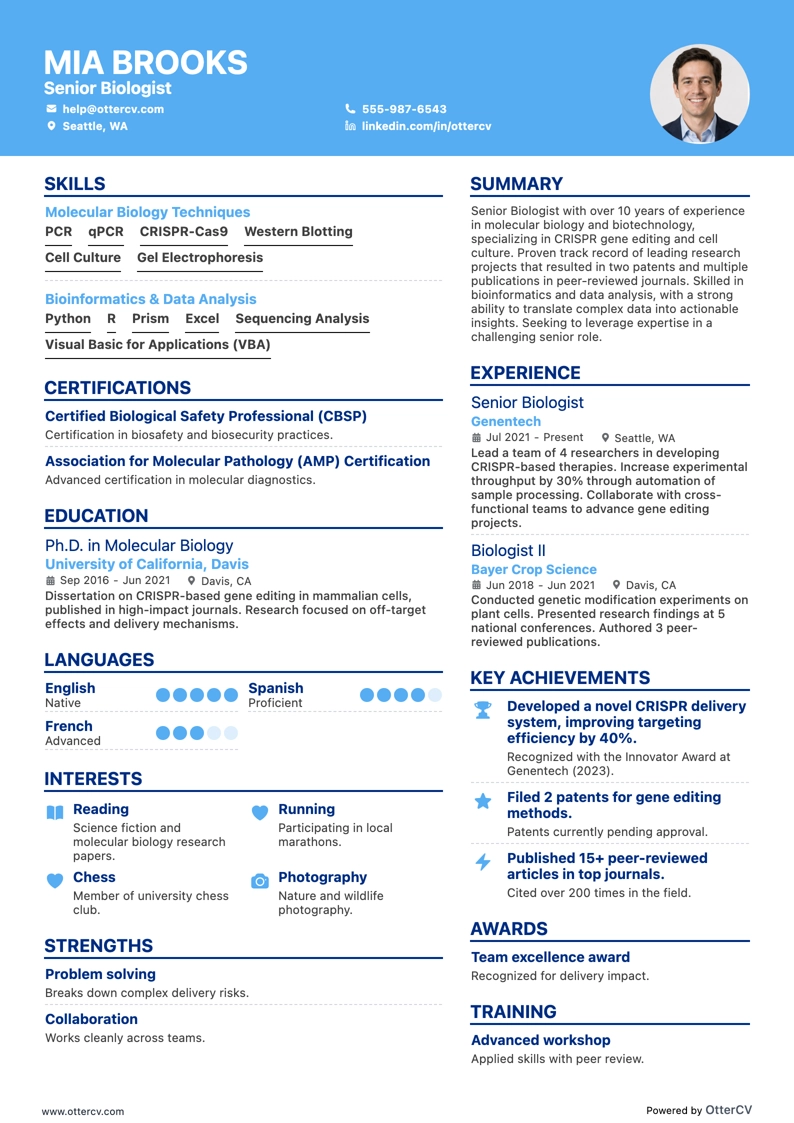
Senior Biologist resume example

Senior Biologist

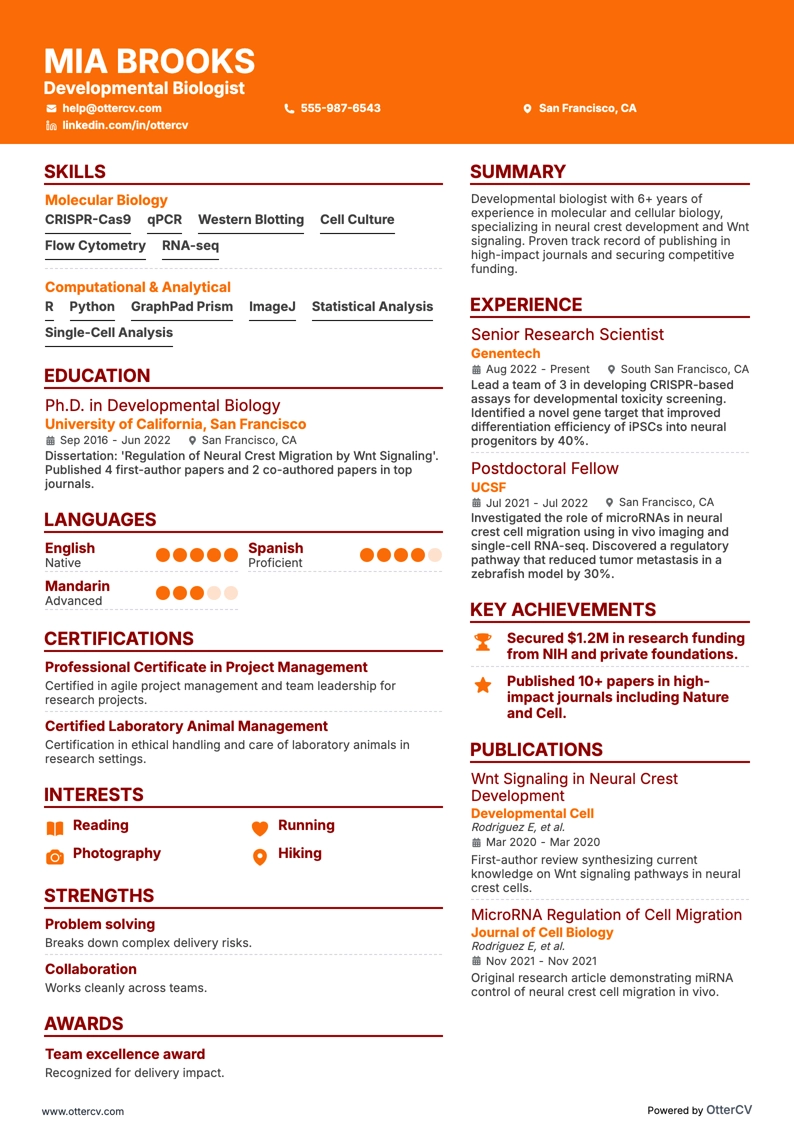
Developmental Biologist resume example

Developmental Biologist

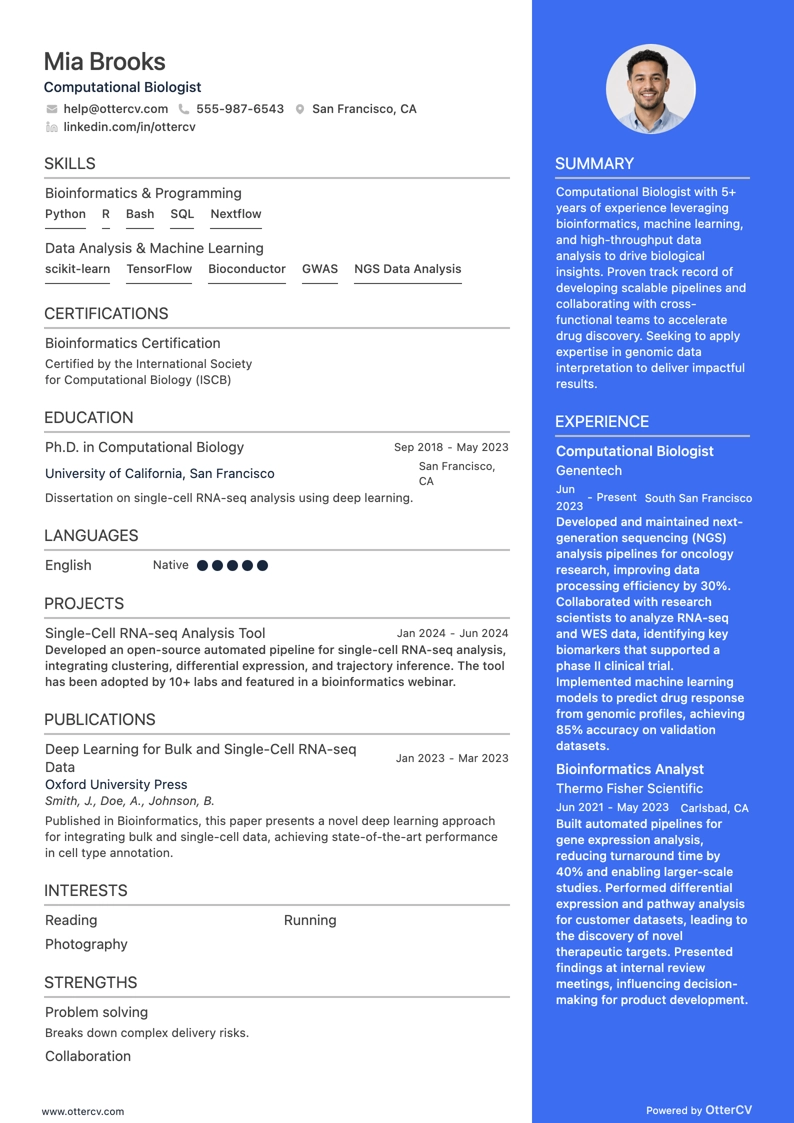
Computational Biologist resume example

Computational Biologist

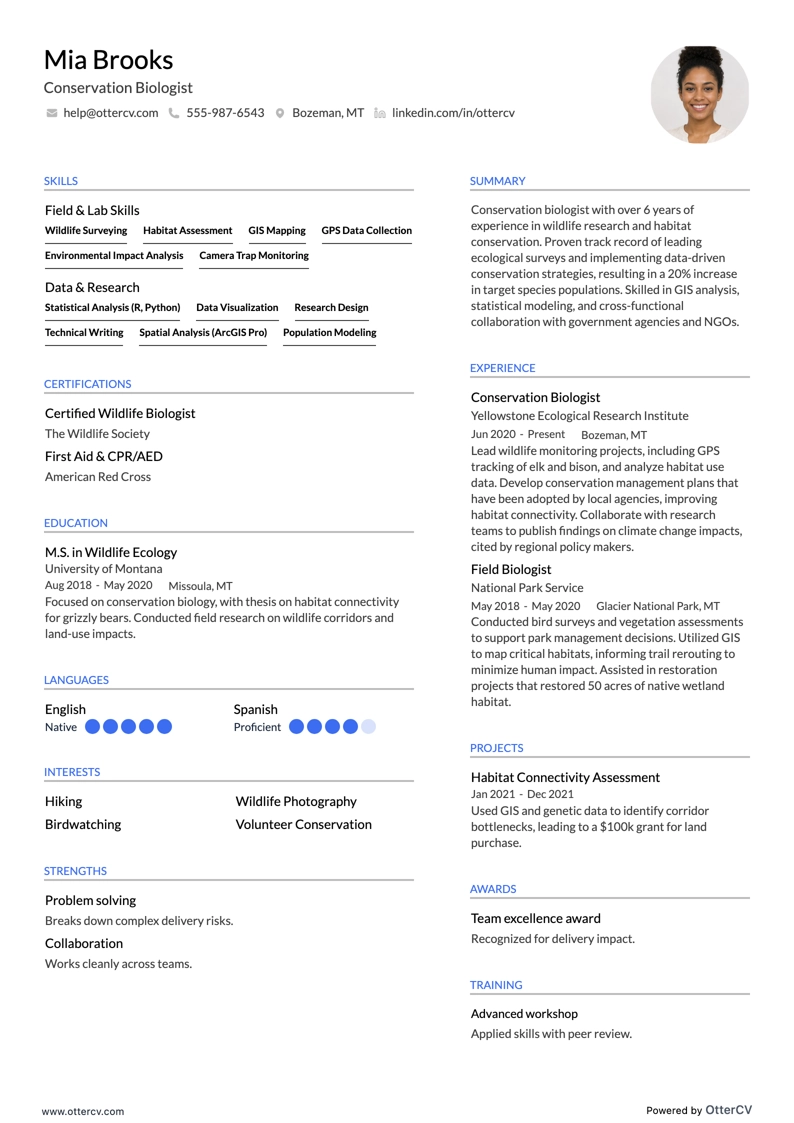
Conservation Biologist resume example

Conservation Biologist

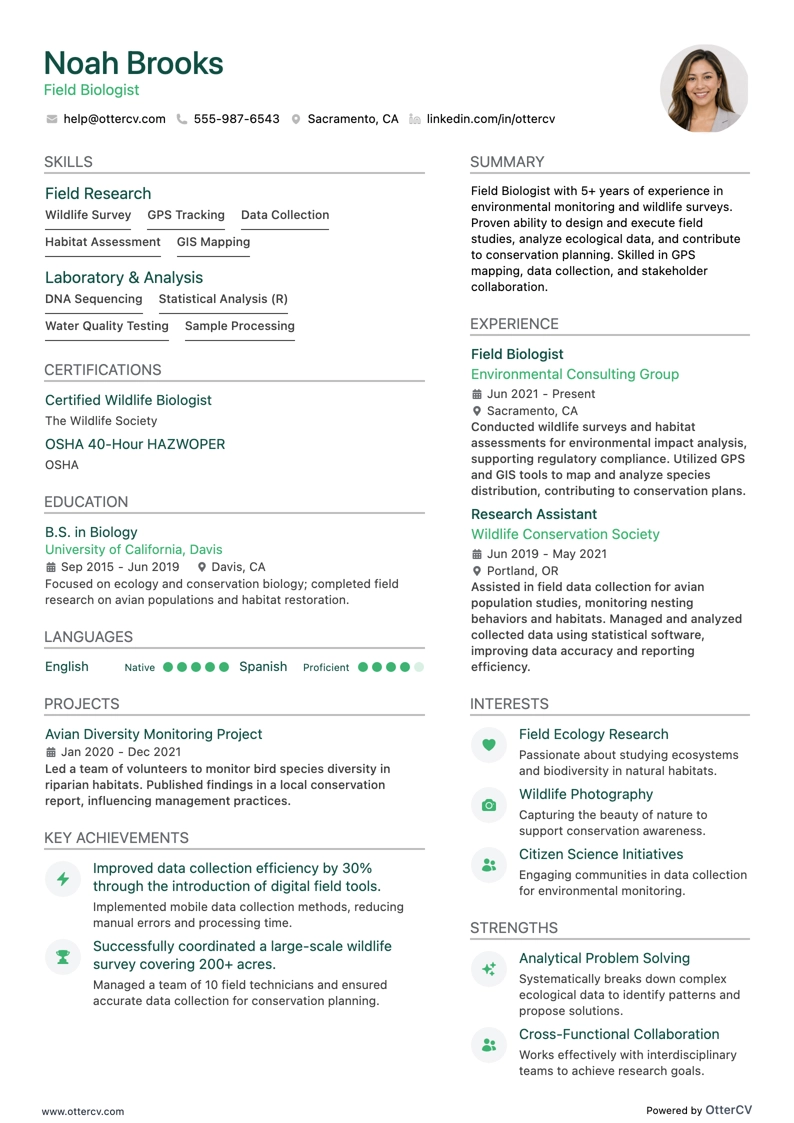
Field Biologist resume example

Field Biologist

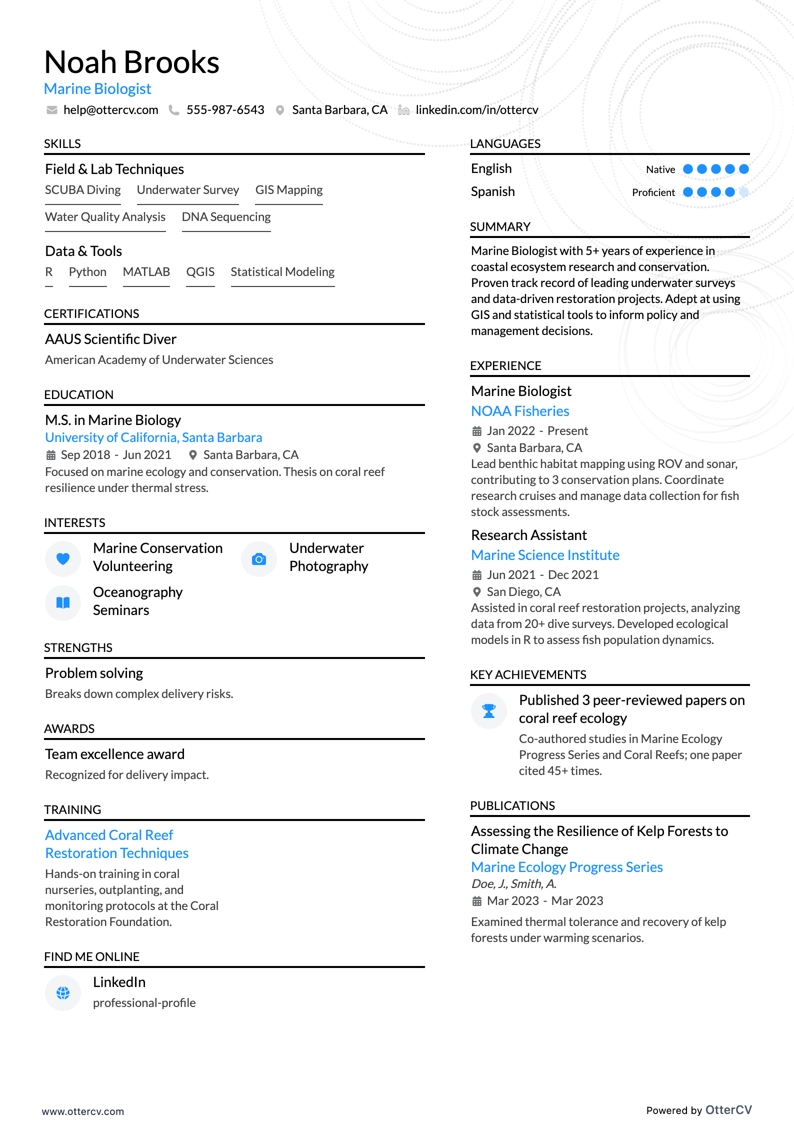
Marine Biologist resume example

Marine Biologist

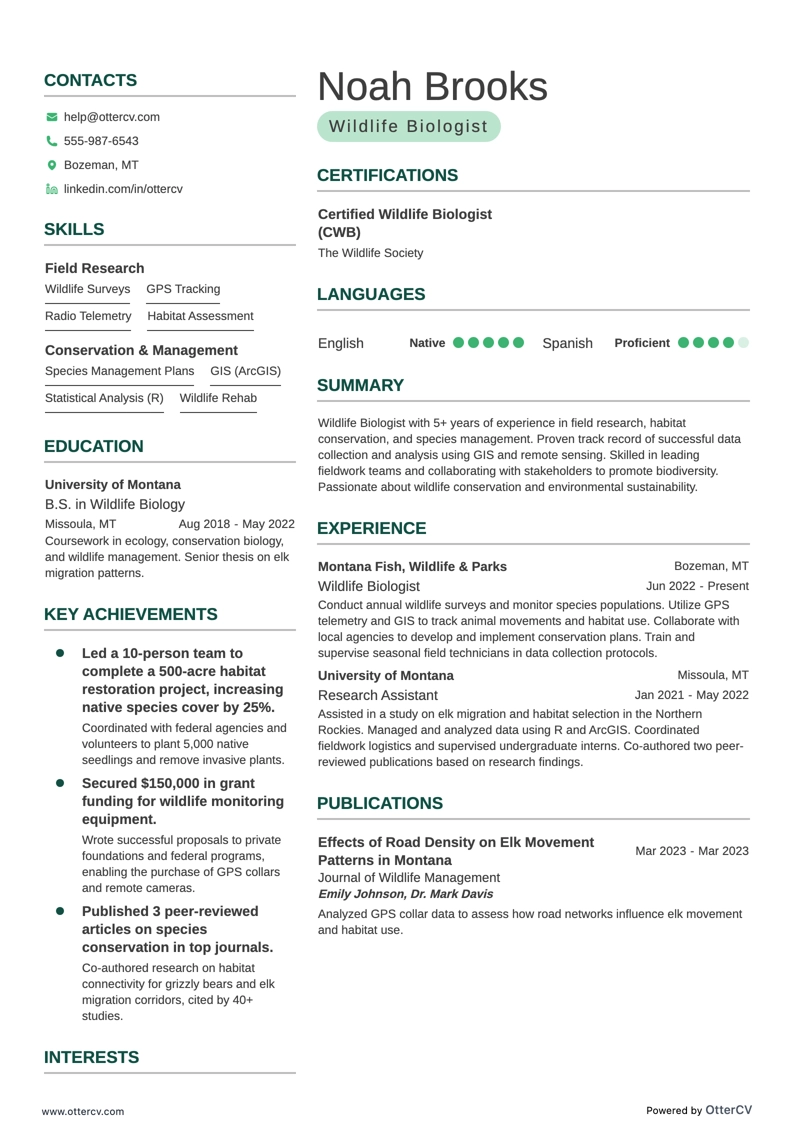
Wildlife Biologist resume example

Wildlife Biologist

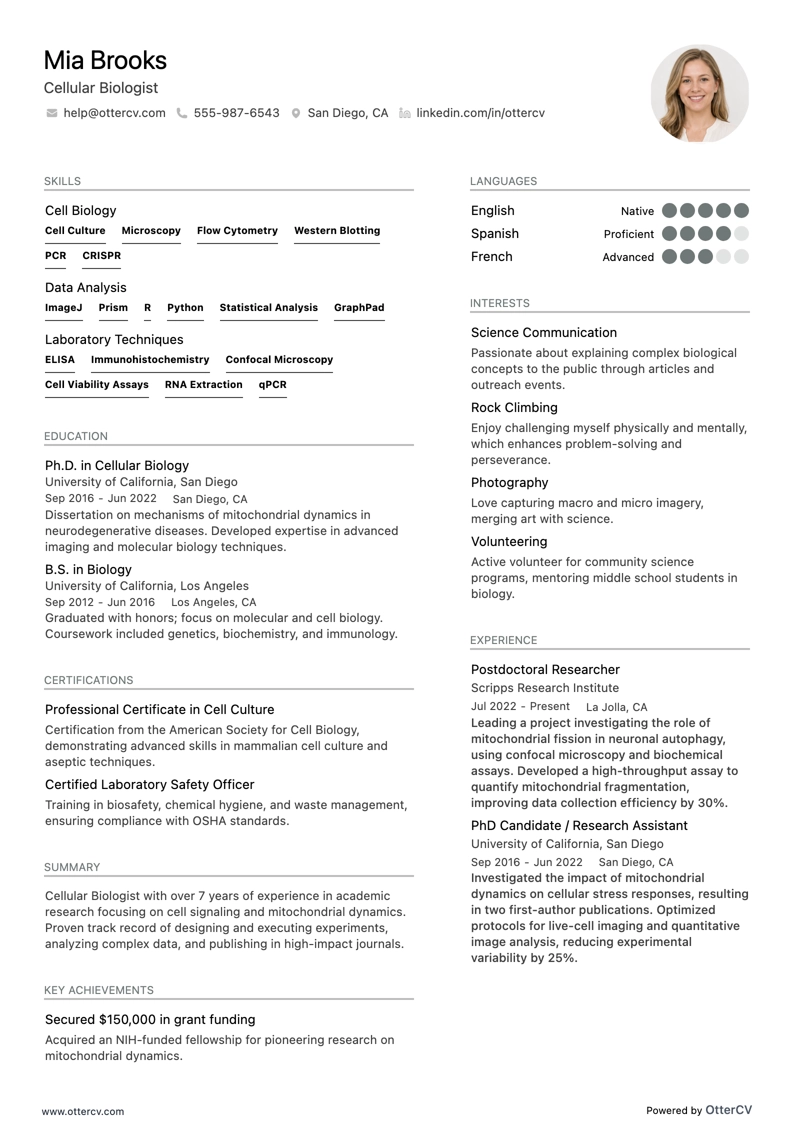
Cellular Biologist resume example

Cellular Biologist

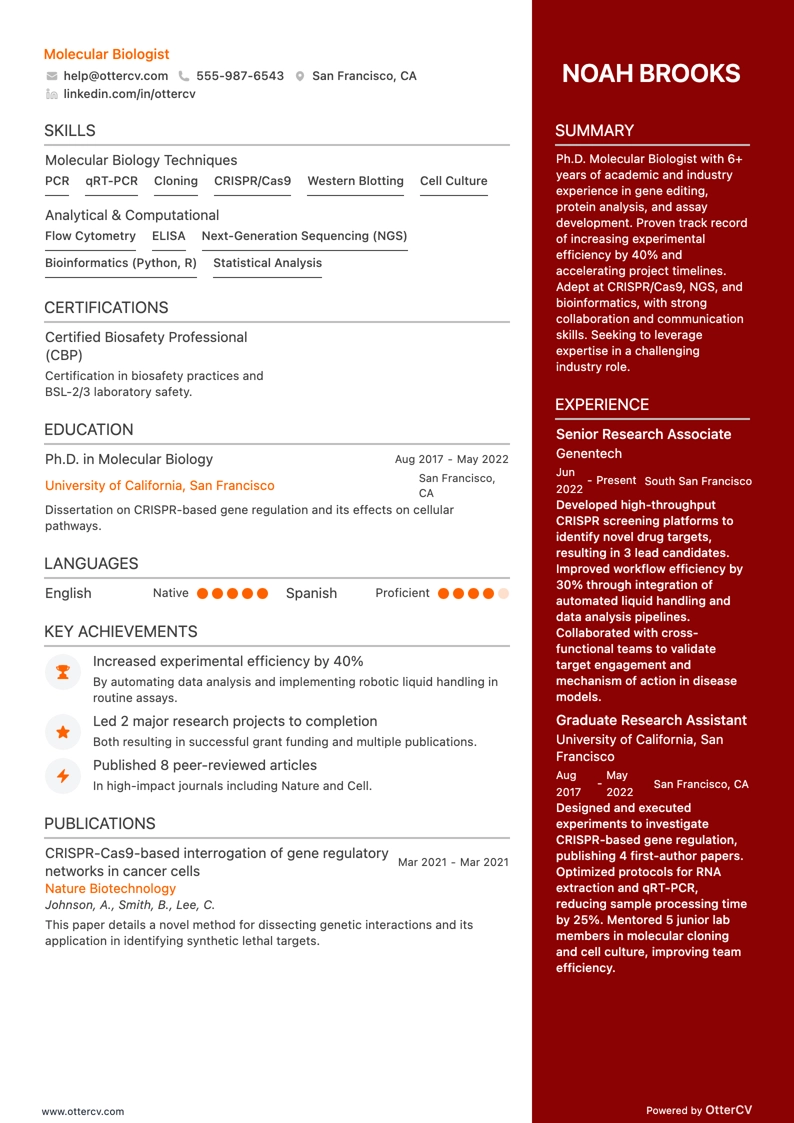
Molecular Biologist resume example

Molecular Biologist

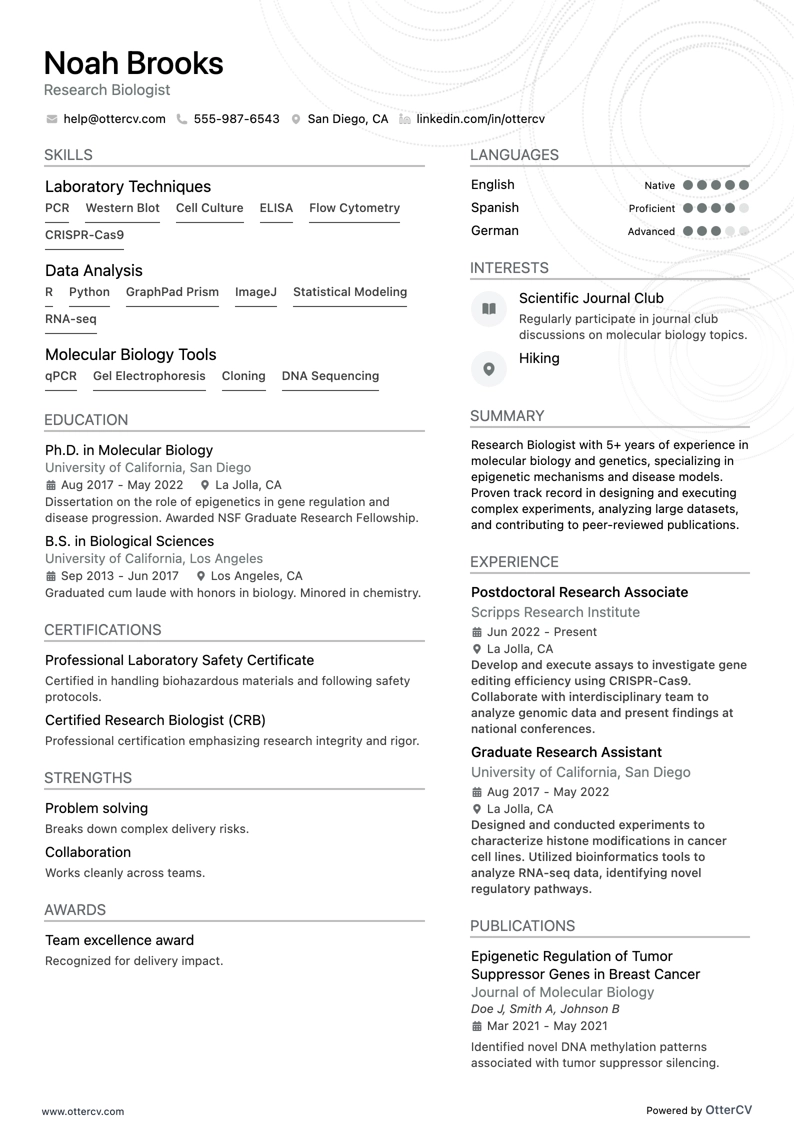
Research Biologist resume example

Research Biologist

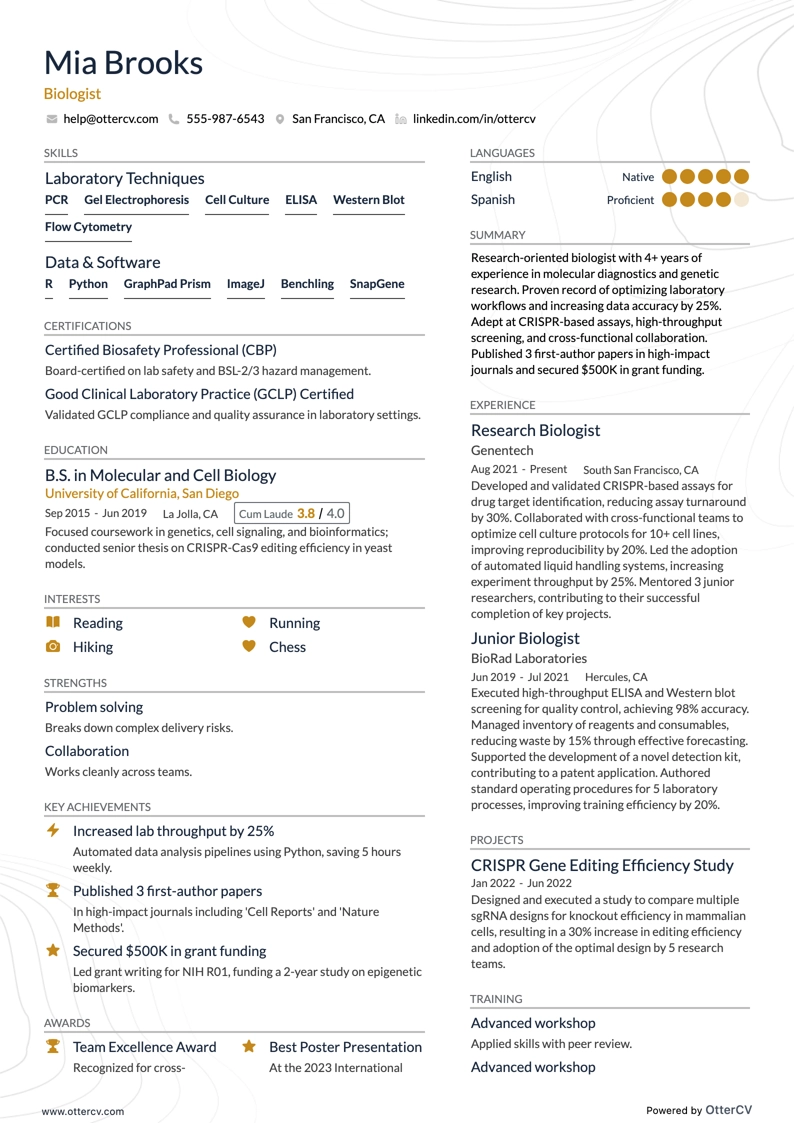
Biologist resume example

Biologist

Writing a compelling biology resume in 2026 comes with its own challenges. Biology job seekers face unique hurdles beyond scientific knowledge and industry-relevant skills.

Ethical dilemmas in research, limited funding opportunities, and the rapid pace of technological advancement can make landing a job even more daunting.

It is a tough environment, but with careful planning, research, and attention to detail, you can build a biologist resume that helps you thrive in this competitive job market.

In this guide, we will teach you how to write a resume that gets you calls for job interviews.

Key takeaways

  • Use a reverse-chronological format and single-column layout for traditional biology roles.

  • Choose a two-column layout for modern industry positions to improve readability and efficiency.

  • Include a thorough education section with coursework and projects relevant to the role.

  • Prioritize certifications for biotech or laboratory roles to show readiness for industry demands.

  • Highlight conservation work or ecological studies to demonstrate practical experience and motivation for fieldwork roles.

We’ll start with an example to inspire you. You can copy and customize it in Enhancv’s AI-powered resume builder.

Biology resume sample

This is a simple text-only resume for a research scientist. Take a moment to review how it is structured and written.

Dr. Emily Carter

Research Scientist

(555) 143-85XX | emily.carter@echocv.com | @LinkedIn | San Diego, CA

Summary

Experienced Research Associate with expertise in molecular biology and bioinformatics. Skilled in designing experiments, analyzing complex datasets, and collaborating with cross-functional teams. Proficient in PCR and CRISPR workflows, with a strong track record of advancing genomic research through data visualization and presentations. Published author recognized for delivering impactful findings.

Experience

Research Associate

Molecular Insights Lab, San Diego, CA

January 2022 – Present

  • Designed and executed molecular biology experiments, including PCR and CRISPR workflows, contributing to the identification of three novel gene pathways.
  • Analyzed and interpreted complex datasets using bioinformatics tools and statistical software (R, Python), reducing analysis time by 20%.
  • Collaborated with interdisciplinary teams to develop genomic solutions, improving project outcomes and innovation.
  • Authored and presented findings at two international conferences, receiving accolades for data visualization techniques.
  • Maintained laboratory compliance with safety protocols and a zero-incident record.

Education

Ph.D. in Molecular Biology

University of California, San Diego, 2021

Bachelor of Science in Biology

University of Washington, 2016

Skills

  • Molecular biology techniques (PCR, CRISPR, gel electrophoresis)
  • Bioinformatics tools (BLAST, Galaxy)
  • Statistical software (R, Python)
  • Data visualization and interpretation
  • Cross-functional team collaboration

Certifications

  • Applied Bioinformatics Certificate
  • Good Laboratory Practice (GLP) Certification
This resume is decent, but it can be much stronger. Ready for expert insight?

How to format a biology resume

Start by formatting your biology resume in a way that looks professional and makes your skills and core competencies easy to find.

The best resume format for a biologist resume

A reverse-chronological resume is the best choice for academic and research roles, since it helps hiring managers quickly review your most recent and relevant experience.

If you’re applying for a traditional role, such as research scientist, wildlife biologist, or microbiologist, use a simple single-column layout.

One-page resumes are appreciated in 2026, but you can confidently use two pages if you have more than a decade of experience.

For a modern industry role, such as bioinformatics specialist, biotechnology product manager, or environmental data analyst, a one-page two-column format is recommended to optimize space and convey efficiency.

This approach keeps your resume focused and helps hold a recruiter’s attention without unnecessary fluff.

Whichever format you choose, keep these design tips in mind:

Resume design tips

  • Set resume margins between 0.5" and 1" for a neat appearance.
  • Choose simple, legible fonts such as Arial or Calibri.
  • Keep body text between 10–12 points and headings between 14–16 points.
  • Use black text on a white background.
  • Add subtle resume colors to highlight headers and important details.
  • Save time on formatting with Echocv’s ready-made templates.

Contact information

File format and naming

  • Save your resume in PDF to preserve formatting and improve compatibility across devices.
  • Use a clear, professional file name, such as Emily_Carter_Research_Scientist_Resume.pdf.
  • Avoid special characters and overly long file names.

Top sections to include in a biologist resume

  • Include your contact information.
  • Add a resume summary or objective.
  • List your work experience.
  • Include your education.
  • Highlight your skills.
  • Add relevant certifications.
  • Include projects, if applicable.

Proper resume formatting is a basic professional courtesy. In a STEM field like biology, though, the section most likely to earn you a call from a hiring manager is your resume work experience.

How to write your biology resume experience

Take your time when writing your biology resume experience section. This is where you show the impact you made in previous roles.

Use these tips to present your experience effectively:

  • Each work experience description should include your job title, company name and profile, location, and employment period.
  • List entries in reverse-chronological order, starting with your current or most recent role.
  • If one experience entry is especially relevant to the job, place it above the others even if it is not the most recent.
  • Tailor your resume to the role by focusing on relevant accomplishments and metrics instead of listing duties.

Do not underestimate the value of resume tailoring. It is one of the most effective ways to make your experience section more compelling.

It helps by:

  • Adding relevant keywords and making your resume ATS-friendly.
  • Showing hiring managers that you are goal-oriented.
  • Demonstrating alignment with the organization’s needs.

To see how this works in practice, let’s go through a simple exercise. We’ll review an example job description and adapt an experience entry to match it.

Research Scientist

Research Scientist

Company Profile: BioInnovate Inc. is a cutting-edge biotechnology firm focused on advancing scientific discovery through innovative research and technology. Its mission is to improve healthcare and environmental sustainability by developing solutions in molecular biology, genomics, and bioinformatics.

Responsibilities:

  • Design and execute experiments to support research and development initiatives in molecular biology and genomics.
  • Analyze and interpret complex datasets using bioinformatics tools and statistical software.
  • Collaborate with cross-functional teams, including bioinformaticians, engineers, and product managers, to develop innovative solutions.
  • Prepare and present findings through technical reports, presentations, and peer-reviewed publications.
  • Maintain laboratory compliance with safety protocols and quality standards.
  • Stay current with advancements in the field by reviewing scientific literature and attending conferences.

Requirements:

  • Master’s or Ph.D. in Molecular Biology, Biotechnology, Bioinformatics, or a related field.
  • Proficiency in molecular biology techniques such as PCR, CRISPR, and gel electrophoresis.
  • Experience in bioinformatics, including genome assembly, annotation, and data visualization.
  • Strong analytical and problem-solving skills with expertise in statistical analysis tools like R or Python.
  • Excellent communication and teamwork abilities.

For easy reference, we’ve highlighted the key parts of the job description. Next, we’ll address them in the experience entry using nearly the same terms.

Experience

Research Associate

Molecular Insights Lab

01/2022 - Present | San Diego, CA

  • Designed and executed advanced molecular biology experiments, including PCR and CRISPR workflows, contributing to the identification of three novel gene pathways.
  • Analyzed and interpreted datasets using bioinformatics tools and statistical software, including R and Python, reducing analysis time by 20%.
  • Collaborated with interdisciplinary teams to develop genomic solutions, improving project outcomes through effective cross-functional communication.
  • Authored and presented findings at two international conferences, earning recognition for innovative data visualization techniques.
  • Maintained laboratory compliance with safety protocols, resulting in zero incidents during tenure.
RIGHT

If you’ve been diligent about tracking metrics in your work, this next section will be especially useful.

How to quantify your experience on а resume

Precise numbers make your achievements tangible. You’ll be more likely to land interviews if you present your accomplishments with specific, measurable examples like these:

Section 16

  • Reduced analysis time by 25% across 300 genomic samples by optimizing bioinformatics workflows.
  • Processed over 1,200 biological samples within a six-month period to support high-throughput sequencing projects.
  • Contributed to securing $500,000 in research funding by developing grant proposals and presenting key findings.
  • Published four peer-reviewed articles and delivered three presentations at international conferences to share groundbreaking research.
  • Identified three novel gene pathways through 200+ molecular biology experiments, directly impacting therapeutic developments.

Experience is a major advantage when applying for a biology role. But if you do not have it, the next section can help.

How to write a biology resume with no experience

You can still create a compelling biology resume without experience by focusing on your strengths. A functional or hybrid format is usually the best way to do that.

A functional resume emphasizes skills and relevant accomplishments rather than work history. A hybrid resume combines elements of both functional and reverse-chronological formats.

These resume types are ideal for biologists with no direct experience or for recent graduates.

Include the following in your resume:

  • Place your education section before your experience.
  • Highlight coursework, lab work, or independent projects that gave you transferable experience.
  • Create a detailed skills section and explain how you developed those abilities.
  • Add volunteer roles, internships, or assistantships that match the role you want.

Tailor each part of your resume to the position, then write a strong resume objective.

Objective writing tips

If you do not have direct experience, your objective statement should clearly communicate your motivation for the role.

Include these elements:

  • Specific technical skills that match the job requirements.
  • A clear reference to the company’s mission or research focus.
  • A notable academic achievement or research project that sets you apart.
  • Action verbs that show enthusiasm, such as “eager to apply” or “dedicated to advancing.”

Here’s an example for someone applying for an entry-level marine biologist role:

Objective

Recent marine biology graduate with a strong foundation in ecological research and aquatic ecosystem analysis, seeking an entry-level marine biologist role to apply academic training in field studies, species monitoring, and conservation efforts while supporting sustainable marine resource management.

RIGHT

Any resume benefits from a detailed skills section, but let’s look at whether biology roles require anything specific.

How to list your hard and soft skills on your resume

Listing your skills may seem straightforward, but there are a few best practices to follow. For any biology role, include a dedicated hard skills section on your resume.

Hard skills are job-specific technical abilities developed through education and training. Soft skills are interpersonal traits that affect how you interact with coworkers.

Technical Expertise

Using a section title like Technical Expertise instead of typical resume wording can help strengthen your credibility.

That said, avoid exaggerating your abilities or lying on your resume, since technical skills are easy for employers to assess and test.

In 2026, here is what hiring managers and ATS systems are looking for in biology resumes:

Best hard skills for your biology resume

  • PCR (Polymerase Chain Reaction).
  • CRISPR-Cas9.
  • Next-Generation Sequencing (NGS).
  • Flow cytometry.
  • Spectrophotometry.
  • High-Performance Liquid Chromatography (HPLC).
  • Mass spectrometry.
  • Bioinformatics tools, such as BLAST and Galaxy.
  • Microscopy, including confocal and electron microscopy.
  • DNA sequencing.
  • RNA-Seq analysis.
  • ELISA (Enzyme-Linked Immunosorbent Assay).
  • Genomic assembly and annotation.
  • Geographic Information Systems (GIS).
  • Western blotting.
  • Immunohistochemistry.
  • Data analysis software, such as R and Python.
  • Environmental sampling tools.
  • Proteomics analysis.
  • Gel electrophoresis.

Soft skills do matter for biologists, especially when collaborating with colleagues. However, hiring managers usually evaluate interpersonal qualities more closely during interviews, so a separate soft skills section is generally unnecessary and can draw attention away from your technical qualifications.

Instead, show these skills through your work experience and accomplishments, where they are most effective in context on a resume.

Here’s what’s expected for most biology roles in 2026:

Best soft skills for your biology resume

  • Communication helps you share findings clearly.
  • Team collaboration supports effective work with others.
  • Problem-solving shows you can address research and workplace challenges.
  • Critical thinking highlights your ability to evaluate information carefully.
  • Time management shows you can handle tasks and deadlines efficiently.
  • Adaptability helps you adjust to changing priorities and environments.
  • Attention to detail is important for accuracy and precision.
  • Leadership demonstrates your ability to guide projects and teams.
  • Organization helps you keep work structured and efficient.
  • Conflict resolution supports healthy collaboration in group settings.
  • Multitasking shows you can manage multiple responsibilities.
  • Creativity helps you approach problems with fresh ideas.
  • Decision-making reflects your ability to choose effective actions.
  • Networking helps you build professional relationships.
  • Emotional intelligence supports strong interpersonal communication.
  • Active listening helps you understand instructions and feedback clearly.

Now that you’ve outlined your skills, it’s time to highlight your educational background, which is especially important in biology.

How to list your certifications and education on your resume

Academic rigor is highly valued in biology, and a strong educational background is often a deciding factor because it forms the foundation of your scientific knowledge.

For roles such as research scientist, wildlife biologist, or university lecturer, education should take priority over certifications, since hiring managers are typically more interested in your degree.

Here’s how to structure your education section:

For example, if you are applying for a wildlife biologist role, your education section should look something like this:

Education

Master of Science in Wildlife Biology

University of California, San Diego

Invalid Date - Invalid Date

GPA: 3.9 / 4.0

  • Conducted a thesis project on habitat restoration techniques, leading to a 15% increase in biodiversity in the study area.
  • Collaborated on a field study monitoring endangered species populations across a 50-square-mile region.
  • Published a peer-reviewed paper on the impact of climate change on migratory bird patterns in North America.
  • Developed GIS maps to analyze wildlife corridors, aiding conservation planning initiatives.
  • Recipient of the Dean's Award for Excellence in Environmental Research.
  • Graduated with Honors for outstanding contributions to ecological field studies.
RIGHT

For roles where specific technical expertise is essential, it can make sense to place your certification section near the top of your resume.

List the certificate name, the year you earned it, and the issuing organization.

Here’s an example:

Certifications

Certified Bioinformatics Specialist (CBS) | 2023
National Bioinformatics Association

RIGHT

Based on our assessment, these are the five biology certifications recruiters prioritize most in 2026:

There’s one more vital resume component to examine—arguably the “nucleus” of your application.

How to write your biology resume summary

A strong biology resume summary brings together your education, experience, accomplishments, and motivation to show why you’re the right candidate for the role.

Use these best practices:

  • Start with your years of experience or education level.
  • Highlight key technical skills relevant to the job.
  • Quantify achievements by using numbers.
  • Tailor the summary by referencing the company’s mission or focus.
  • Briefly mention your career goals to align with the role.

Here’s an example to inspire you:

Summary

Dedicated biology educator with a Master of Science in Education specializing in Biological Sciences. Experienced in creating interactive lesson plans, delivering engaging lectures, and fostering a love for science among students. Skilled in curriculum development, laboratory supervision, and integrating real-world applications into biology instruction. Passionate about inspiring students to pursue careers in STEM fields through innovative and collaborative teaching methods.

RIGHT

This example resume summary is well rounded. The applicant highlights their ability to design educational programs, manage lab activities, and create interactive learning environments.

It also aligns closely with the role requirements, which can improve ATS compatibility and help capture the attention of hiring managers.

To make your application even stronger, consider adding a few strategic sections to your resume.

Additional sections for a biology resume

Once you’ve covered the essential resume sections, you can tailor your resume further by including relevant additional components.

  • Volunteer Work: Highlights transferable experience and intrinsic motivation.
  • Publications and Presentations: Ideal for research and industry roles.
  • Grants and Funding: Highly valued in senior-level positions.
  • Awards and Recognitions: Enhances academic applications.
  • Fieldwork and Research Projects: Crucial for roles in ecology, wildlife biology, and environmental science.

In conclusion

Writing an attention-grabbing biology resume isn’t as complex as mapping out a genome. It comes down to presenting your expertise and skills with the right structure and careful attention to detail.

Biology resume examples

Explore additional Biology resume samples and guides and see what works for your level of experience or role.

By Experience

Principal Biologist

Principal Biologist resume preview

Senior Biologist

Senior Biologist resume preview

Biology resume examples

Explore additional Biology resume samples and guides and see what works for your level of experience or role.

By Role

Developmental Biologist

Developmental Biologist resume preview

Computational Biologist

Computational Biologist resume preview

Conservation Biologist

Conservation Biologist resume preview

Field Biologist

Field Biologist resume preview

Marine Biologist

Marine Biologist resume preview

Wildlife Biologist

Wildlife Biologist resume preview

Cellular Biologist

Cellular Biologist resume preview

Molecular Biologist

Molecular Biologist resume preview

Research Biologist

Research Biologist resume preview

Biologist

Biologist resume preview