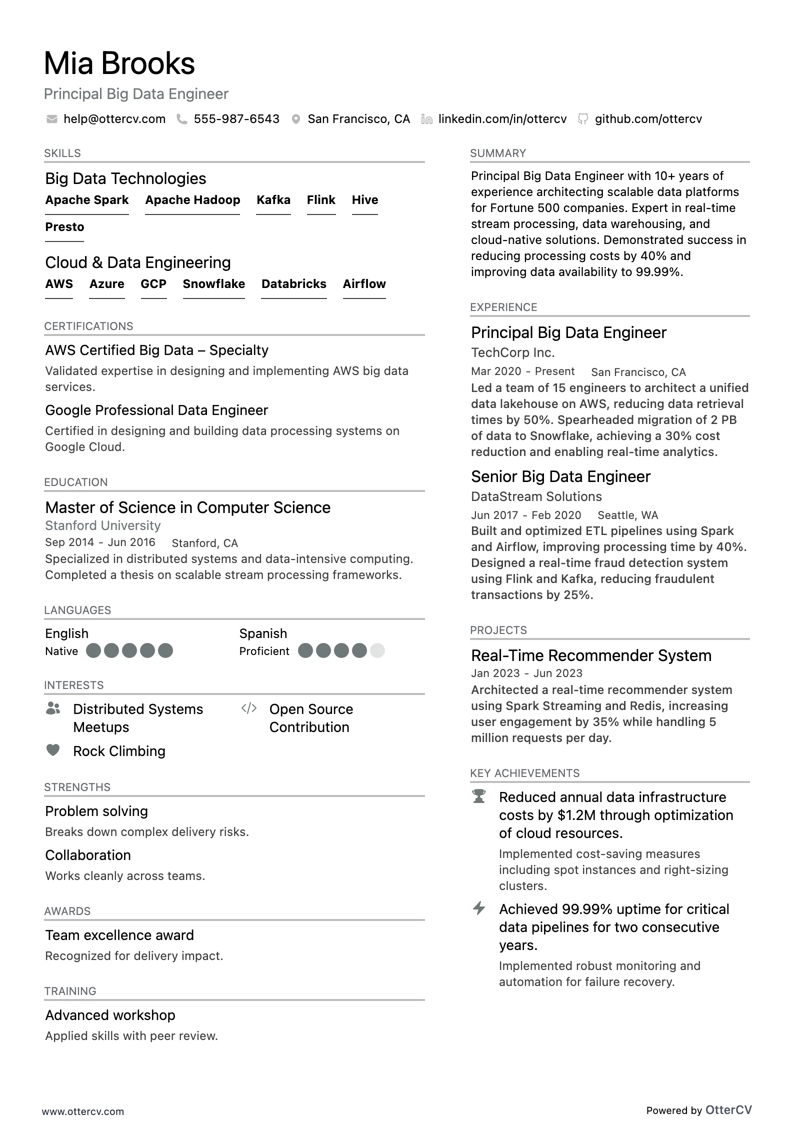
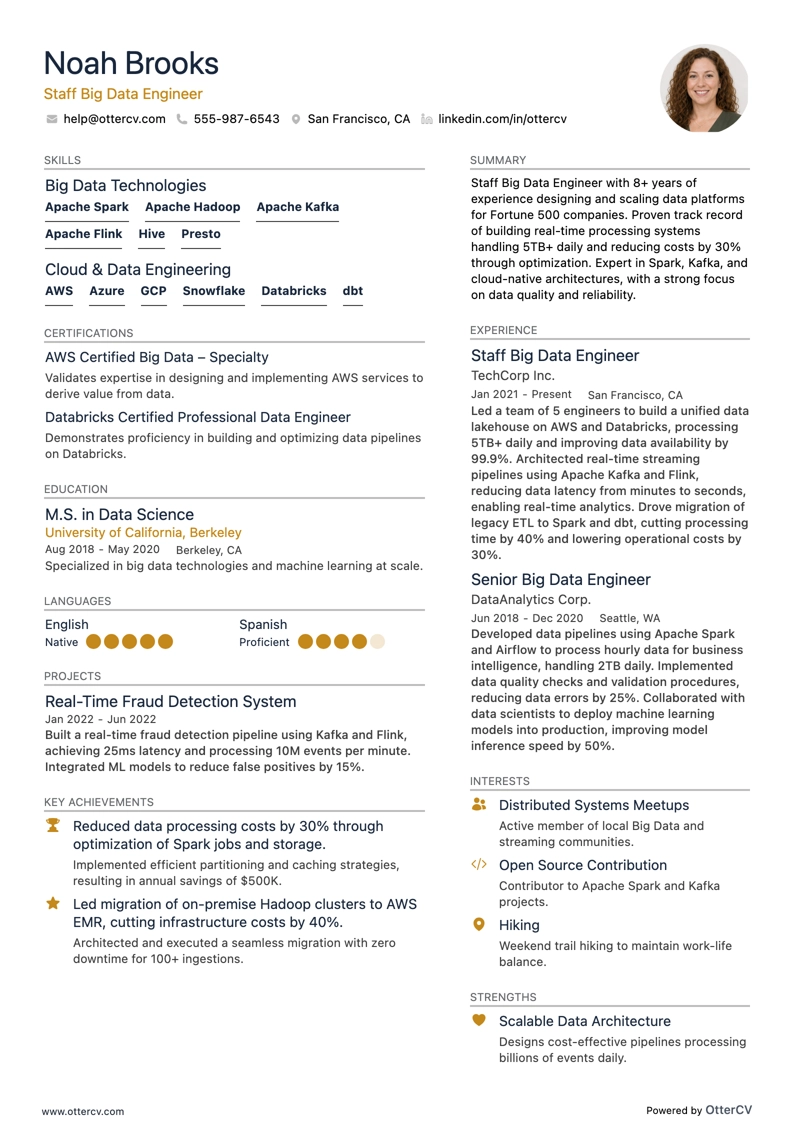
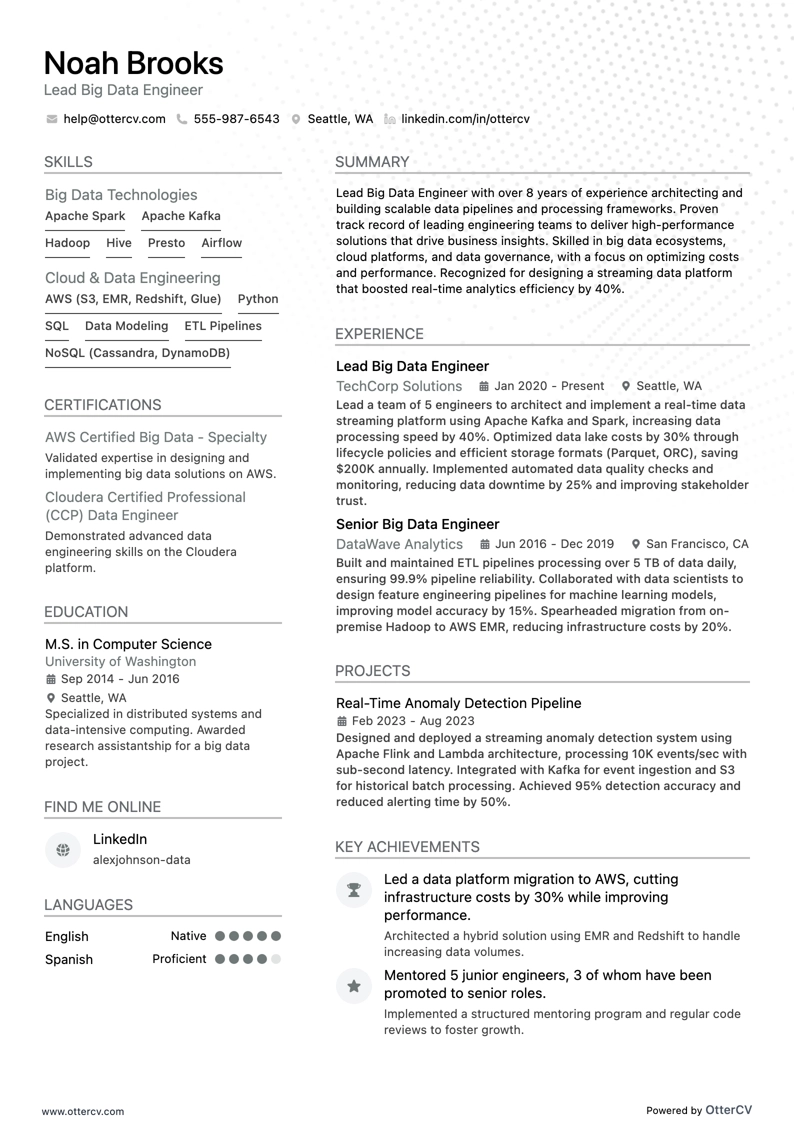
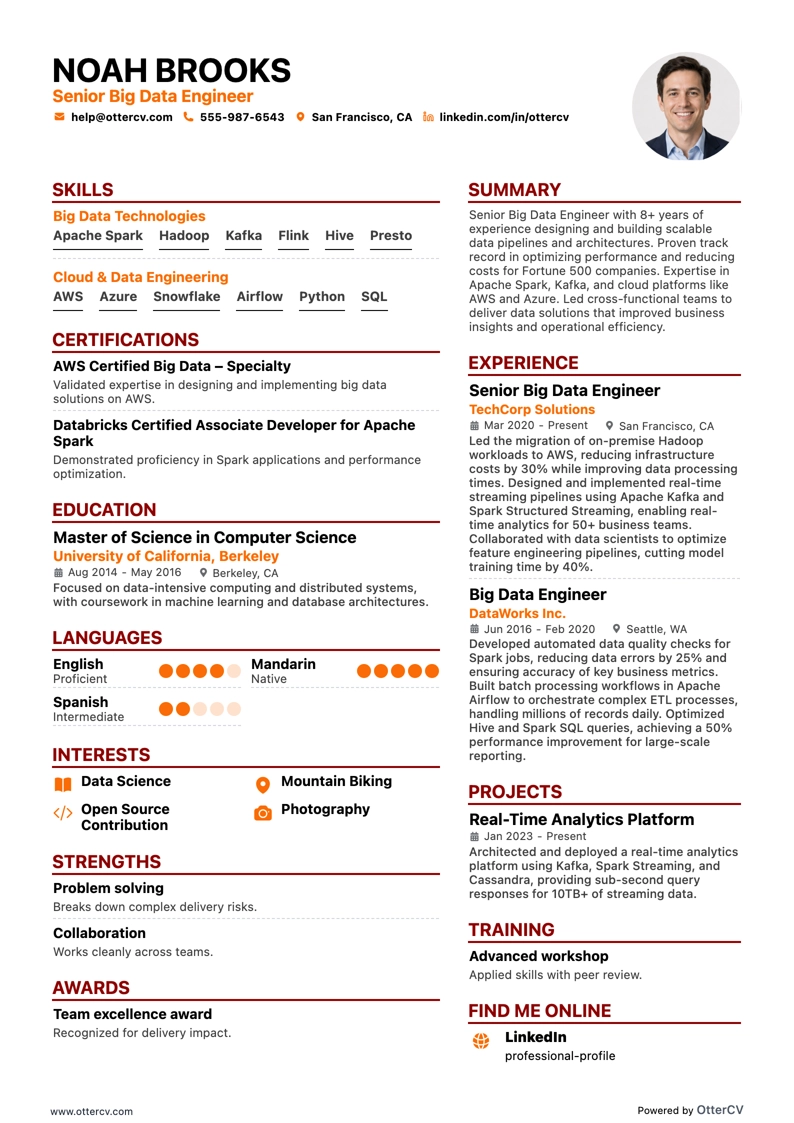
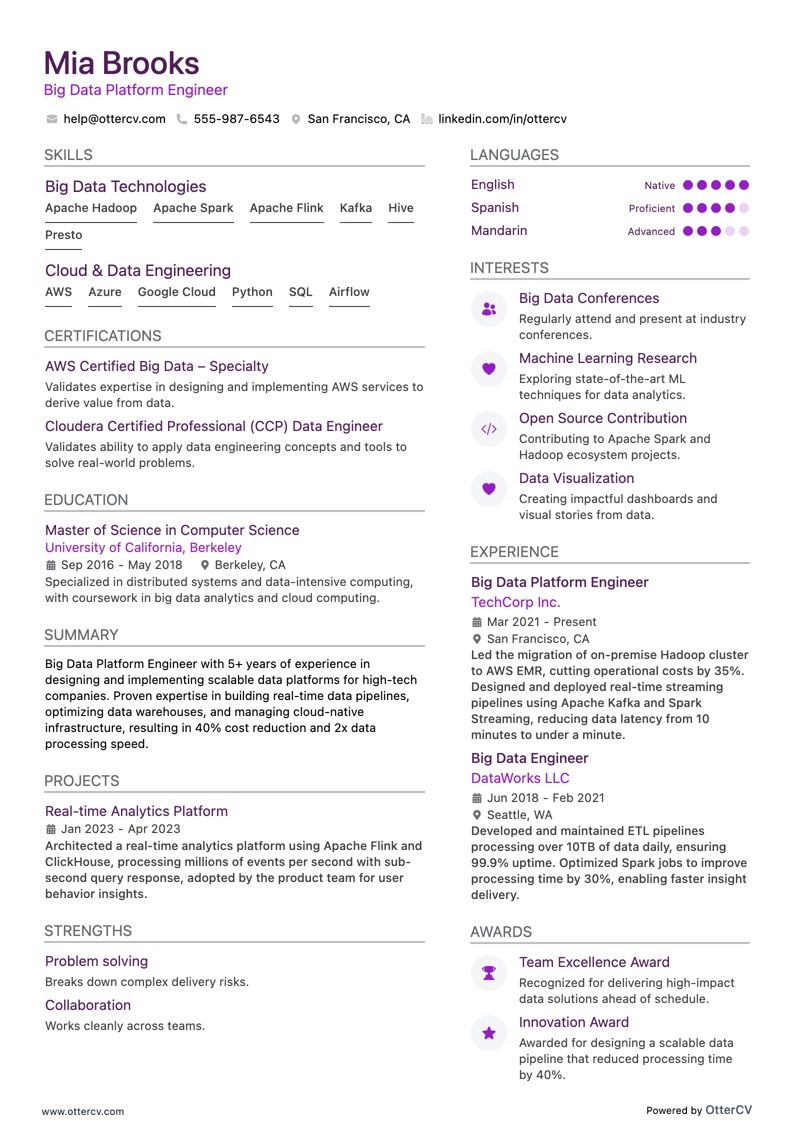
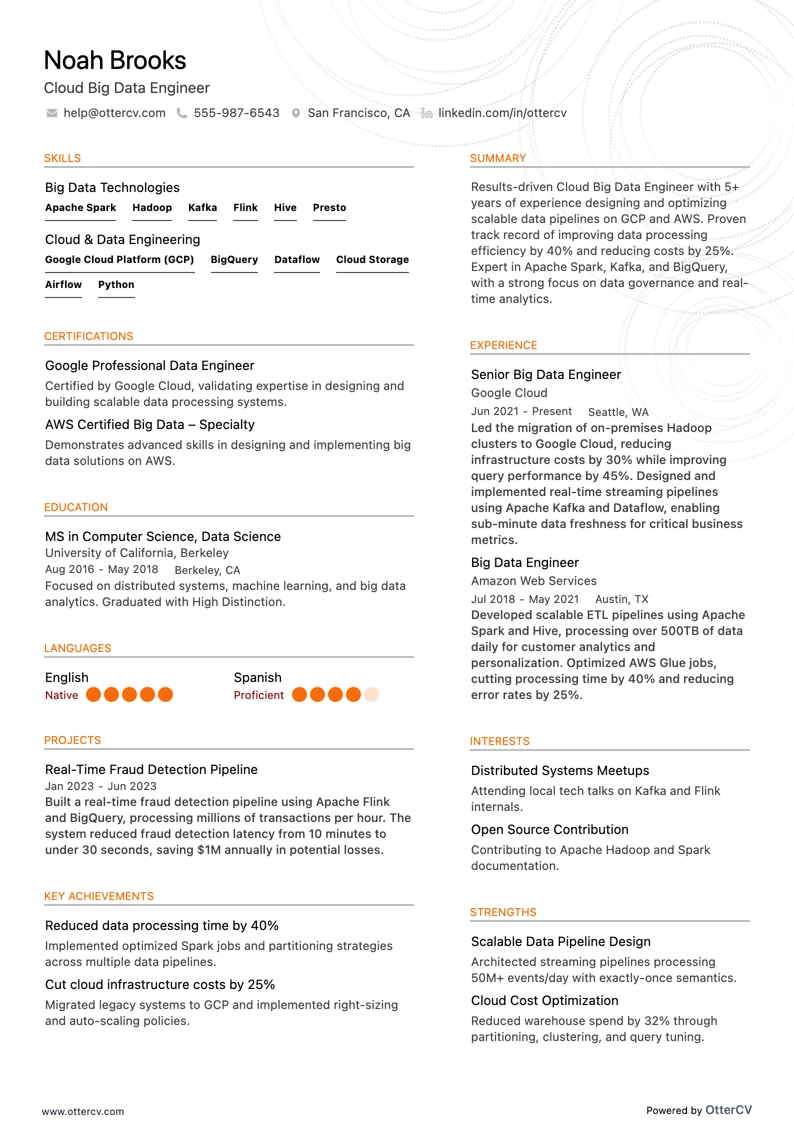
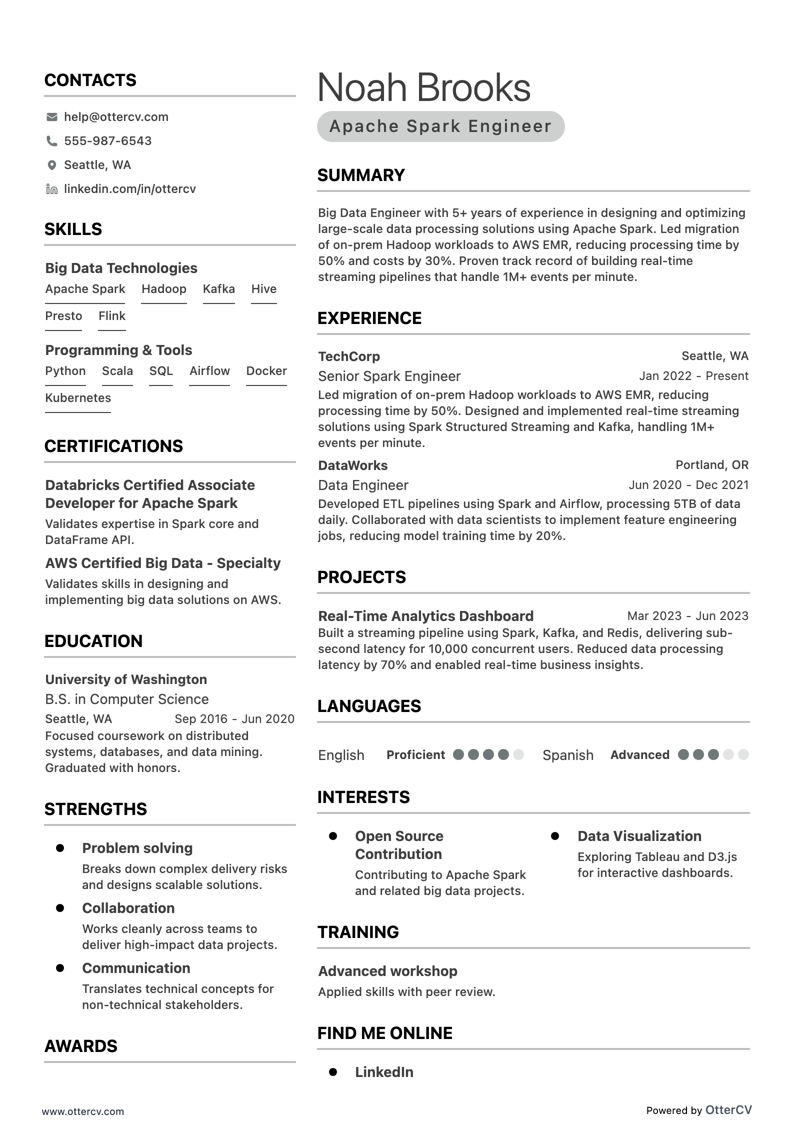
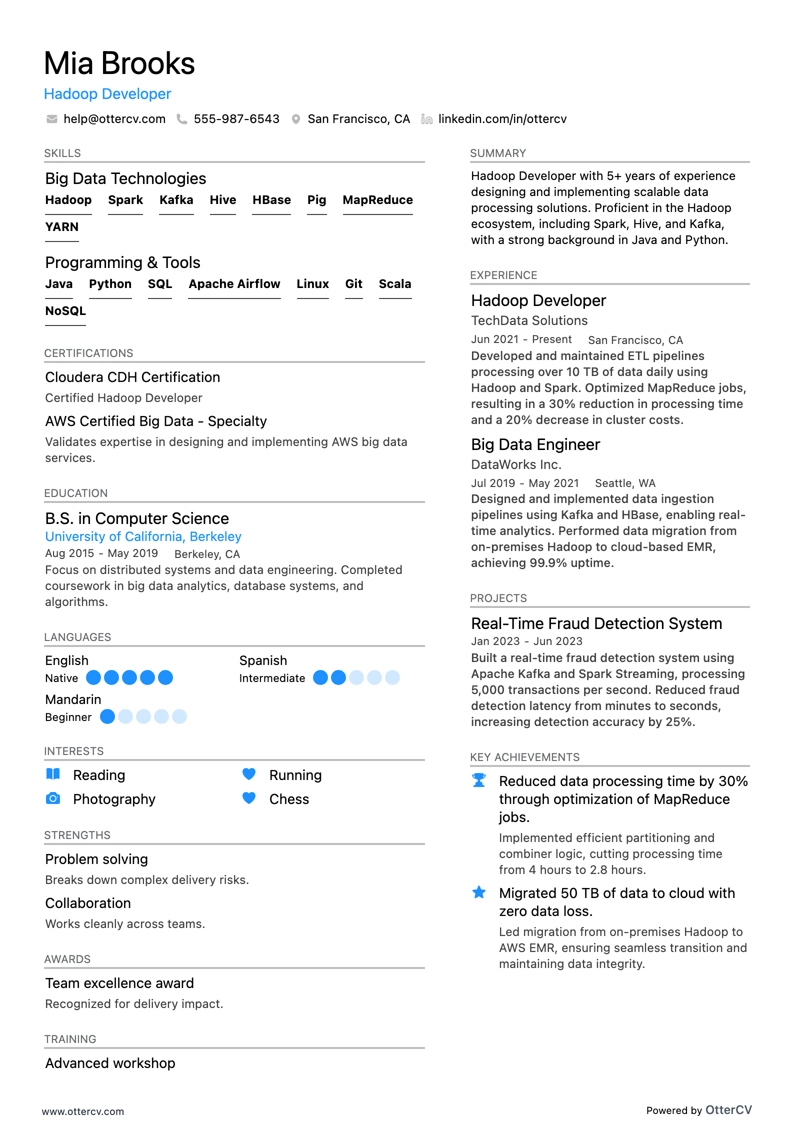
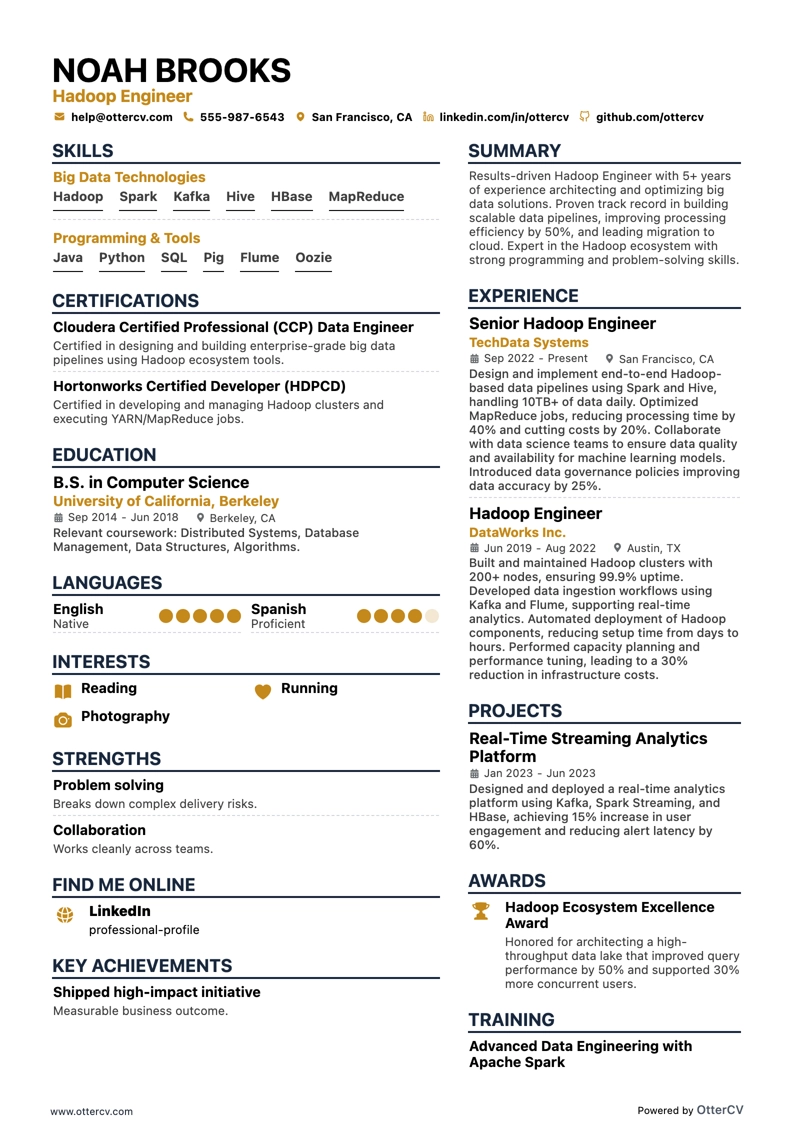
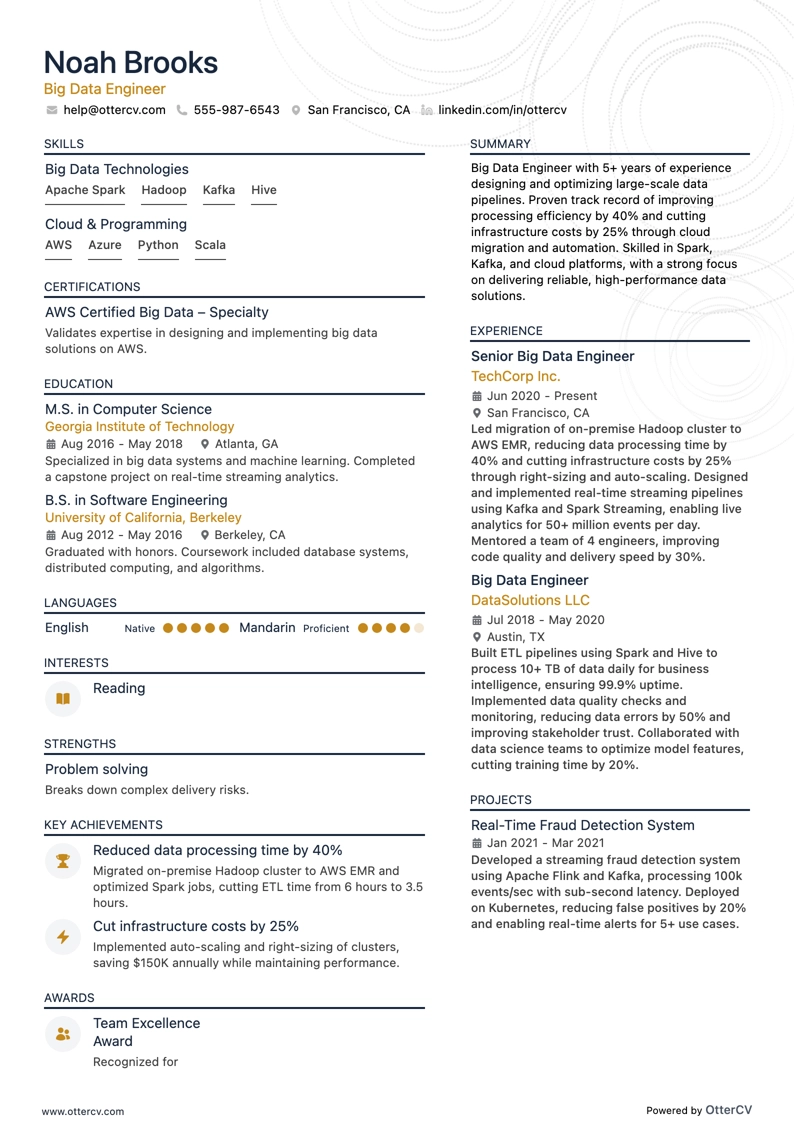
Why is this version more impactful? Because it makes value easier to understand at a glance:
- Clear metrics: Specific numbers make achievements tangible and credible.
- Leadership and technical ability: These qualities are implied through the work itself rather than stated outright, which helps present you as a multifaceted candidate.
- Industry-specific skills: Proficiency in key big data technologies is highlighted, aligning closely with field requirements.
Want to create the same effect on your own resume? Start by learning how to measure impact in big data engineering.
How to quantify impact on your resume
Including quantified impact in your resume helps you present accomplishments in a way that is clear, measurable, and compelling.
You can strengthen your resume by quantifying results such as:
- The volume of data you managed or processed, showing your ability to work with large-scale data infrastructure.
- The percentage increase in data processing speed after optimizing ETL workflows, which demonstrates efficiency gains.
- The reduction in data storage costs achieved through effective data management strategies, highlighting a cost-saving mindset.
- The improvement in data accuracy or quality resulting from your data validation processes.
- The increase in analytics speed or efficiency from pipeline enhancements, showing your impact on decision-making.
- The growth in user engagement or customer satisfaction driven by data-based product improvements.
- The decrease in system downtime from maintenance and optimization efforts, demonstrating reliability and operational efficiency.
- The revenue growth or cost reduction tied to your big data initiatives, connecting your work directly to business outcomes.
But what if you are trying to land your first job in big data engineering? You can still stand out by focusing on the right resume elements.
How to write a big data engineer resume with no experience
An entry-level big data engineer typically handles simple data analysis, learns to implement technologies, and does a lot of troubleshooting. To get there, you first need a resume that gets you the job.
A junior big data engineer should focus on the following:
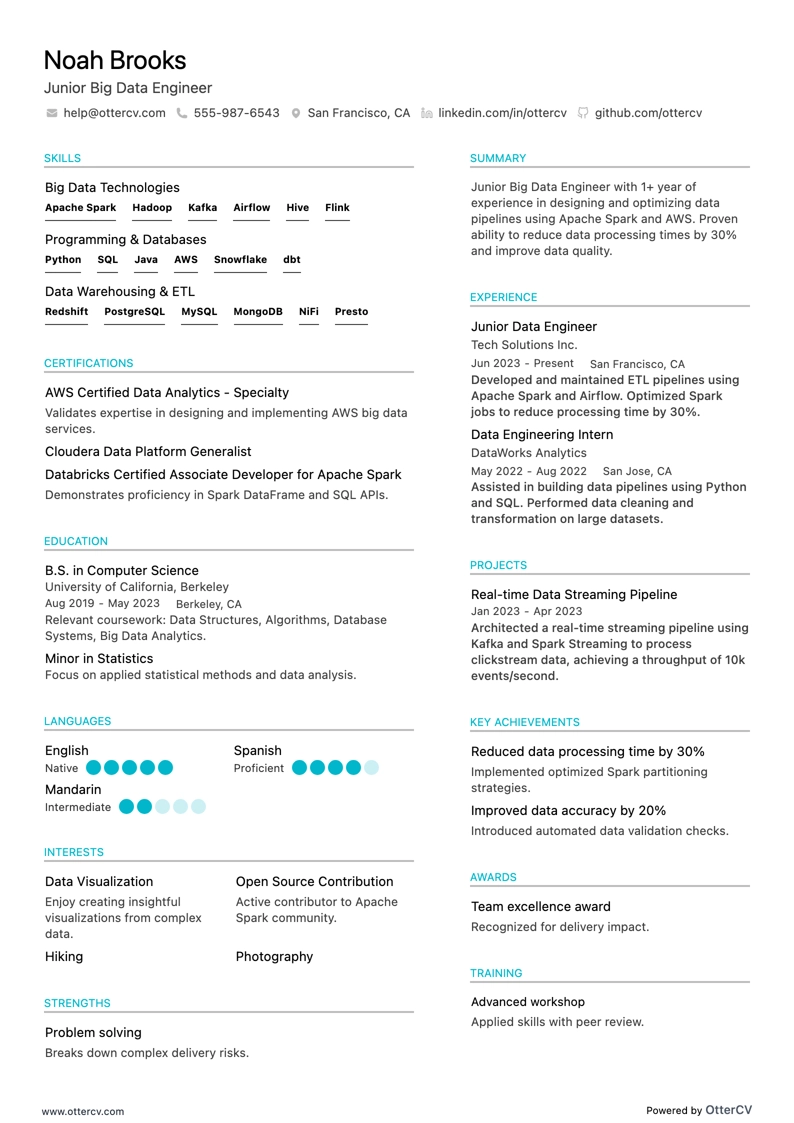
- Educational background: Highlight degrees in Computer Science, Data Science, Information Technology, or related fields. Include relevant coursework or projects involving big data, databases, or data analysis.
- Resume objective: Keep it to no more than 3 sentences and focus on career goals rather than work history, which makes it especially useful for entry-level candidates.
- Technical skills: List programming languages such as Python, Java, and Scala; big data technologies such as Hadoop, Spark, and Kafka; database systems such as MongoDB and Cassandra; and other tools you have learned, such as Git and Docker.
- Internships and projects: Detail any internships or academic projects involving big data technologies or concepts. Explain your role, the technologies used, and the outcomes or insights gained. Quantify achievements whenever possible.
- Certifications and courses: Include relevant certifications or online courses, such as programs on Udemy or Coursera, or certifications from Cloudera or AWS.
- Participation in relevant extracurricular activities: If you have joined coding clubs, hackathons, or data science meetups, include them to show initiative and genuine interest in the field.
- Soft skills: Big data work often involves cross-functional collaboration, so mention strengths such as teamwork, communication, and creative problem-solving.
A strong mix of hard and soft skills can make this section especially effective.
How to list big data skills on your resume
Big data developers work across a growing range of technologies and must be comfortable handling large amounts of information.
When listing your hard skills, include the programs, languages, and frameworks named in the job posting. Also include the tools and technologies already mentioned in your work experience section.