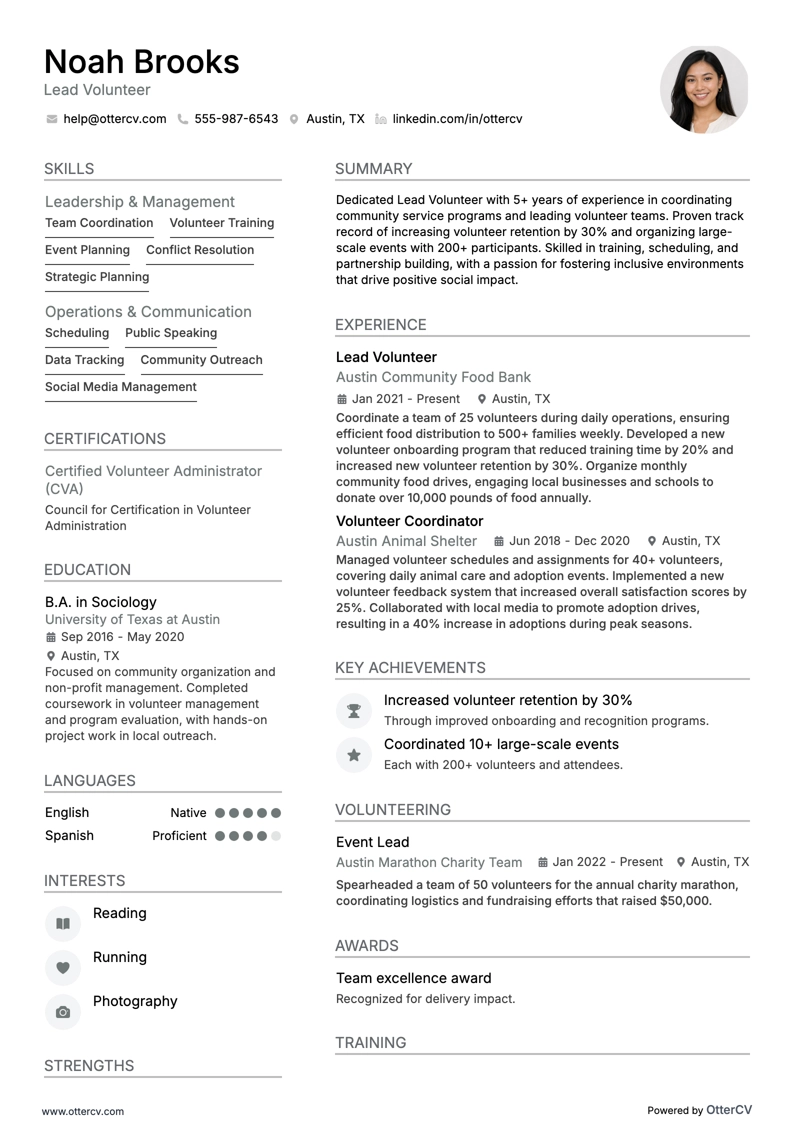
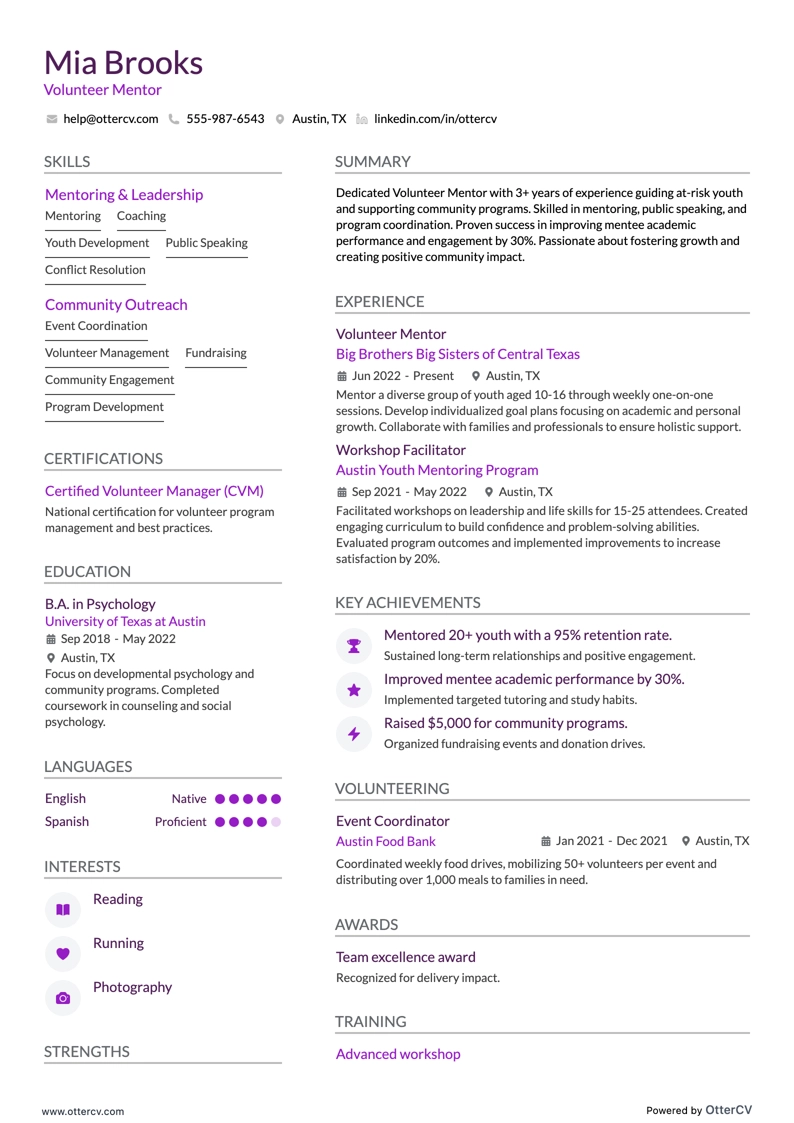
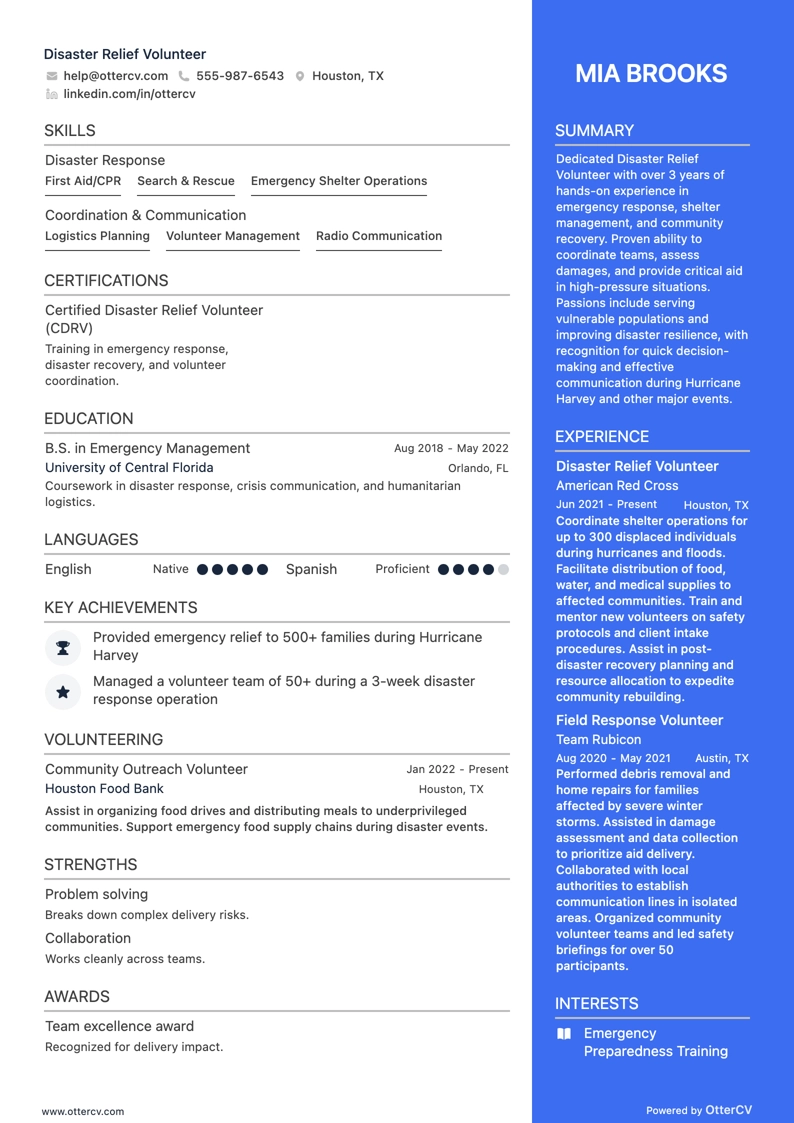
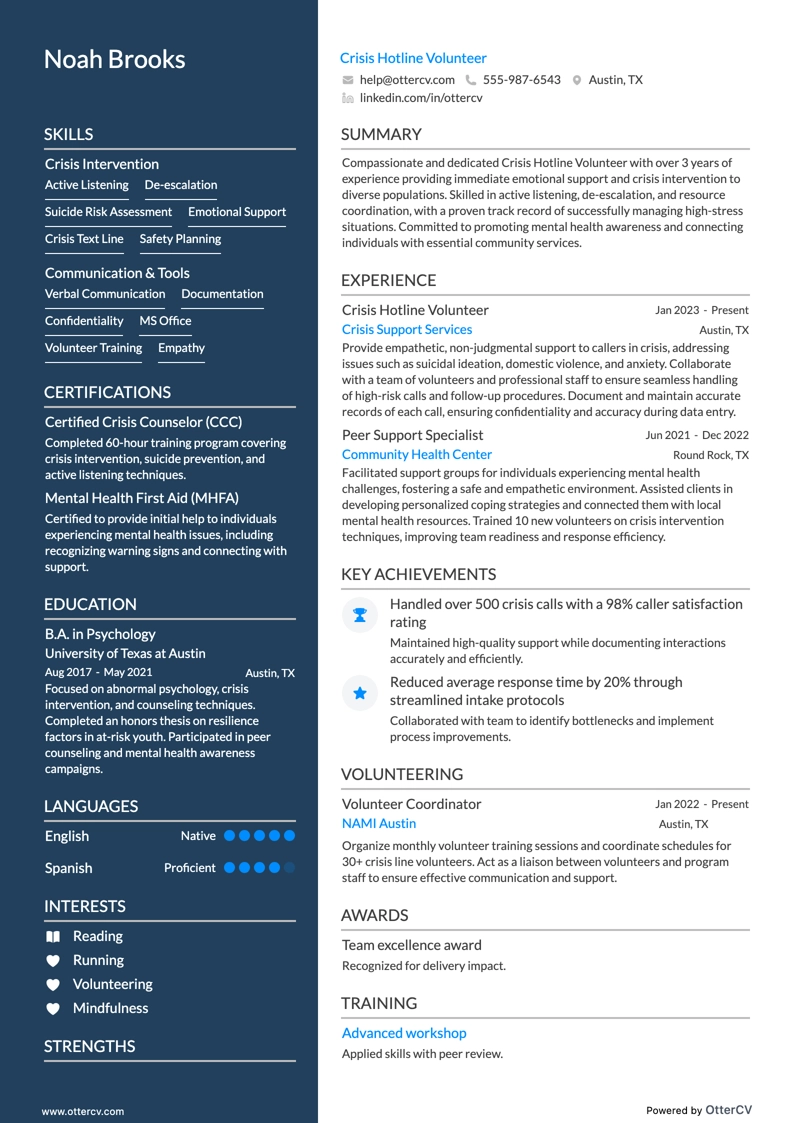
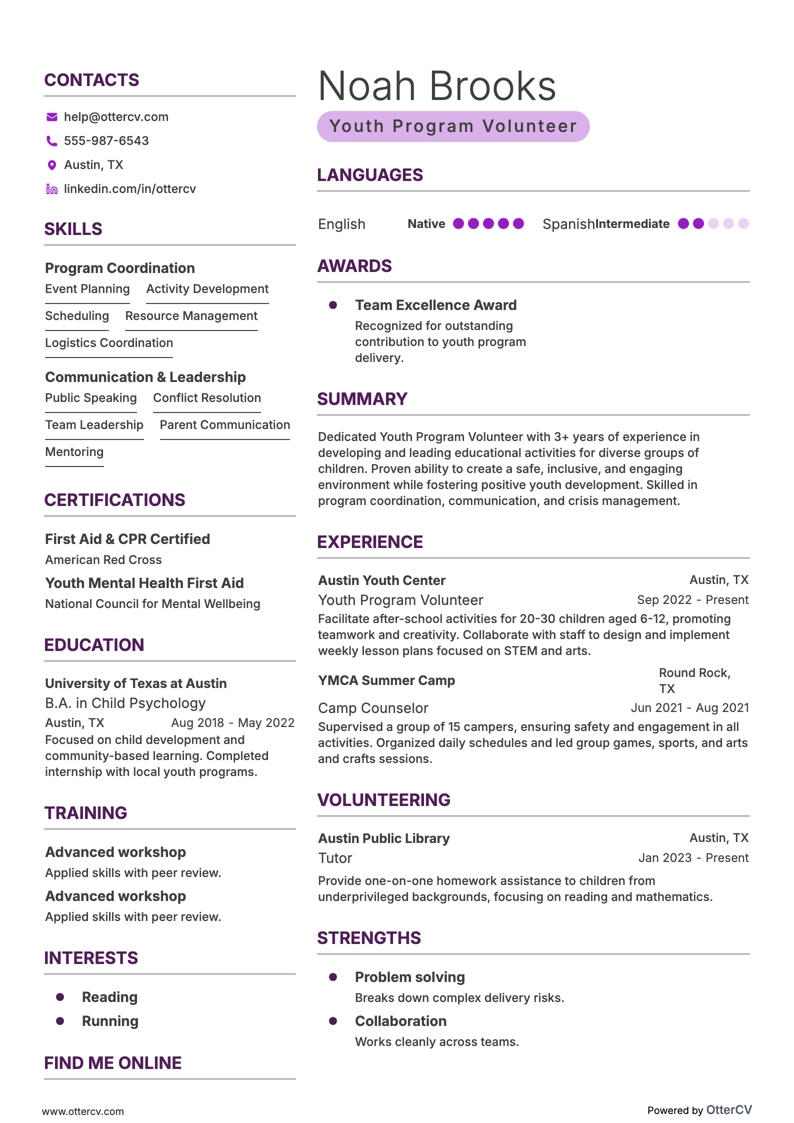
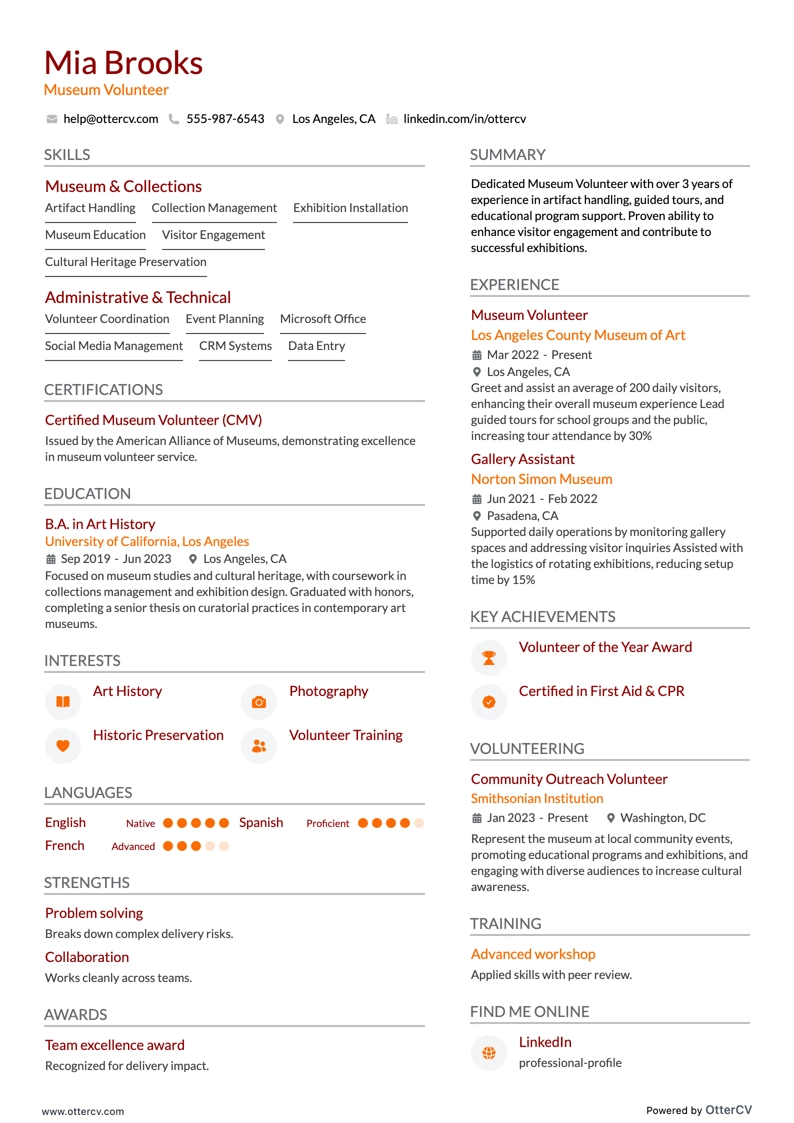
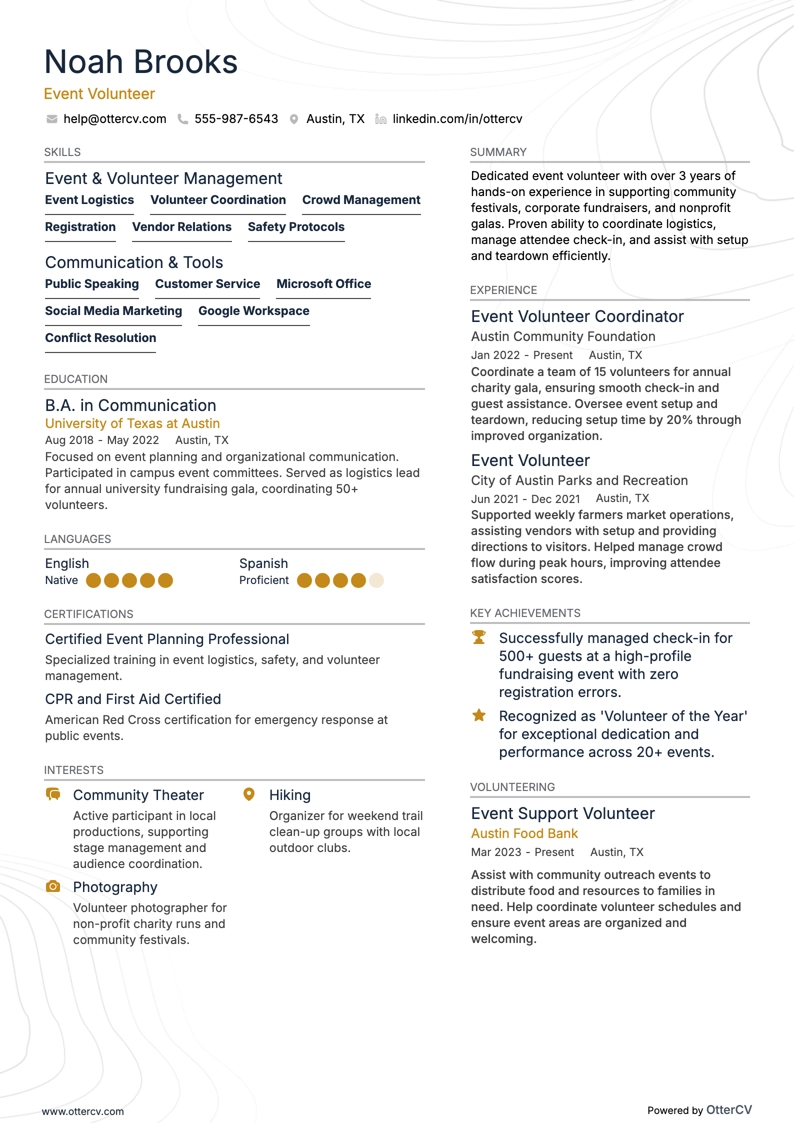
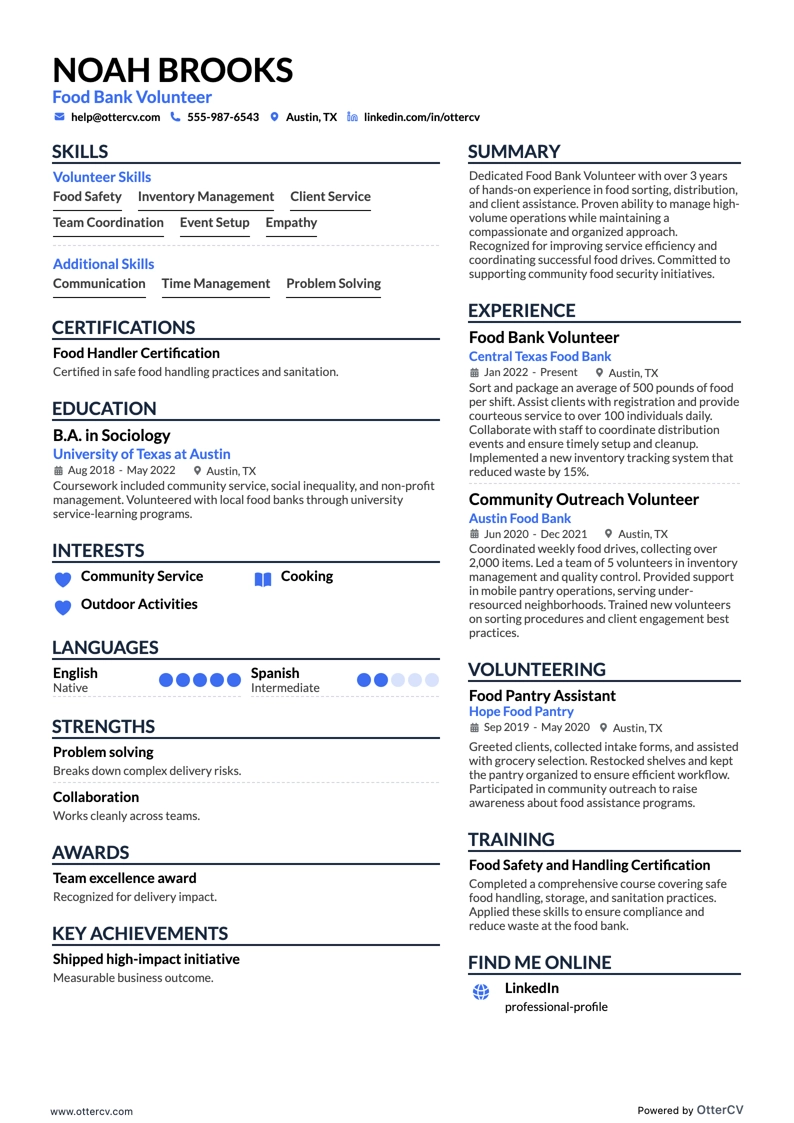
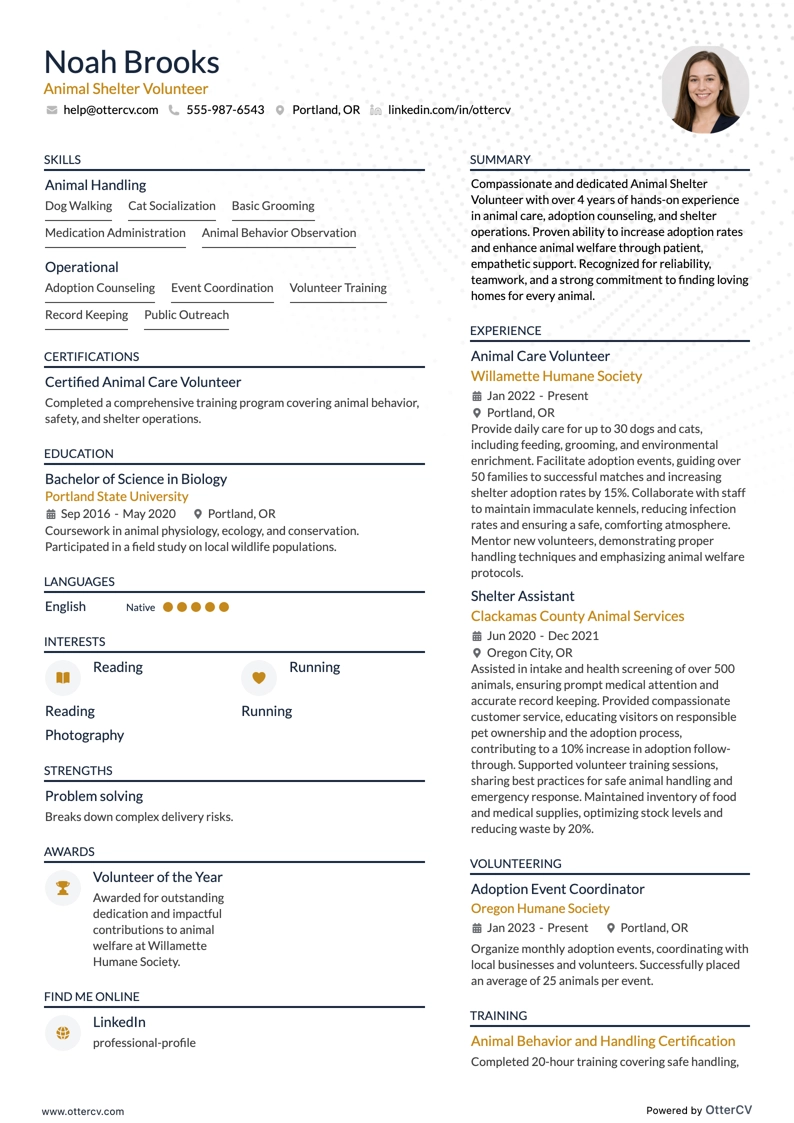
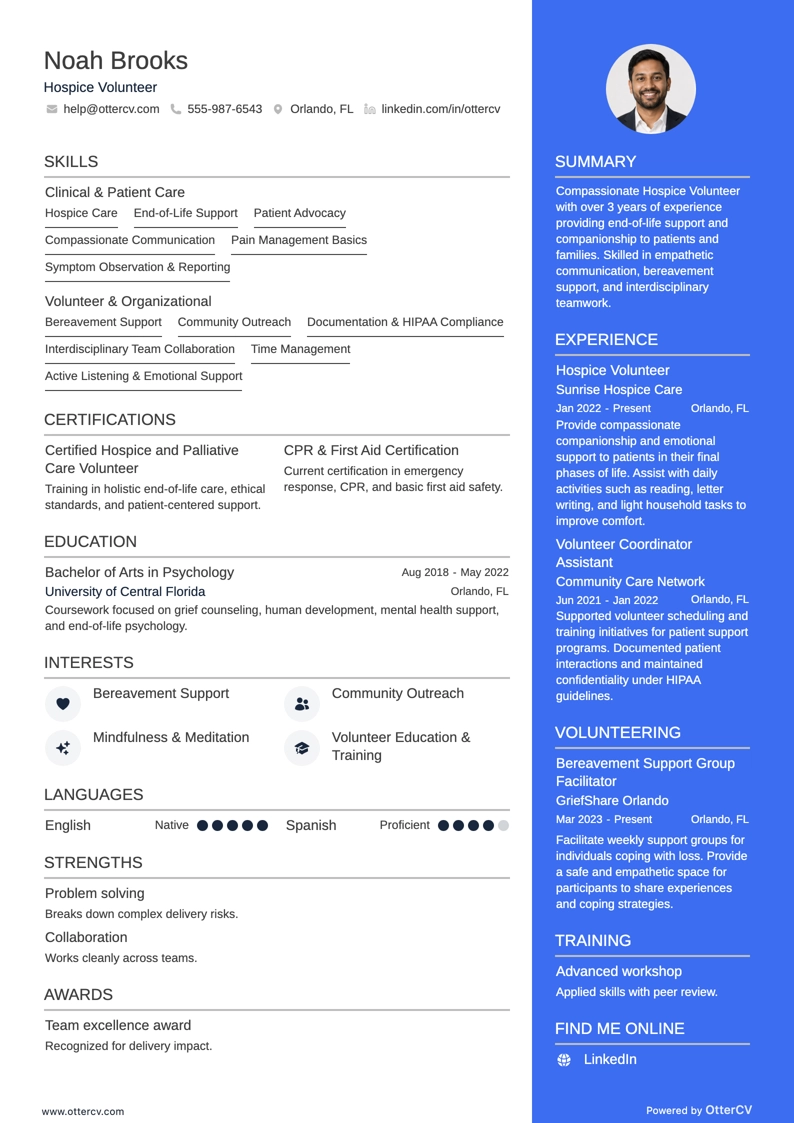
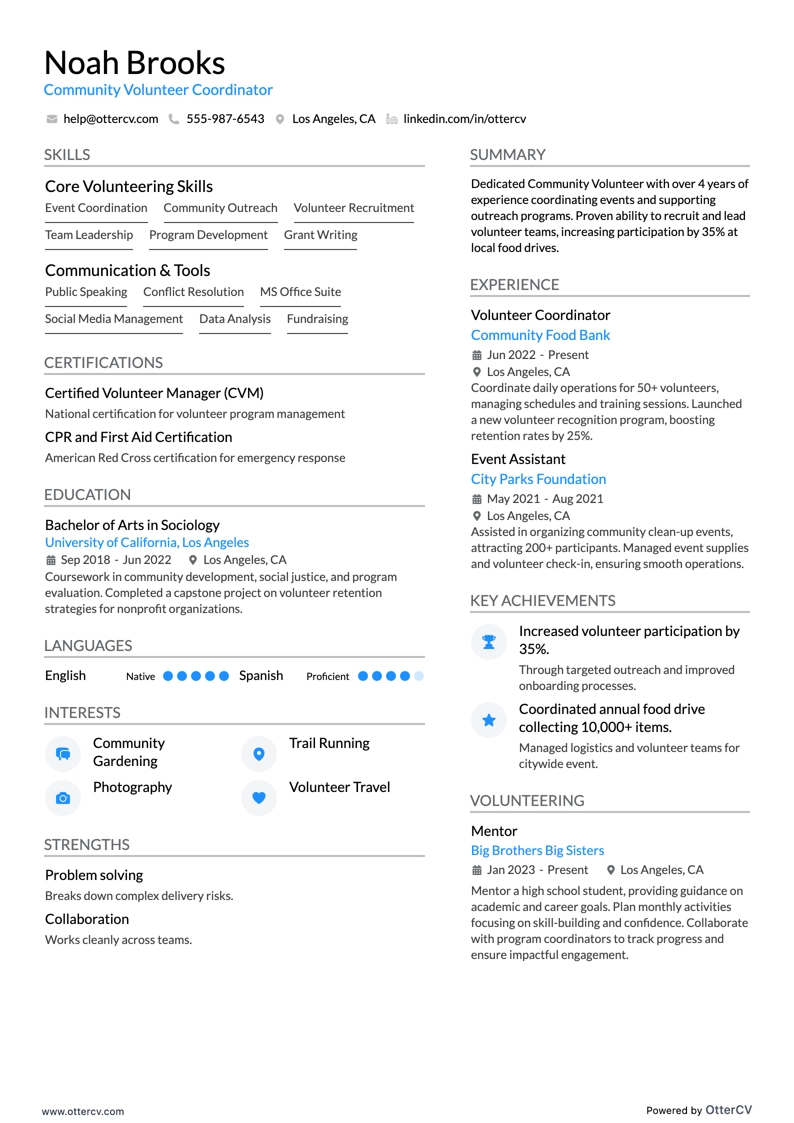
A volunteer resume should show what you are willing to give: time, energy, and knowledge.
You may want to volunteer to add experience to your resume for college applications or other opportunities, and that is perfectly fine. Still, your resume should take a human-centered approach and show recruiters that you can help people move closer to their goals and contribute to a cause that makes the world better.
To do that, tailor every resume section to the volunteer role. Show how you can apply what you have learned through college or professional experience. Focus on strengths such as empathy and communication that directly benefit others, explain how you will support the cause you chose, and make it clear that you are self-motivated.
Below are the volunteer resume formats that can help you stand out.
Volunteer resume formats
You can use one of these three resume formats:
- Reverse-chronological resume
- Functional resume
- Hybrid resume
Your choice should depend on two main factors:
- Years of experience
- Industry experience
- Reverse-chronological resumes are a good choice for candidates with a couple of years of experience in the niche.
- Functional resumes are suitable for professionals changing careers or for job seekers. However, this format is not widely popular among recruiters.
- Hybrid resumes combine the best of both worlds and work well for all types of professionals, from beginners to seniors.
Also pay attention to your style and layout. Here are some resume tips:
- Use a 12p resume font size.
- Use 10’ resume margins.
- If you have under 10 years of experience, use a one-page resume; otherwise, use a two-page resume.
- Check your grammar and spelling.
- Prefer the PDF format.
If you want to improve your chances of getting an interview call, add References and Languages.
Be mindful of regional differences in resume formats. For example, a Canadian layout might vary.