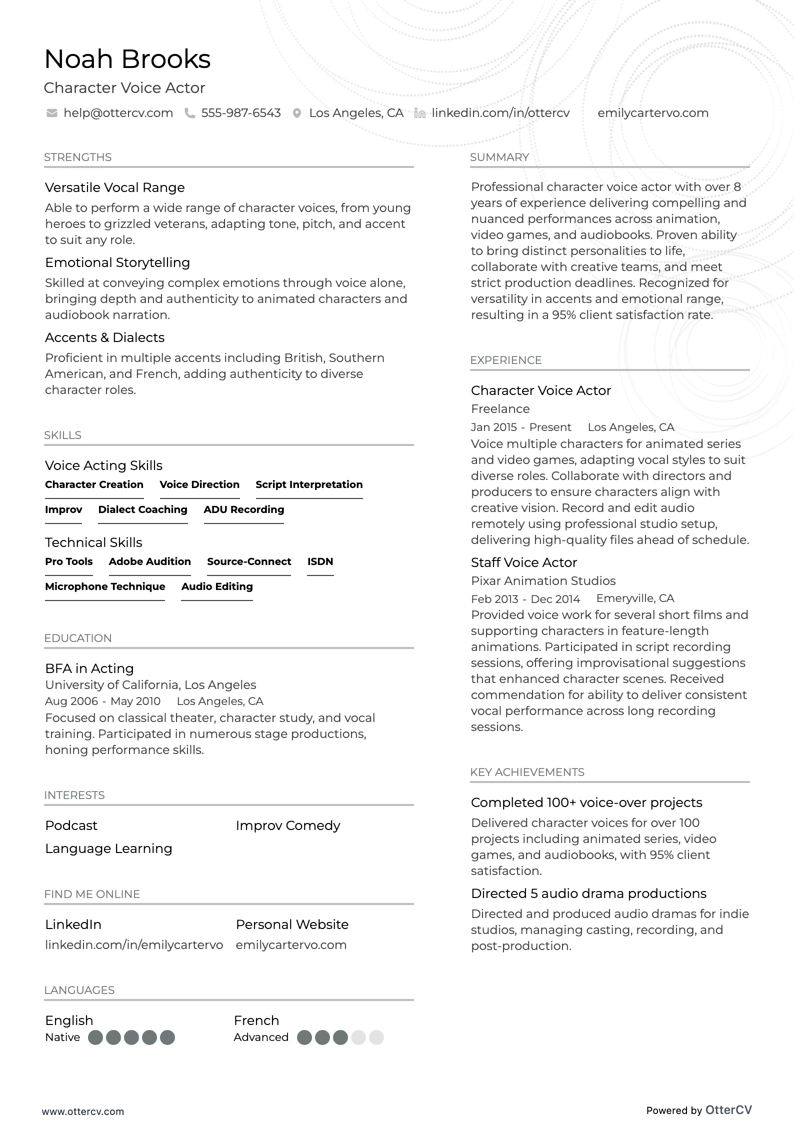
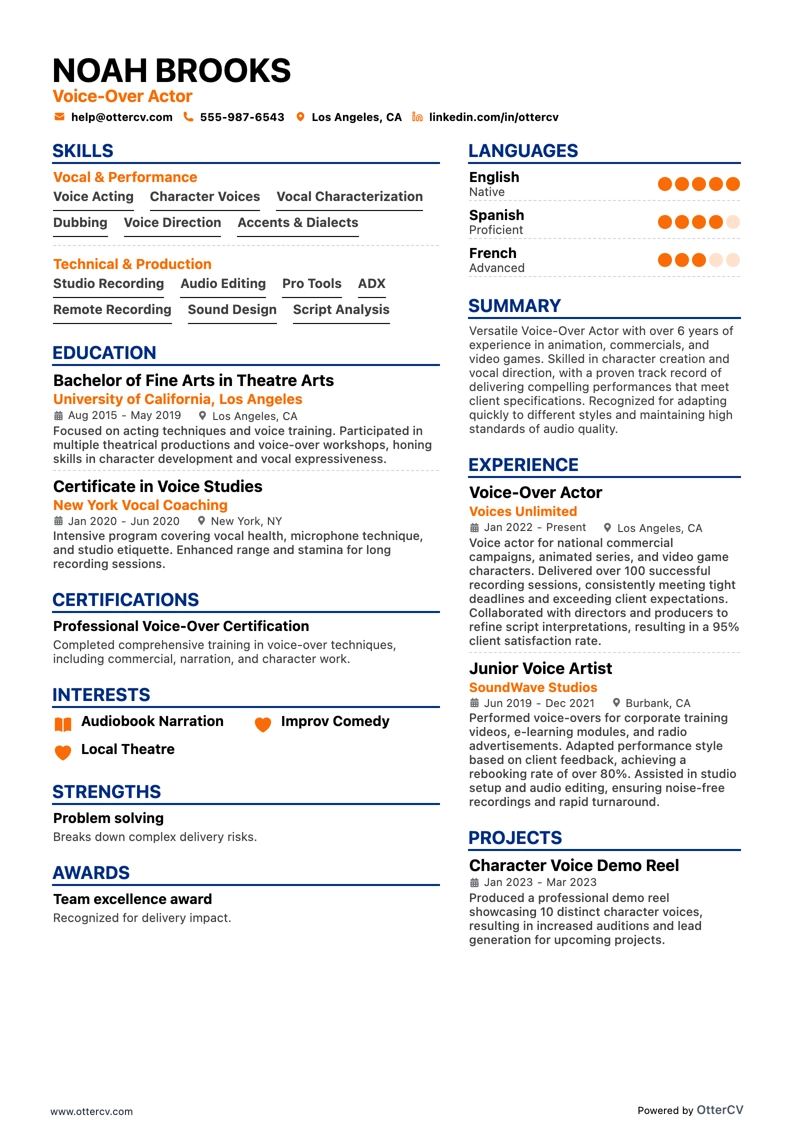
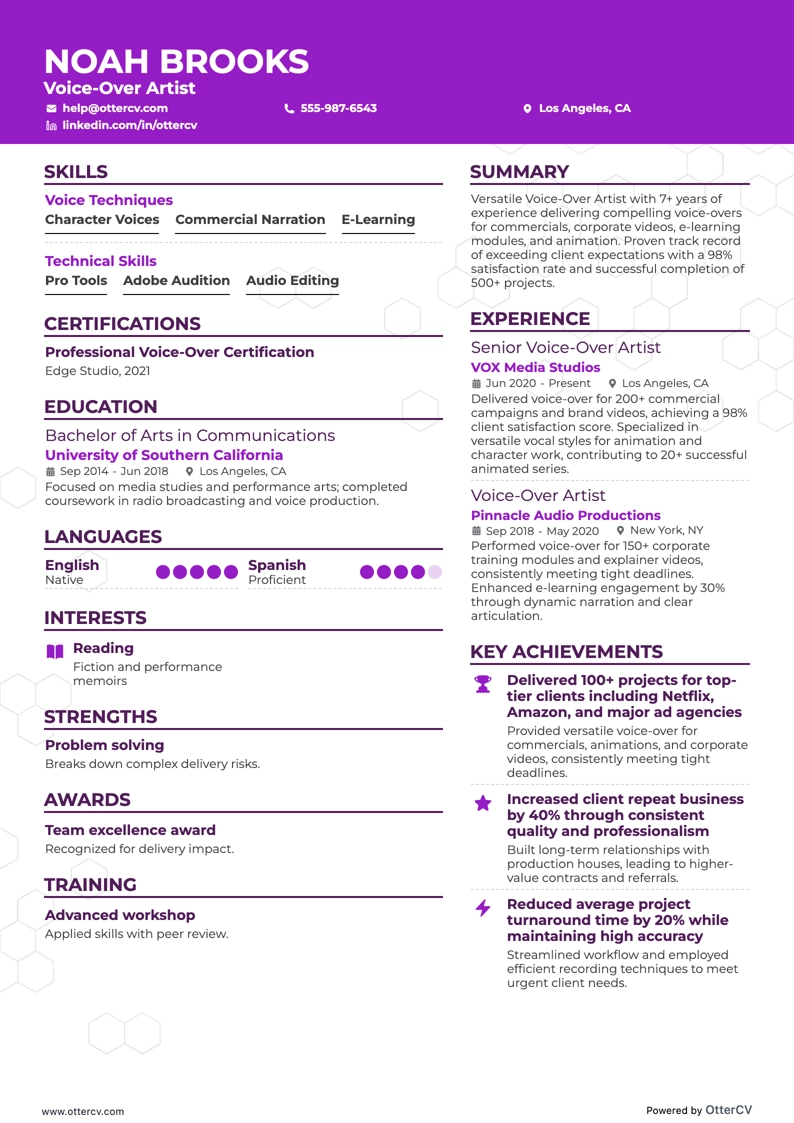
Why not use a functional resume?
A functional resume removes project context and timelines, which makes it difficult for casting directors to judge where, when, and how you have used your vocal skills in real productions.
Career changers with transferable performance experience: If you are moving from theater, broadcasting, podcasting, or public speaking and do not yet have formal voice acting credits, a functional resume can highlight transferable skills such as vocal control, script interpretation, and microphone technique while you build your reel.
Performers with limited or gapped work history: If you have taken significant time away from performing or are just starting out with only training and demo work, a functional format can keep empty timelines from dominating the page.
When it is acceptable: A functional resume can work if you have zero professional voice acting credits but can connect relevant skills to specific training projects, self-produced demos, or performance results from related fields.
A functional resume should be a temporary solution. Once you have even a few completed voice acting projects, switch to a hybrid or reverse-chronological resume, since casting directors and agents prefer clear credits with production names, roles, and dates.