What are good additional sections to include on a supply chain analyst resume?
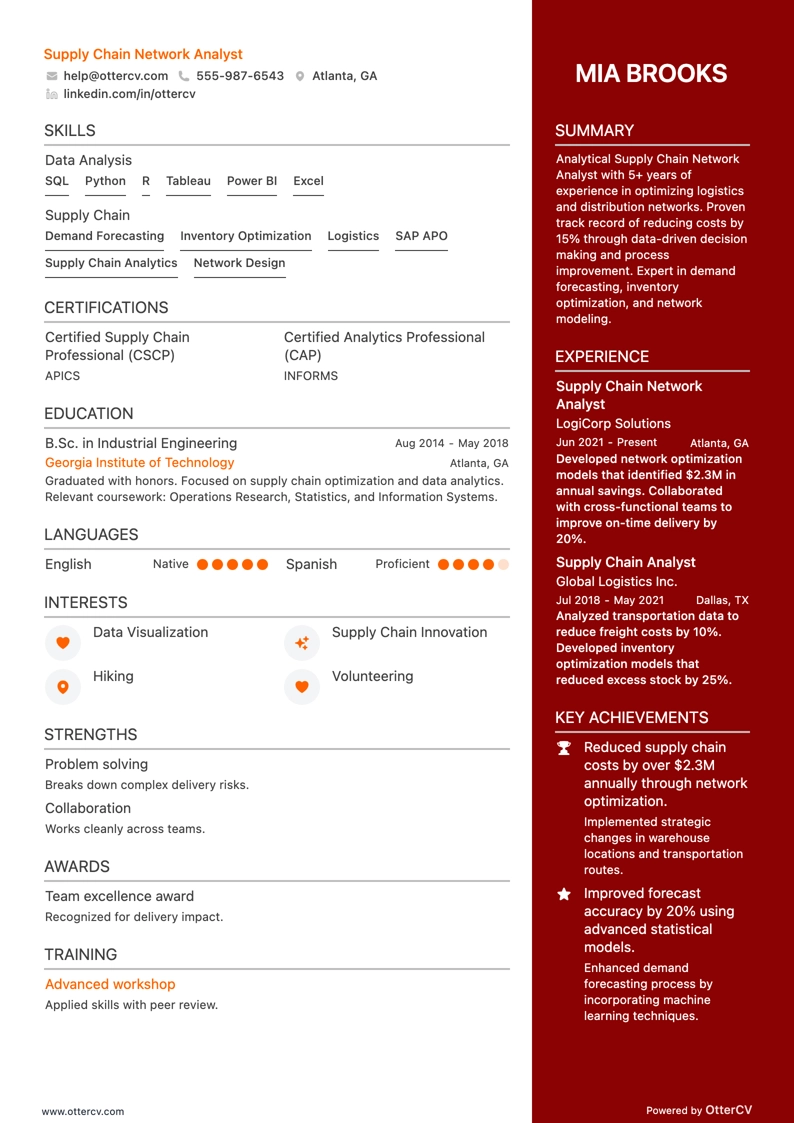
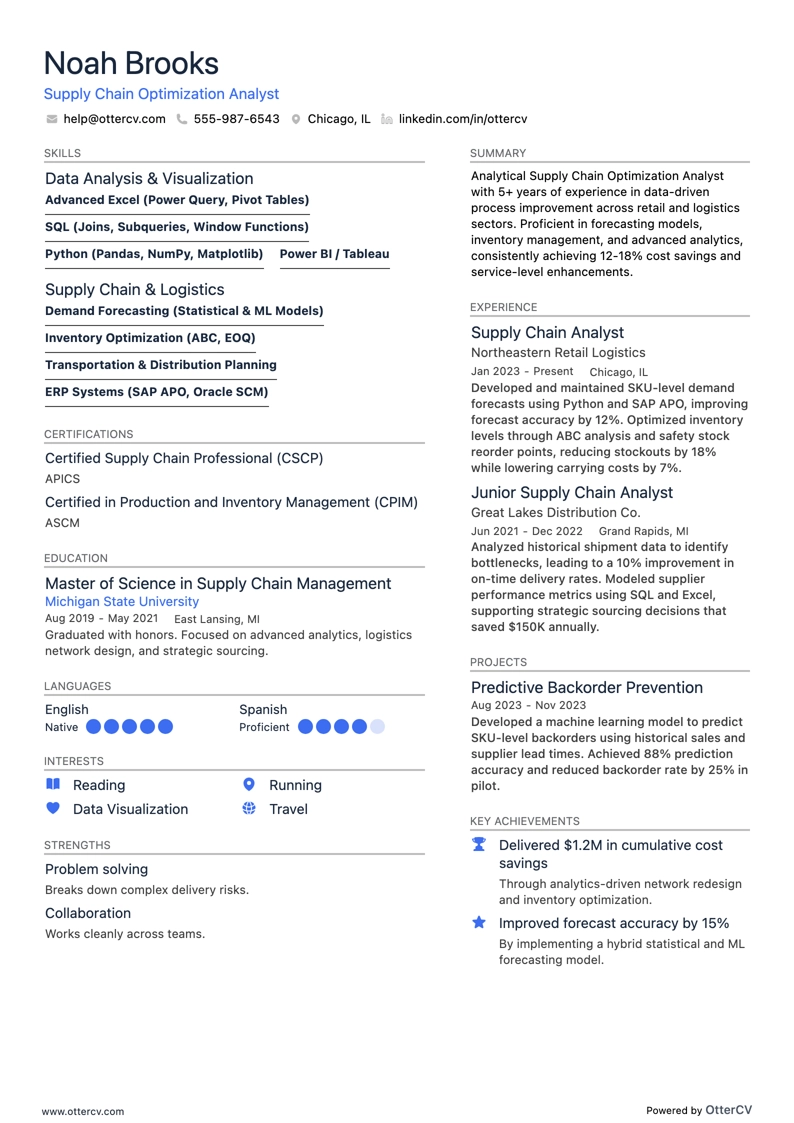
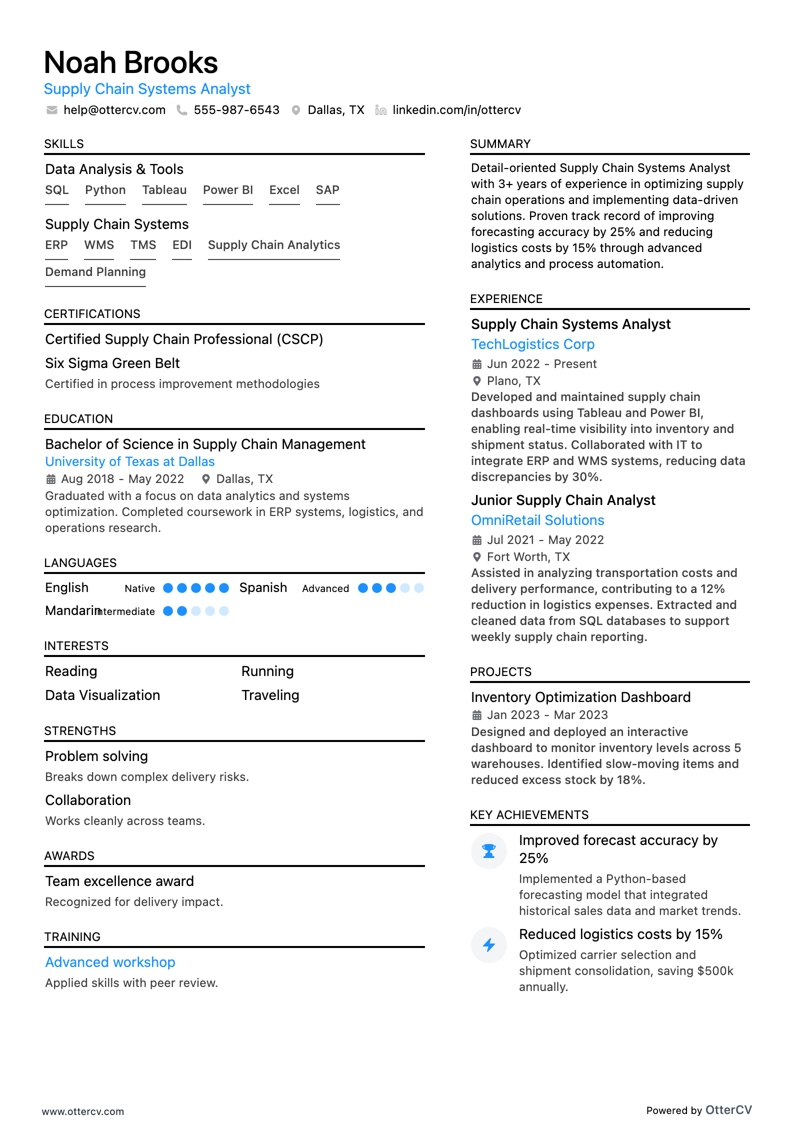
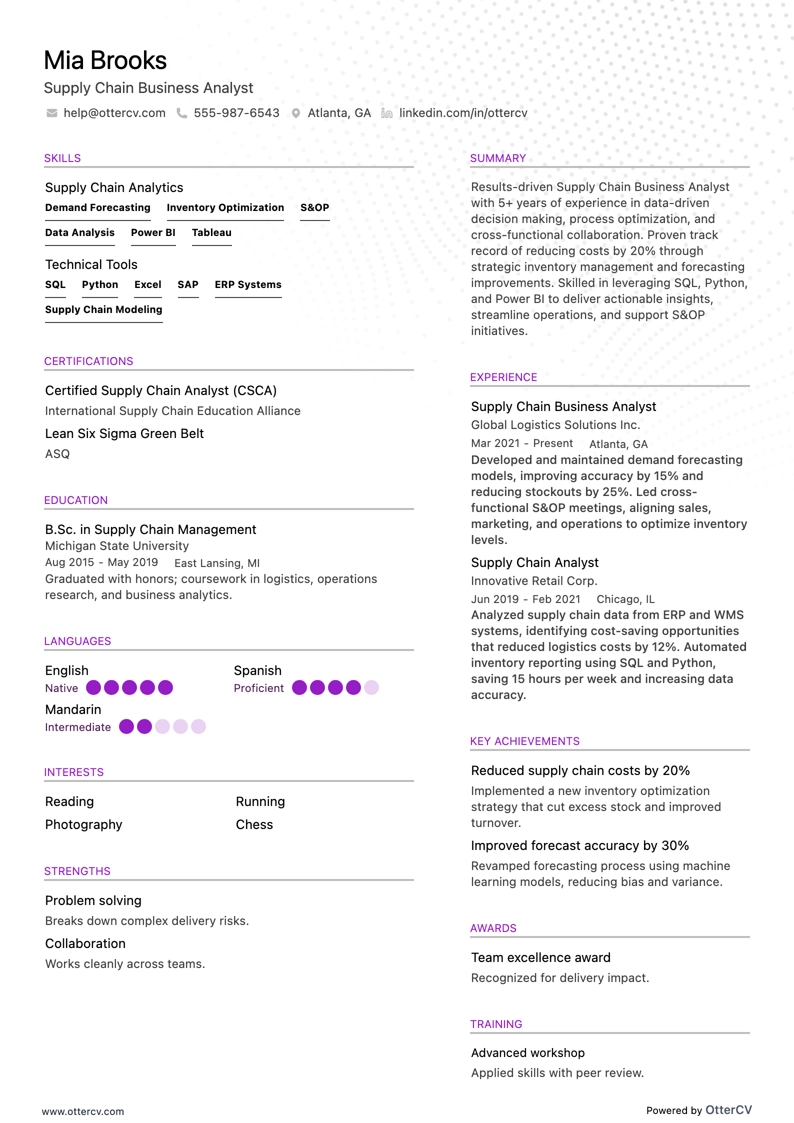
Besides the essentials like Experience, Skills, Education, and Certifications, you can strengthen your resume with a few additional sections:
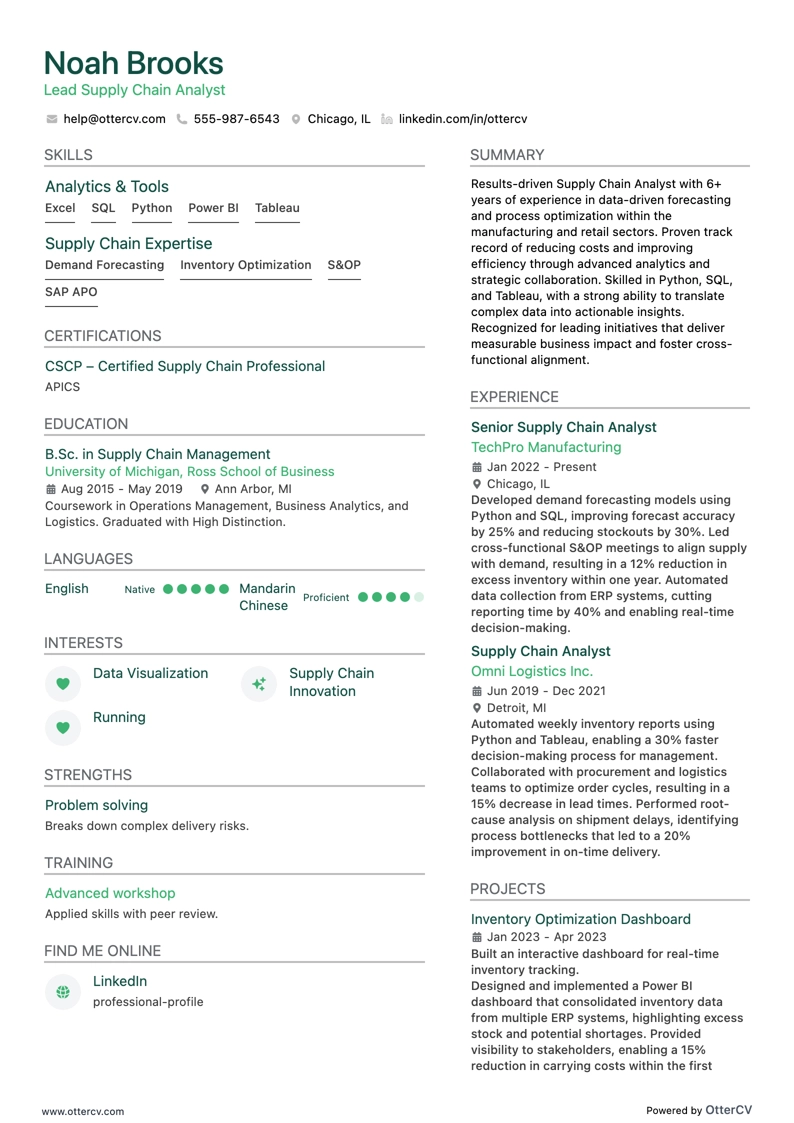
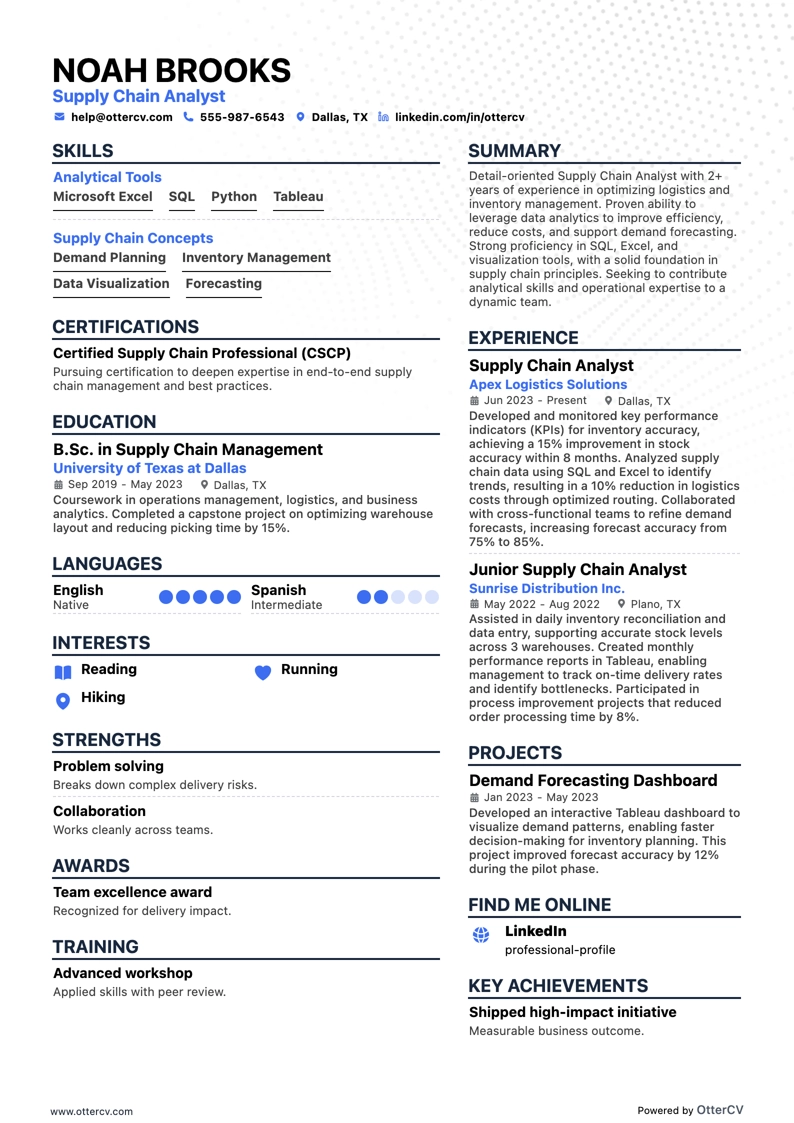
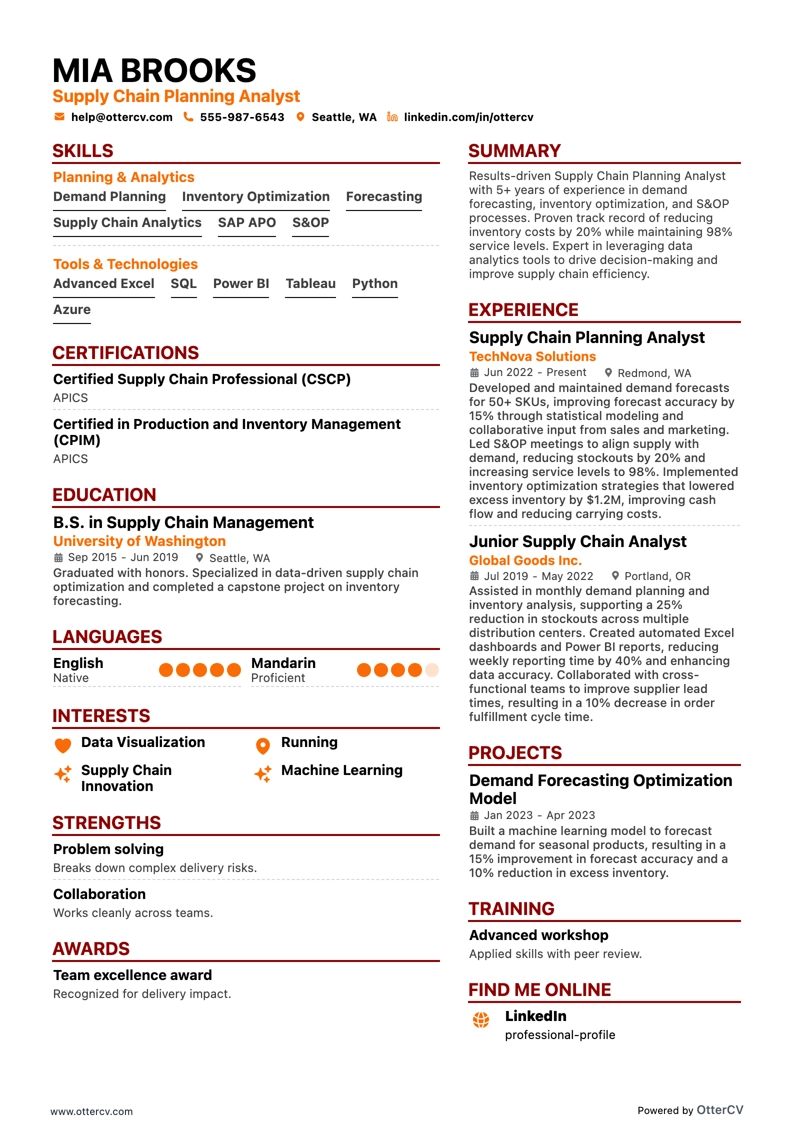
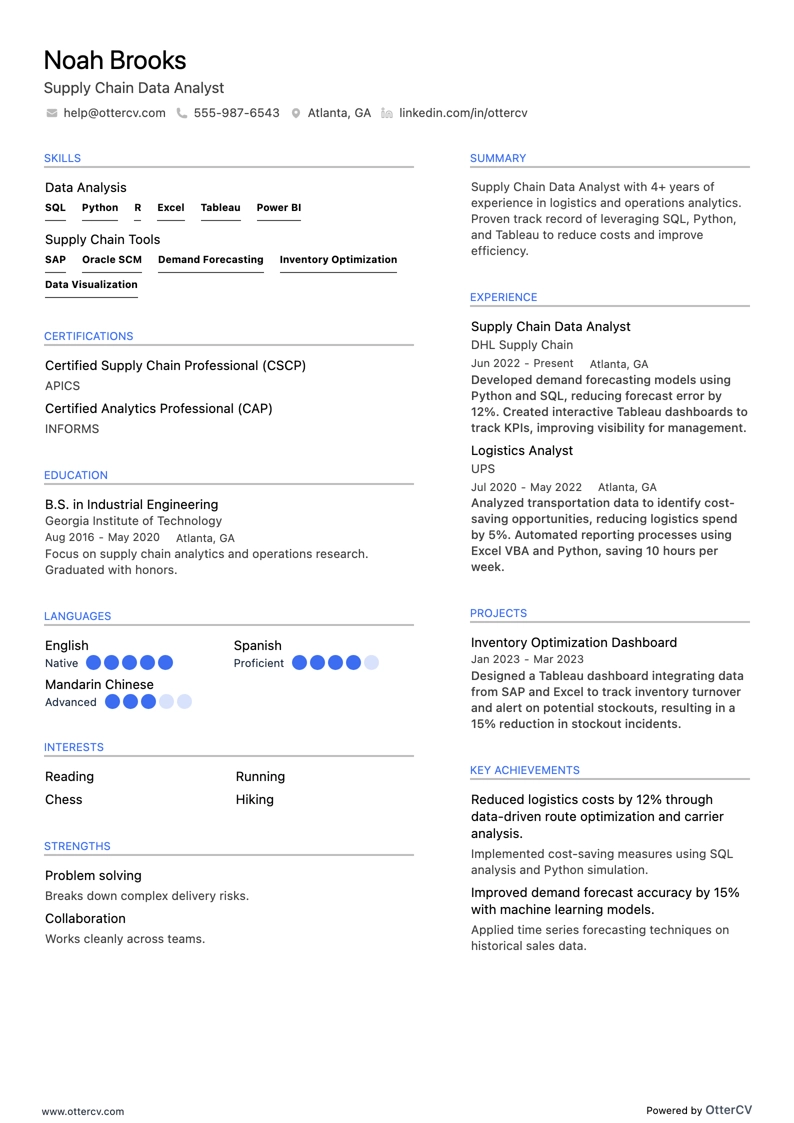
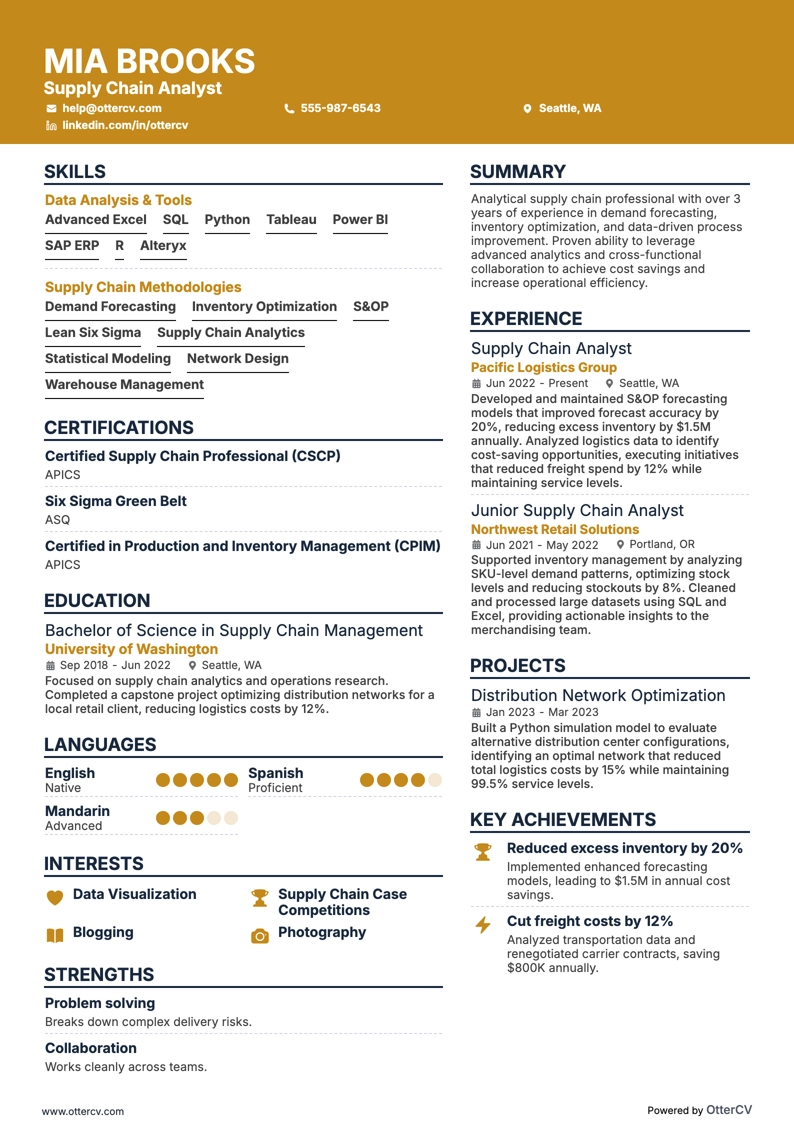
- Projects: Highlight data analyses, process audits, or optimization studies.
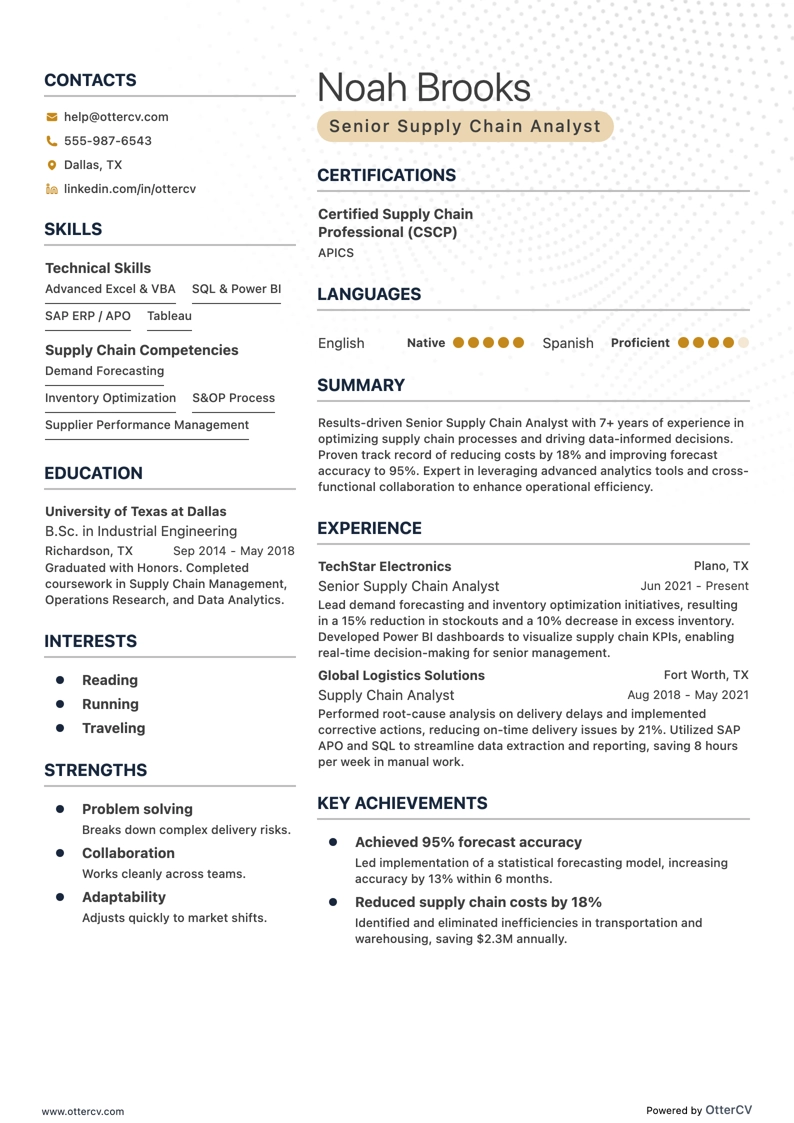
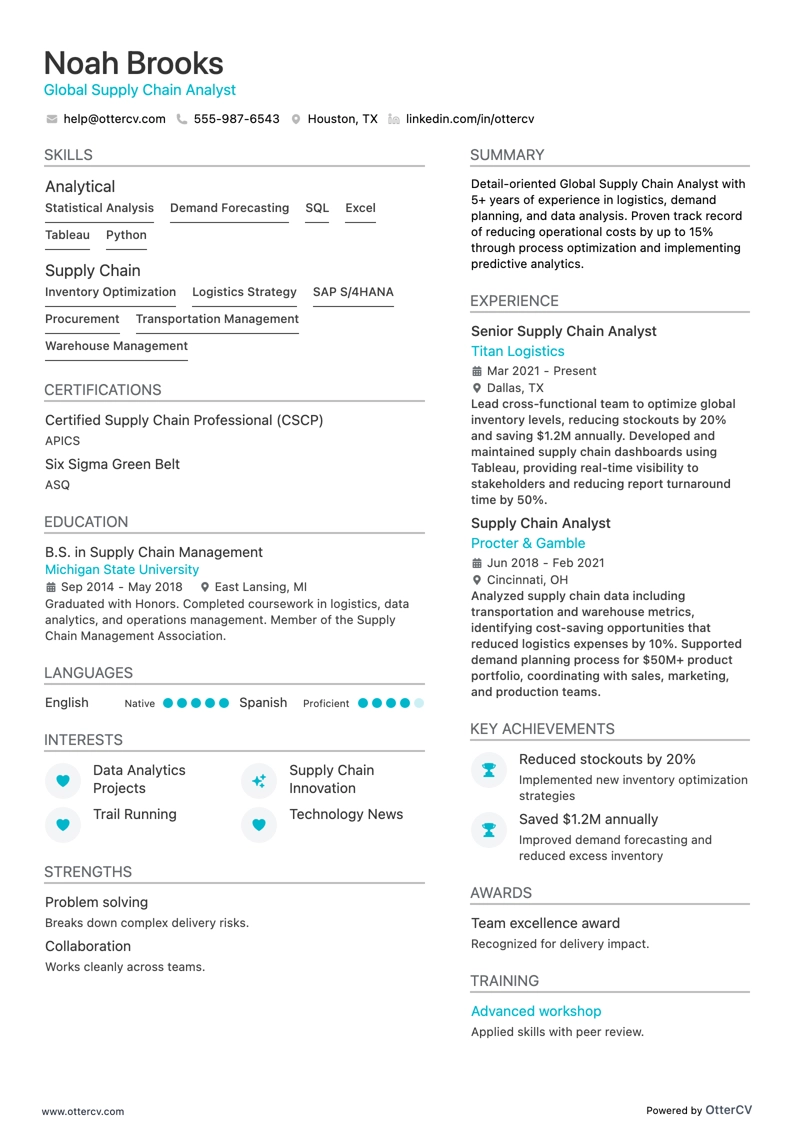
- Achievements: Quantify your impact, such as “Reduced supplier delays by 10%”.
- Technical Proficiency: Include ERP systems, data tools, and analytics software.
- Languages: Especially useful in global logistics environments.
How do I show career progression on a supply chain analyst resume?
Show career progression through increasing responsibility and measurable impact. Mention when you have:
- Moved from reporting tasks to leading analyses.
- Influenced decision-making or helped implement new systems.
- Delivered measurable results, such as cost savings or process improvements.
Do I need industry-specific experience to land a supply chain analyst job?
Not necessarily. Skills like data analysis, process improvement, and vendor coordination transfer well across industries. Still, tailoring your resume with industry-relevant tools can help you stand out more quickly.
How much do supply chain analysts earn, and how does salary relate to skills?
Salaries for supply chain analysts vary widely by experience, industry, and region. In the U.S., many capable mid-level analysts earn in the $60,000 to $90,000 range, while experienced or senior analysts commonly earn more than $100,000, with top roles reaching $120,000+.
Compensation is often higher for candidates with strong ERP and data-system proficiency, advanced analytics and forecasting skills, recognized certifications, and global supply chain experience.
How can I stay organized while applying for supply chain analyst jobs?
Job hunting can feel like managing your own logistics network. To stay organized, use Echocv’s AI Job Application Tracker to monitor applications, follow up at the right time, and see which resume versions perform best.
To bring it all together
If you’ve made it this far, you have what you need to create a supply chain analyst resume that is sharp, data-driven, and truly your own. Every great supply chain starts with strong organization, and your resume is no different.
When you’re ready to put it all together, build your document with Echocv’s Resume Builder. It’s quick, easy, and helps your best achievements stand out.
You’ve got this, and the next great role may be closer than you think.