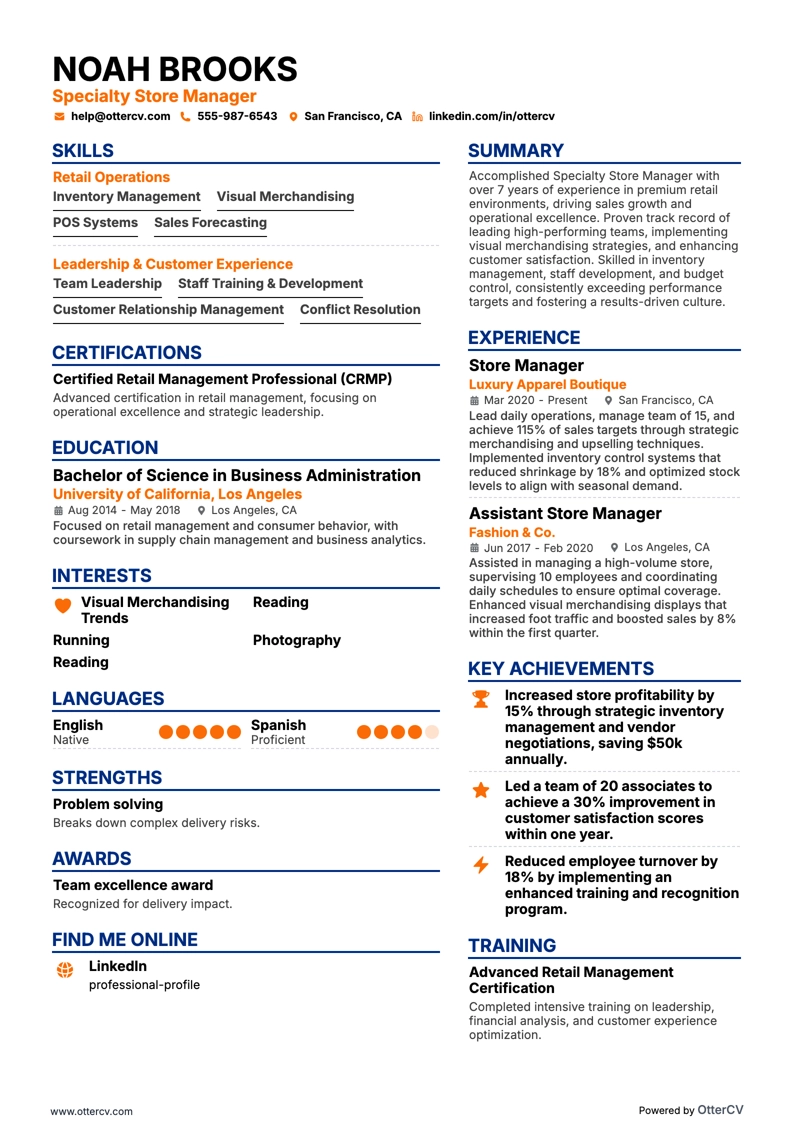
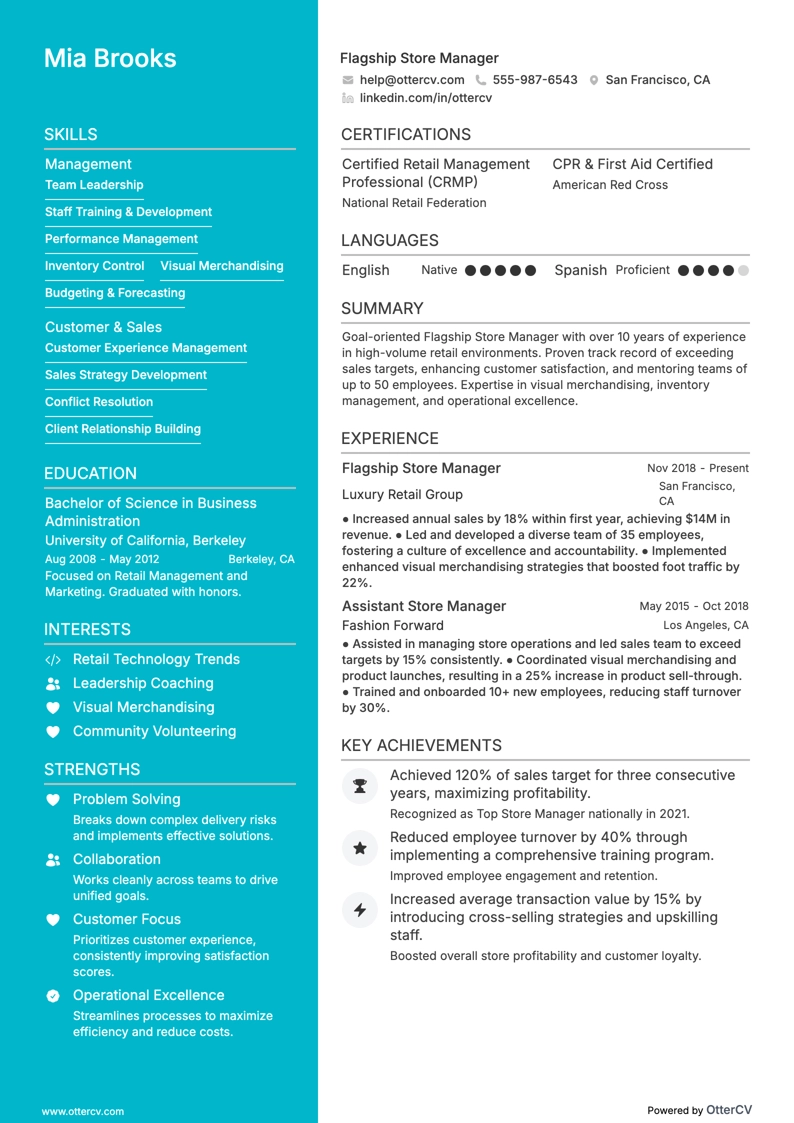
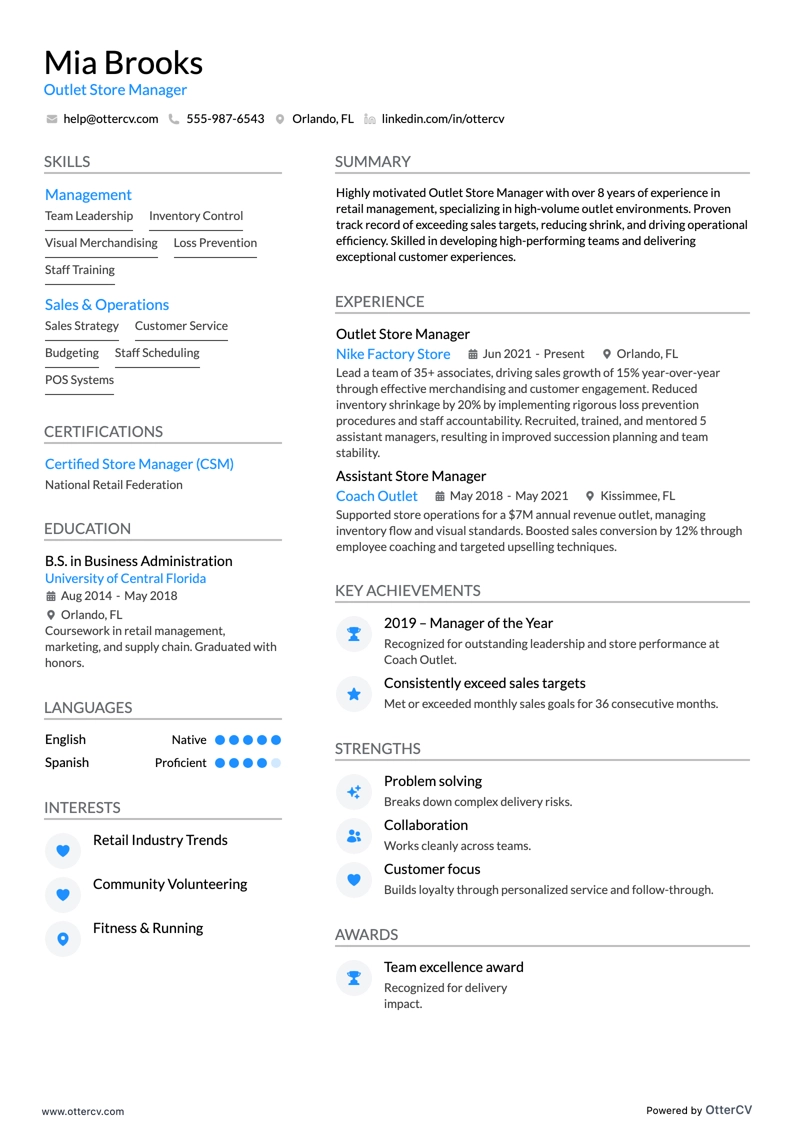
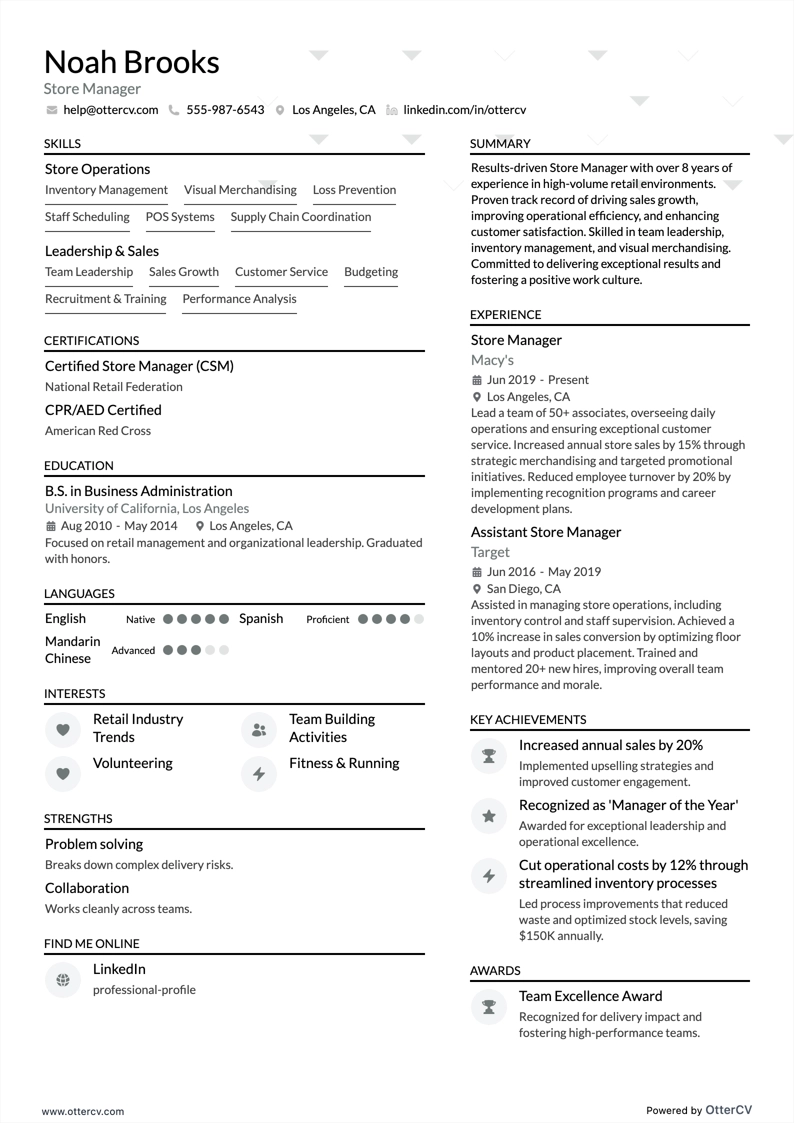
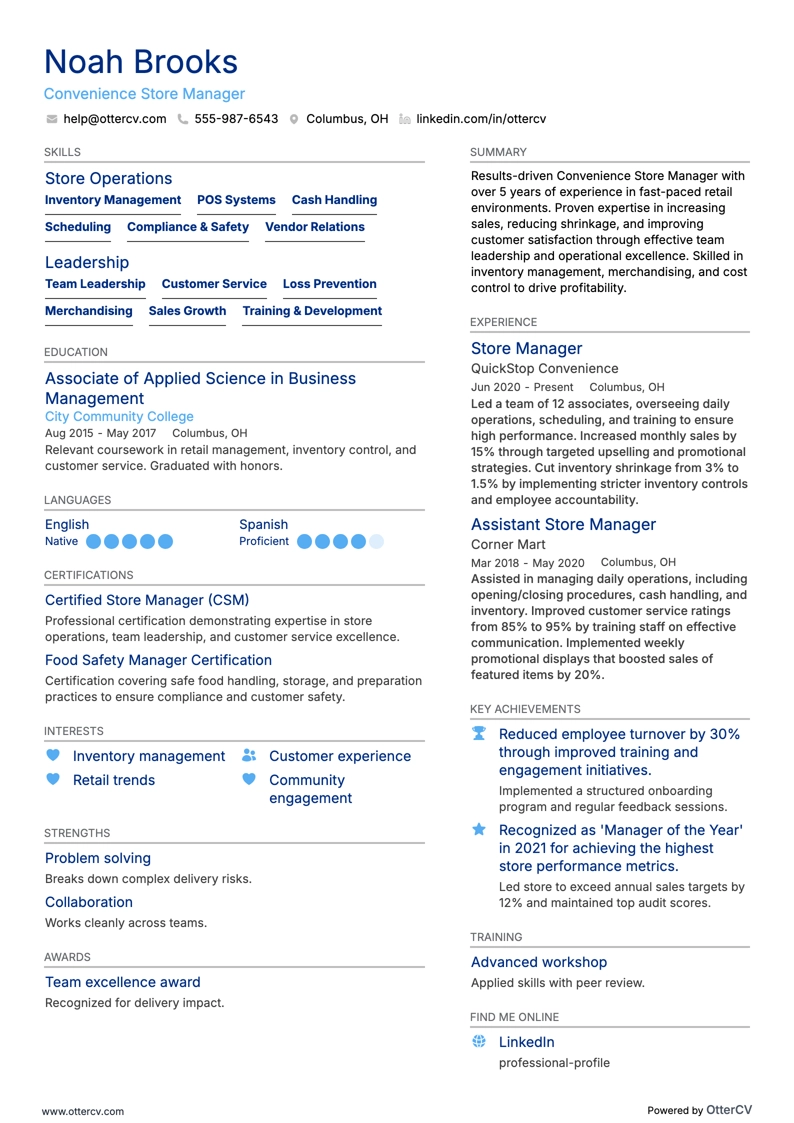
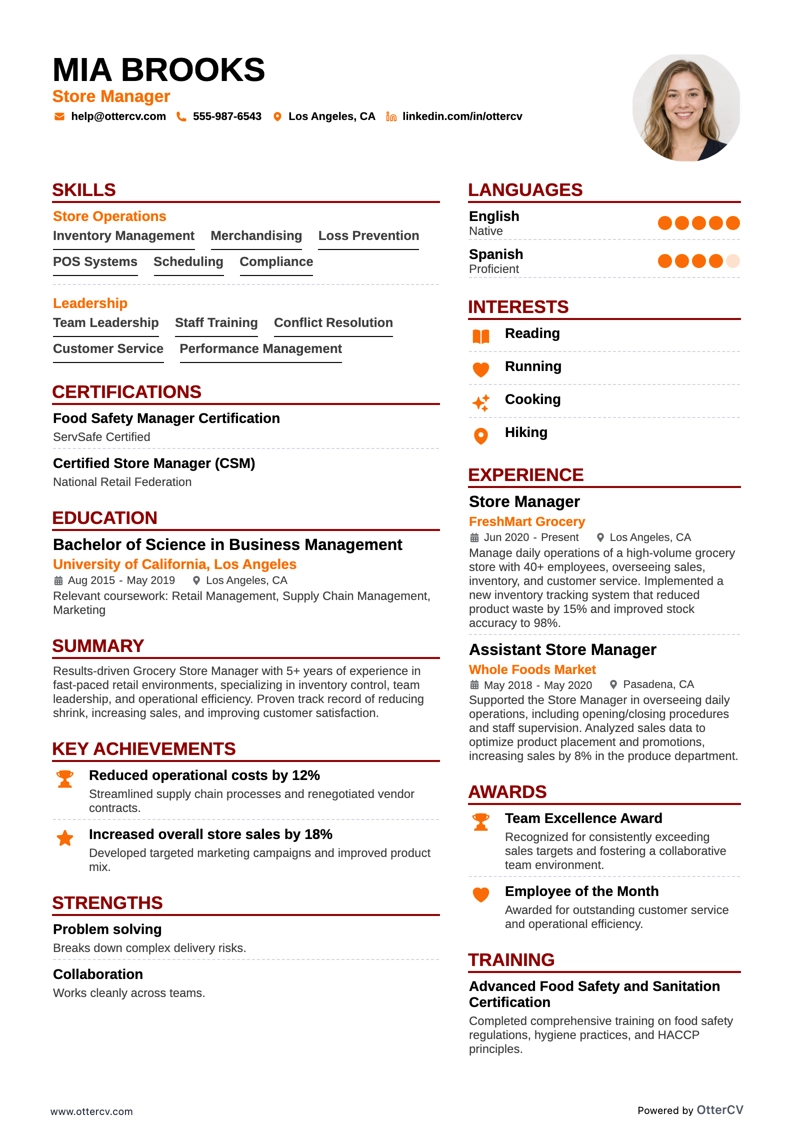
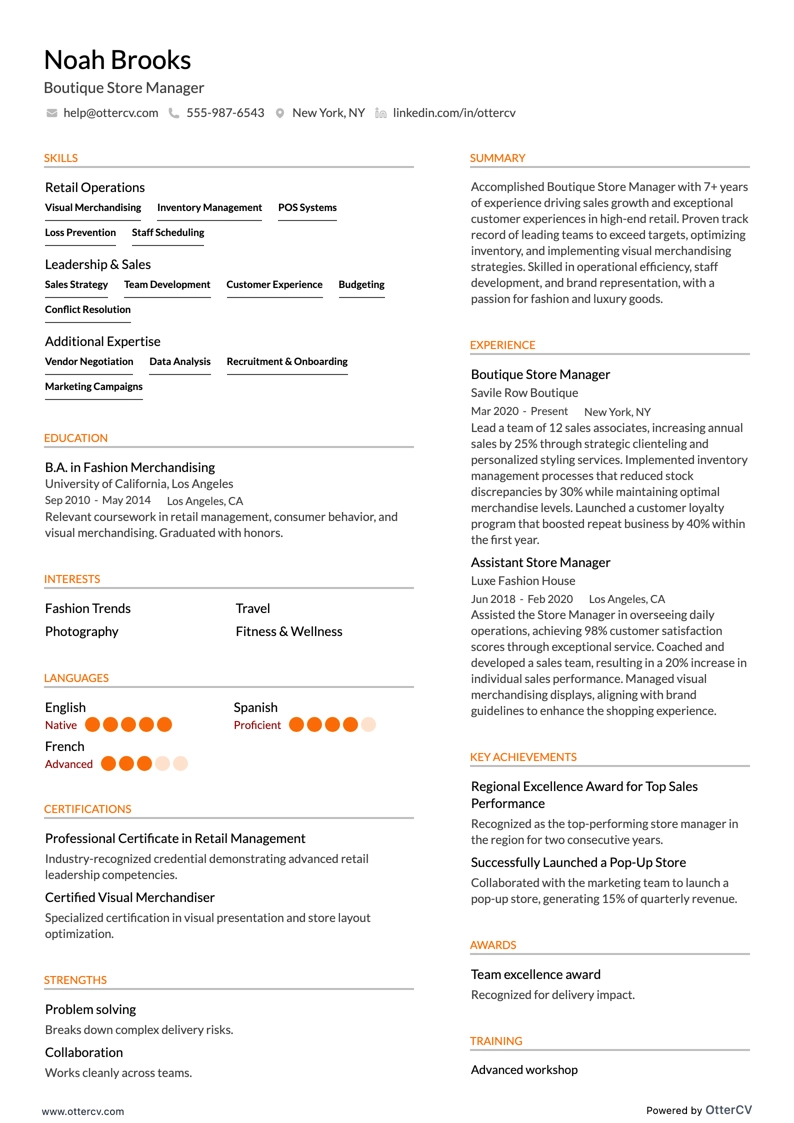
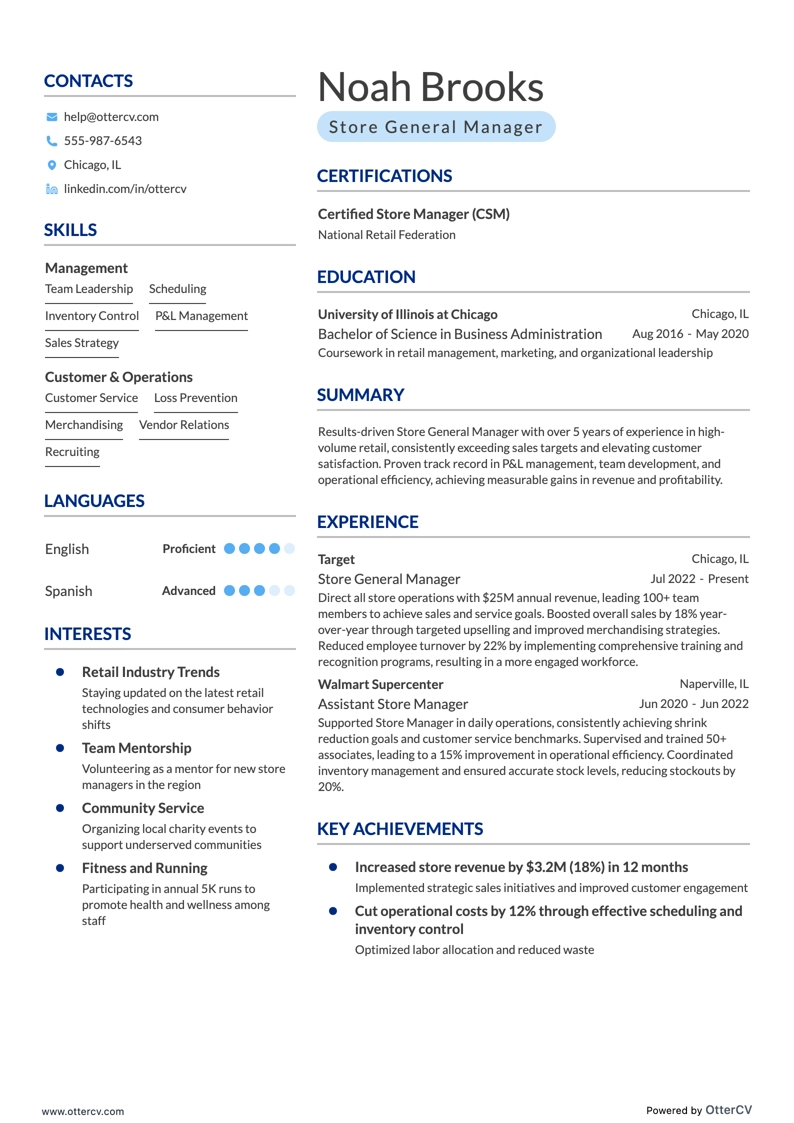
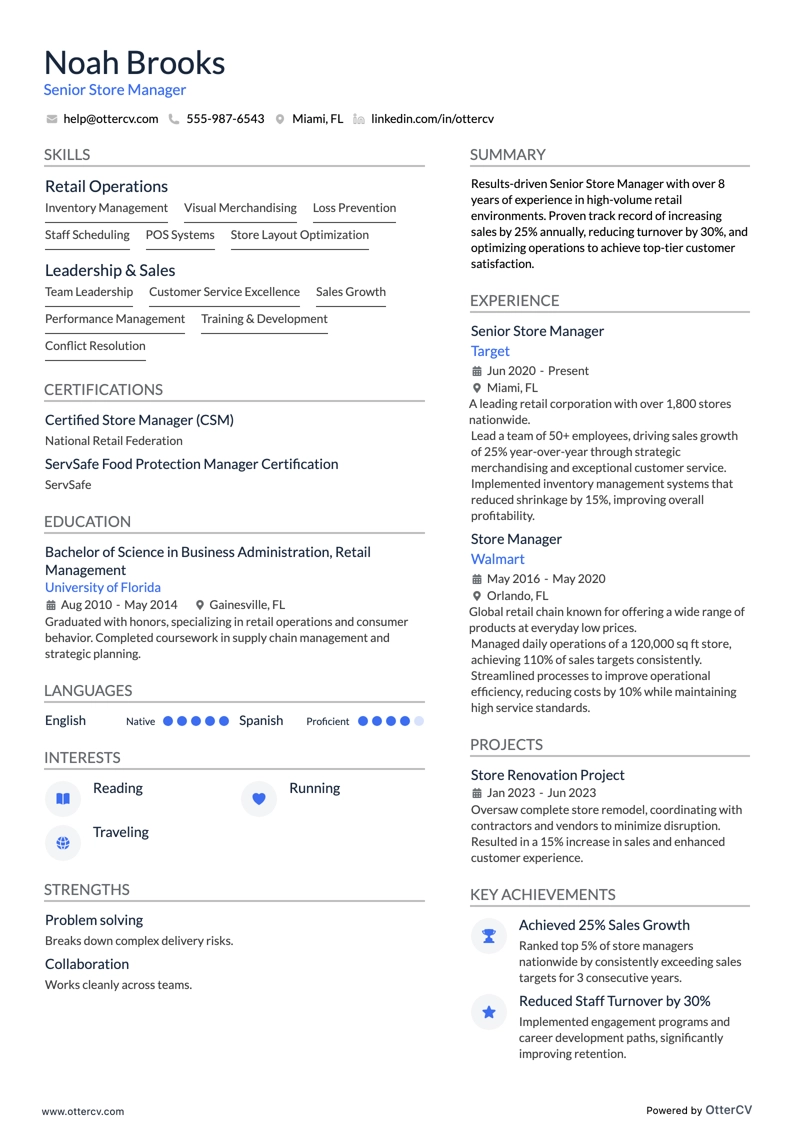
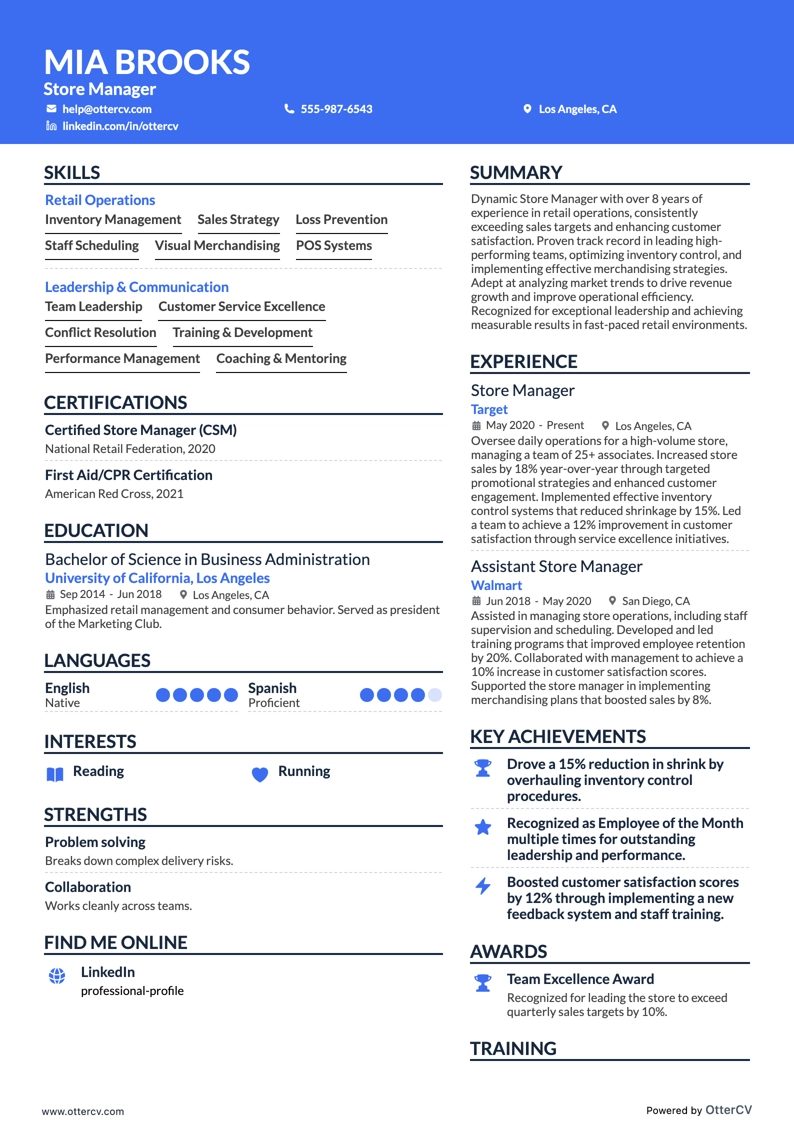
Due to shifting consumer behavior and economic factors, the retail sector continues to evolve. The pace of change is so fast that store managers need to show adaptability and current knowledge of industry trends above all else. At the same time, the field is highly competitive, especially for roles with attractive benefits and at well-established companies. To stand out among candidates with similar experience and qualifications, store managers need a resume that clearly highlights their value.
A polished resume is one of the best ways to get recruiters’ attention. This guide will show you:
- Which resume format best fits your level of experience
- How to include job description keywords without sounding forced
- How to show that you go above and beyond for both customers and employees
- How to present your skills and back them up with results
- How to structure your resume so each section flows into a convincing narrative
- Which certificates can help set you apart from other candidates
If you’re exploring other retail-related roles, you can also review these resources:
Let’s dive in.
How to format a store manager resume
A major part of being a store manager is selling products and services, so your resume should also sell your strengths effectively.
Start by choosing the right resume layout. In most cases, you have three main options:
- Reverse-chronological order: This format works best for store managers with a strong and steadily progressing work history. It lists your experience starting with your most recent role and moves backward. If your retail career shows consistent growth and achievements, this is usually the best choice.
- Functional resume: This format can work well for store managers changing careers, dealing with employment gaps, or starting out. It emphasizes skills and achievements rather than job history in time order.
- Combination (hybrid) resume: This format blends the strongest parts of reverse-chronological and functional resumes. It lets you highlight your most relevant skills and accomplishments first, followed by a concise work history. It is especially useful when you want to emphasize experience that closely matches the role you are targeting.
As you build a resume that reflects your strengths as a store manager, make sure it also communicates your personality and professional style. The right balance of style and simplicity can turn your resume into a clear reflection of your professional brand.
Also keep in mind the market you’re applying to. For example, a Canadian resume, for instance, might have a unique layout.