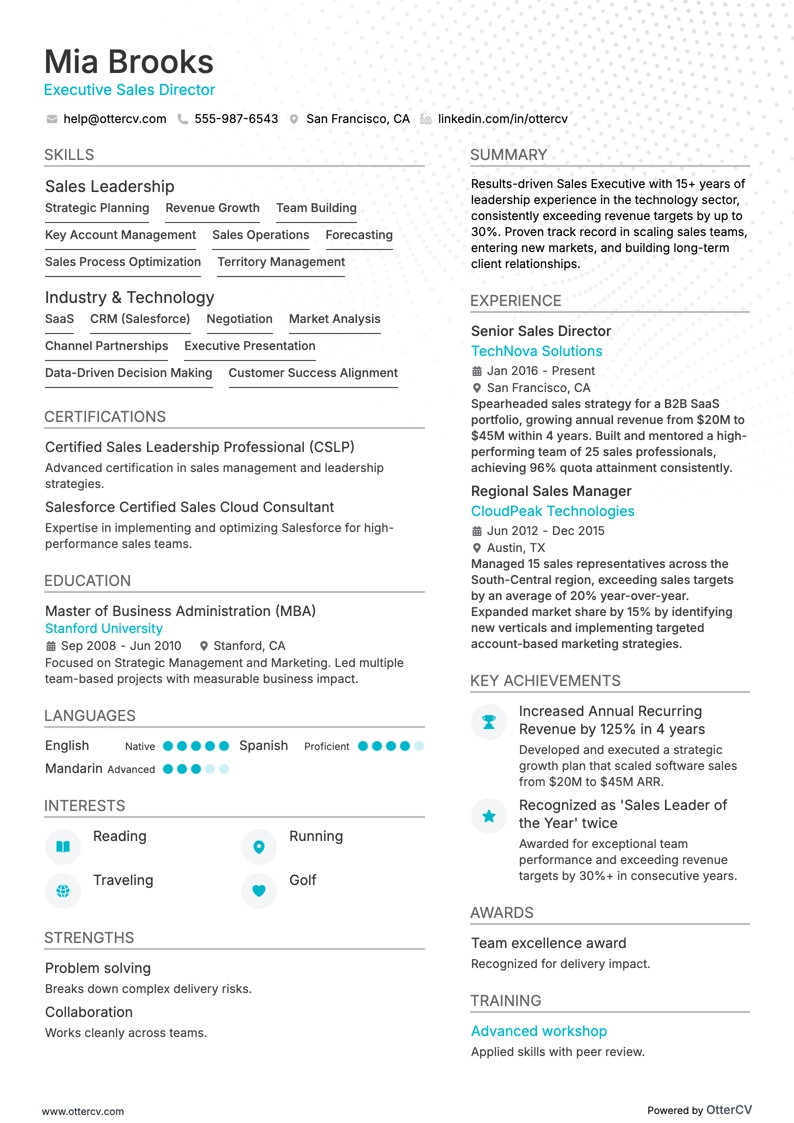
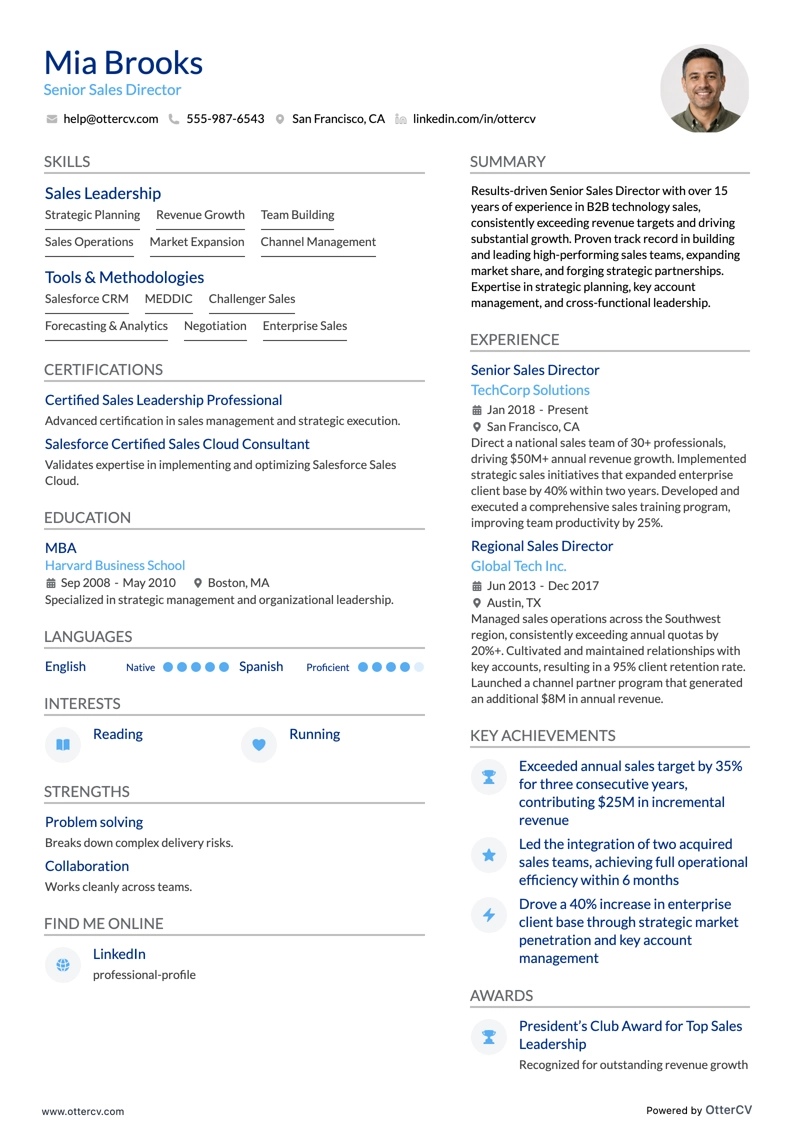
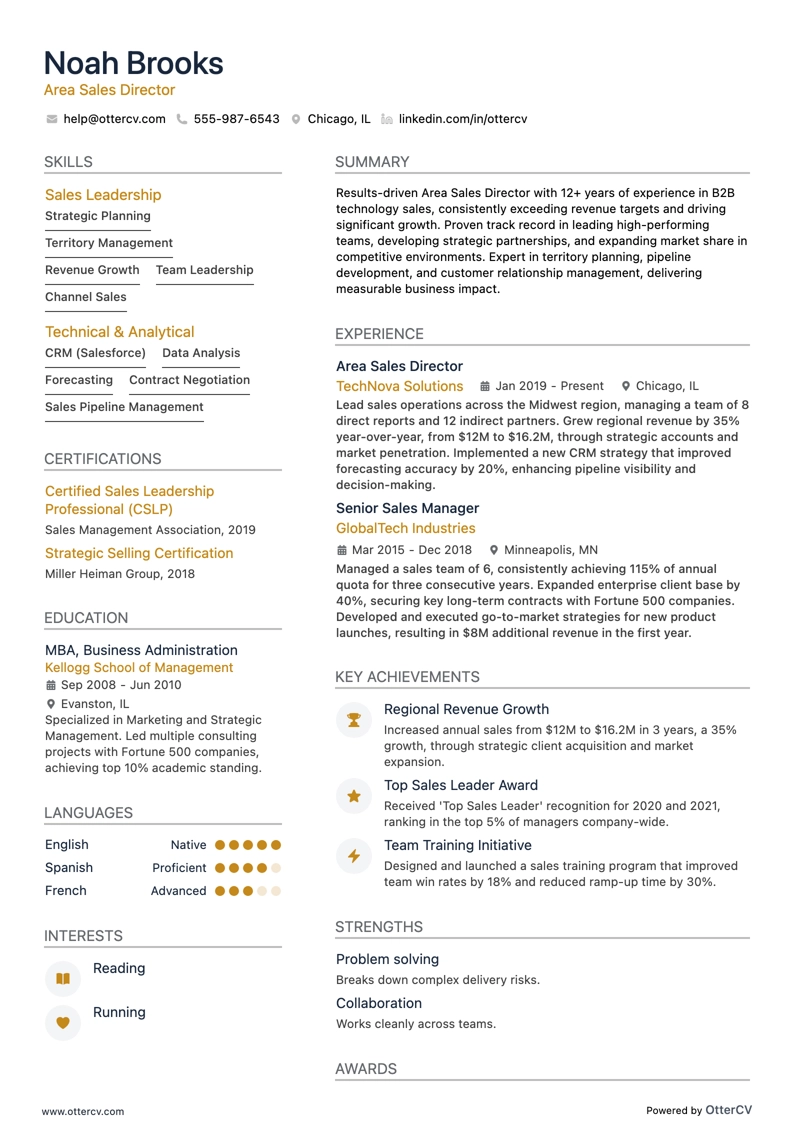
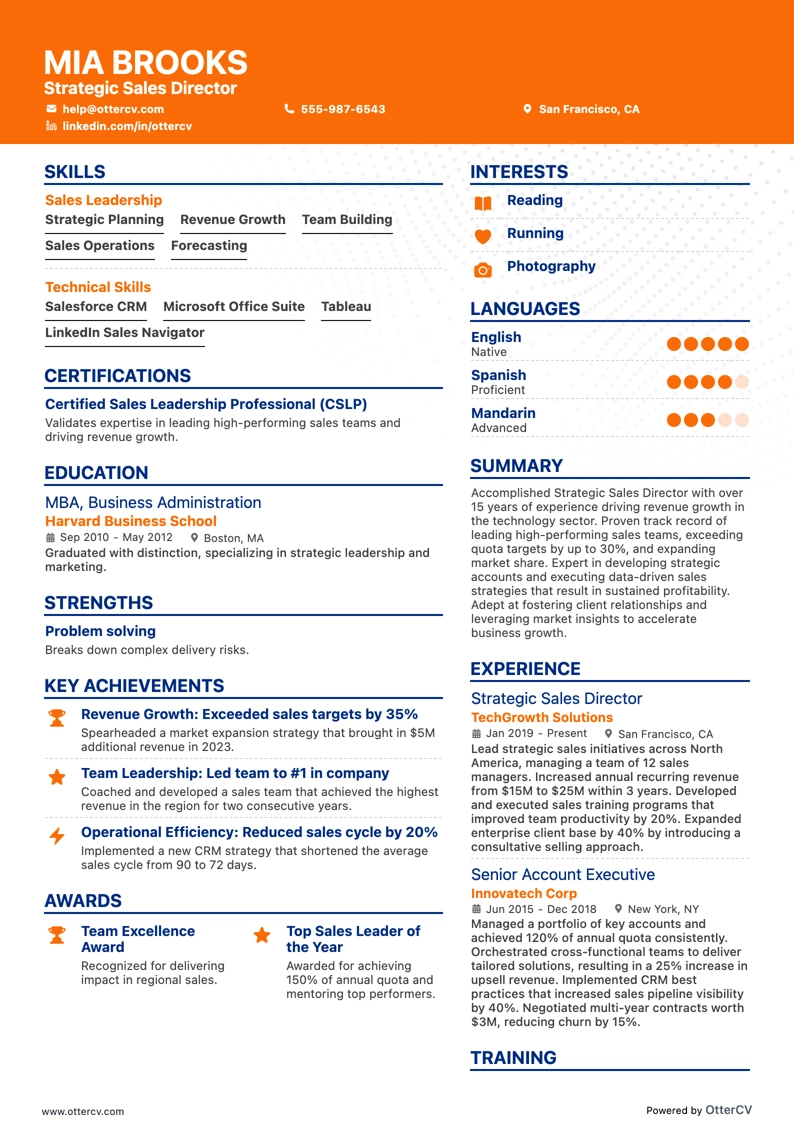
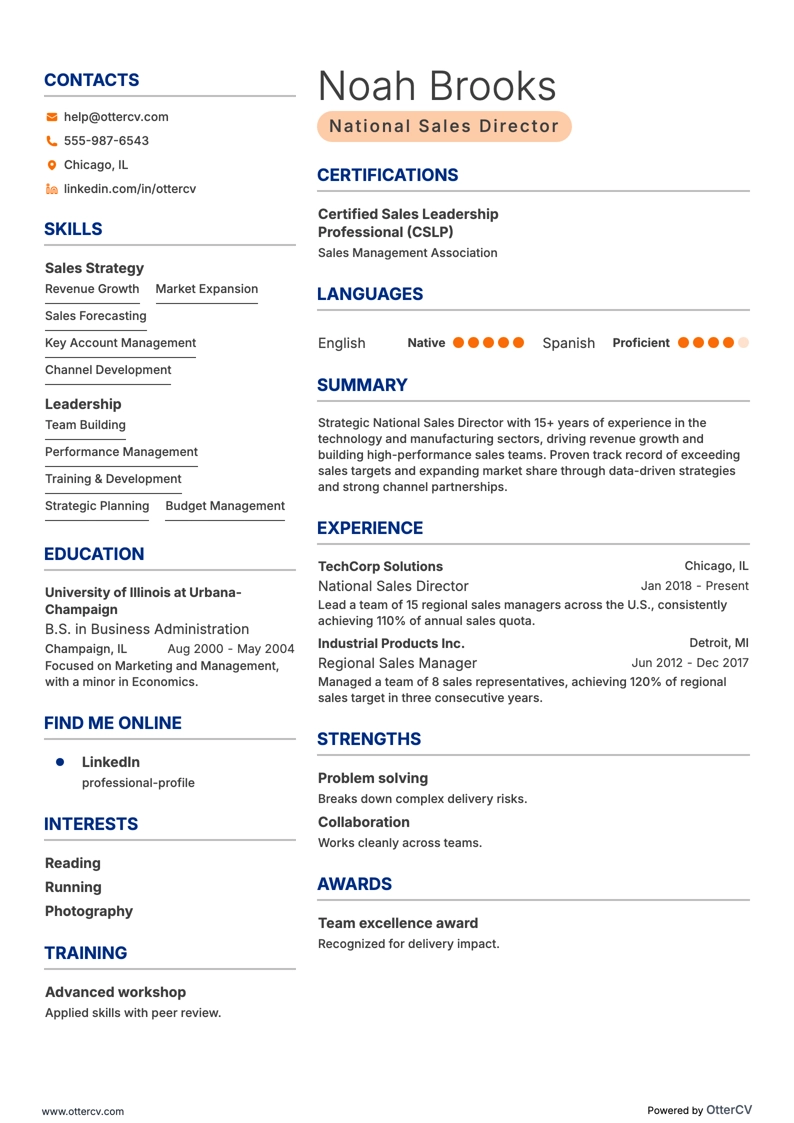
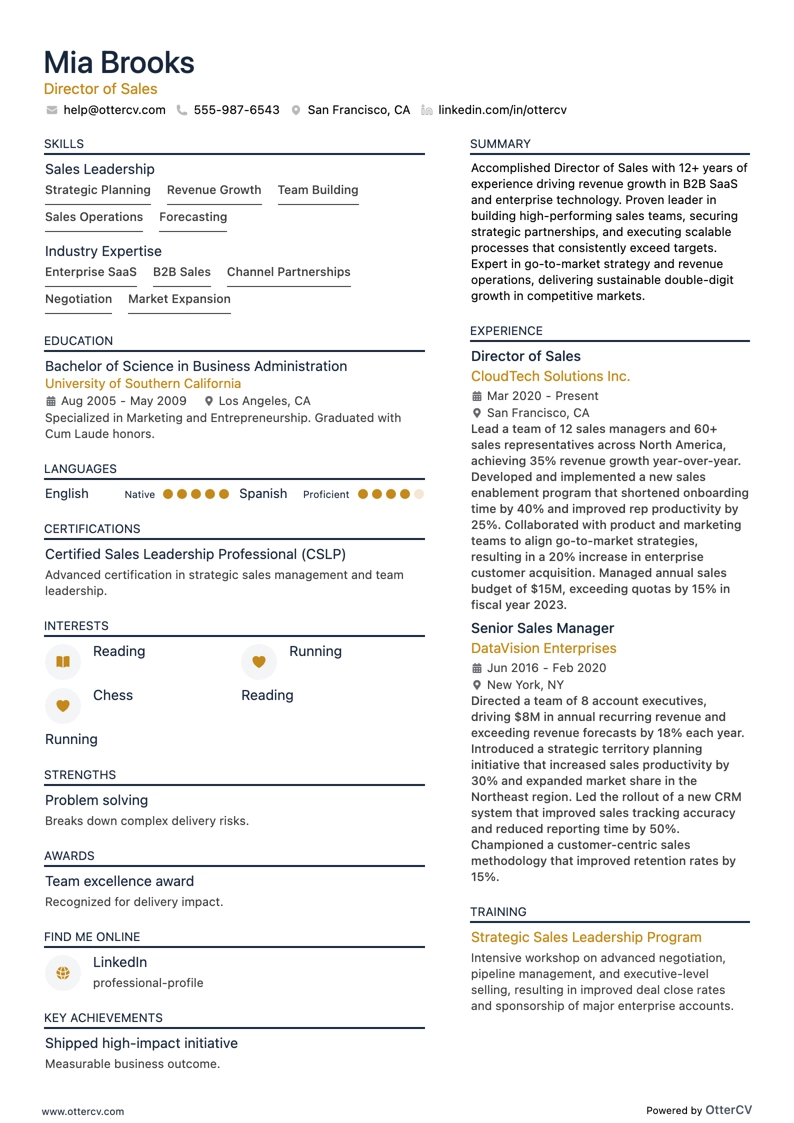
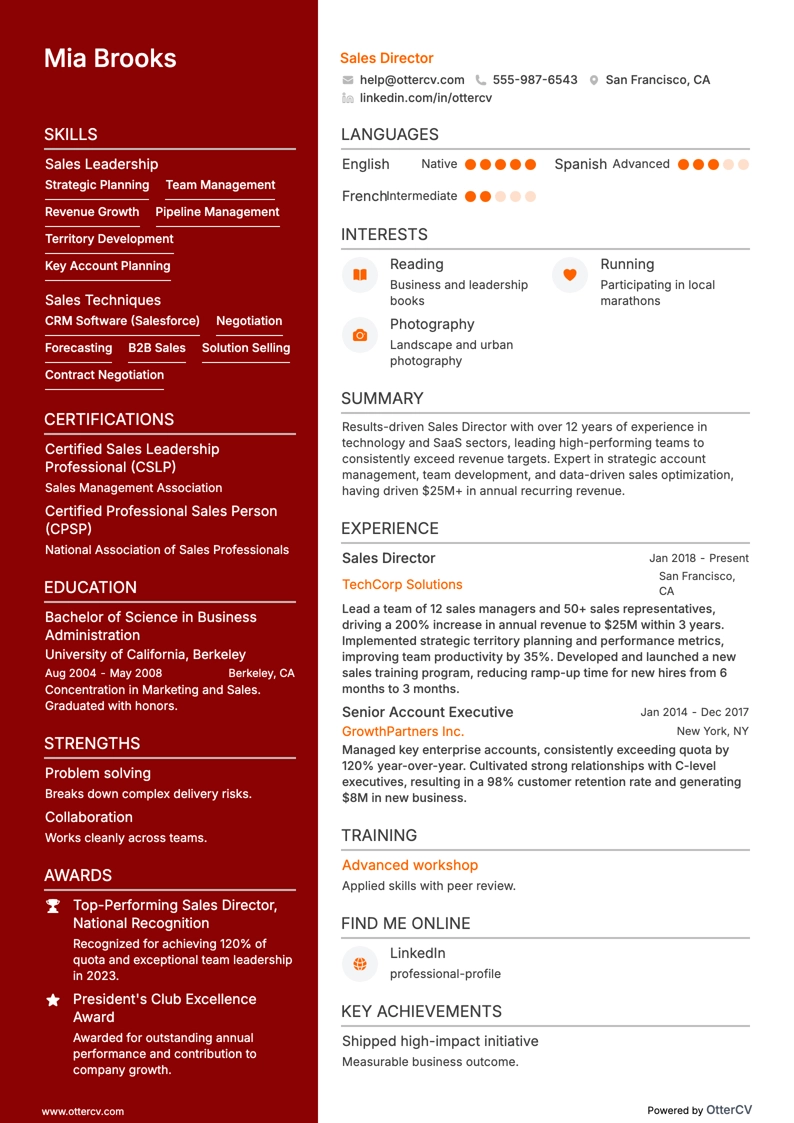
The second example reads much better. Here’s why:
- Each bullet highlights one leadership responsibility and the ROI tied to it.
- Every point includes measurable results, so hiring managers can quickly see the applicant’s impact in leading teams and improving sales processes.
- It also proves key soft skills, especially collaboration and communication, by showing how the applicant worked across departments and secured budget approval from senior management.
How to quantify the impact on your resume
Sales professionals are numbers-driven. Early in your career, you learn that the number of leads you contact influences how many meetings you book and, ultimately, your monthly sales.
That focus on metrics continues at the leadership level, except your achievements are less about quota attainment and more about broader outcomes like shortening the sales cycle and increasing market share.
Because hiring committees, especially VPs and C-level executives, will pay close attention to your numbers, it helps to know how can you include metrics on your resume.
Here are some quantifiable achievements you can include on your resume:
- New revenue
- Revenue increase
- Number of clients or deals closed
- Cost savings from streamlining the sales process
- Team growth, especially if you scaled the sales team
- Performance improvement after the initial product launch, or a successful product launch
- Increase in market share for existing offers
- Performance improvement when entering a new market
- Ranking in the national or global sales team
- New sales channels opened, such as online shopping websites or trade shows
When writing bullet points, you can use either the Challenge - Action - Result (CAR) format or the Situation - Task - Action - Result (STAR) format. You do not have to present them in that exact order, either. You can also mix the sequence, such as Action - Result - Challenge.
ARC Example:
Secured 5 new accounts with a total revenue of $3.5M for a new health supplement launched in July 2025.
In this example, the action is securing the accounts, the result is the $3.5M in revenue, and the challenge is launching a new health supplement brand. It tells a strong story in one line without getting too technical. Save the full details for the interview.
Check out this guide on how to write story bullet points.
How do I write a sales director resume with no experience?
You typically need a proven track record and about 7 to ten years of experience in sales or a related management role to land a sales director position. But what if you don’t have any experience in a director-level role?
There is no single path to becoming a sales director. Many people move up from sales manager or regional sales manager positions, but others come from marketing, customer service, or even operations management. So if you have management experience, even outside a formal director title, you may still be a strong candidate.
What matters most is your ability to train and coach teams, improve systems, and show that you can build winning sales strategies.
Here’s how to translate your previous sales or leadership experience into a strong sales director resume:
- If you have no direct sales experience, focus on how your previous work increased revenue. That could include a successful marketing campaign or better upsell performance from a customer service team you managed.
- Show how well you coach people. Include specific mentoring methods you use, such as incentive programs or quarterly reviews instead of annual reviews, and explain how those methods led to new business or higher productivity.
- Highlight strategic initiatives and projects you created, along with product launches you oversaw, since these are common sales director responsibilities.
- List revenue targets you met or exceeded and any new accounts you helped acquire, even if you were not in a direct sales role, as long as you worked with the team that closed the deal.
- If you have no sales experience, emphasize other transferable skills from other industries, such as training and coaching, strategic planning, business development, or networking.
How to list hard skills and soft skills on your resume
It can be tempting to add every hard skill and soft skill you have to your sales director resume. But doing that can push your application well past 3 pages, which wastes valuable space and may discourage recruiters from reading the rest.
Blindly pasting a long list of skills is also a risky ATS strategy. You may include common terms like communication, strategic planning, and forecasting, but you still will not be able to cover every specific tool or technical requirement, such as data analysis or enterprise planning software.
A better approach is to review the job ad, or several job ads, and select 5 hard skills and 5 soft skills that appear there and also genuinely match your background.
Hard skills are role-specific and can include tasks like sales forecasting or tools such as Customer Relationship Management (CRM) software. Soft skills are broader, which is why they are often transferable across roles and industries.
Some job ads may mention basic sales skills like pipeline management and product knowledge. Skip those for this section. With only about 10 spots available, prioritize director-level capabilities such as sales team training, sales forecasting, and C-suite business development.