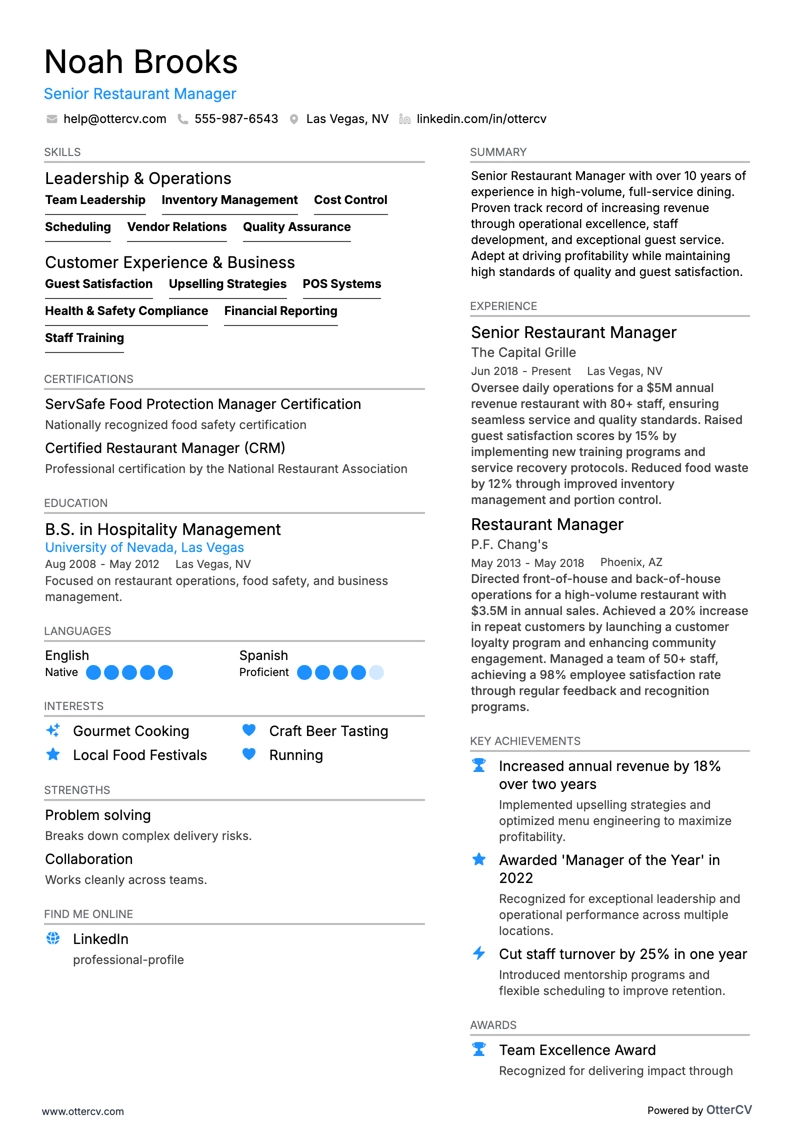
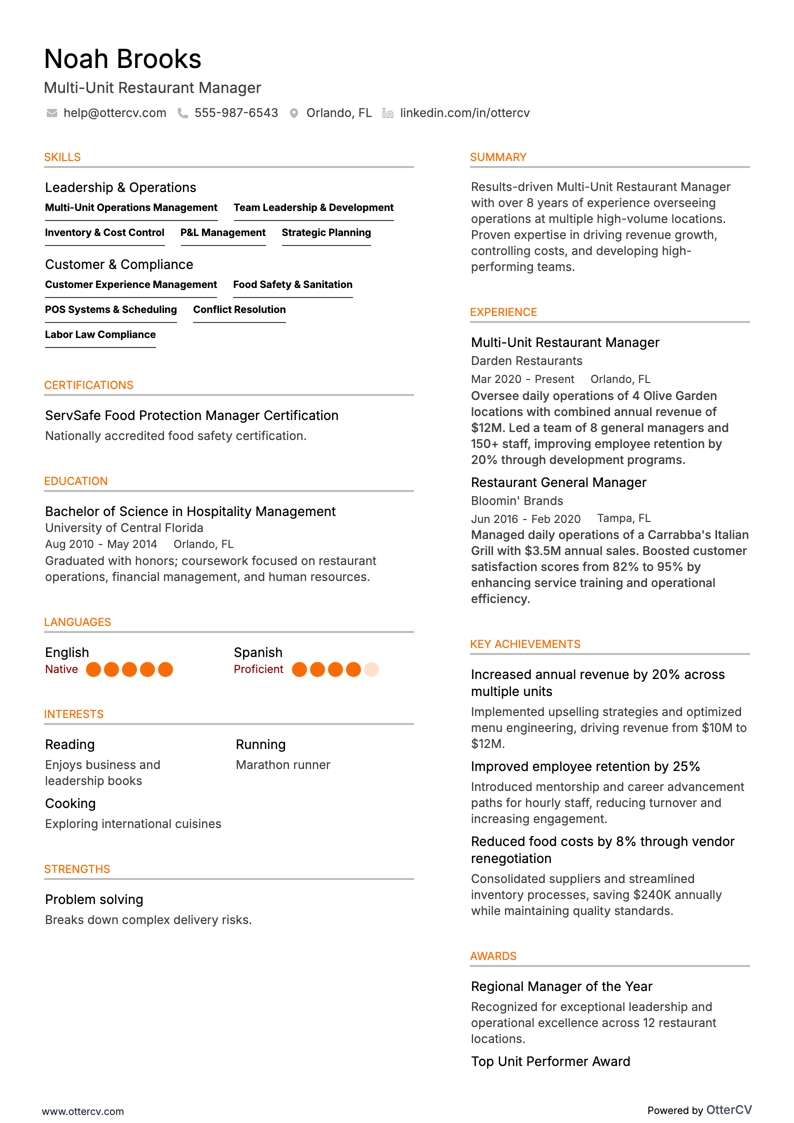
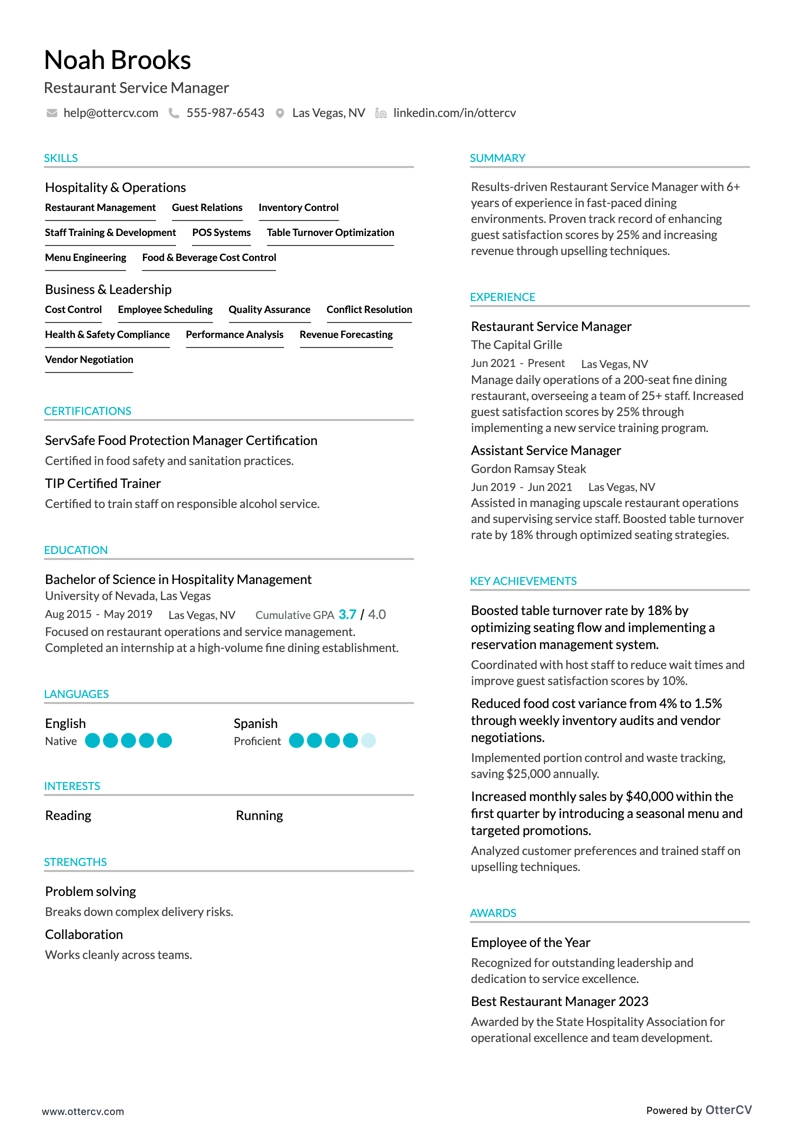
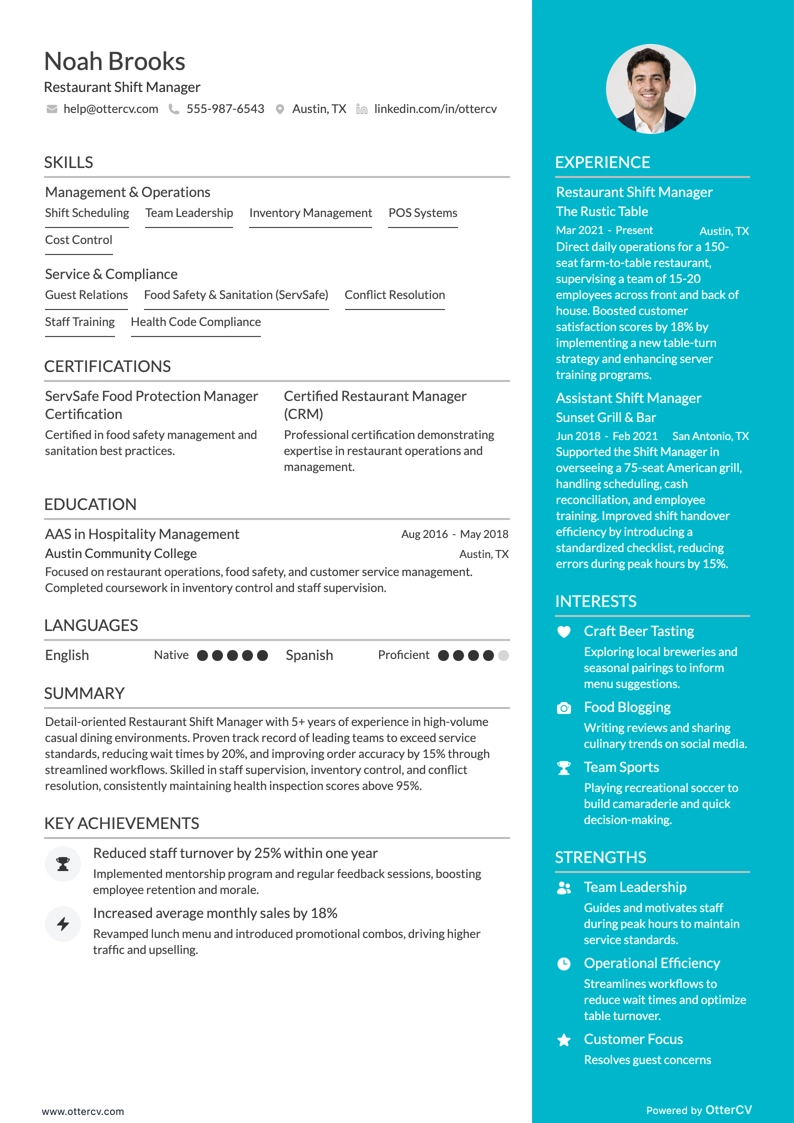
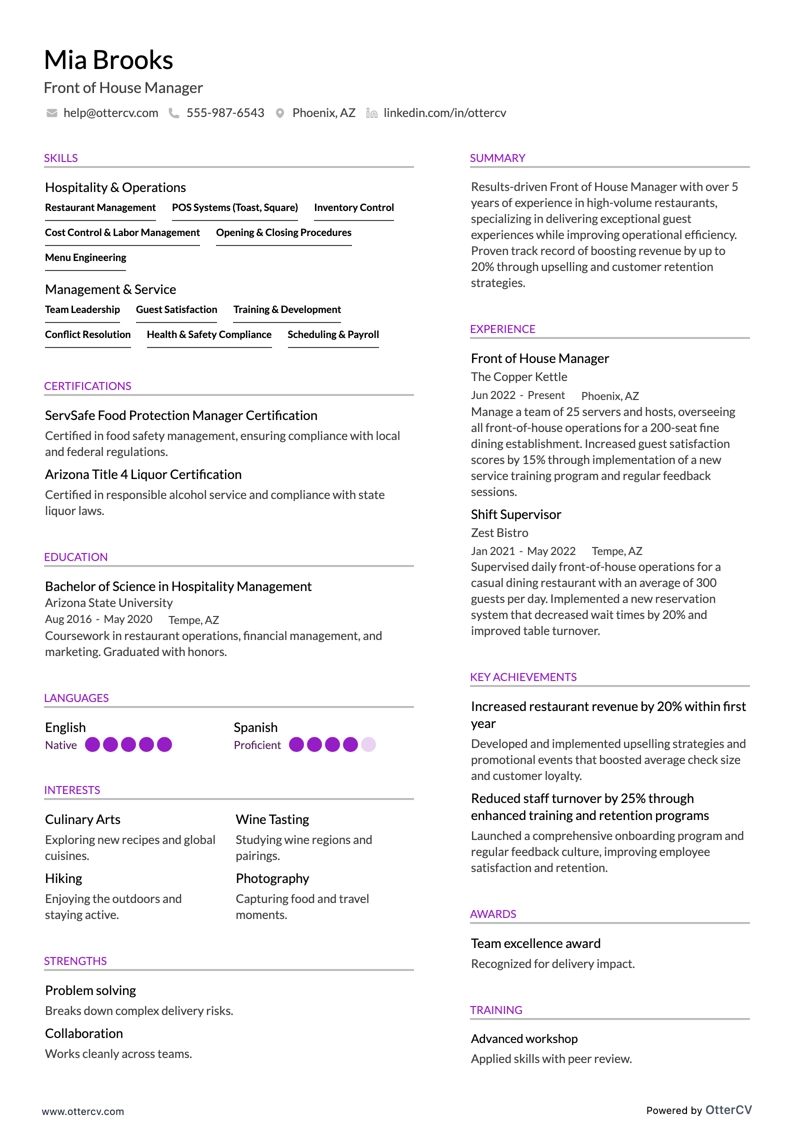
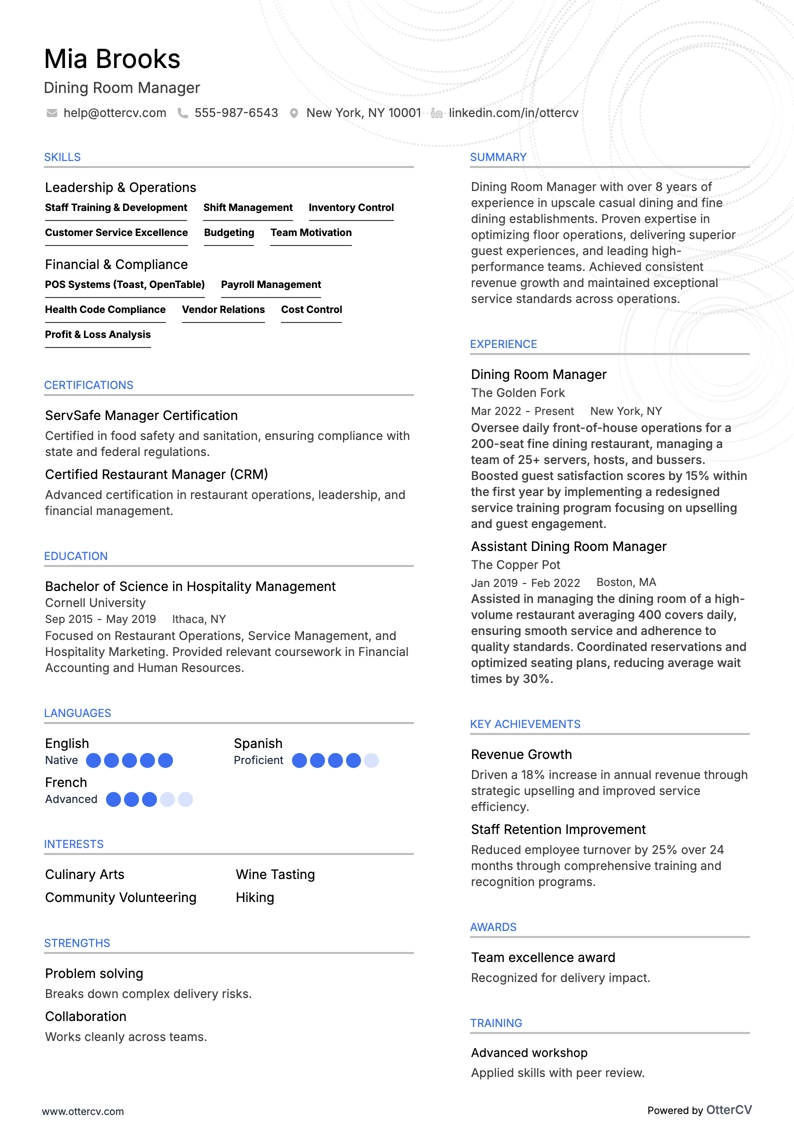
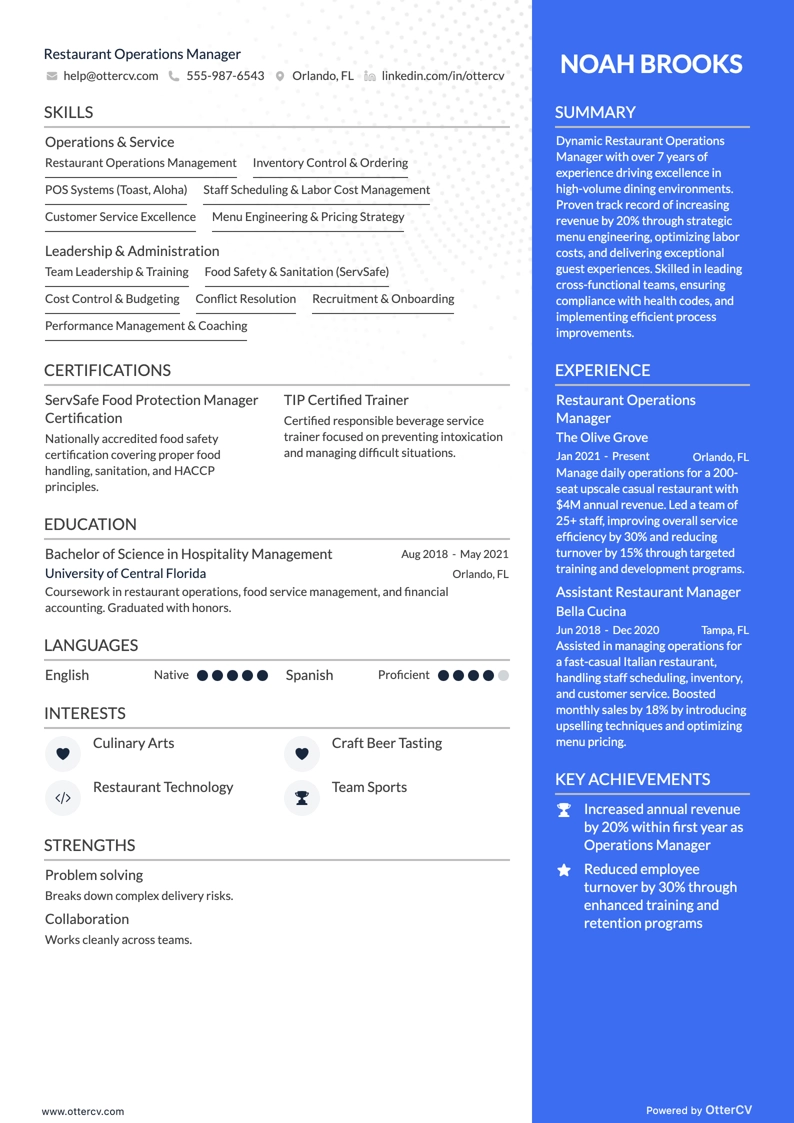
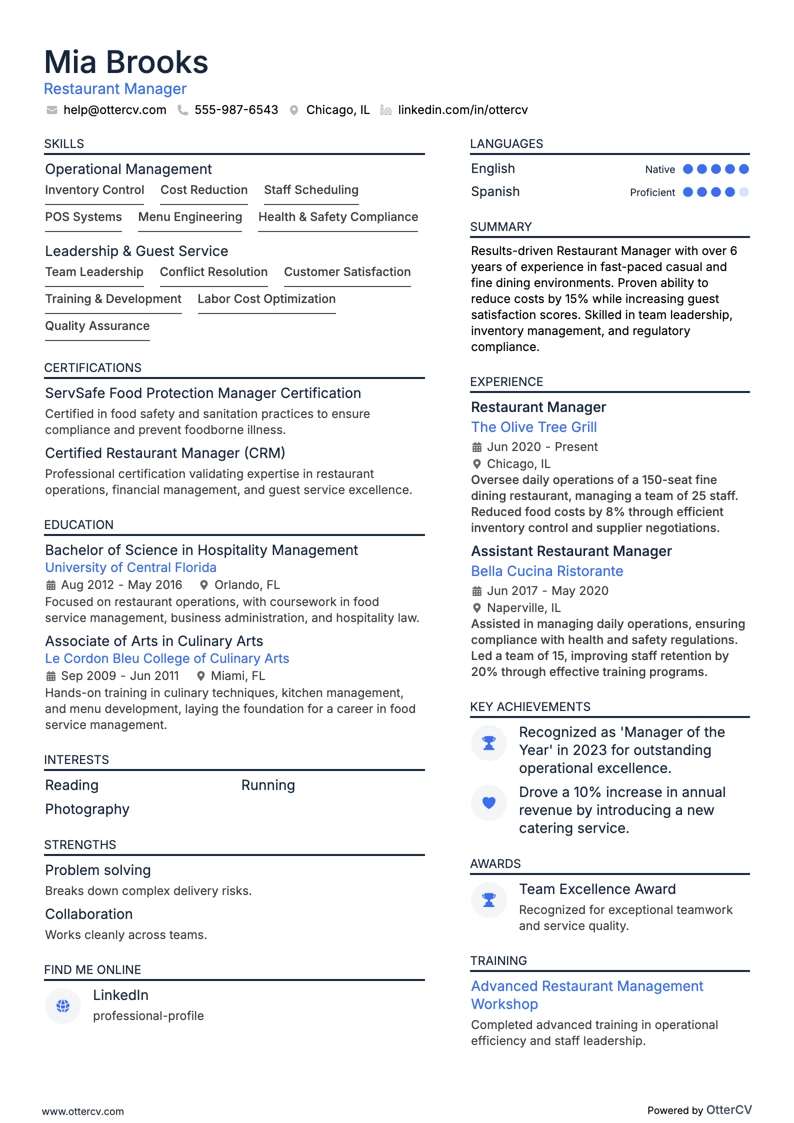
Assuming your experience is already listed in reverse chronological order, with your most recent role first, this candidate gets several important things right:
- Uses action verbs: Starts each bullet point with a strong resume action verb that clearly explains the candidate’s role and impact.
- Quantifies achievements: Includes specific numbers and percentages to show the scale of contributions and results.
- Highlights leadership and management skills: Shows the ability to lead teams and improve restaurant operations.
- Demonstrates problem-solving abilities: Explains how issues such as staff turnover or customer satisfaction were identified and resolved.
- Details specific responsibilities and skills: Clearly describes responsibilities and applied skills such as inventory management, budgeting, and marketing.
This approach shows career progression, leadership ability, and direct impact on restaurant performance, helping the resume stand out to employers.
Since listing every past responsibility can make your resume too long, keep it concise and focused on impact.
How to quantify your impact
- Include the size of the restaurant you managed: This shows you can handle the logistics and operations of a similar-sized establishment.
- Mention the number of staff you supervised: This proves you can lead and manage a team, which is essential for the role.
- Specify your measurable contributions to revenue growth: This demonstrates your ability to drive sales and improve profitability.
- Document the reduction in operating costs under your management: This shows you can manage resources efficiently and reduce unnecessary expenses.
- Detail the number of successful food safety inspections during your tenure: This reflects your commitment to safe, high-quality food service.
- Present customer satisfaction survey scores or ratings: High ratings help prove your success in customer service and customer experience management.
- Mention the number of menus or special promotions you oversaw: This shows creativity and awareness of food trends.
- Report the worker retention rate during your management: This reflects your leadership style and people management skills in building a positive work environment.
Writing a restaurant manager resume without any work experience
As challenging as it may seem, writing a restaurant manager resume with no experience is still possible. Start by understanding the role well. Reading more about what restaurant managers do can help, and this guide is a useful place to begin.
If you lack direct experience, focus on transferable skills, education, and any relevant volunteer work or internships.
Focus on these areas:
- Professional objective: Show your eagerness to move into a management role and highlight communication, leadership, and customer service skills.
- Education: List your degrees and any relevant hospitality or management coursework.
- Skills: Include transferable hard and soft skills such as leadership, problem-solving, customer service, and familiarity with technology.
- Volunteer experience or internships: Describe any experience that shows your ability to manage, organize, or lead, focusing on results and skills gained. Volunteering on a resume always helps.
- Additional qualifications: Mention certifications, languages, or memberships that strengthen your application.
Also, pair your resume with a concise cover letter that connects your background to the specific job and highlights your enthusiasm and potential to grow into the role.
Putting Your Skills Under the Spotlight
The next section to focus on is the resume skill section, which is especially important in the restaurant industry.
Keep your skills relevant. Read the job description carefully and tailor your resume, especially your skills section, to match what the employer is looking for.
It also helps to understand the difference between hard skills on a resume and soft skills. Hard skills support operational and financial management, while soft skills enable leadership, communication, and a positive dining experience for customers.
Both are essential for a restaurant manager because together they support efficient operations, strong leadership, and business growth.
Here are a couple of lists with the most useful skills related to the restaurant manager role.