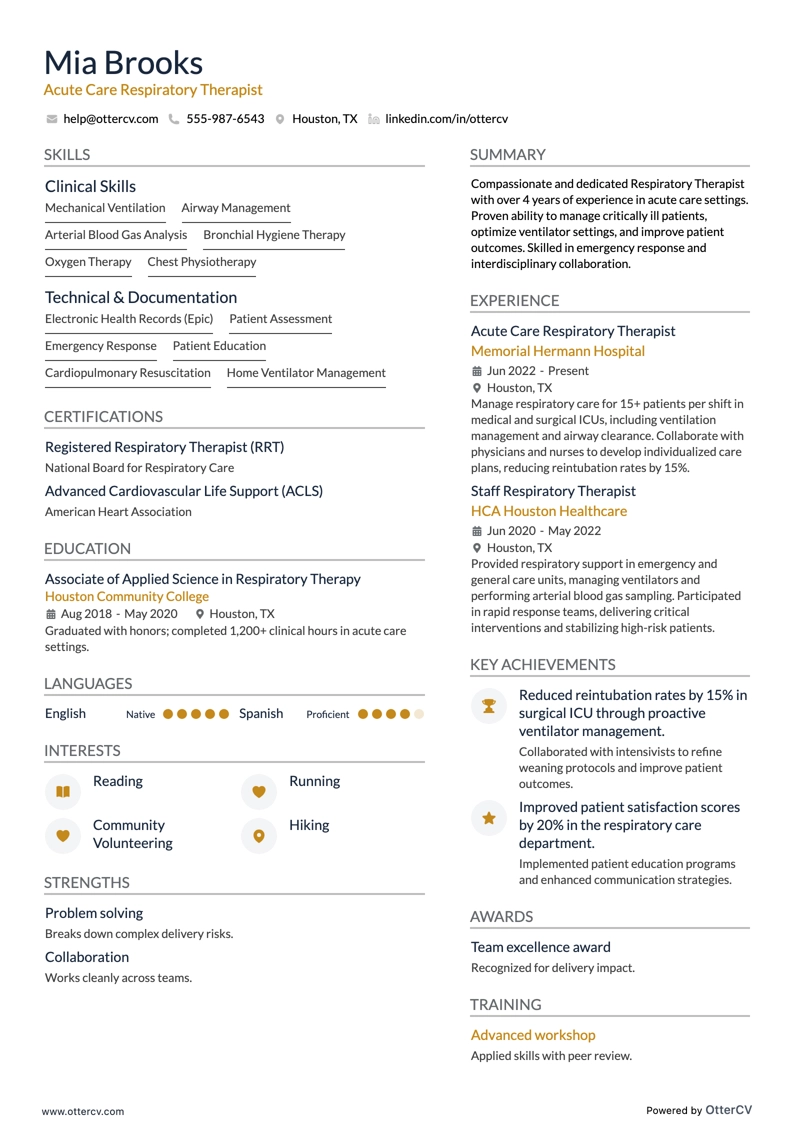
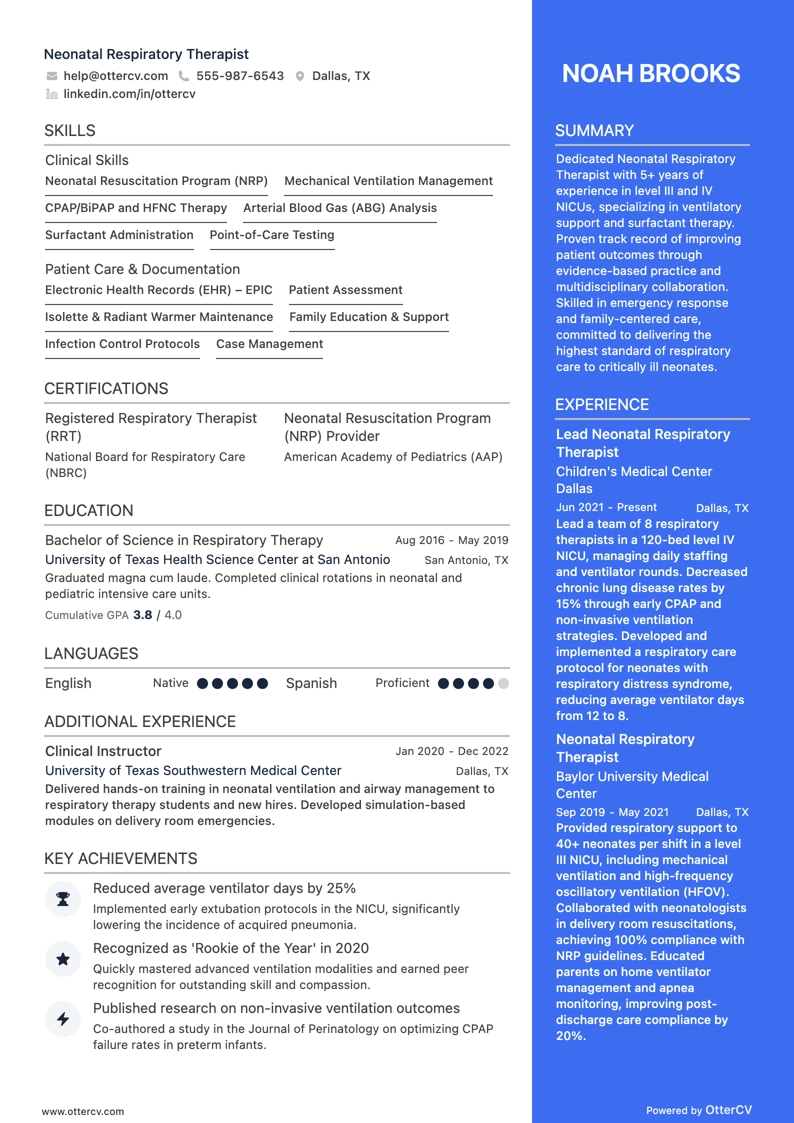
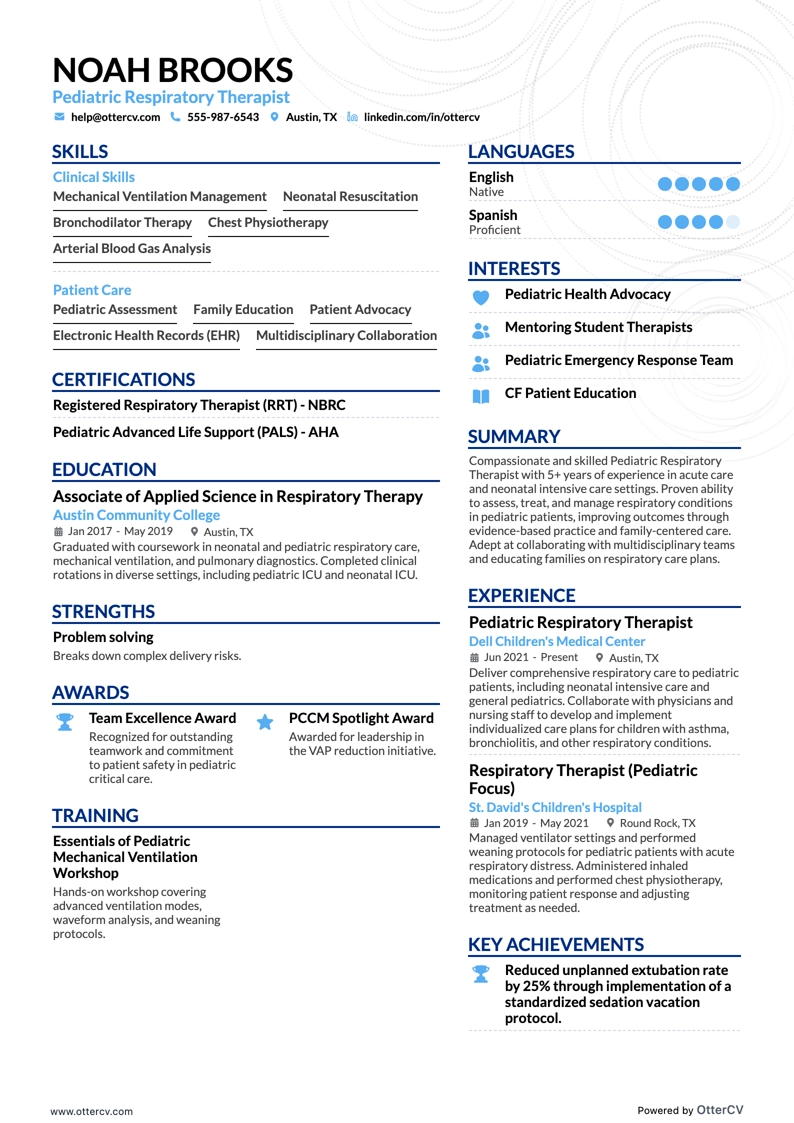
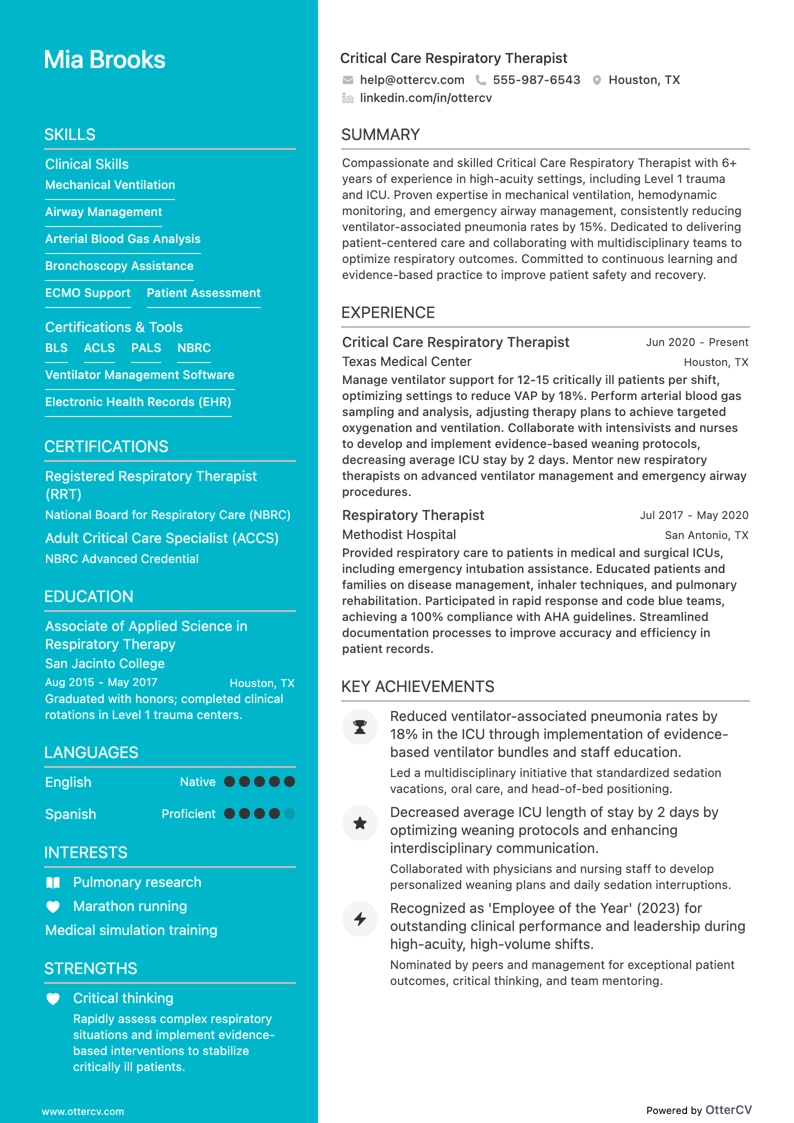
Respiratory therapists continue to play a key role in healthcare even after the pandemic as many people still deal with Long COVID symptoms and other chronic lung diseases.
As a result, demand for pulmonary specialists is growing, and job requirements continue to expand each year. A strong respiratory therapist candidate should show experience using a range of medical equipment across different settings, including critical care.
In this article, we’ll cover:
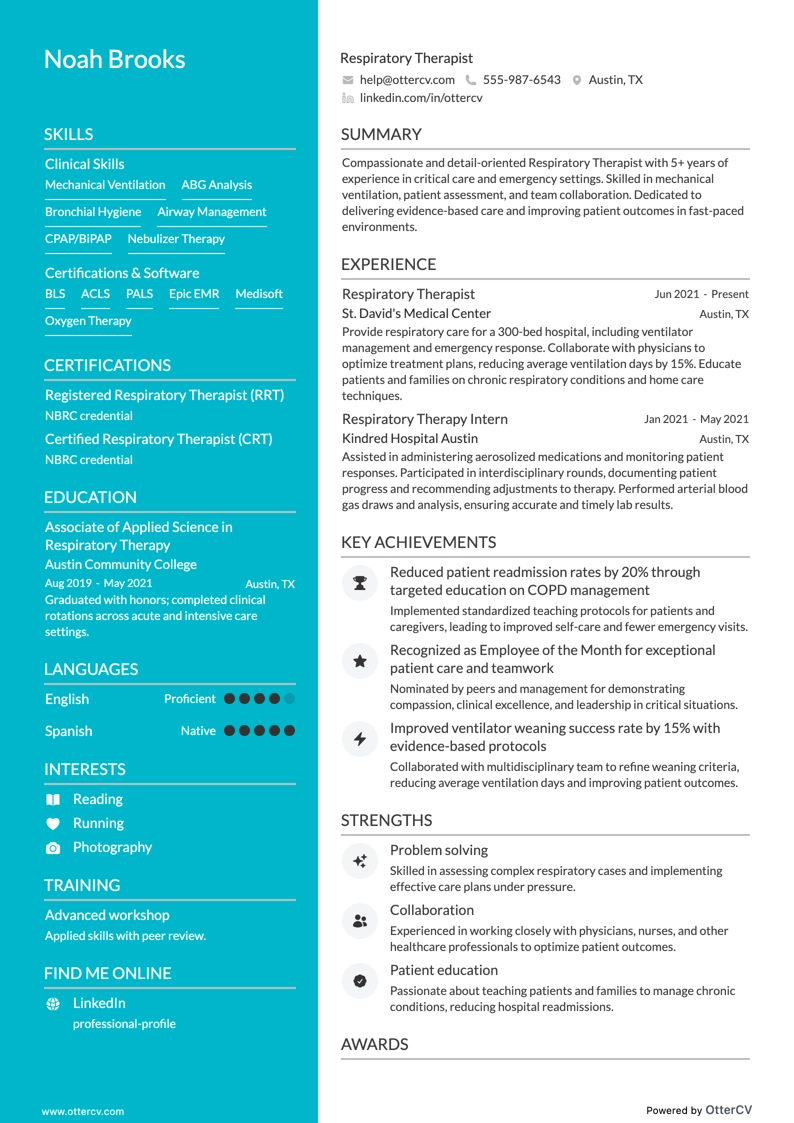
- Respiratory therapist resume examples to support your writing process
- Pitfalls to avoid when listing your degrees and certifications
- How to choose a resume format that reflects your specialization and experience
- How to tailor your application to match the role’s demands
- How to write an eye-catching resume profile
Explore related guides:
- Physical therapist assistant resume
- Physical therapist resume
- Occupational therapist resume
- Therapist resume
- Respiratory therapist cover letter
How to format your respiratory therapist resume
Because respiratory therapists work in a variety of environments and as part of larger medical teams, their work history often includes diverse roles. One common challenge is fitting every relevant position onto a resume while also showing how that experience connects to the job you’re applying for. In many cases, poor layout choices are the reason.
Choosing a resume format depends on your qualifications and the amount of clinical experience you have. To help you decide, here are the most applicable resume formats for respiratory therapists.
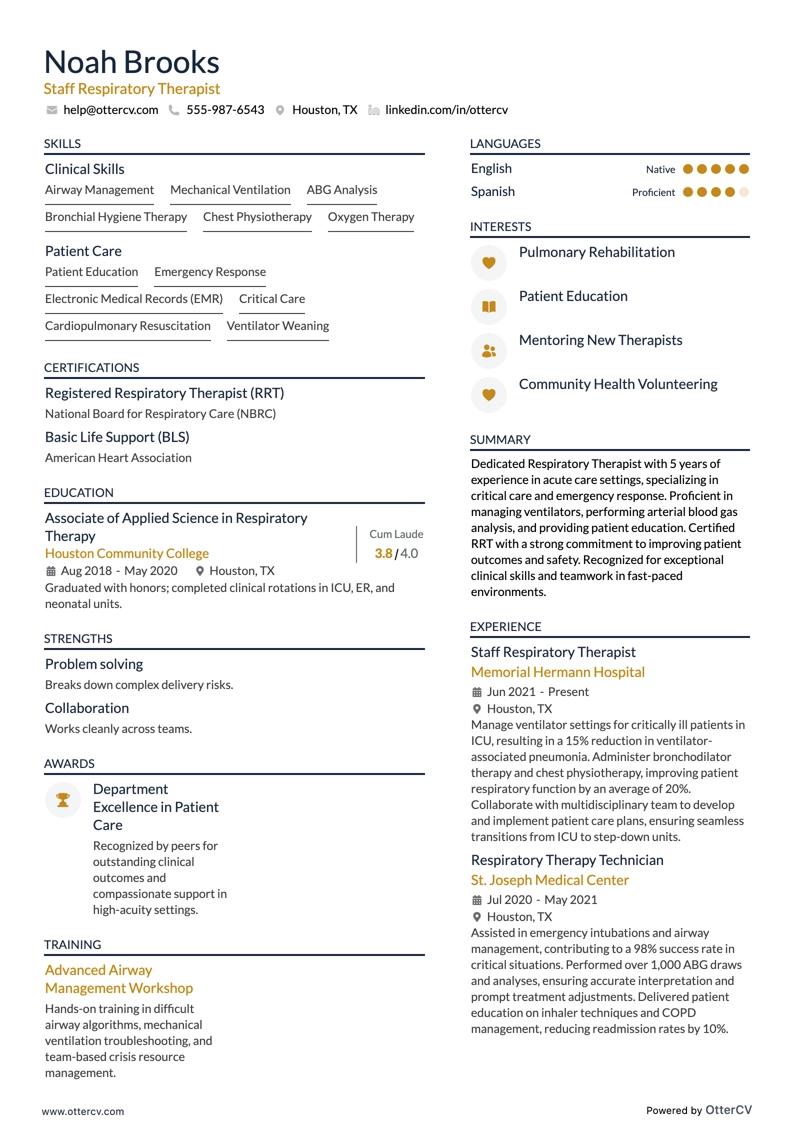
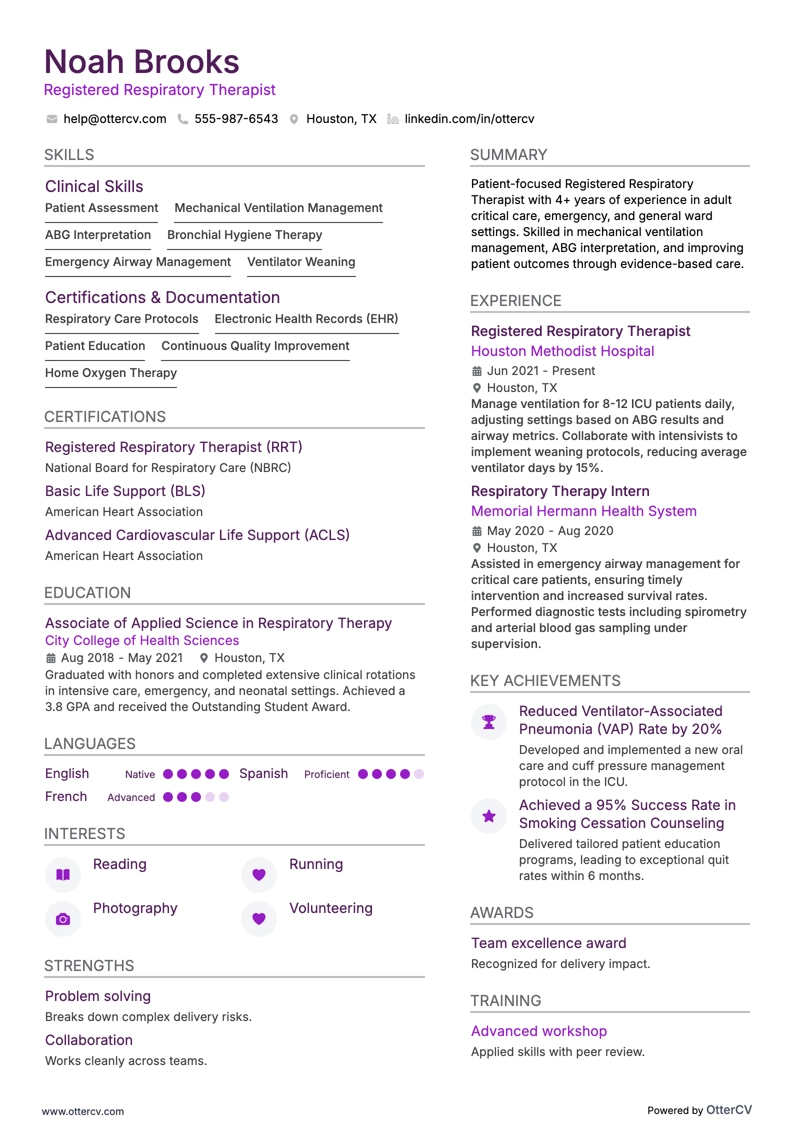
Reverse-chronological resume format
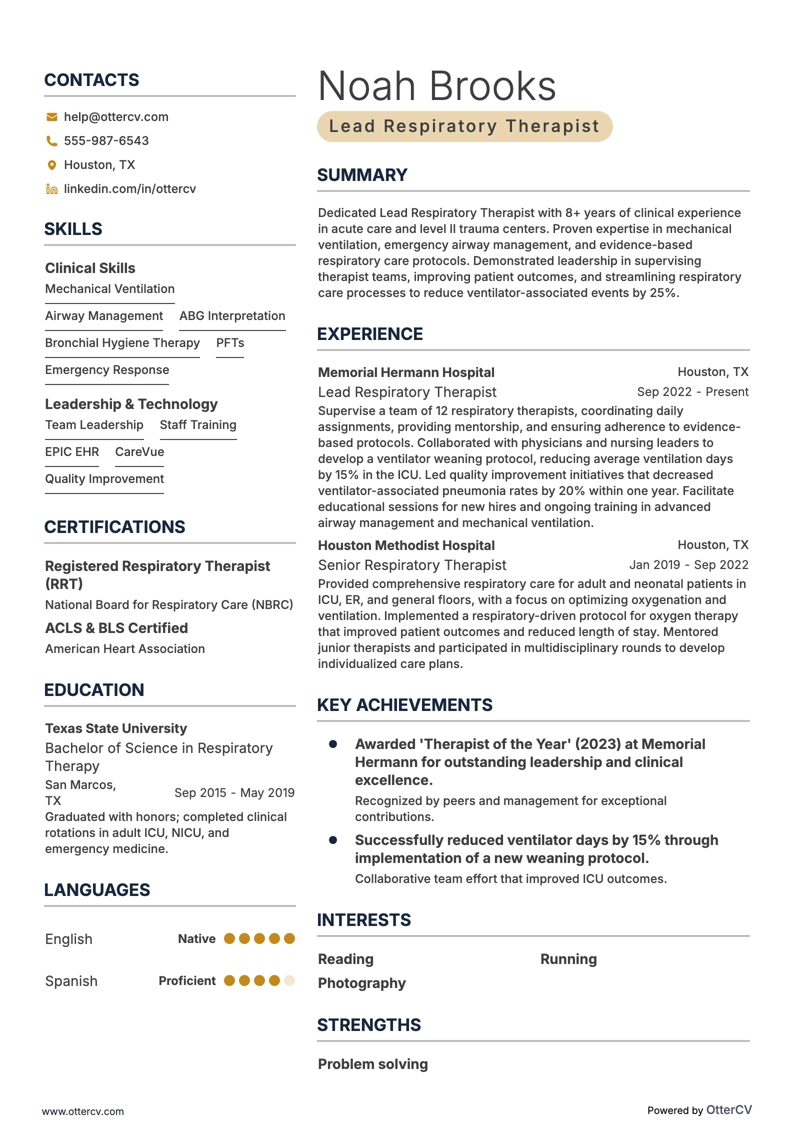
If your career path is fairly linear and you have more than five years of experience, choose the reverse-chronological resume format. This layout highlights your current level of expertise and shows how you have developed over time as a respiratory therapist.
A clear career progression, such as advancing within the same medical facility, signals reliability and professionalism to recruiters. It also helps employers understand your long-term goals as a pulmonary specialist and whether those goals align with their needs.
This format is also favored by hiring managers and works well with Applicant Tracking Systems (ATS).
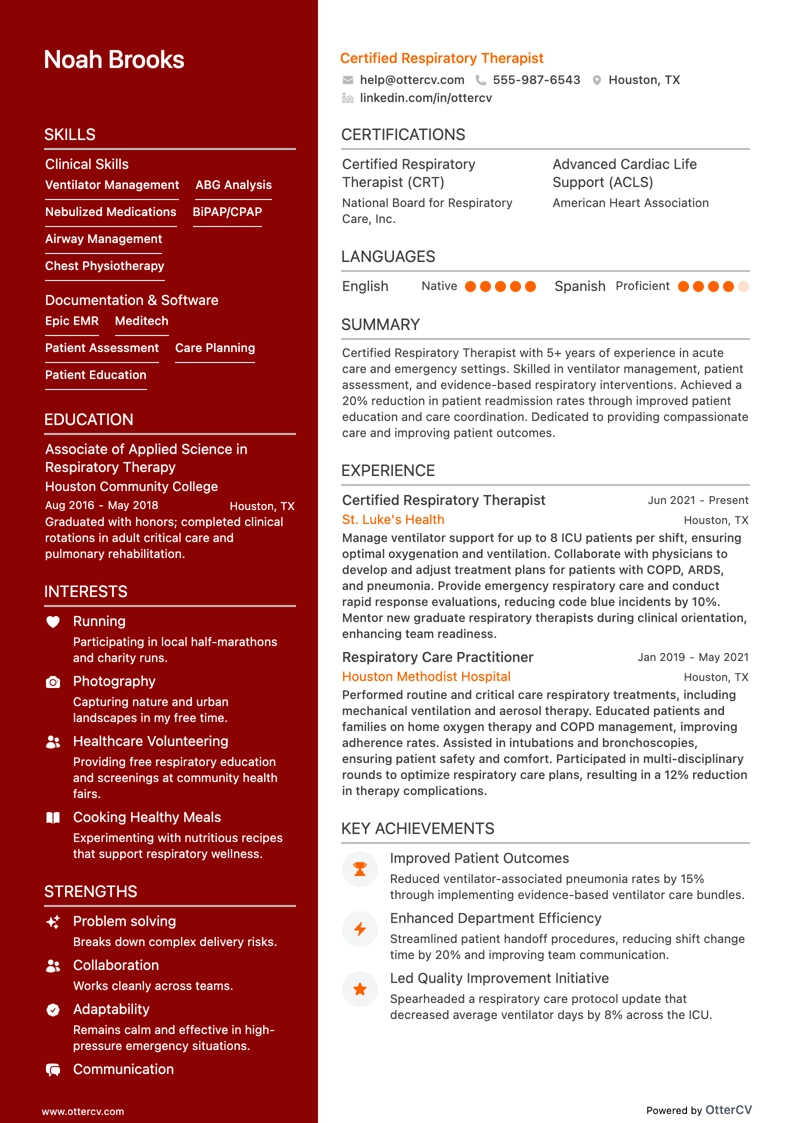
Hybrid (combination) resume format
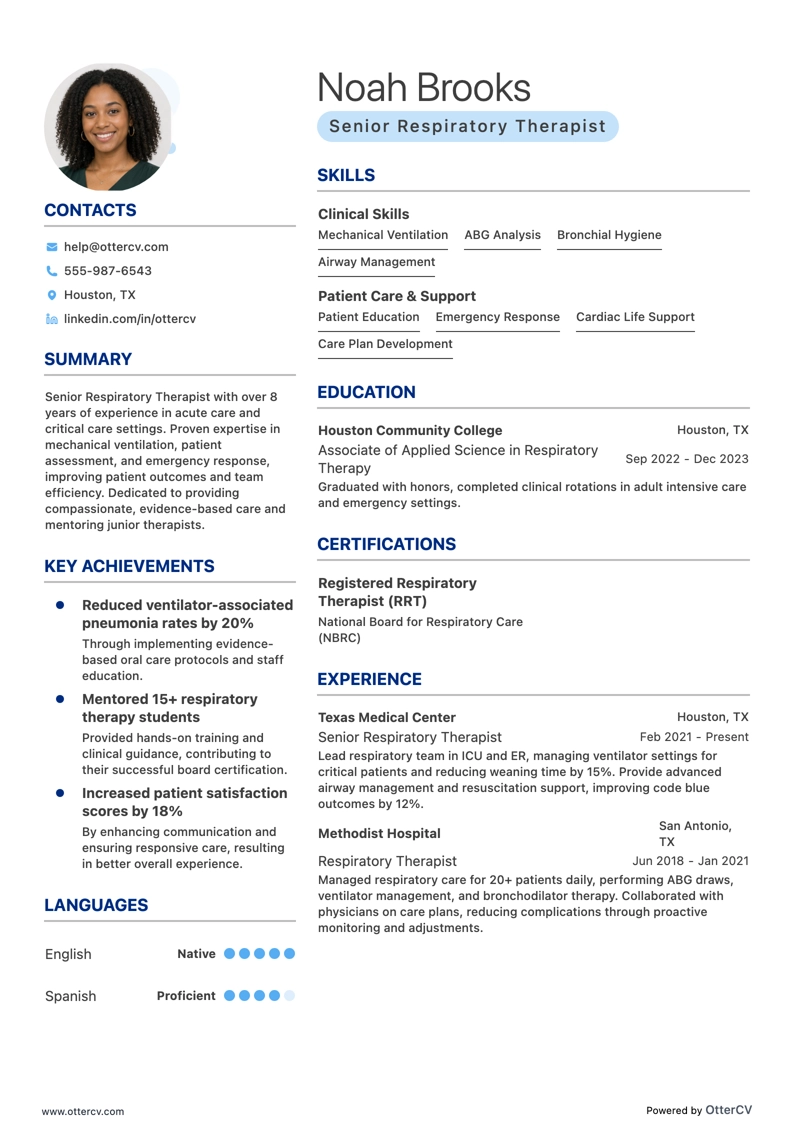
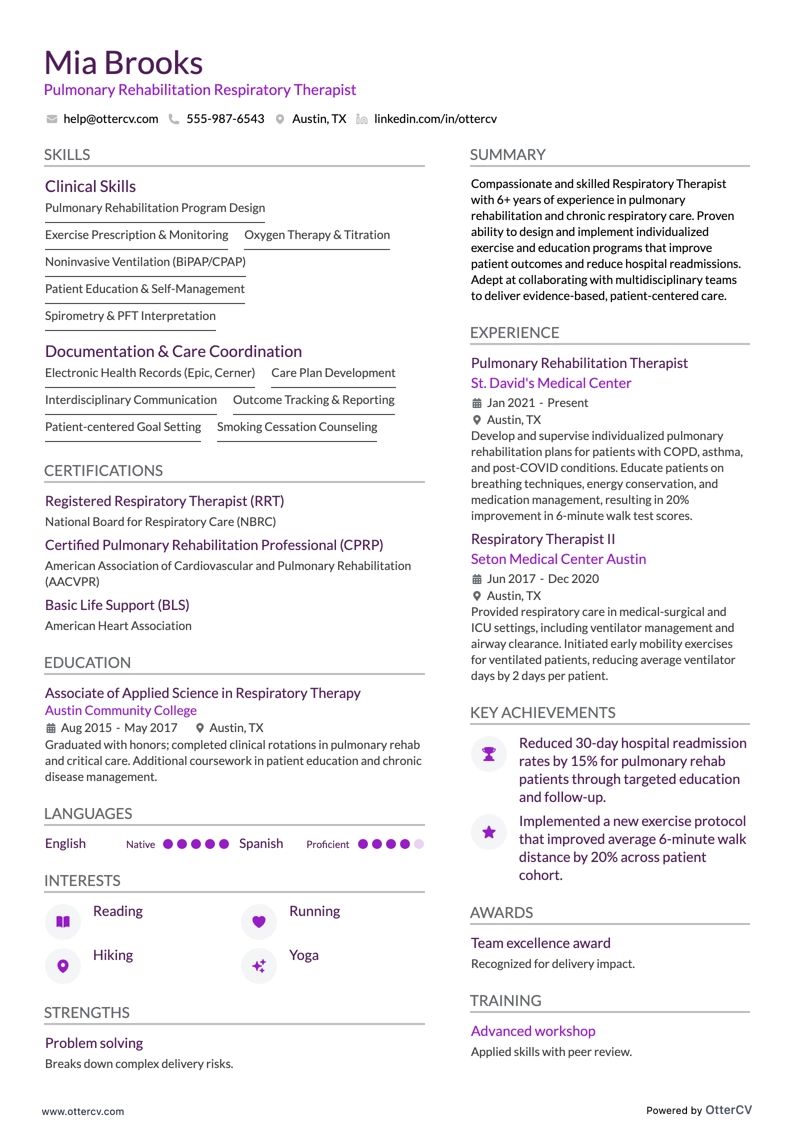
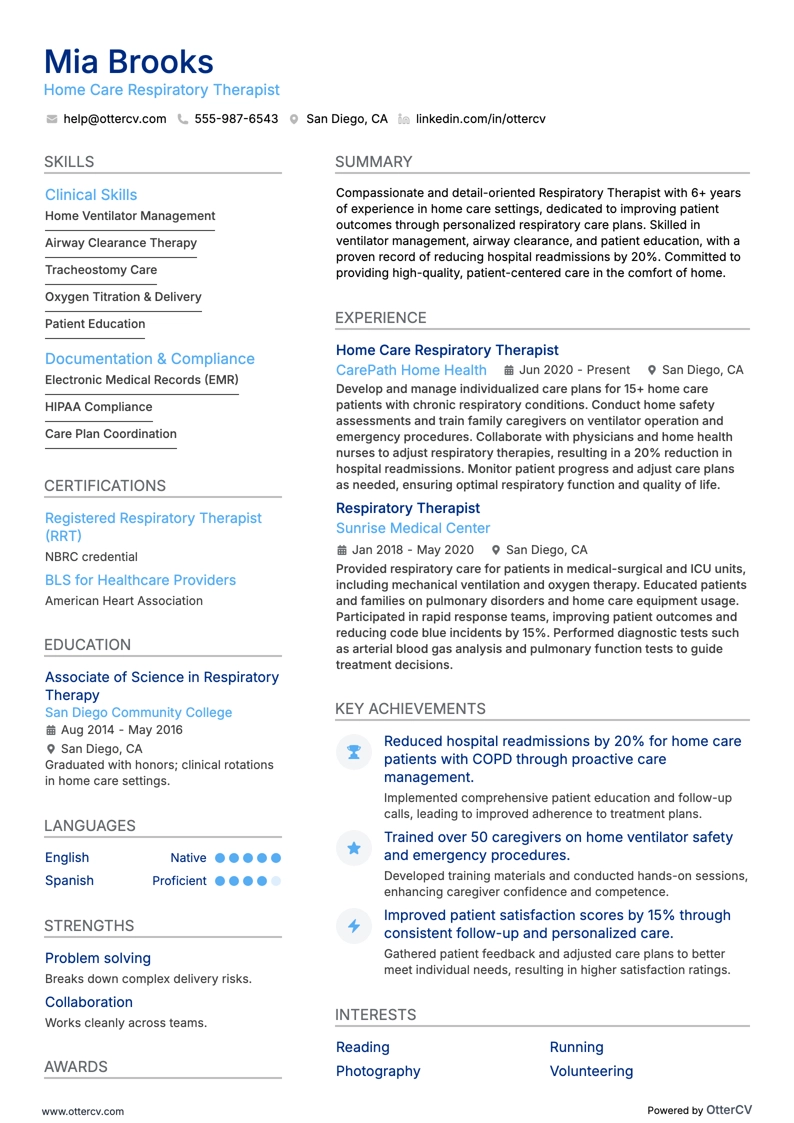
If your employment background is varied or your roles often overlap, it can be difficult to summarize your experience and choose which positions to include. In that case, the hybrid resume format may be a better fit. It offers a balanced view of your background by emphasizing both your most relevant roles and your strongest skills.
This makes it especially useful for respiratory therapists with experience in both clinical settings and home care. It is also a strong option for candidates with less than five years of experience because it puts more focus on medical capabilities than on gaps in work history.
Keep in mind that you will need to be selective about the positions you include, since this format offers less space than a traditional resume layout.
Also be mindful of regional differences in resume conventions. For example, a Canadian layout may vary.