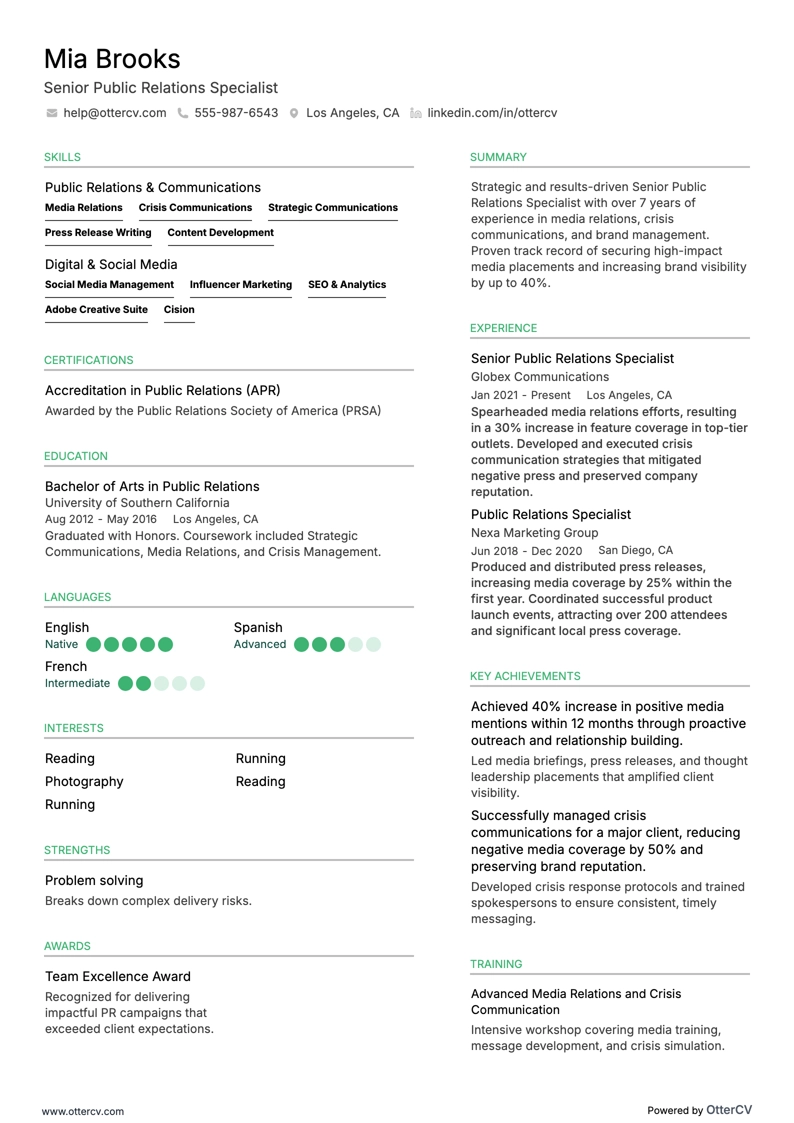
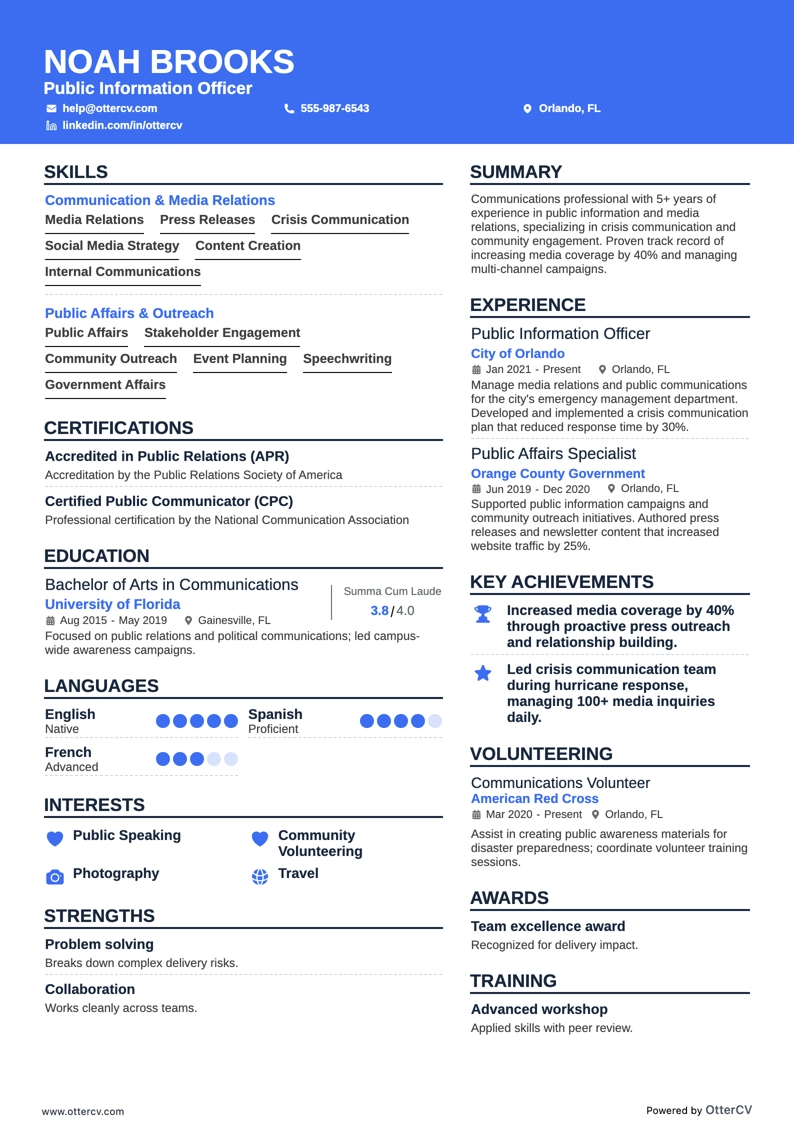
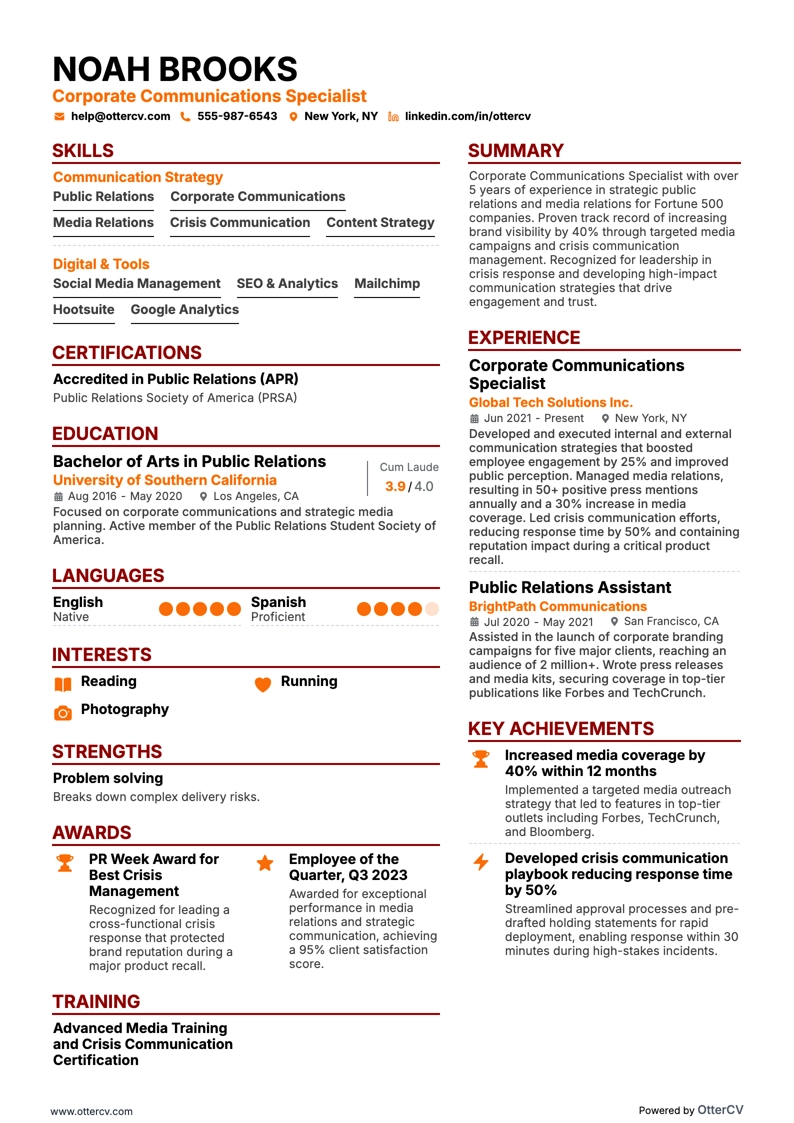
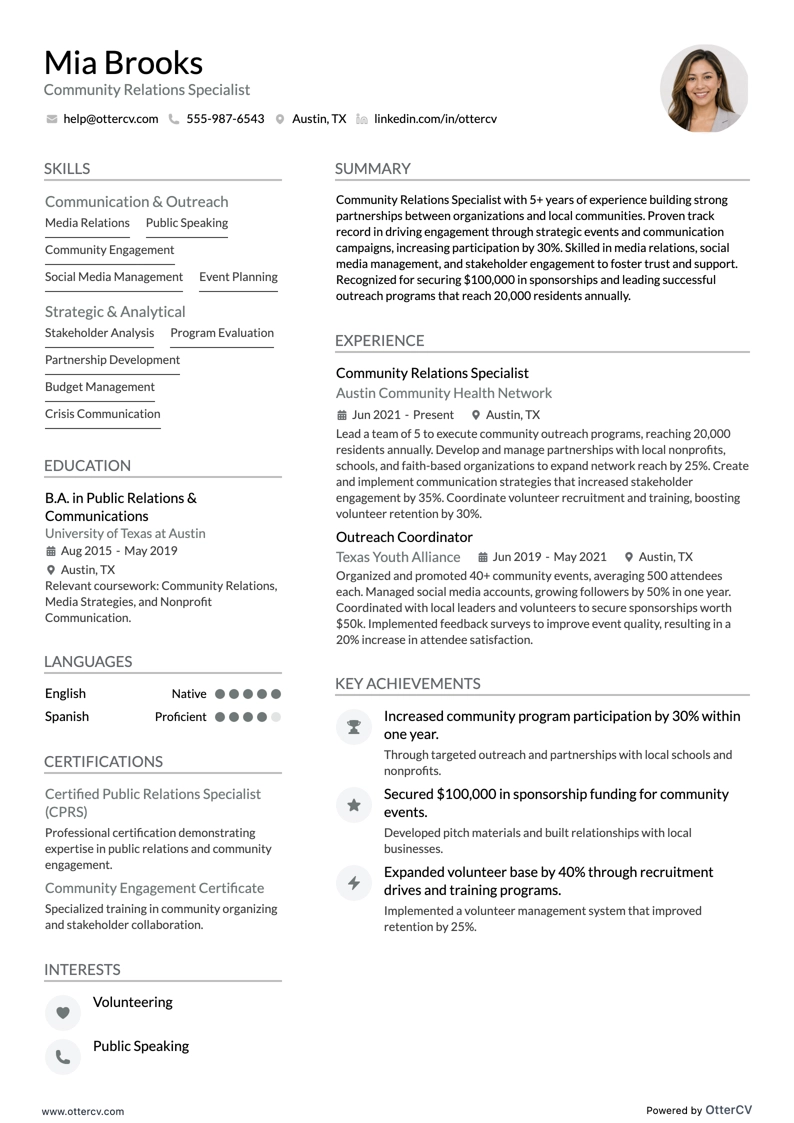
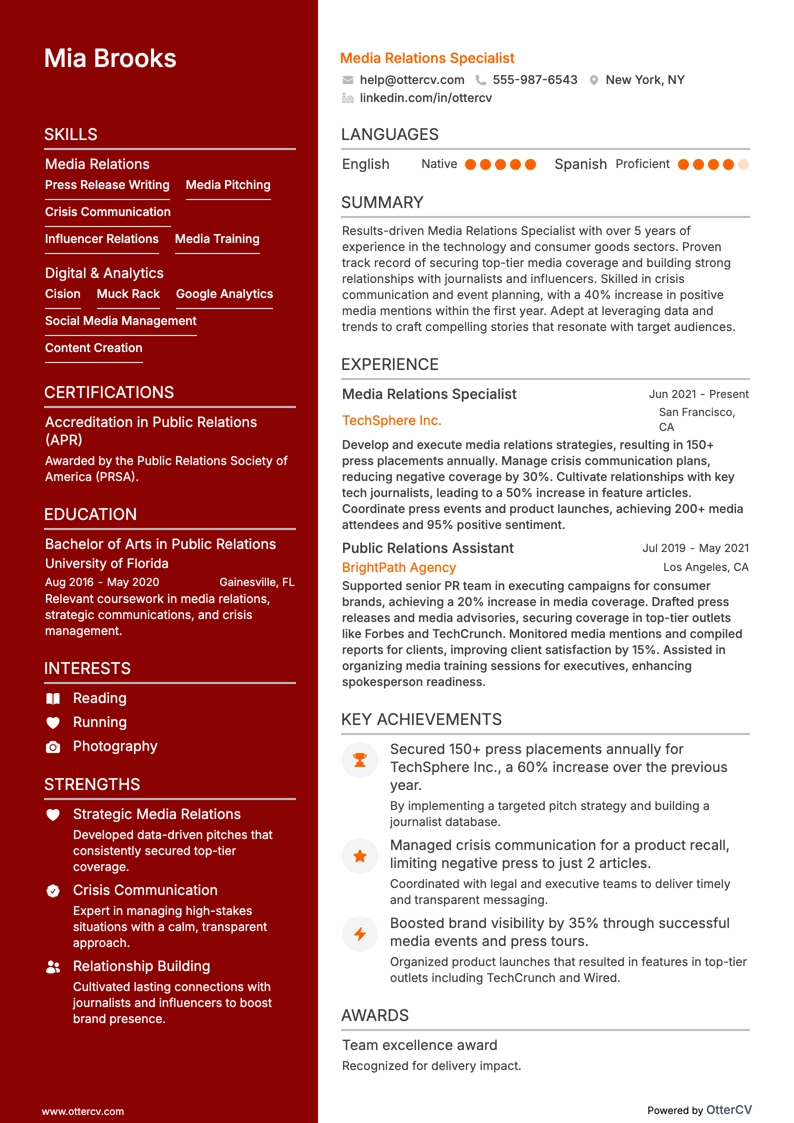
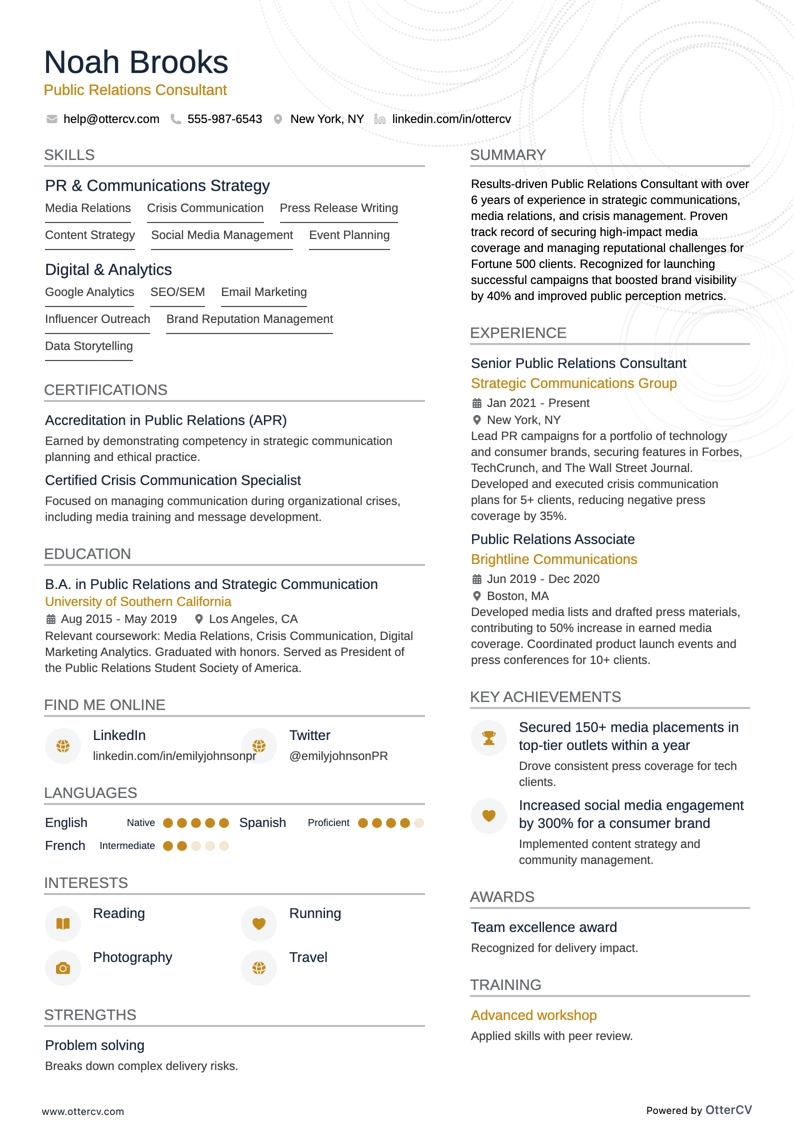
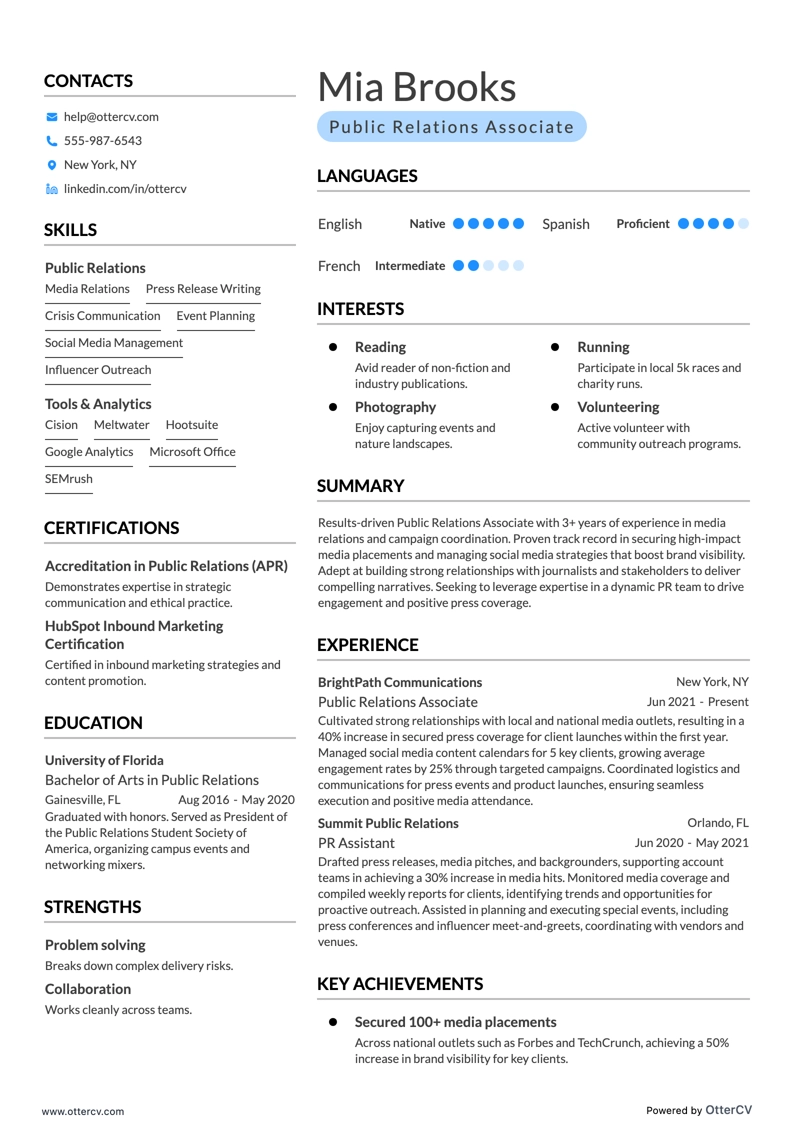
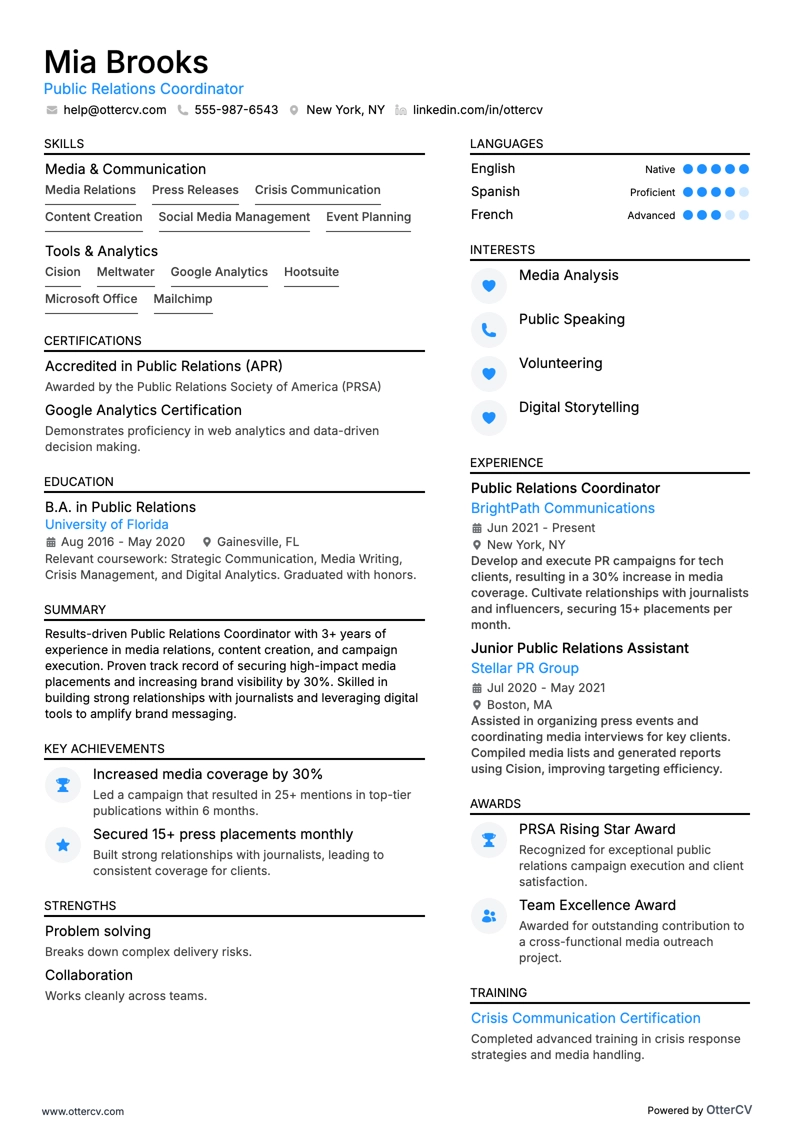
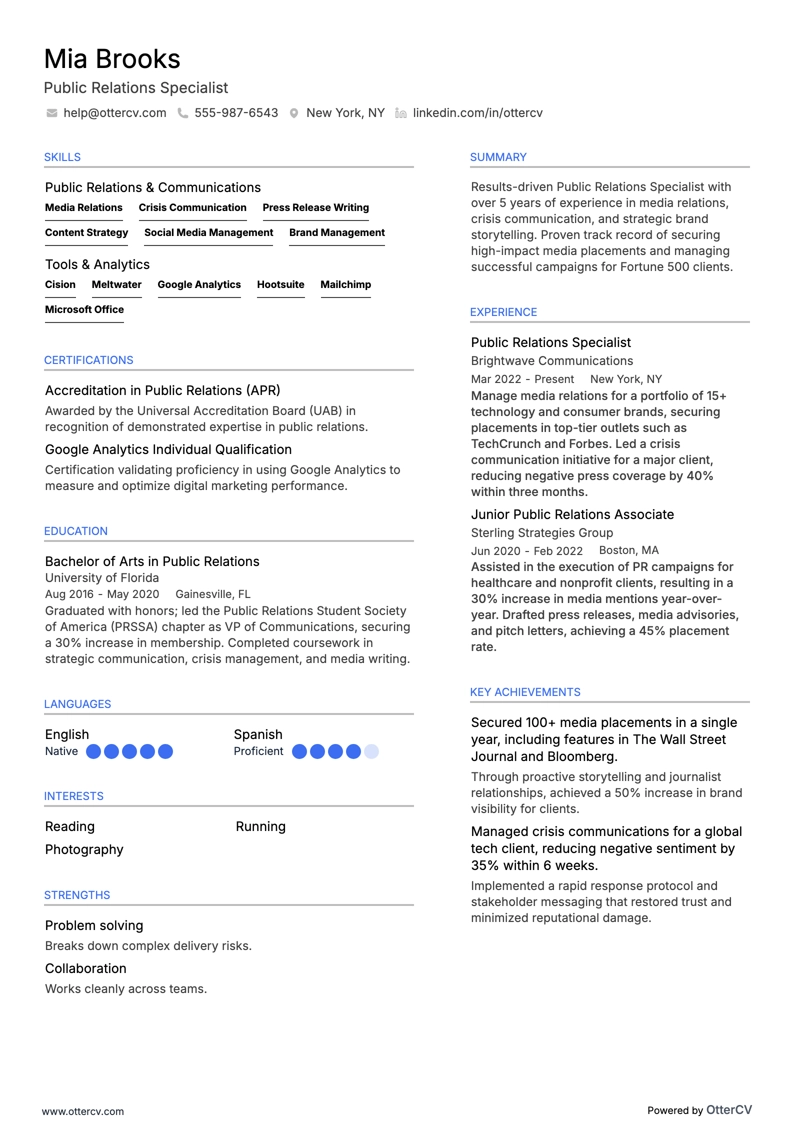
- Workplace description — effectively detailed.
- Position — defined in full.
- Responsibilities and achievements — thoughtfully quantified with data.
Specific metrics can completely change how a candidate is perceived, helping present a more seasoned professional profile.
The strategic use of impactful words such as increase, boost, top, positive, improvement, and doubling can also shape perception, even on a subconscious level.
But how do you build a balanced, quantified experience section? Public relations specialists often struggle to measure their achievements clearly.
We can help with that. Read on.
How to quantify impact on your resume
You’re great with words. Now let’s make you better with numbers.
To amplify your professional impact, follow these simple steps:
- Include the number of social media followers you helped increase to show your ability to build online presence and visibility.
- Specify the percentage improvement in positive media coverage to demonstrate your skill in managing press relationships and promoting a positive company image.
- Quantify the number of crises managed to show experience in handling difficulties and protecting a company’s reputation.
- Highlight the reach of campaigns in numbers to show the scale you can handle and the impact you can deliver.
- Mention the percentage increase in overall brand recognition during your tenure to reflect your effectiveness in raising public awareness.
- Note the number of unique PR strategies you developed to showcase innovation and strategic thinking.
- Present the number of key industry influencers you have relationships with to emphasize your network and ability to promote a brand through powerful channels.
- State the number of employees you trained in media handling to demonstrate leadership, mentorship, and your contribution to making the company PR-ready.
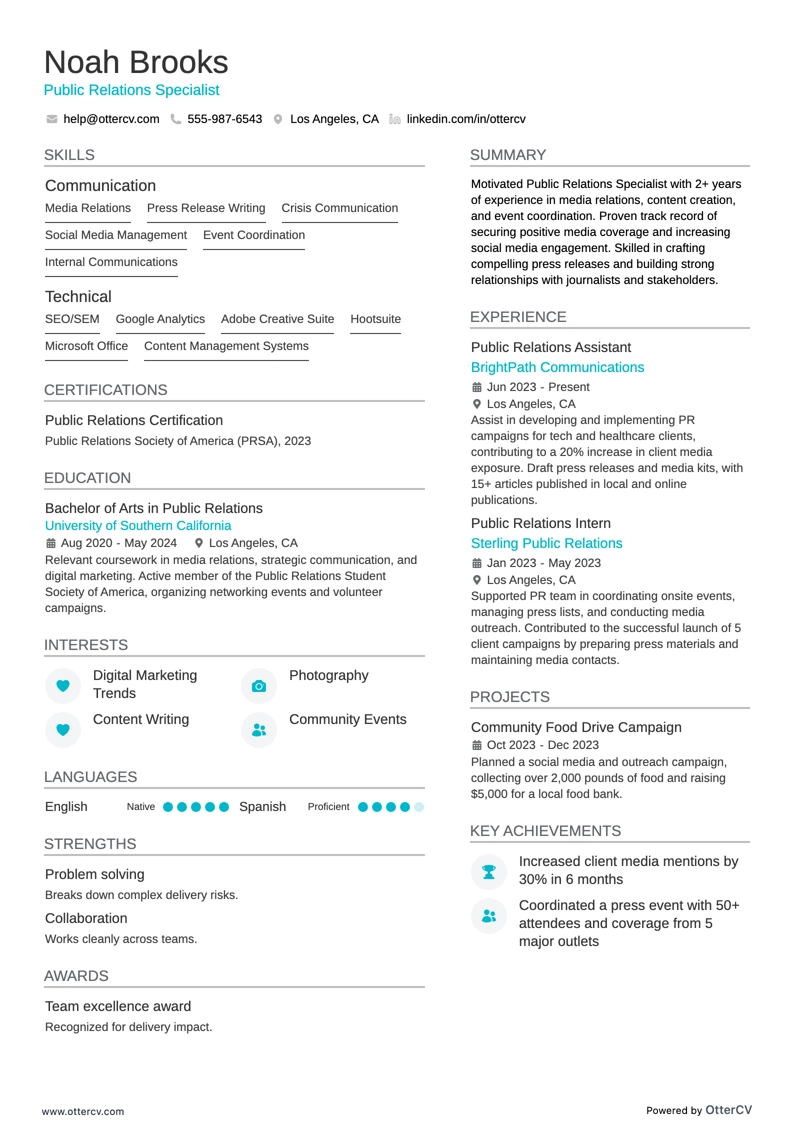
So far, so good. But what if you’re trying to land your first job in public relations?
How to write a public relations specialist resume with no experience
Whether you're applying for an internship, an entry-level role, or changing industries, you may be starting with minimal experience.
Imagine you come from a sports PR background and apply to a tech-focused company. You may struggle to answer detailed industry-specific questions. In that case, showing genuine interest in the field becomes essential, and using metrics can strengthen your case once again.
Here are some smart strategies for building an entry-level PR specialist resume:
- Speak the language of PR. Showing familiarity with PR terminology can reassure recruiters that you understand the field. Use industry terms throughout your resume, especially in the summary and experience sections.
- Customize your resume. Take every opportunity to emphasize your skills despite limited experience. Expand your skills section, and include educational honors and certifications that reflect your commitment to growing in PR.
- Highlight relevant experiences. Include activities that built PR-related abilities, such as managing a social media profile, using analytics tools, or coordinating community events.
Now let’s look at how to personalize your skills section, which is just as important for junior candidates as it is for senior PR professionals.
How to list hard and soft skills on your resume
When listing skills on your PR specialist resume, authenticity matters. Claiming expertise in APA style or crisis management without proof is unlikely to impress.
Use tangible examples to support your skills. Whether you include them in your experience or summary sections, or feature them in a dedicated Proudest Moments or Career Highlights section, real-world evidence makes a stronger impression.
Leaving skills off your resume could also hurt your chances with ATS. Large organizations often use these systems to filter resumes based on the skills named in the job ad.
Soft skills are especially common in PR, but they can be harder to communicate effectively. Instead of listing every skill you have, focus on the ones you truly excel at and back them up with concrete examples of how you’ve used them in real situations.
Here’s a list of some you can use.