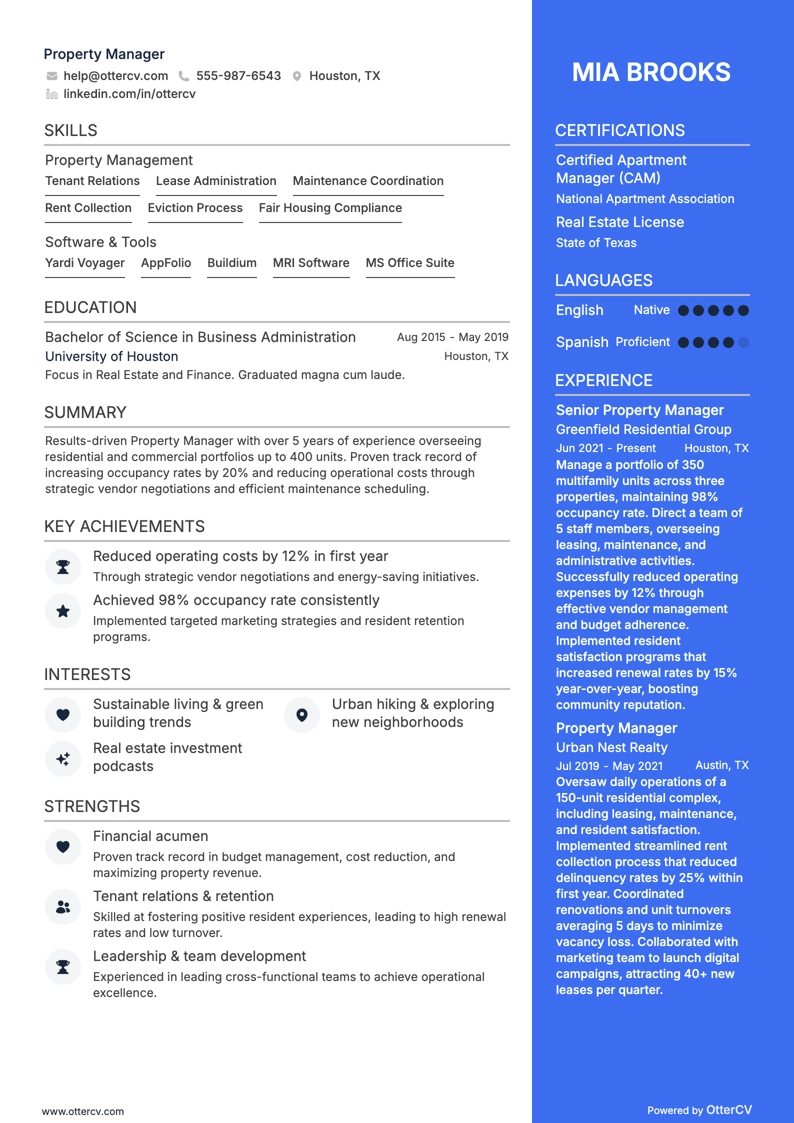
Property management is a demanding but rewarding field. You may be following up on late rent, handling urgent repairs, and overseeing a diverse portfolio of 100 to 200 properties.
To stay effective, you need to visit properties regularly, whether you work on-site or remotely, and stay informed about current laws. In this industry, your primary clients are the property owners, not the tenants.
If you want to land a role in this field, you need a professional resume that helps you make a strong first impression on recruiters.
What you’ll learn here:
- How to choose a resume template that strengthens your profile as a property manager
- Which resume sections matter most and how to write them
- The best way to highlight your property management experience
- How to present your achievements to reflect your impact in property management
- Which skills from the job description are most important to emphasize on your property manager resume
You may also find these housing-related resume guides helpful:
- Assistant property manager Resume
- Facility Manager Resume
- Broker Resume
- Realtor Resume
- Real Estate Agent Resume
- Property manager Cover Letter
How to format a property manager resume
When choosing a resume format, focus on the one that presents your property management experience and skills most effectively.
The reverse-chronological resume format is often the best choice because it makes your career progression easy for employers to follow.
That said, other formats may be a better fit in some cases. A hybrid resume works well if you have a wide mix of relevant skills from different roles or are making a major career change. A functional resume can be useful if you have employment gaps, since it emphasizes skills and experience over a strictly chronological work history.
Here are some tailored resume tips and tricks:
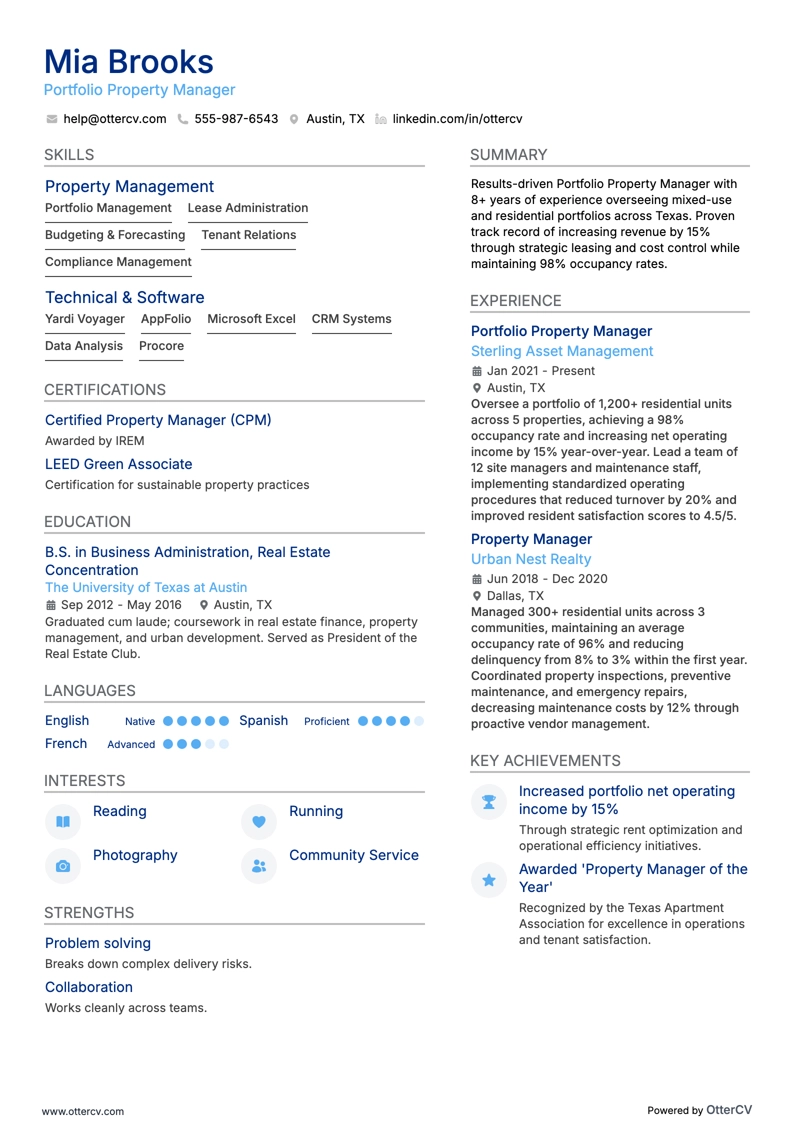
- Avoid decorative fonts that ATS scanners may struggle to read. Use simple, professional fonts such as Rubik, Montserrat, Lato, or Arial in sizes between 10 and 12 points.
- Keep 1-inch margins around your resume for a clean, polished layout.
- Choose resume colors that are easy on the eyes. Blue is a strong option for many professional settings.
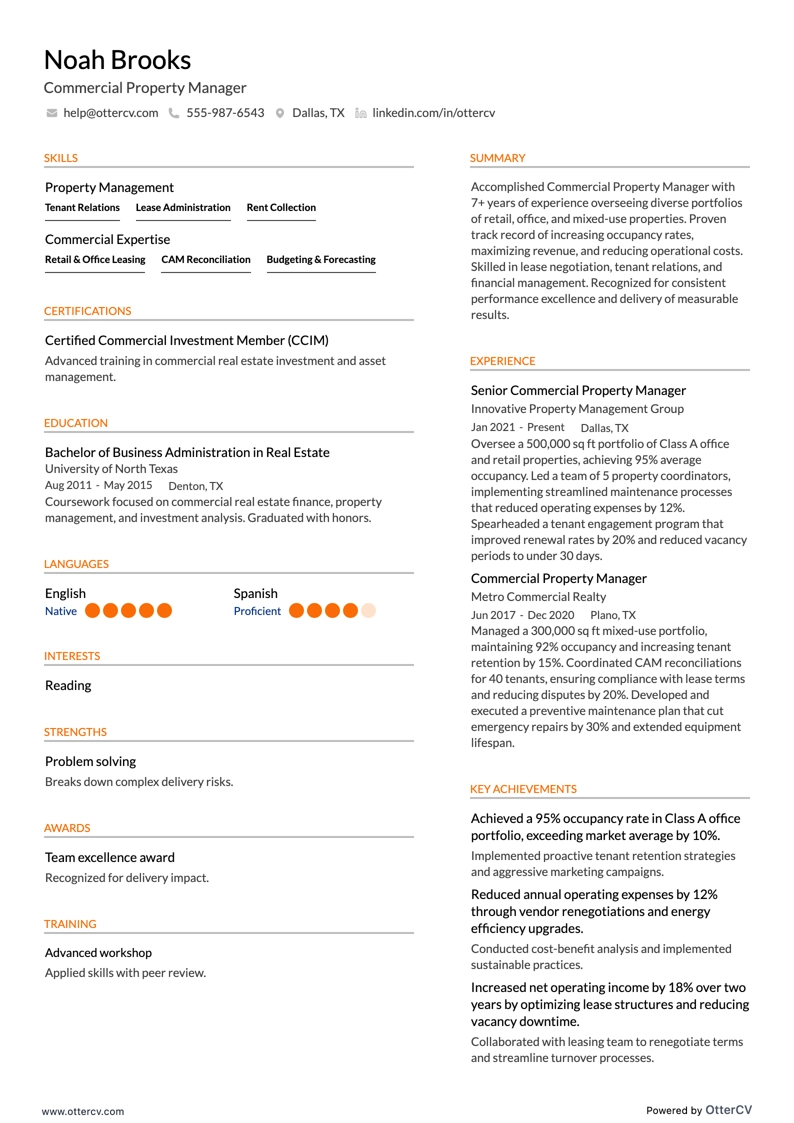
- Keep your resume concise and, if possible, limit it to one page.
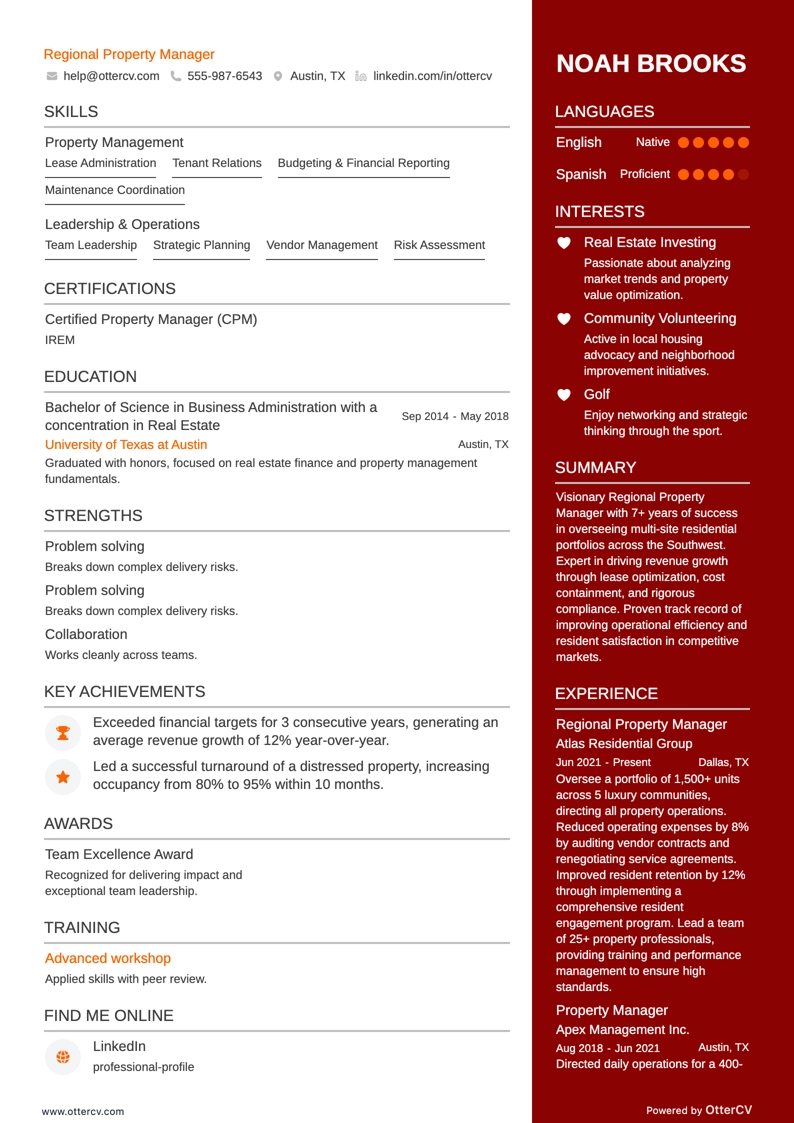
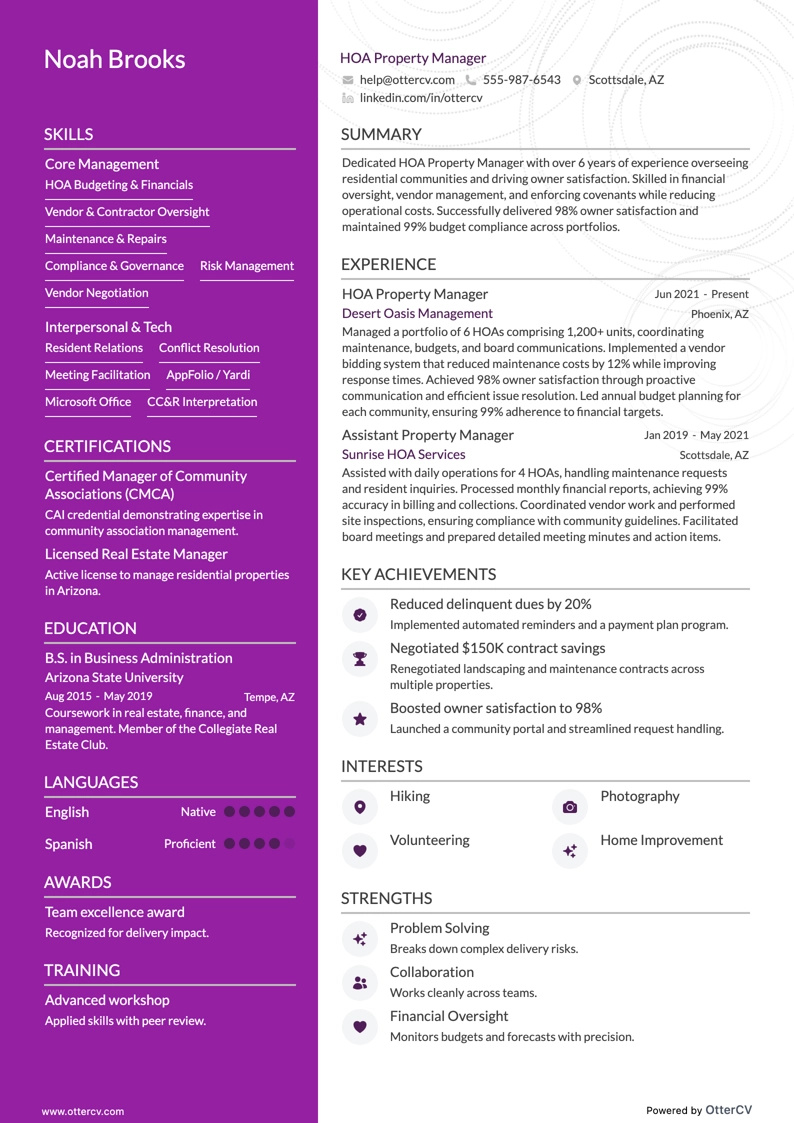
- Include a header with your name, professional title, contact information, and LinkedIn profile link.
- Save your resume as a PDF so its formatting stays consistent across devices and platforms.
Also tailor your resume to the target market. For example, a Canadian resume format may follow a different structure.