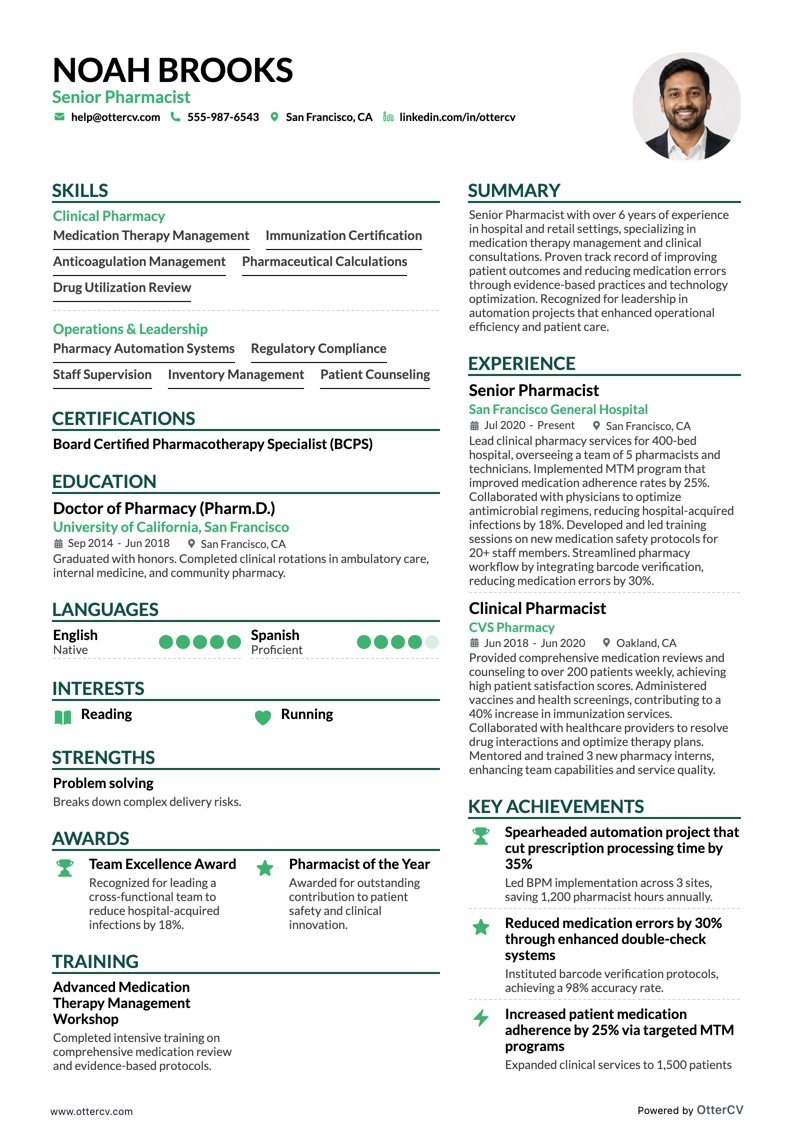
Senior Pharmacist full preview

10 Pharmacist Resume Examples

OtterCV

Written by The OtterCV Team

Updated: 10/16/2025•8 min read

See all resume examples in this guide, or generate your own resume example with your personalized prompt

Senior Pharmacist resume example

Senior Pharmacist

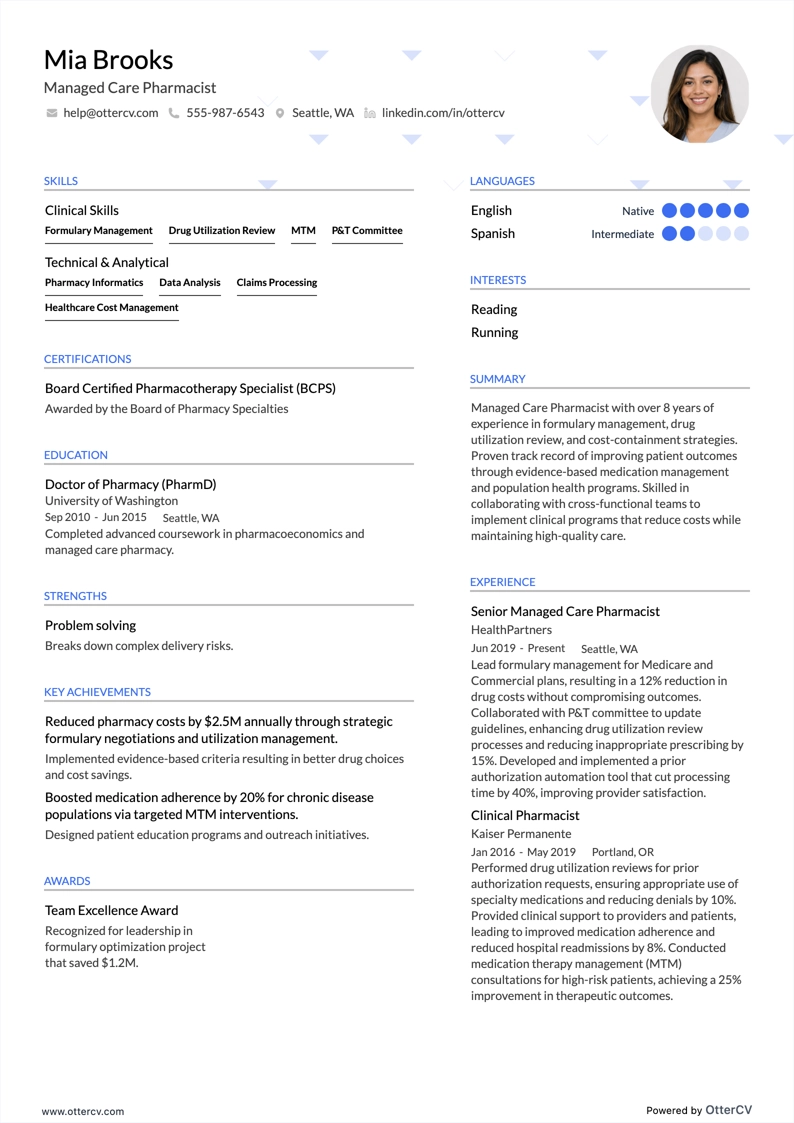
Managed Care Pharmacist resume example

Managed Care Pharmacist

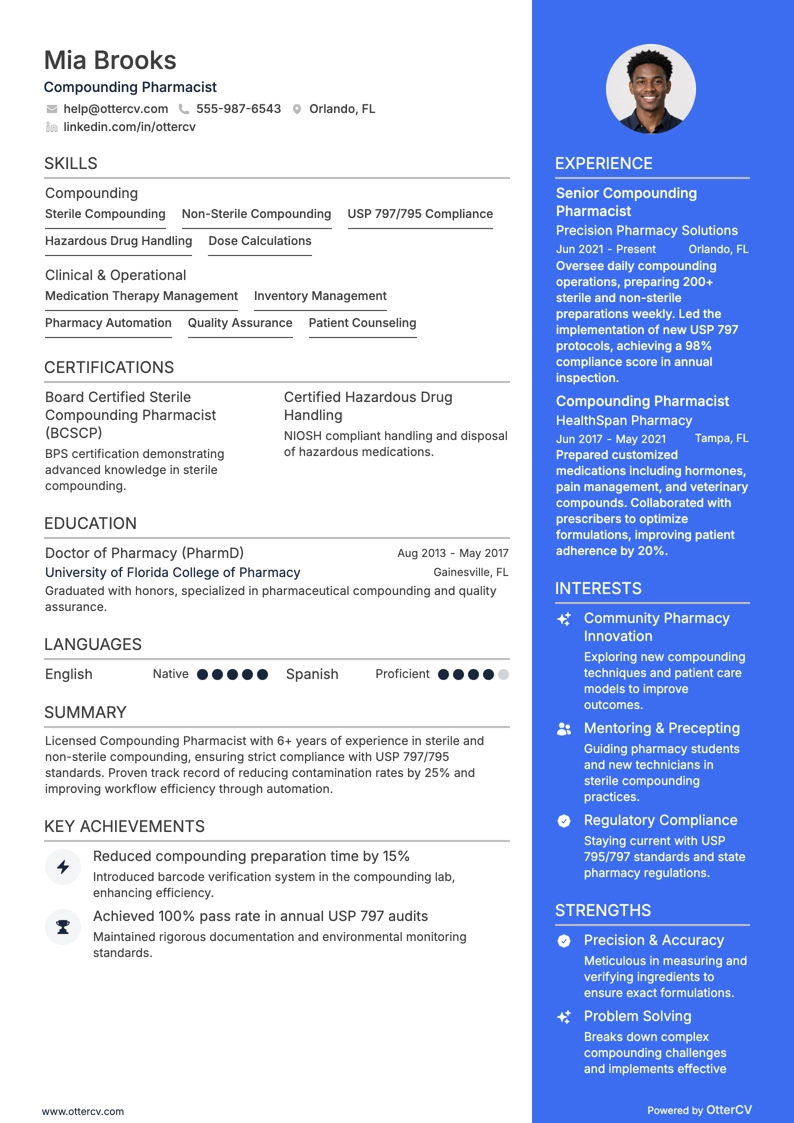
Compounding Pharmacist resume example

Compounding Pharmacist

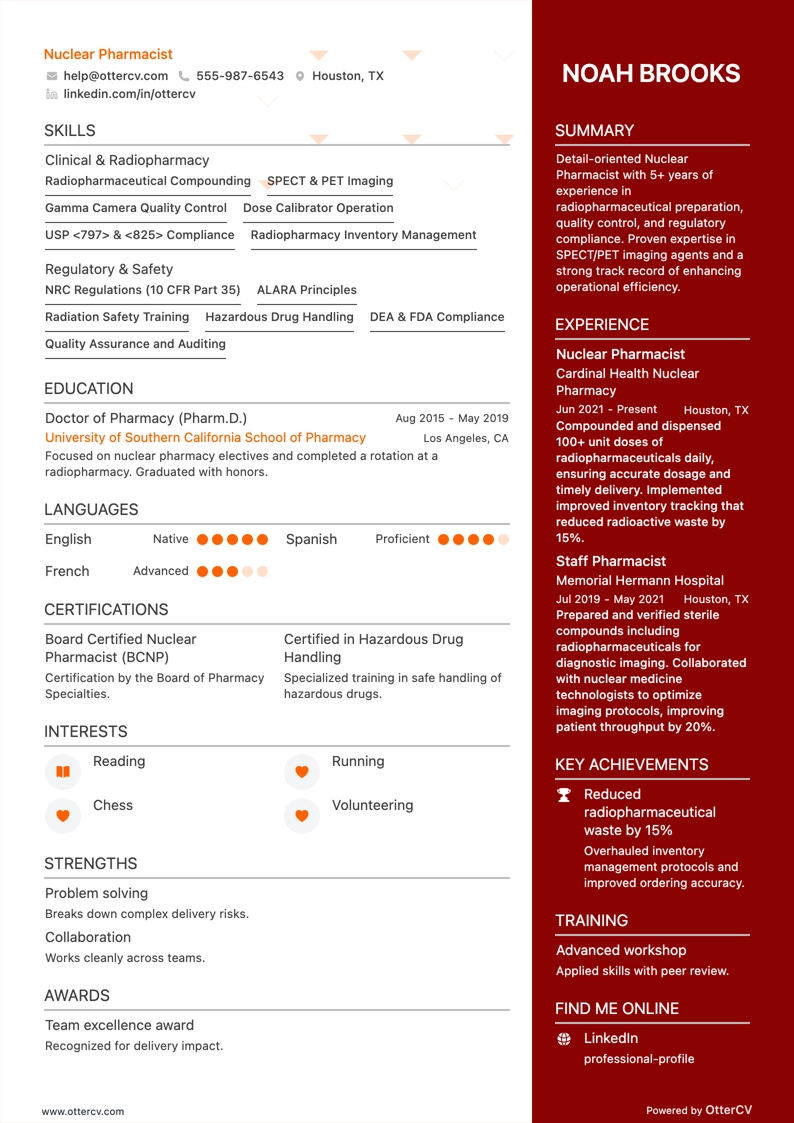
Nuclear Pharmacist resume example

Nuclear Pharmacist

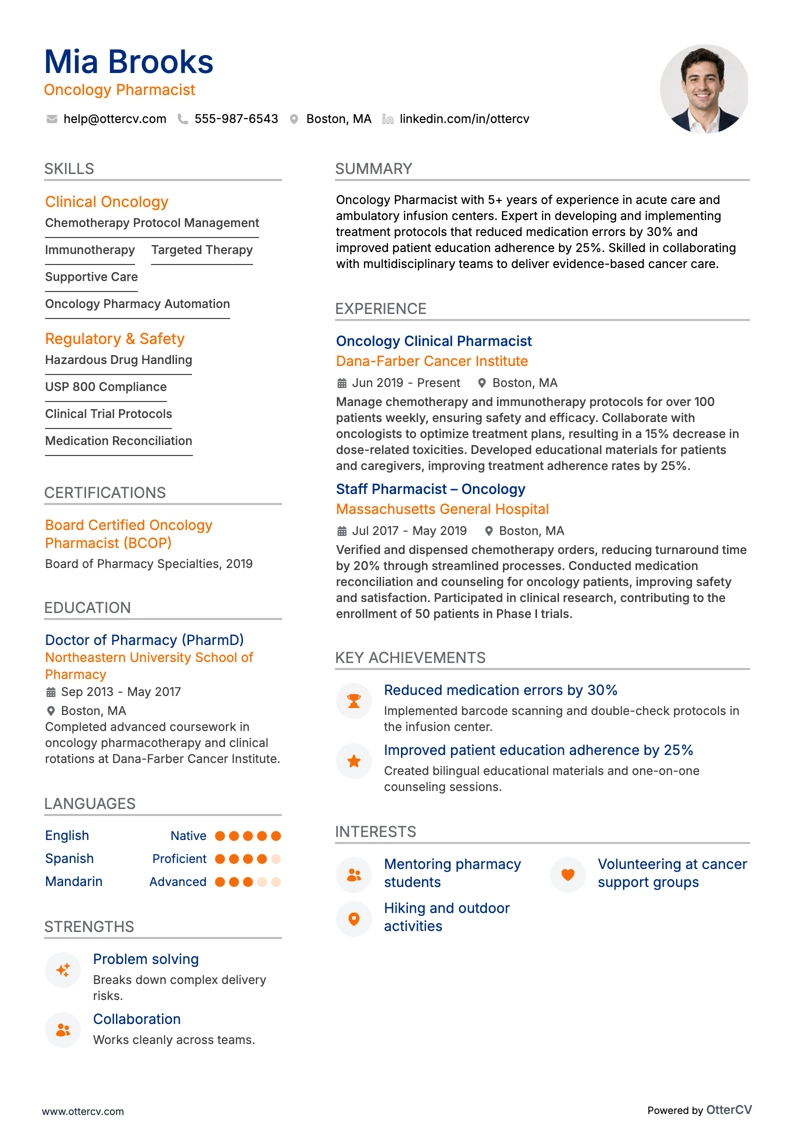
Oncology Pharmacist resume example

Oncology Pharmacist

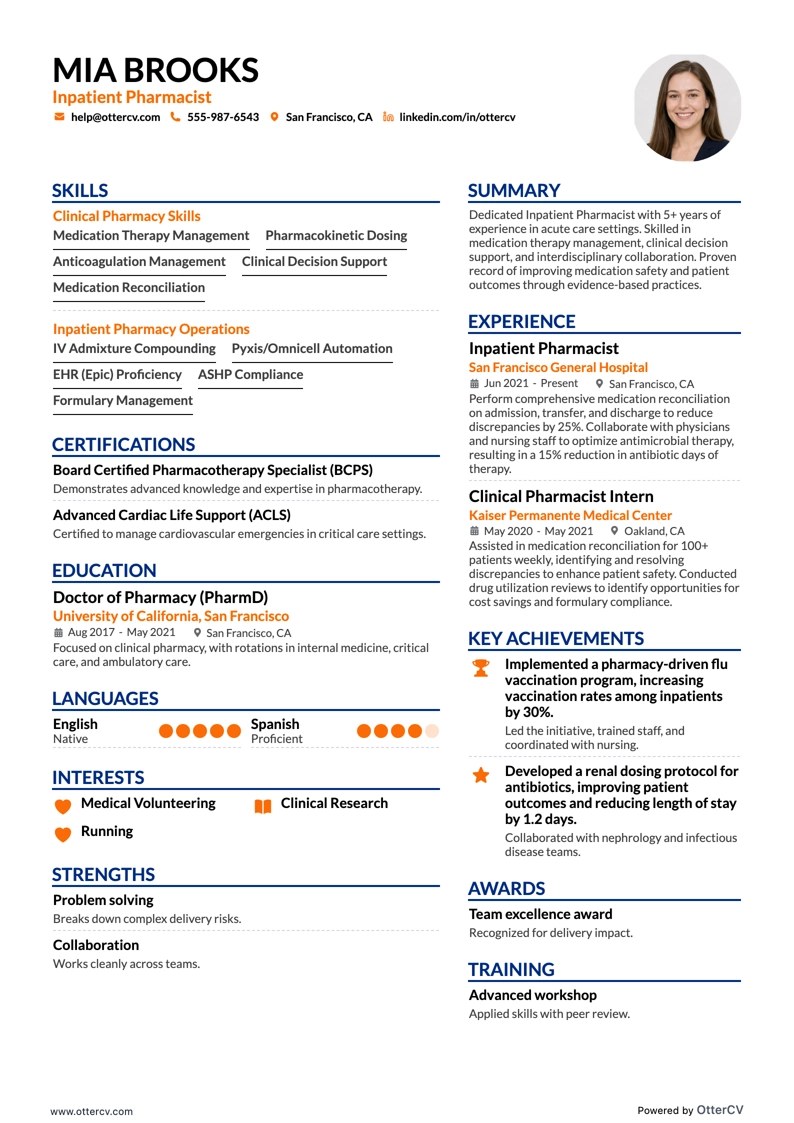
Inpatient Pharmacist resume example

Inpatient Pharmacist

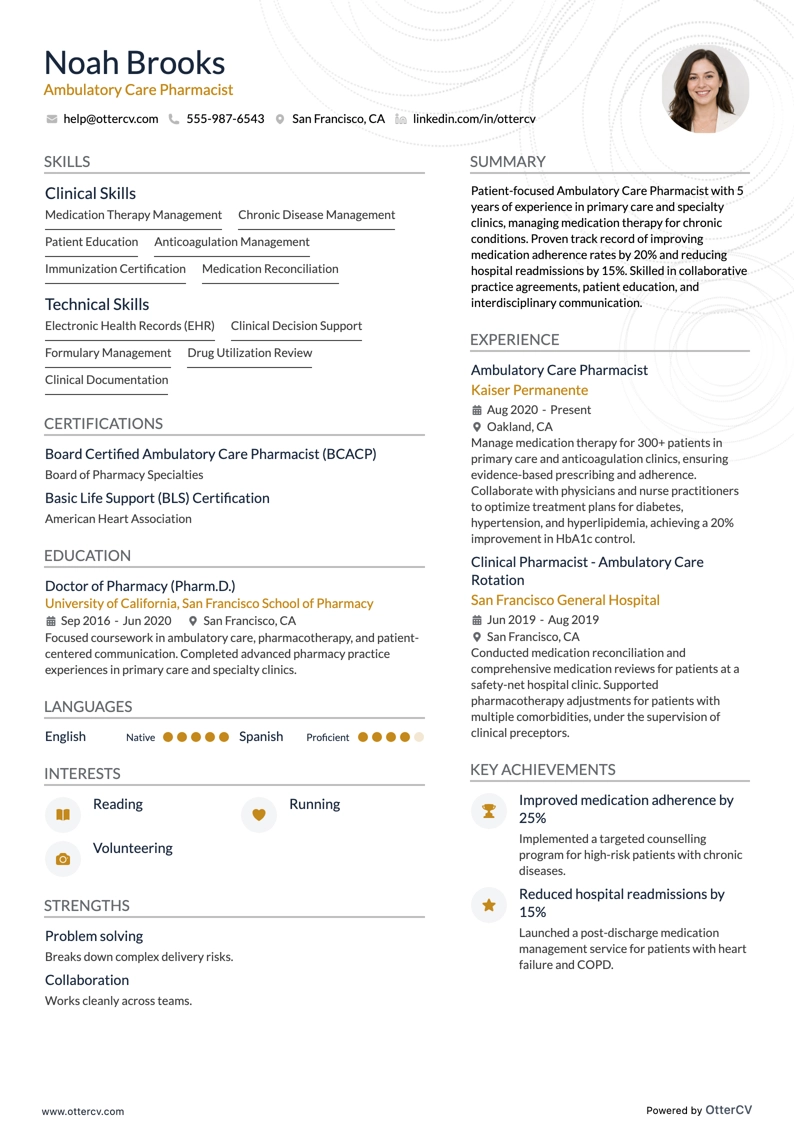
Ambulatory Care Pharmacist resume example

Ambulatory Care Pharmacist

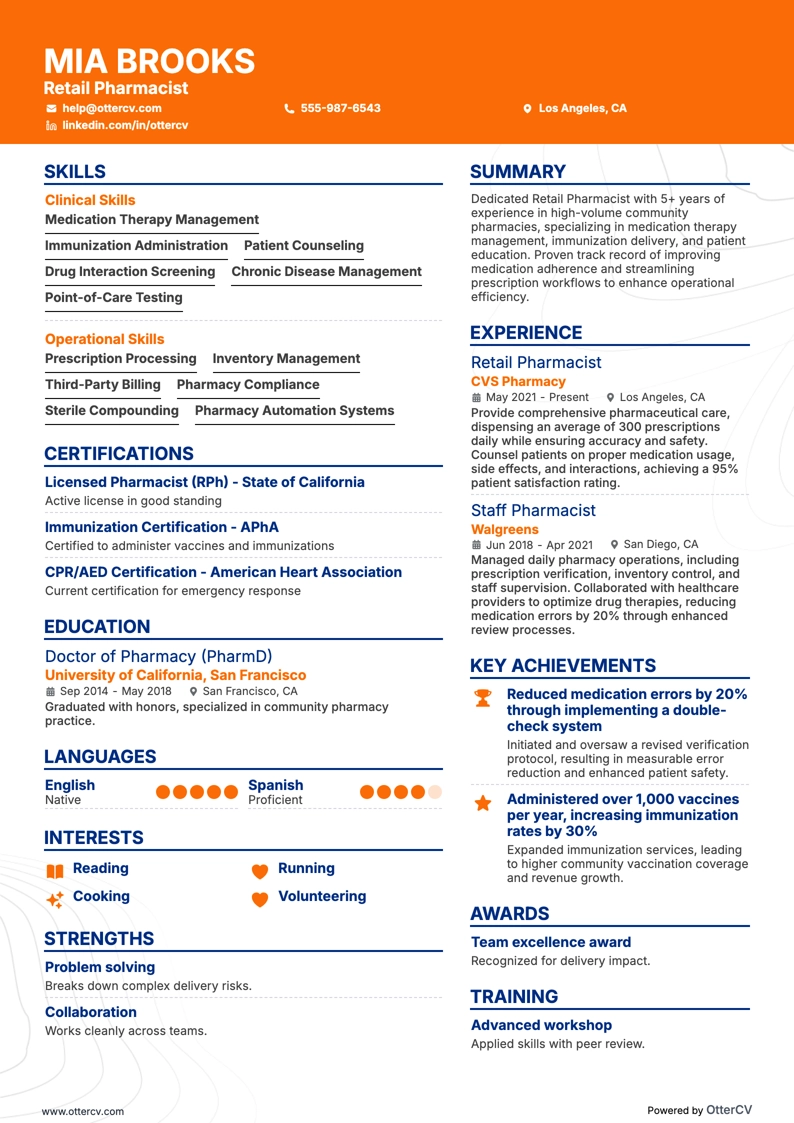
Retail Pharmacist resume example

Retail Pharmacist

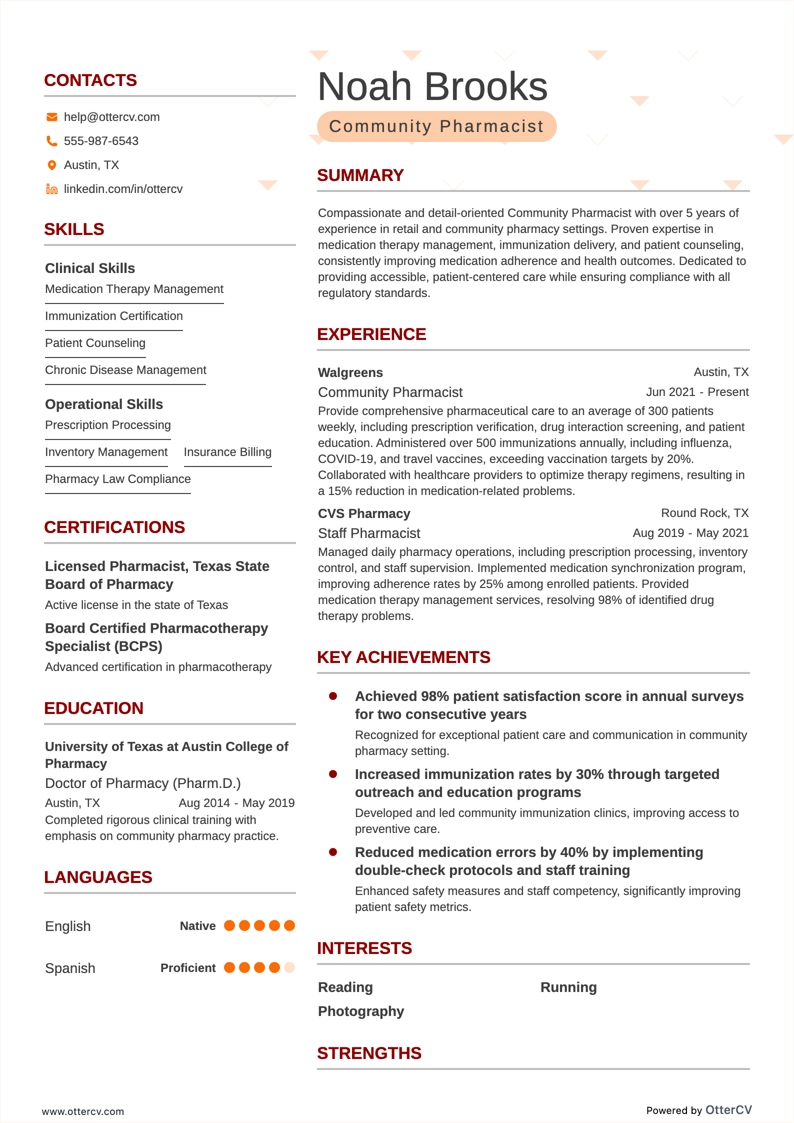
Community Pharmacist resume example

Community Pharmacist

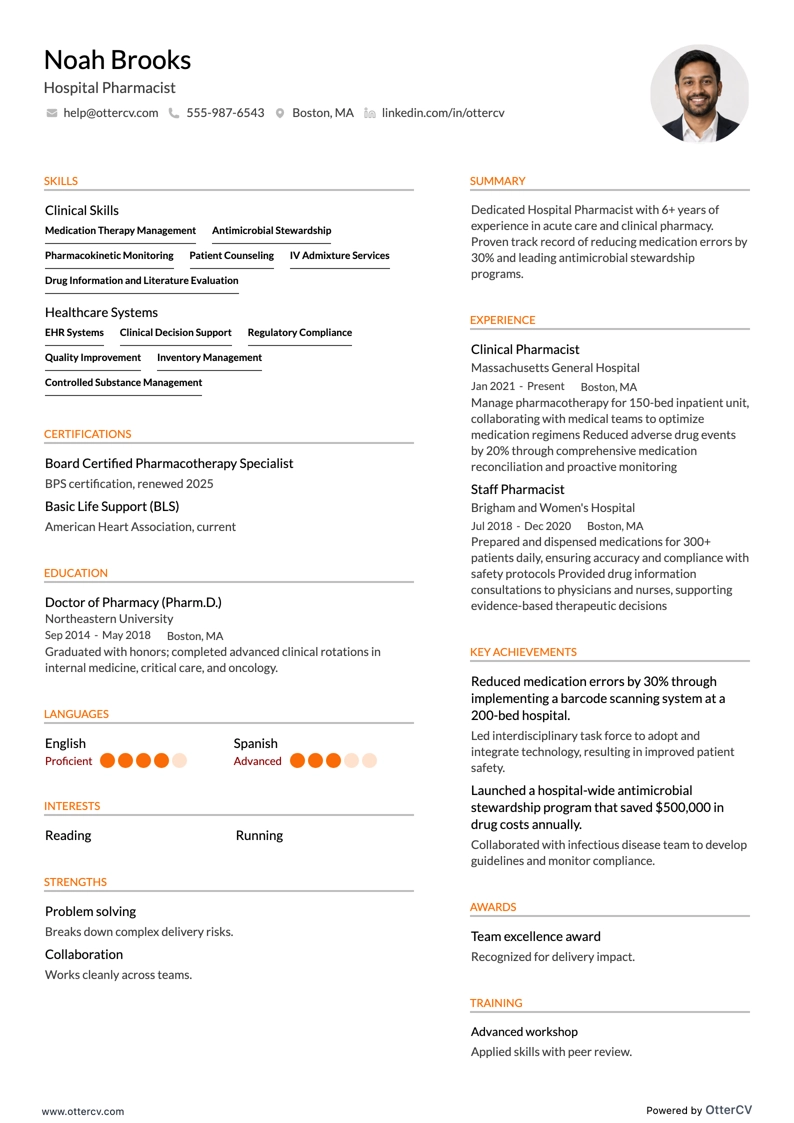
Hospital Pharmacist resume example

Hospital Pharmacist

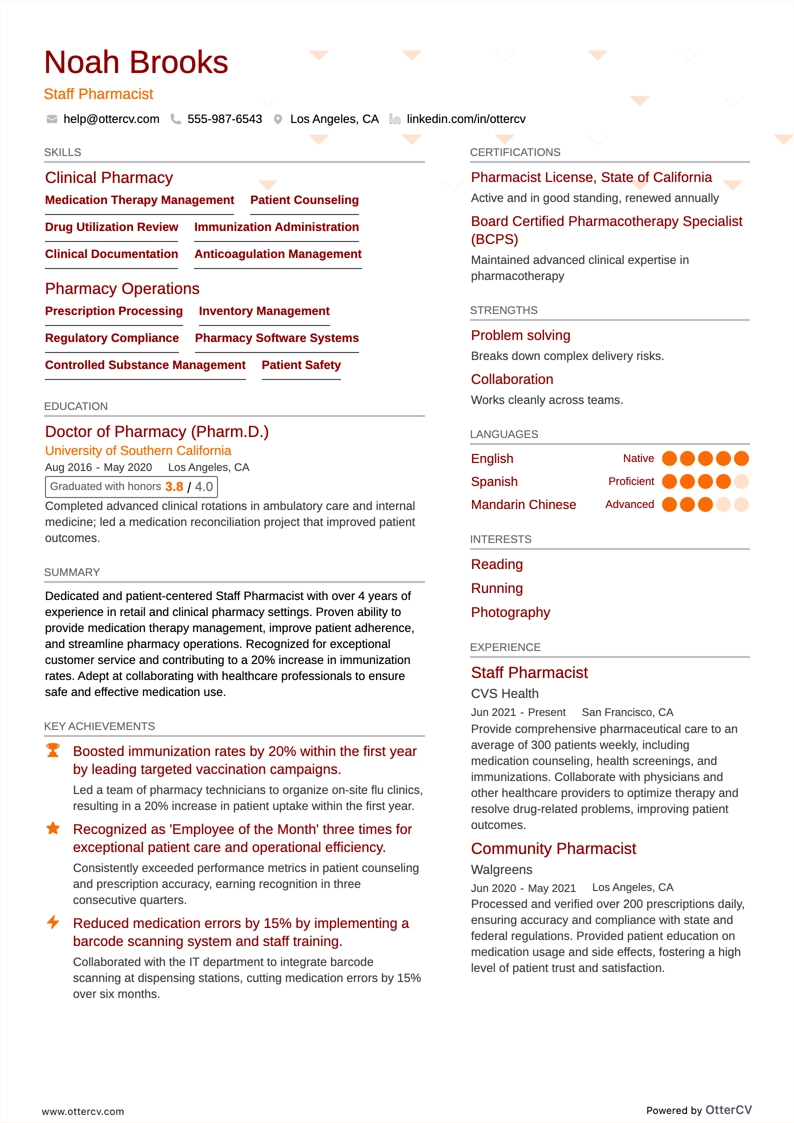
Staff Pharmacist resume example

Staff Pharmacist

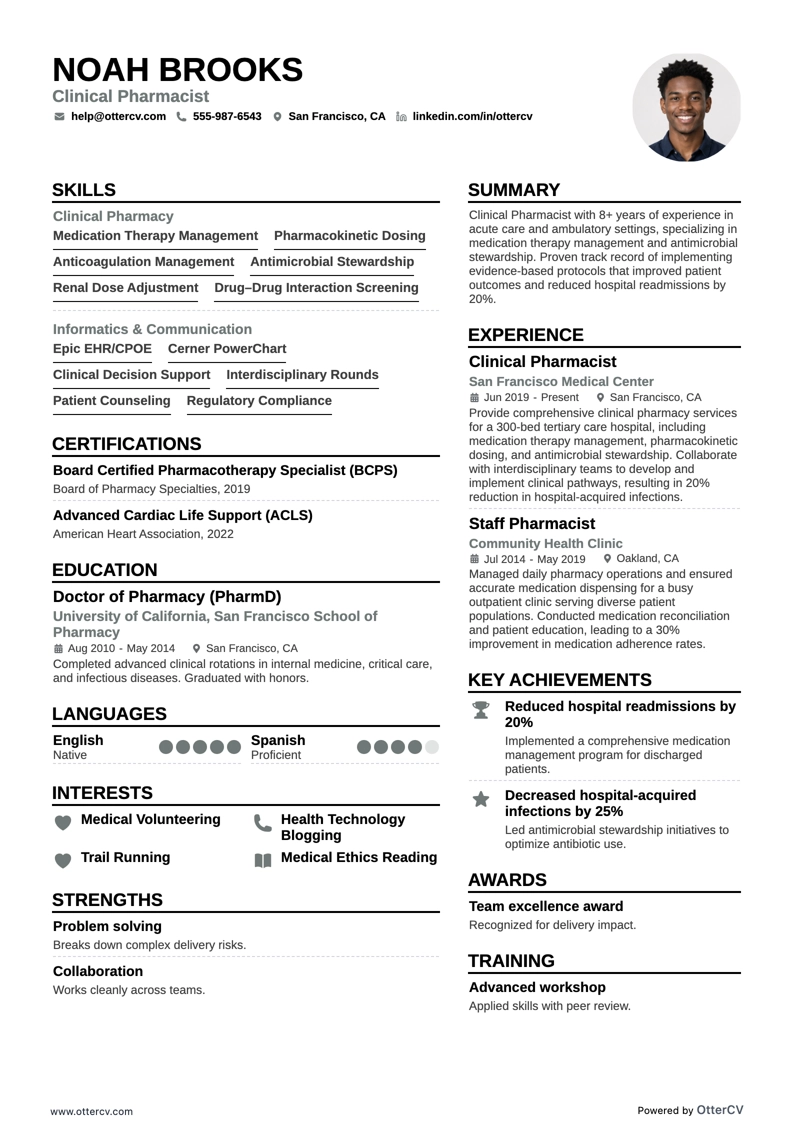
Clinical Pharmacist resume example

Clinical Pharmacist

Starting your journey as a pharmacist in 2026? With an average salary reaching over $150,000, it’s easy to see why this career is so appealing. But it’s also highly competitive, so your resume needs to be more than a list of achievements. Show how you completed your prerequisite courses, excelled in your Pharm.D. program, and passed the NAPLEX exam.

Every section of your resume should reflect dedication and hard work. In a field where many candidates are aiming for the same roles, a standout resume is essential. This guide will help you present your academic success clearly and position yourself for your next opportunity.

This pharmacist resume guide covers:

  • How to format a resume that moves smoothly through the recruiting process;
  • How to list pharmacy experience and what to do if you’re just getting started;
  • How to organize your education, certifications, and licenses into concise resume sections;
  • How to support your entries with concrete data and tailor your resume to each job listing.

If you want something more specific, explore these pharmacy-related resume guides:

How to format a pharmacist resume that stands out

To get hired as a pharmacist, you need to show recruiters that you can provide excellent patient care, dispense prescriptions accurately, and successfully sell OTC and Rx medications.

Pharmacists are a key link between doctors, patients, and insurance companies. The care you bring to your work directly affects patient well-being, so employers are careful to hire the right person for the role.

A strong resume is the first step in building trust with a recruiter. Start with the right format.

Use a reverse-chronological resume format to emphasize your experience and skills. Healthcare employers often prefer this format because it shows a clear career progression, with your most recent role listed first.

If you have less experience or want to highlight job-relevant skills, consider the functional resume, which is organized by skill categories. You can also use the combination format, especially if you are changing career paths within healthcare, since it presents both experience and skills effectively.

Adjust your resume layout based on the market. For example, Canadian resumes may follow a unique format.

Whatever resume format you choose, keep it clear and concise, and focus on your achievements and the value you can bring to the employer.

Resume design and layout for pharmaceutical positions

Recruiters review countless resumes every day, so they need to quickly scan each one and decide whether a candidate fits the role. A resume that follows an expected format is usually seen as clearer and more professional. Because healthcare is a traditional field, pharmacy directors prefer resumes that make key details easy to find, including education, licensure, and relevant experience.

As you build your pharmacist resume, keep these design and layout guidelines in mind:

  • Professional template: If you are not creating your resume from scratch, choose a resume template that is simple, organized, and easy to scan. This can save you time and make the review process easier for recruiters.
  • Margins: Don’t try to shrink margins to fit in more content. Margins below 1 inch can make a resume look cluttered, overwhelming, and difficult to read.
  • Fonts: Use professional fonts in the 10–12 pt range. Easily readable fonts are especially important for ATS assessment. Echocv’s resume builder uses fonts that are entirely ATS-friendly. For pharmacists, Rubik, Lato, and Arial all meet industry expectations.
  • Length: Ideally, your resume shouldn’t exceed 1 page, though 2 pages may be appropriate if you have extensive experience. A one-page resume is more likely to keep recruiters engaged.
  • Colors: In a traditional industry, a small amount of color creates contrast and visual hierarchy, helping direct attention to the most important sections. Green is associated with the health industry, so it can work well as the primary color for section titles.
  • Naming: Name your file with your name, the job title you are applying for, and the word “resume” (for example, JaneDoe_pharmacist_resume.pdf). Always save your document as a PDF so it remains accessible across devices and platforms.
  • Header: A compelling header helps create a strong first impression. Include a descriptive job title and your contact information, including your email, phone number, and LinkedIn URL.

Here are the other resume sections that a pharmacist should include on their resume.

The top sections on a pharmacist’s resume

  • Professional license and certifications validate credentials and expertise.
  • Pharmaceutic skills highlight specific areas of proficiency.
  • Relevant pharmaceutical experience demonstrates practical application of skills.
  • Continuing education and training show commitment to staying current in the field.
  • Patient care and counseling skills emphasize the ability to provide patient-focused care.

How you organize your resume sections depends largely on the job you’re applying for. Research the employer and review the job description carefully to identify the key competencies and keywords to include in your resume. Below is the information your resume should provide.

What recruiters want to see on your resume

  • Active pharmacy license: Essential for legal practice and compliance.
  • Experience in medication therapy management: Shows your ability to optimize patient care.
  • Proficiency in pharmacy management systems: Demonstrates you can handle pharmacy operations efficiently.
  • Knowledge of pharmacology and drug interactions: Critical for patient safety and effective treatment plans.
  • Customer service and communication skills: Important for patient education and building trust in healthcare settings.

Now, let’s focus on the resume experience section, where recruiters assess whether you have the qualifications and skills needed for the role.

How to write your pharmacist resume experience

Your experience section should reflect exactly what the employer is looking for, and you can find that information in the job description. To stand out and avoid sounding generic, highlight the same competencies listed in the job posting and back them up with measurable results and achievements.

For example, did you manage a pharmacy team? How many people? Did you improve processes and increase efficiency? By what percentage?

This is your opportunity to show recruiters why you stand apart from other applicants. Let’s look at two examples of an experience section to see what works best for a pharmacist resume.

Experience

Pharmacist

Red Pharmacy

02/2020 - 02/2022 | Toronto, ON

  • Administered medications.
  • Educated patients on dosages and instructions.
  • Maintained patient records.
  • Delivered excellent customer service.
WRONG

This experience section is too vague and does little to distinguish the candidate from others in the resume pile.

Let’s look at a stronger example.

Experience

Retail Pharmacist

Red Pharmacy

02/2020 - 02/2022 | Toronto, ON

  • Delivered excellent customer service, achieving a 4.8 average pharmacy rating.
  • Administered 200+ COVID vaccinations per day, the highest in the province.
  • Increased revenue by 20% in 2021 by improving the automatic patient follow-up system and delivering refills.
  • Completed the CAMH Opioid Use Disorder Treatment Course and gained experience in methadone pain management strategies.
RIGHT

This candidate strengthens each resume statement with concrete data.

  • Specific title: Naming the role as retail pharmacist is a smart keyword strategy. It helps recruiters quickly see the match and positions the candidate as a specialist rather than a generalist.
  • Quantifiable achievements: Specific figures, such as a 4.8 average pharmacy rating and 200+ COVID vaccinations per day, clearly show impact and performance.
  • Revenue growth: A 20% increase in revenue demonstrates direct contribution to business success and a solid understanding of pharmacy operations.
  • Specialized skills: Experience with methadone highlights specialized knowledge and a commitment to handling complex health issues.
  • Customer service excellence: A high pharmacy rating helps prove the ability to deliver strong patient service, build trust, and maintain satisfaction.

To achieve similar results, follow the guidance below.

How to quantify impact on your resume

Your resume should be specific, focused on real achievements, and show a mix of technical and soft skills. If you are a pharmacy manager, it should also reflect business knowledge. Most importantly, your resume needs to provide clear evidence of your training and expertise. Use this list as a starting point:

  • Include the percentage increase in pharmacy revenue under your management to show business growth and your direct impact.
  • Mention the number of prescriptions filled per day to highlight efficiency and your ability to handle high-volume work.
  • State the percentage reduction in medication errors tied to your initiatives to show commitment to patient safety and quality care.
  • Detail the number of healthcare professionals you've collaborated with on multidisciplinary teams to demonstrate teamwork and communication.
  • List the number of patient counseling sessions conducted to emphasize dedication to patient education and health outcomes.
  • Specify the increase in customer satisfaction scores or pharmacy ratings to reflect strong customer service.
  • Report the percentage of inventory reduction while maintaining or improving service levels to show effective resource management.
  • Describe the number of new services you introduced to show innovation and contribution to expanding pharmacy offerings.

Think in facts and figures even if you do not yet have pharmacy work experience. Read on to learn more.

How do I write a pharmacist resume with no experience

Everyone starts somewhere, including junior pharmacists who have spent the past 6-7 years completing prerequisite coursework, training, and licensing.

The following guidance is intended for entry-level roles or pharmacists making a career transition within the field.

PRO TIP

If you have 0–3 years of experience in pharmacy, write a resume objective instead of a career summary. It is more concise and can better show your alignment with a prospective employer’s mission and values.

  • Create a strong education section. Include your bachelor’s or pre-pharmacy program, your Doctor of Pharmacy degree (PharmD), and your NAPLEX and MPJE scores.
  • Focus on certifications. Include them even if they’re still pending. This is also a good place to mention the specialty you’re pursuing, such as oncology, diabetes, or First Aid.
  • Mention any internship or residency roles. Describe the in-field experience you gained during your education, including the location, your role, and key responsibilities or achievements. This helps show your practical experience and how you apply pharmacy knowledge. (We explore this in further detail at the end of the article).
  • Highlight relevant skills. Focus on both technical skills, such as knowledge of pharmacological databases and drug dispensing, and soft skills, such as communication, customer service, and the ability to work under pressure, that matter in a pharmacy setting.
  • Show your initiative. Include any volunteer work or extracurricular activities, especially those related to healthcare or community service, to demonstrate leadership, teamwork, and dedication to helping others.

Your resume is your chance to tell the story of your journey in pharmacy. You’ve already invested significant time and money in training and licensing. Now you need to show that you’re ready to take on the challenges ahead with enthusiasm and expertise.

How to list your hard and soft skills on your resume

Pharmacists need to show both hard and soft skills on their resumes. Hard skills cover the technical aspects of being a pharmacist—the skills you learned in school and during rotations. These can include experience in an area of medicine such as nephrology or oncology, as well as familiarity with specific software or workflows, like Fillware.

Best hard skills for a pharmacist resume

  • Prescription dispensing and review.
  • Pharmacology expertise.
  • Medication therapy management (MTM).
  • Drug utilization review (DUR).
  • Immunization and vaccination administration.
  • Pharmaceutical calculations.
  • Compounding techniques.
  • Inventory management systems.
  • Patient record management software.
  • Pharmaceutical research and development.
  • Clinical pharmacokinetics.
  • Aseptic technique for sterile compounding.
  • Regulatory compliance (FDA, DEA).
  • Drug interaction and contraindication analysis.
  • Pharmacy information systems, such as Epic and Cerner.
  • Automated dispensing technology.
  • Health insurance and billing practices.
  • Pharmacogenomics.
  • Chemotherapy drug preparation.
  • Opioid dispensing and control measures.

Soft skills are personal traits that help pharmacists provide excellent patient care and work effectively with a team. Below are the top interpersonal skills a pharmacist should demonstrate on a resume.

The easiest way to write a skills section is to start with the employer’s job description. Note the keywords used to describe the ideal candidate and the role’s responsibilities, then use those same keywords in your skills section.

How to put certifications and education on a pharmacist resume

Education is essential for a pharmacist and should have its own section on your resume. How much detail to include depends on whether you’re fresh out of college or an experienced pharmacist pursuing a new role.

If you’re entry-level, your education section can and should include more detail to help make up for limited experience. In that case, include:

  • Your undergraduate degree and college name
  • Your PharmD degree and college name
  • Years studied
  • GPA grade
  • Any notable coursework, recognition, or awards
  • Residency rotations

Education

Doctor of Pharmacy (Pharm.D.)
St. John's University College of Pharmacy and Health Sciences
08/2016 - 05/2020 | Queens, NY
GPA: 3.8 / 4.0

  • Completed a rigorous curriculum focused on pharmaceutical sciences, patient care, and pharmacy management.
  • Completed advanced pharmacy practice experiences (APPEs) across multiple settings, including community pharmacies, hospitals, and ambulatory care clinics.
  • Conducted a capstone research project on the impact of medication therapy management on patient outcomes in cardiovascular diseases.
  • Participated in professional development workshops to strengthen communication, leadership, and clinical decision-making skills.
RIGHT

If you’re a seasoned pharmacist, include the same core education details, but leave out your GPA, notable coursework, awards, and rotations. Your professional accomplishments should take priority.

Licenses and certifications for pharmacists

As with education, a separate licenses and certificates section is essential on a pharmacist resume.

Every role will require an active license in your state or province. Include the license name, state or province, license number, and active dates.

Next, review the job description to identify which certifications the employer wants. Some may be required, while others may simply be preferred. If you have them, list those first before adding other certifications.

Here are some common licenses and certifications in the pharmaceutical industry:

After outlining your experience and certifications, return to the summary at the top of your resume. Condense your strengths and accomplishments into a concise, impactful introduction of no more than five sentences.

How to write your pharmacist resume summary or objective

Both a career summary and an objective statement should reflect your professional goals and core values while giving employers a clear overview of what you offer. The objective is shorter and better suited to entry-level or novice pharmacists, while the summary is more appropriate for candidates with extensive experience.

In general, a resume summary should make it easy for employers to identify the key skills and competencies they want in a candidate. That is why you should review the job description carefully before writing your summary and tailor it to each application.

To understand what makes a summary effective, consider the examples below, including both a strong version and a weak one.

Summary

Chief Pharmacist with years of experience improving pharmacy operations and management processes. Implemented a new inventory system, supported team development, and contributed to community health initiatives, including public health campaigns. Committed to using this experience to continue improving patient care and pharmacy performance.

WRONG

This summary is likely to send the resume straight to the rejection pile. It is far too vague and does not persuade anyone that you are a trustworthy professional.

Summary

As a chief pharmacist with over 15 years of experience, I have led my team to improve prescription accuracy by 30% and increase customer satisfaction scores by 25%. My background in pharmaceutical operations and healthcare management supported the successful implementation of an innovative inventory system that reduced waste by 20%.

I also excel at developing and mentoring high-performing teams, strengthening skills and productivity through targeted training programs. My commitment to community health is reflected in multiple public health awareness campaigns that directly impacted more than 10,000 Denver residents. Committed to excellence and innovation in pharmacy services, I aim to apply this comprehensive experience to improve health outcomes and operational efficiency.

RIGHT

Why it’s good

  • Quantifiable achievements: The summary highlights specific, measurable results, such as increasing prescription accuracy by 30% and improving customer satisfaction scores by 25%, showing the candidate’s direct impact on operational success.
  • Leadership and management skills: It emphasizes the candidate’s ability to lead and develop a team, demonstrating strong leadership capability.
  • Expertise in the field: It shows deep knowledge of pharmaceutical operations and healthcare management, supported by the successful implementation of an innovative inventory system that reduced waste by 20%.
  • High-level professionalism: The use of the first-person narrative conveys seniority and authority. Combined with highly professional language, this strengthens the candidate’s credibility.
  • Future-focused and motivated: The candidate expresses a commitment to excellence and innovation, with a clear intention to use their extensive background to improve health outcomes and operational efficiency.

If you want your resume summary to stand out, consider using our AI-powered resume checker to proofread your content and save yourself the stress.

Additional sections for a pharmacist resume

Adding a few targeted sections to a pharmacist resume can help highlight your specialized skills, experience, and achievements. Common optional sections include:

  • Professional affiliations: Membership in organizations such as the American Pharmacists Association (APhA) or the American Society of Health-System Pharmacists (ASHP) shows commitment to the profession and ongoing education.
  • Publications: If you have authored or co-authored research papers, articles, or textbooks related to pharmacy or medicine, listing them can add significant value to your resume.
  • Awards and honors: Include any recognition you have received for your work in pharmacy, such as excellence awards, scholarships, or accolades from professional associations.
  • Conferences and workshops: Participation in industry conferences, workshops, and seminars shows your engagement with the pharmacy community and your effort to stay current with new developments.
  • Professional references: While not always included directly on a resume, having this section ready upon request can be beneficial, especially when references come from the pharmaceutical field.

Tailor these sections to reflect your individual experience and the specific job you’re applying for. Doing so can significantly strengthen your resume’s impact.

How to put internships in a pharmaceutical resume

The main goal of additional resume sections is to show your practical experience in the field and highlight your commitment and hands-on skills across different pharmacy settings. Many aspiring pharmacists include a section for residency or internship roles because internships create opportunities to build professional relationships and receive mentorship from experienced healthcare professionals.

When building an internship or residency section, keep these points in mind:

  • Your internship section should follow the same format as the experience section, including the workplace, dates, and at least 3 bullet points describing your contributions.
  • List internship experience in a separate section only if you do not yet have other professional experience. If you are no longer junior, include it in the main experience section.
  • Use concrete evidence of your accomplishments to clearly show your impact and skills.

Here’s a good example of a detailed residency section entry on a pharmacist’s resume:

Residency

Pharmacy Resident

General Hospital Pharmacy

06/2022 - 06/2023 | New York, NY

Completed a comprehensive pharmacy residency program focused on clinical pharmacy practice, medication therapy management, and patient care.

  • Implemented medication therapy management protocols, improving patient adherence by 25%.
  • Led a cross-functional team in a QI project that reduced medication errors by 15%.
  • Developed and delivered educational presentations on drug interactions to healthcare staff, improving medication administration safety.
RIGHT

Key takeaways

  • Format a resume that does justice to both your skills and professional experience.

  • Present career achievements with concrete facts and figures.

  • Choose which skills to include and where to place them so recruiters get a clear picture of your profile.

  • Describe your education, training, and certifications in a concise but effective way.

  • Strengthen your experience section by using the right metrics instead of only listing job responsibilities.

Pharmacist resume examples

Explore additional Pharmacist resume samples and guides and see what works for your level of experience or role.

By Experience

Senior Pharmacist

Senior Pharmacist resume preview

Pharmacist resume examples

Explore additional Pharmacist resume samples and guides and see what works for your level of experience or role.

By Role

Managed Care Pharmacist

Managed Care Pharmacist resume preview

Compounding Pharmacist

Compounding Pharmacist resume preview

Nuclear Pharmacist

Nuclear Pharmacist resume preview

Oncology Pharmacist

Oncology Pharmacist resume preview

Inpatient Pharmacist

Inpatient Pharmacist resume preview

Ambulatory Care Pharmacist

Ambulatory Care Pharmacist resume preview

Retail Pharmacist

Retail Pharmacist resume preview

Community Pharmacist

Community Pharmacist resume preview

Hospital Pharmacist

Hospital Pharmacist resume preview

Staff Pharmacist

Staff Pharmacist resume preview

Clinical Pharmacist

Clinical Pharmacist resume preview