Chief CRNA full preview

10 Nurse Anesthetist Resume Examples

OtterCV

Written by The OtterCV Team

Updated: 7/28/2024•8 min read

See all resume examples in this guide, or generate your own resume example with your personalized prompt

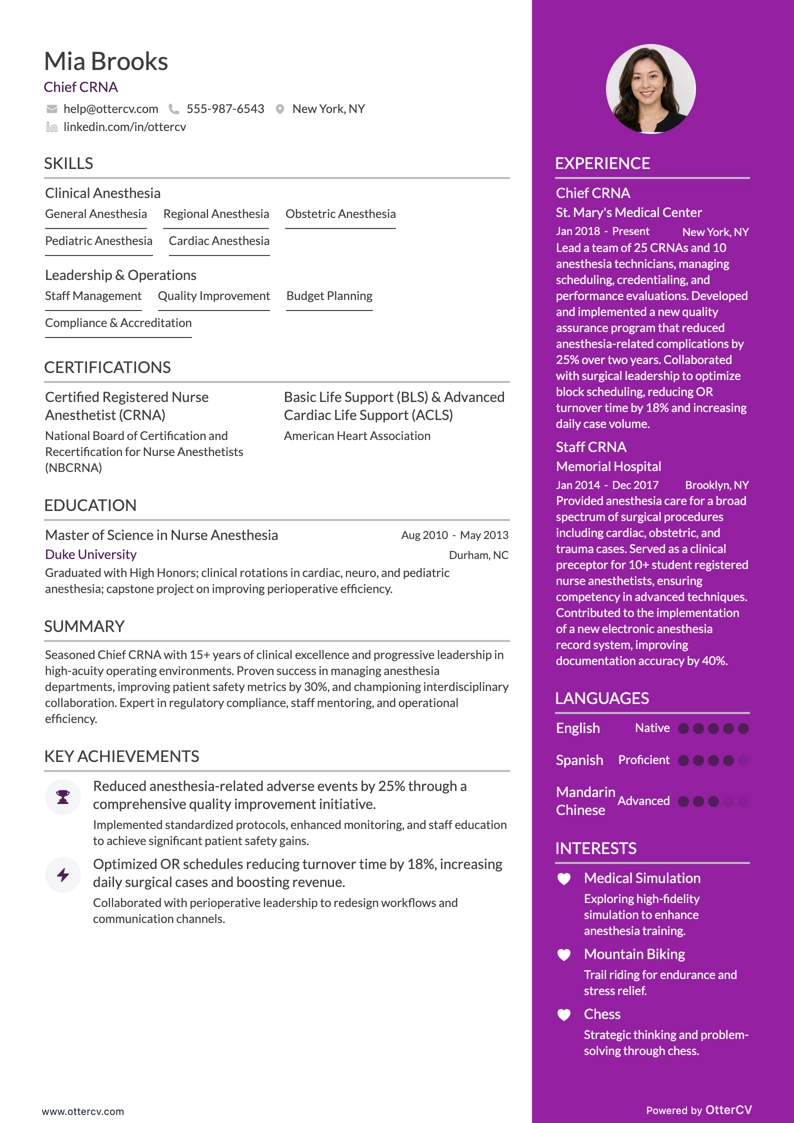
Chief CRNA resume example

Chief CRNA

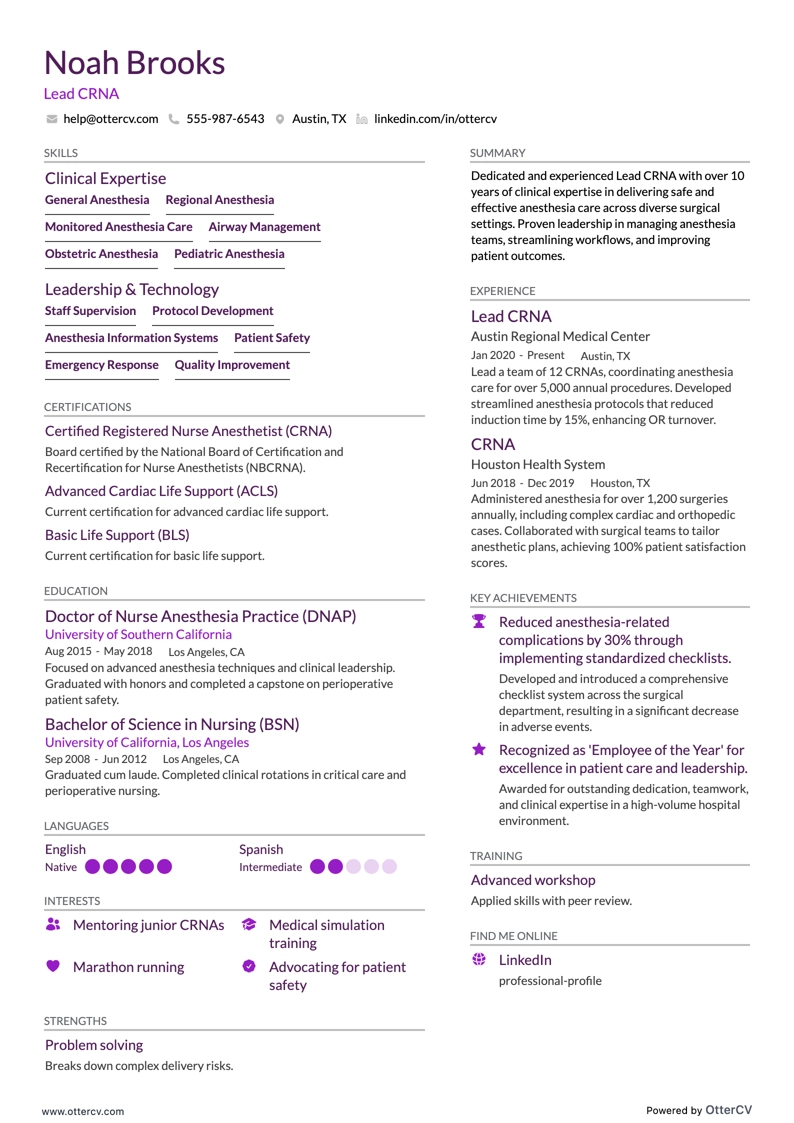
Lead CRNA resume example

Lead CRNA

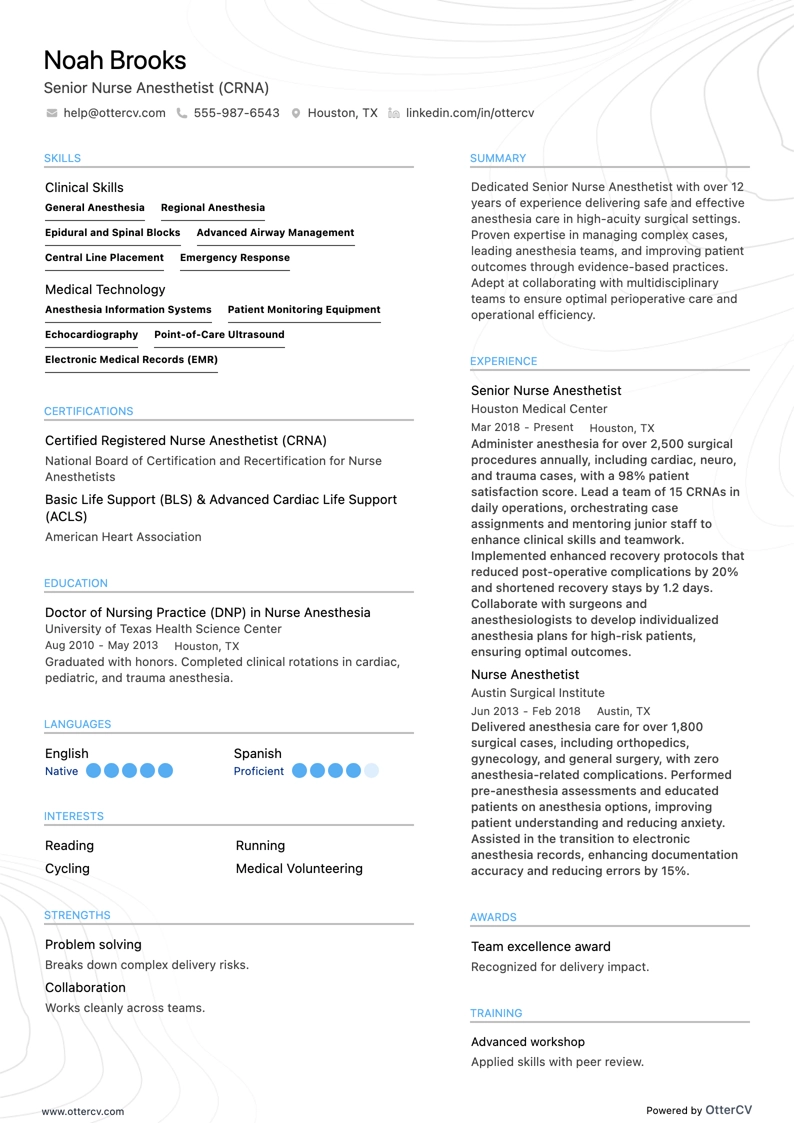
Senior Nurse Anesthetist resume example

Senior Nurse Anesthetist

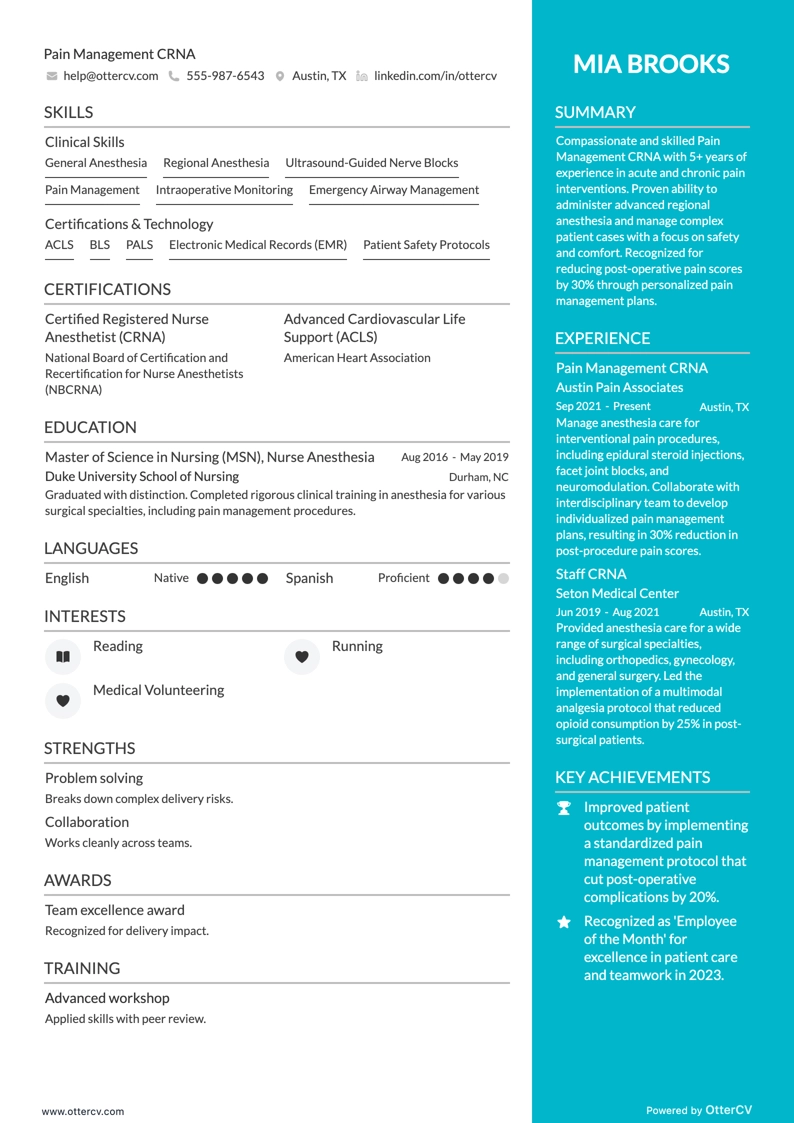
Pain Management CRNA resume example

Pain Management CRNA

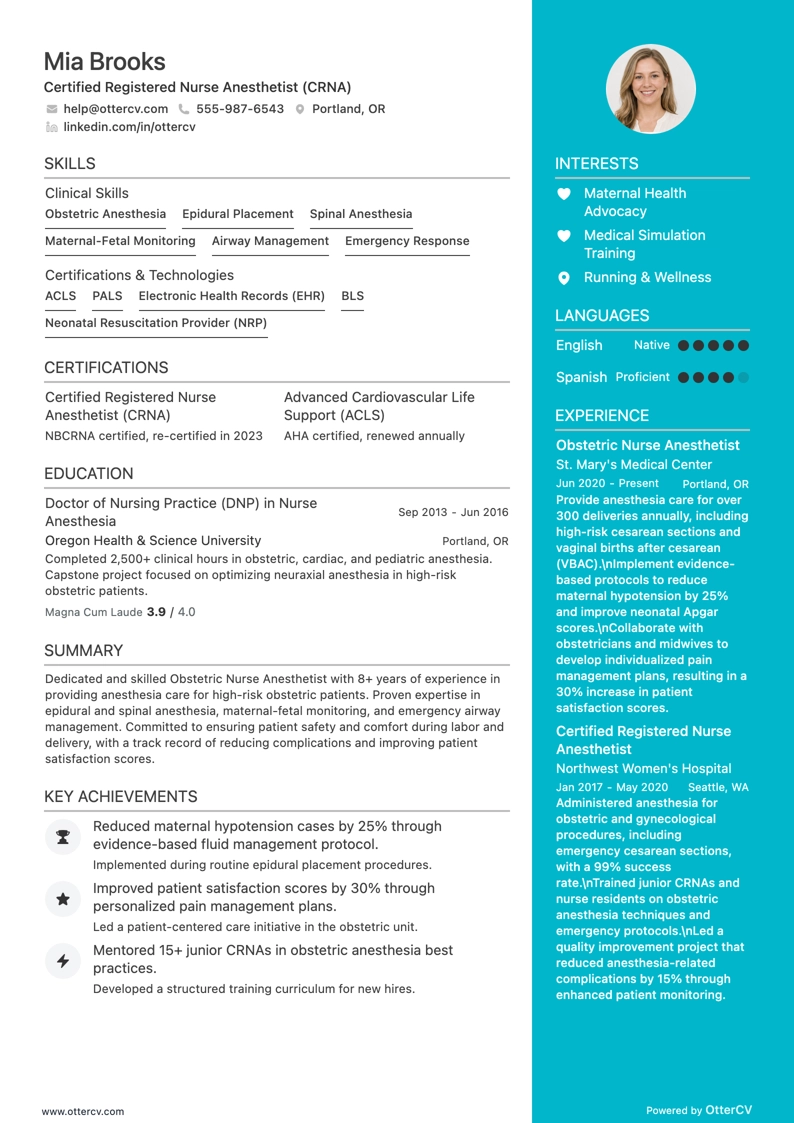
Obstetric Nurse Anesthetist resume example

Obstetric Nurse Anesthetist

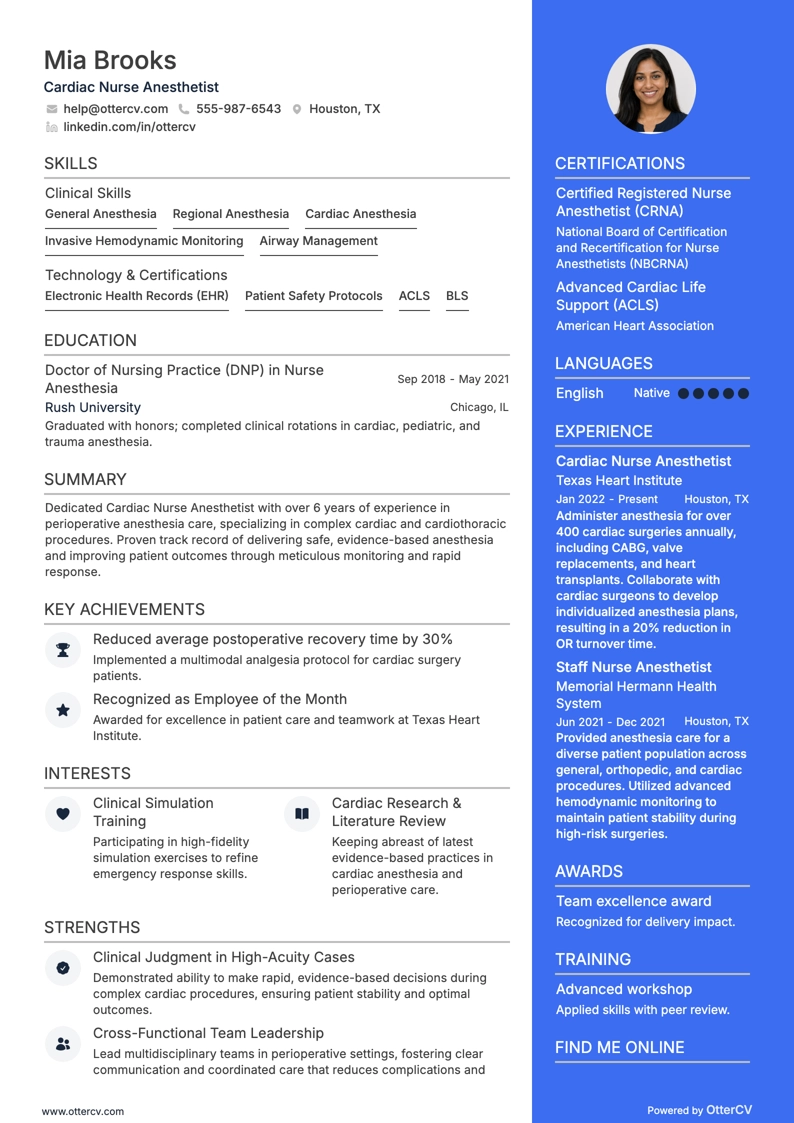
Cardiac Nurse Anesthetist resume example

Cardiac Nurse Anesthetist

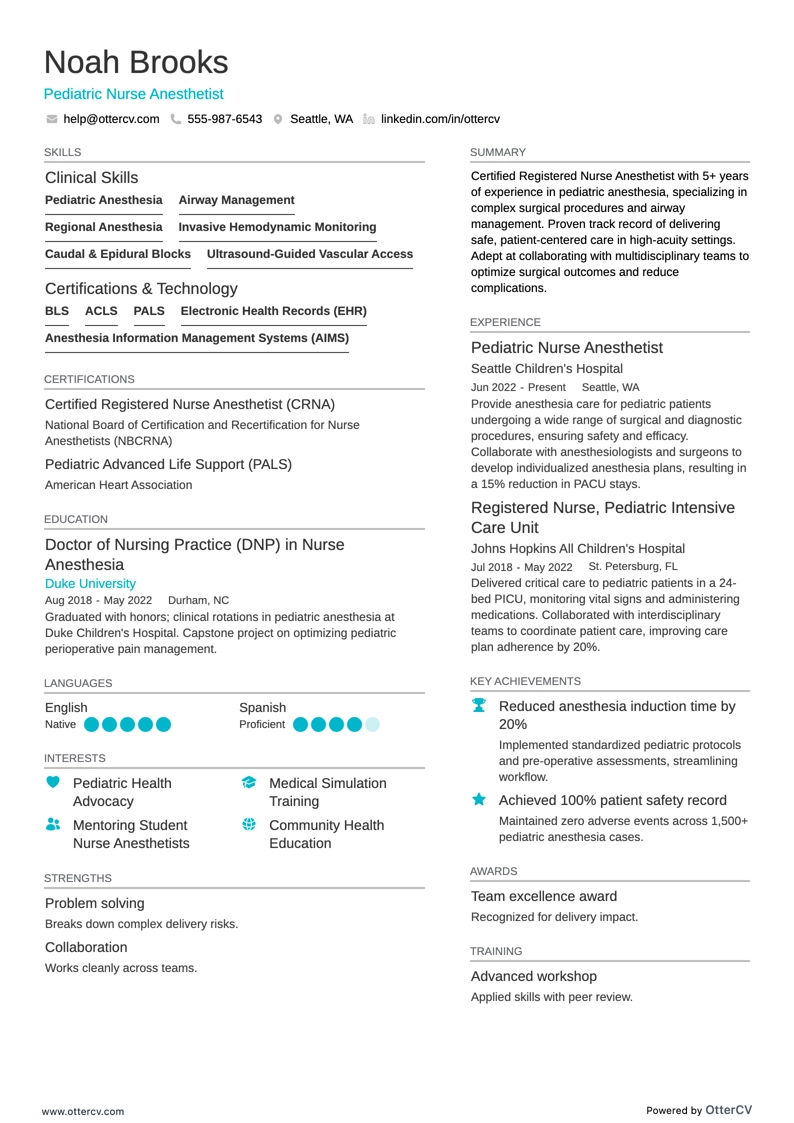
Pediatric Nurse Anesthetist resume example

Pediatric Nurse Anesthetist

Clinical Nurse Anesthetist resume example

Clinical Nurse Anesthetist

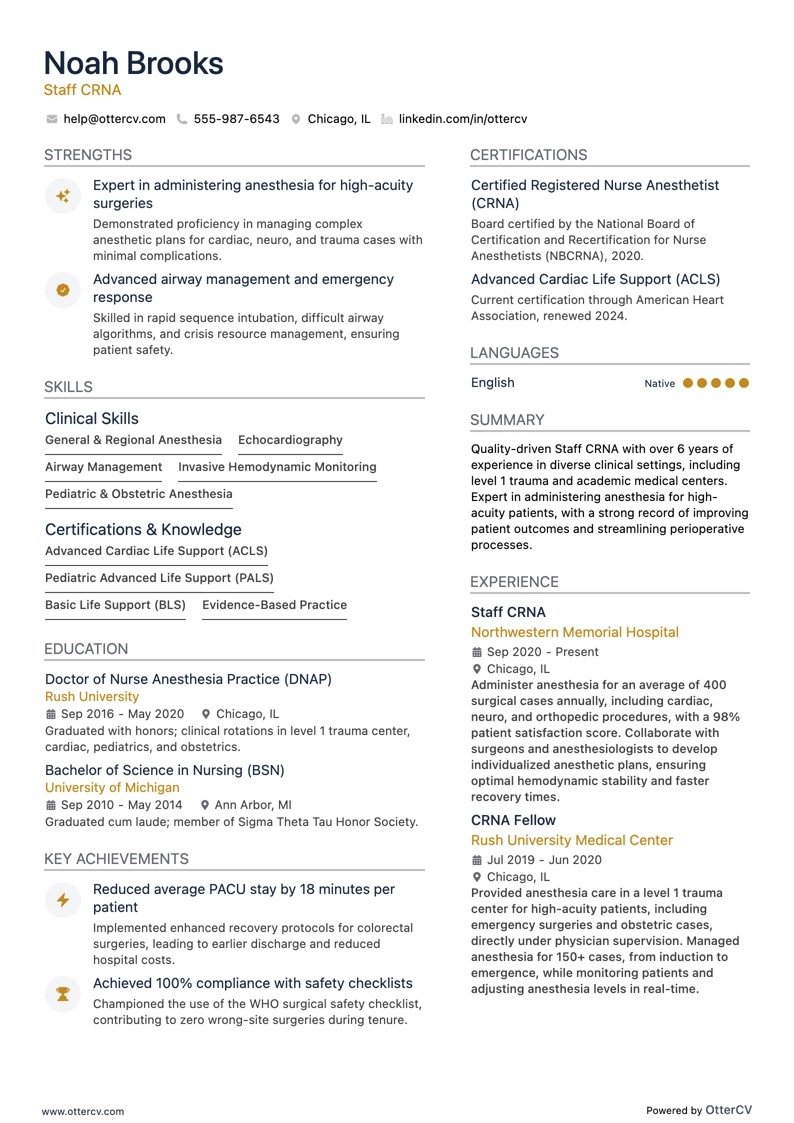
Staff CRNA resume example

Staff CRNA

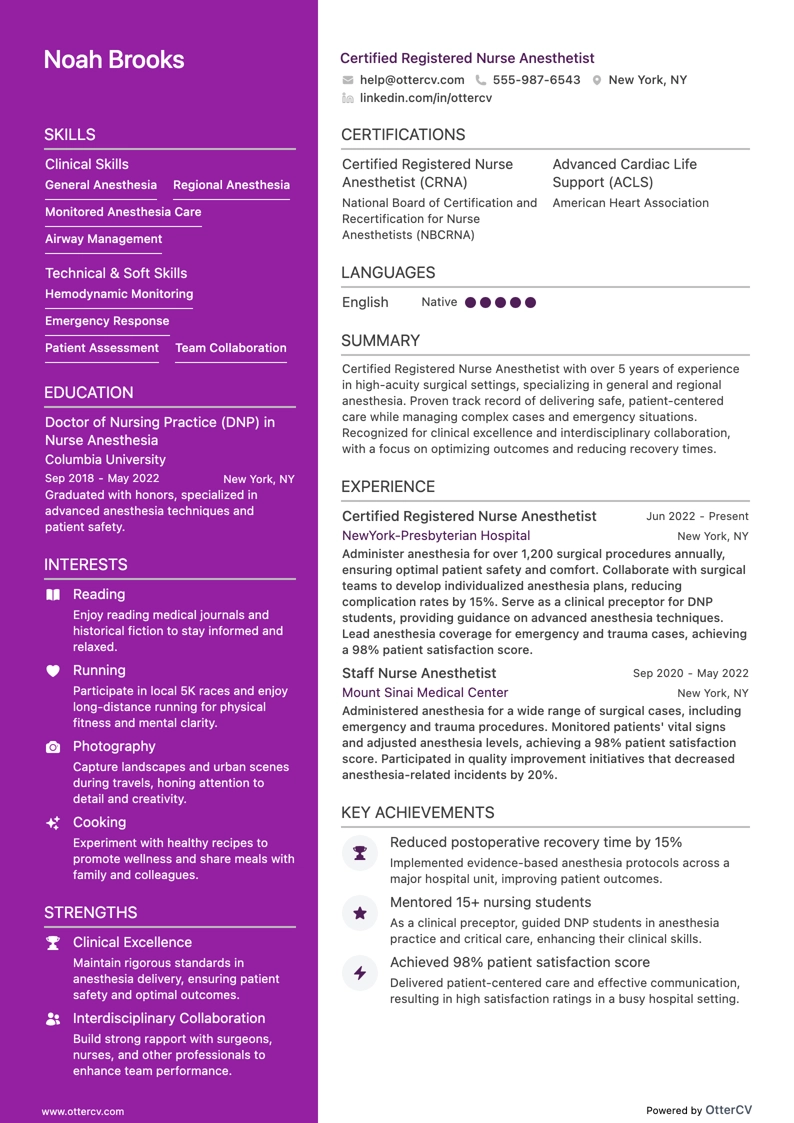
Nurse Anesthetist resume example

Nurse Anesthetist

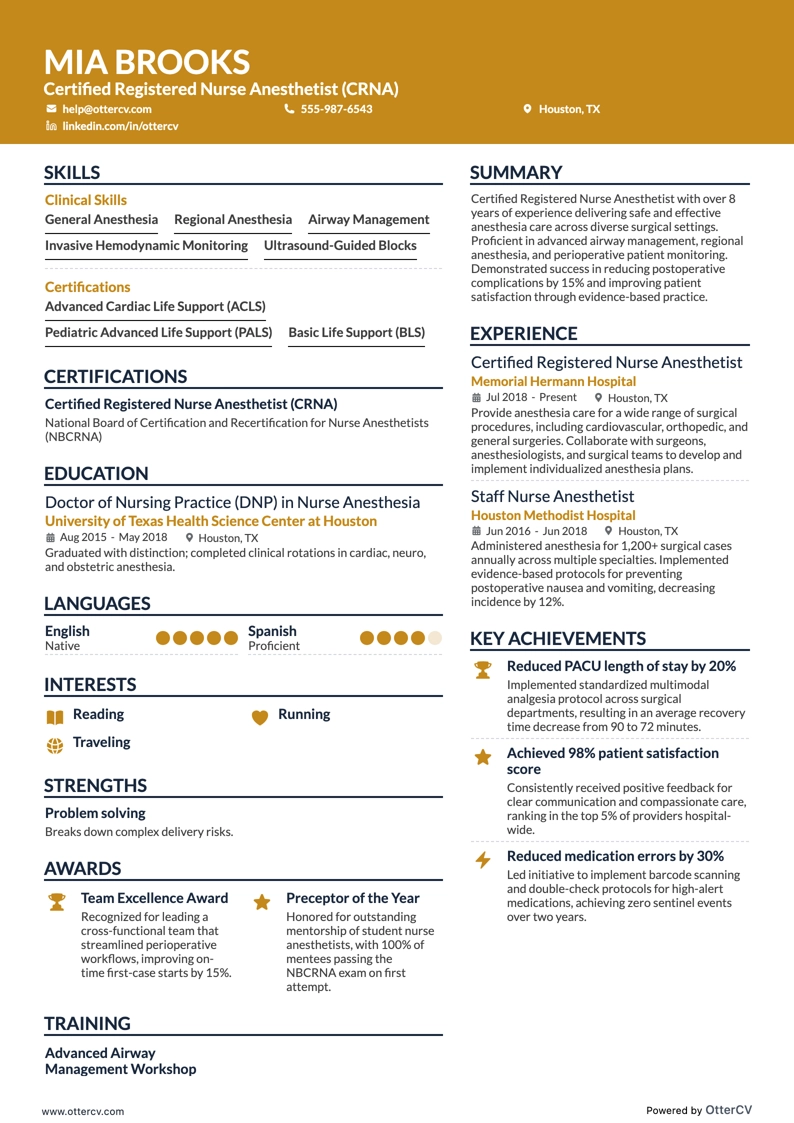
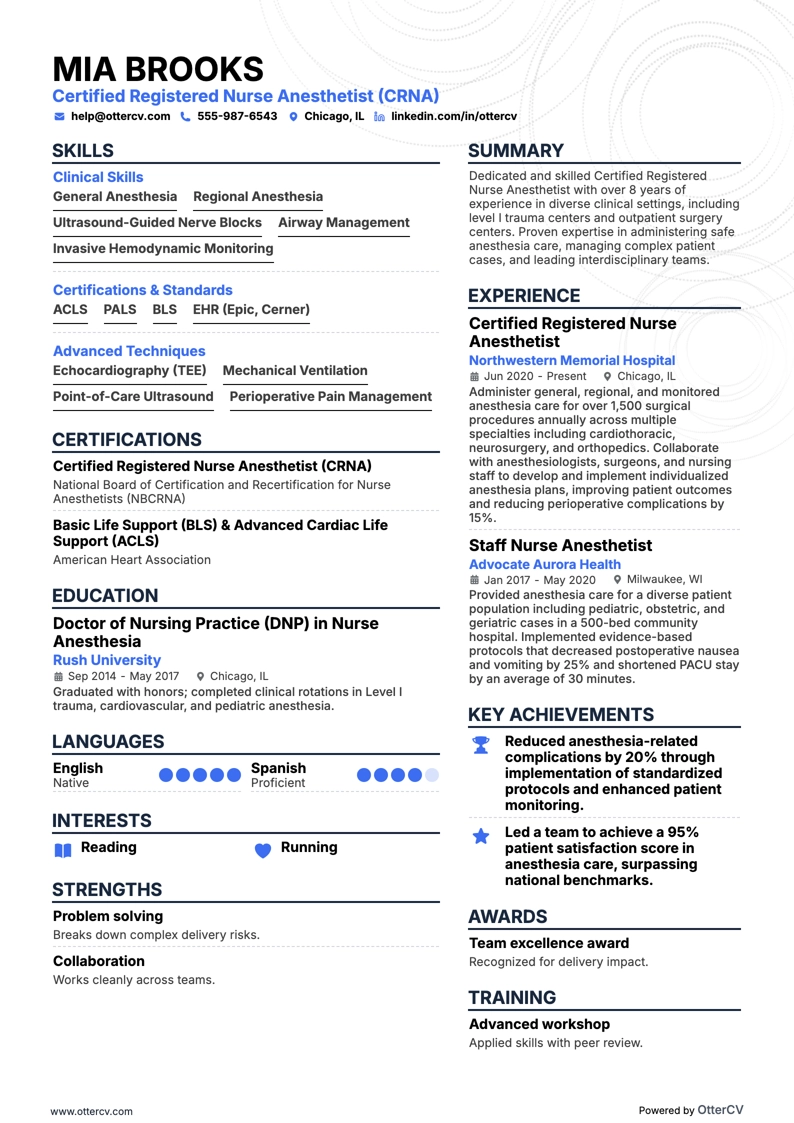
Certified Registered Nurse Anesthetist resume example

Certified Registered Nurse Anesthetist

Many nurse anesthetist resumes fall short because they read like task logs and hide clinical outcomes. That can hurt your chances in ATS screening, quick recruiter reviews, and competition for high-acuity roles.

A strong resume shows what changed because of your care, not just what tools or techniques you used. If you're unsure where to start, learning how to write a resume from the ground up can help you avoid common structural mistakes. Focus on case volume, acuity mix, on-time starts, reduced post-op nausea rates, fewer airway complications, smoother PACU handoffs, and improved patient satisfaction.

Key takeaways

  • Quantify anesthesia outcomes in every bullet, including case volume, complication rates, and on-time starts.

  • Use a reverse-chronological resume format for experienced CRNAs and a hybrid format for career changers.

  • Tailor each resume to the job posting’s terminology, equipment, and clinical specialties.

  • Show skills through measurable results in your experience section, not just a list of duties.

  • Place certifications above education when they are recent or explicitly required by the employer.

  • Write a three-to-four-line summary that highlights your title, specialty focus, and a key achievement.

  • Use Echocv to turn vague duties into specific, recruiter-ready resume bullets faster.

Job market snapshot for nurse anesthetists

We analyzed 307 recent nurse anesthetist job ads across major US job boards to give you a quick view of employer expectations, in-demand skills, and overall industry demand.

What level of experience employers are looking for nurse anesthetists

Years of ExperiencePercentage found in job ads
1–2 years5.9% (18)
3–4 years0.3% (1)
5–6 years0.7% (2)
Not specified91.5% (281)

Nurse anesthetist ads by area of specialization (industry)

Industry (Area)Percentage found in job ads
Healthcare76.2% (234)
Education10.4% (32)
Government7.8% (24)
Finance & Banking5.5% (17)

Top companies hiring nurse anesthetists

CompanyPercentage found in job ads
Henry Ford Hospital13.0% (40)
Novant Health13.0% (40)
Department of Veterans Affairs6.5% (20)
Kaiser Permanente3.9% (12)
HCA Healthcare3.6% (11)
Brigham and Women's Hospital3.3% (10)

Role overview stats

These tables outline the most common responsibilities and employment types for nurse anesthetist roles. Use them to align your resume with employer expectations and understand how the role is structured across the market.

Day-to-day activities and top responsibilities for a nurse anesthetist

ResponsibilityPercentage found in job ads
Anesthesia35.2% (108)
Acls30.6% (94)
Bls26.1% (80)
Pals22.1% (68)
Airway management18.6% (57)
Nursing15.0% (46)
Crna certification13.0% (40)
Rn license11.4% (35)
Als certification10.7% (33)
Bls certification10.1% (31)
Clinical judgment9.4% (29)
Regional anesthesia9.1% (28)

How to format a nurse anesthetist resume

Recruiters reviewing nurse anesthetist (CRNA) resumes prioritize clinical competency, anesthesia case volume, certifications, and the ability to work autonomously across surgical settings. A clear, well-structured resume format helps these qualifications stand out quickly during both human review and applicant tracking system (ATS) scans.

I have significant experience in this role—which format should I use?

I have significant experience in this role—which format should I use?

Use a reverse-chronological format to show your deepest anesthesia experience, case diversity, and clinical growth in a clear, progressive timeline.

  • Start each role entry with your scope of practice, including the surgical specialties covered, facility type, and whether you worked independently or in a care team model.
  • Highlight proficiency with anesthesia-specific tools and domains such as regional blocks, arterial line placement, ventilator management, total intravenous anesthesia (TIVA), and electronic health record (EHR) systems like Epic or Cerner.
  • Quantify clinical outcomes and operational contributions with case counts, complication rates, turnaround improvements, or cost reductions.

Example: “Administered over 1,200 anesthetics annually across cardiac, orthopedic, and trauma cases, maintaining a 99.4% complication-free rate while reducing average turnover time by 11 minutes per case.”

I'm junior or switching into this role—what format works best?

I'm junior or switching into this role—what format works best?

A hybrid resume format works best because it highlights relevant clinical skills and certifications while still showing your work history timeline.

  • Place a dedicated skills section near the top of your resume that features anesthesia-related competencies, pharmacology knowledge, airway management techniques, and monitoring systems.
  • Include clinical rotations, simulation hours, capstone projects, or transitional roles such as ICU or OR nursing that show direct exposure to anesthesia workflows.
  • Connect each skill or experience to a specific action and measurable result so recruiters can see applied competency, not just coursework.

Example scaffold: Advanced airway management (skill) → performed fiberoptic intubations during a 600-hour clinical residency rotation (action) → achieved successful first-pass intubation in 95% of difficult airway cases (result).

Why not use a functional resume?

Why not use a functional resume?

A functional resume removes the clinical timeline recruiters use to verify where, when, and how you built your anesthesia skills, which makes it harder for them to judge your readiness for autonomous practice.

  • Edge-case exception: a functional format may be acceptable if you are a registered nurse transitioning into a CRNA role with a significant employment gap or a non-traditional career path, but only if every listed skill is tied directly to clinical projects, rotations, or patient outcomes rather than presented in isolation.

Once you have a clean, well-organized format, the next step is choosing the right sections to present your qualifications clearly.

What sections should go on a nurse anesthetist resume

Recruiters want to quickly identify your clinical scope, case volume, anesthesia modalities, and patient outcomes. Knowing which resume sections to include and how to order them helps you place this information where hiring teams look first.

Use this structure for maximum clarity:

  • Header
  • Summary
  • Experience
  • Skills
  • Projects
  • Education
  • Certifications
  • Optional sections: Awards, Publications, Leadership

Your experience bullets should highlight measurable outcomes, case complexity and volume, independent versus supervised practice scope, and safety and quality results.

How to write your nurse anesthetist resume experience

Once you’ve organized the key parts of your resume, the next step is writing an experience section that turns those details into clear, role-relevant impact.

Your experience section should show how you delivered safe, effective anesthesia care using relevant clinical tools, techniques, and protocols, supported by measurable patient and operational outcomes. Hiring managers care more about proven impact than task lists, so emphasize what you achieved rather than what you were assigned to do.

Each entry should include:

  • Job title
  • Company and location (or remote)
  • Dates of employment (month and year)

Add three to five concise bullet points that explain what you owned, how you executed, and what results you delivered:

  • Ownership scope: the patient populations, case types, anesthesia services, clinical units, or care teams you were directly responsible for as a nurse anesthetist.
  • Execution approach: the anesthesia techniques, pharmacological agents, monitoring technologies, airway management methods, or evidence-based protocols you used to guide clinical decisions and deliver care.
  • Value improved: changes to patient safety metrics, anesthesia recovery outcomes, procedural efficiency, complication rates, compliance standards, or pain management effectiveness tied to your practice.
  • Collaboration context: how you worked with surgeons, anesthesiologists, perioperative nurses, pain management specialists, or other interdisciplinary team members to plan and carry out anesthesia care plans.
  • Impact delivered: outcomes such as improvements in patient throughput, case volume capacity, safety benchmarks, quality assurance results, or departmental performance, framed as results rather than activities.

Experience bullet formula

Experience bullet formula

Action verb + technology + what you built or fixed + measurable result

A nurse anesthetist experience example

Certified Registered Nurse Anesthetist (CRNA)

Riverside Regional Medical Center | Richmond, VA

2021–Present

Five-hundred-bed Level II trauma and tertiary surgical center supporting high-acuity inpatient and outpatient services.

  • Administered balanced general, regional, and monitored anesthesia care for 1,100+ annual cases across trauma, orthopedics, obstetrics, and vascular services, sustaining a 98% on-time first-case start rate through standardized preoperative workflows in Epic (electronic health record).
  • Implemented ultrasound-guided peripheral nerve block protocols using SonoSite ultrasound and nerve stimulation, reducing postoperative opioid requirements by 22% and decreasing post-anesthesia care unit (PACU) length of stay by 14 minutes per case for total joint patients.
  • Led difficult-airway planning and execution with video laryngoscopy (GlideScope) and fiberoptic bronchoscopy, cutting unplanned intensive care unit (ICU) admissions related to airway events by 30% over twelve months in partnership with anesthesiologists and respiratory therapy.
  • Optimized hemodynamic management with invasive monitoring (arterial lines, central venous access) and goal-directed fluid therapy, lowering intraoperative hypotension episodes by 18% and reducing vasopressor utilization by 12% in high-risk vascular cases.
  • Coordinated with surgeons, pharmacists, and perioperative nursing to standardize antibiotic redosing and temperature management, improving Surgical Care Improvement Project compliance from 91% to 97% and reducing surgical site infections by 0.4 percentage points year over year.

Now that you've seen how to structure your experience entries, focus on aligning them with the specific requirements of each job posting.

How to tailor your nurse anesthetist resume experience

Recruiters evaluate nurse anesthetist resumes through both human review and applicant tracking systems (ATS). Tailoring your resume to the job description helps you pass both screenings.

Ways to tailor your nurse anesthetist experience:

  • Match the anesthesia delivery systems and monitoring equipment listed in the posting.
  • Use the same terminology for anesthesia techniques or protocols when it accurately reflects your experience.
  • Include patient outcome metrics or quality benchmarks the employer prioritizes.
  • Highlight experience in the specific surgical specialties the role requires.
  • Emphasize compliance with Joint Commission or state regulatory standards mentioned in the posting.
  • Include collaborative care models referenced, such as care team or ACT frameworks.
  • Align your documentation practices with the EHR platform the facility uses.
  • Reference patient safety or quality improvement initiatives described in the job posting.

Tailoring means aligning your real accomplishments with what the employer asks for, not forcing keywords where they don't belong.

Resume tailoring examples for nurse anesthetist

Job description excerptUntailoredTailored
Administer general and regional anesthesia for cardiac, thoracic, and vascular surgical cases using invasive hemodynamic monitoring techniques, including arterial lines and Swan-Ganz catheters.Provided anesthesia care for patients undergoing various surgical procedures in a hospital setting.Administered general and regional anesthesia for over 400 cardiac, thoracic, and vascular cases annually, placing arterial lines and Swan-Ganz catheters for continuous invasive hemodynamic monitoring throughout each procedure.
Collaborate with a multidisciplinary pain management team to develop and implement epidural and peripheral nerve block protocols for postoperative pain control.Worked with other healthcare professionals to help manage patient pain after surgery.Partnered with a 12-member multidisciplinary pain management team to design epidural and peripheral nerve block protocols that reduced postoperative opioid consumption by 35% across orthopedic and abdominal surgery patients.
Perform preanesthetic assessments for ASA III–V patients in a Level I trauma center, ensuring airway management plans address anticipated difficult intubations using video laryngoscopy and fiberoptic bronchoscopy.Conducted patient assessments before surgery and helped prepare anesthesia plans for complex cases.Performed preanesthetic evaluations for ASA III–V patients in a 650-bed Level I trauma center, developing airway management plans for anticipated difficult intubations and utilizing video laryngoscopy and fiberoptic bronchoscopy in 98% of cases flagged as high-risk.

Once you’ve aligned your clinical experience with the role’s priorities, the next step is to quantify your nurse anesthetist achievements so hiring teams can quickly see your impact.

How to quantify your nurse anesthetist achievements

Quantifying your achievements demonstrates patient safety, efficiency, and clinical reliability. Focus on anesthesia volume, on-time starts, complication rates, pain control outcomes, compliance, and cost savings from standardizing drugs, equipment, and workflows.

Quantifying examples for nurse anesthetist

MetricExample
Case volumeDelivered anesthesia for 780 cases annually across orthopedics, general surgery, and endoscopy, while maintaining consistent coverage for two operating rooms per shift.
On-time startsImproved first-case on-time starts from 82% to 93% in four months by standardizing pre-op blocks and coordinating with anesthesia techs and pre-op nurses.
Safety outcomesReduced post-op nausea and vomiting from 18% to 11% by implementing multimodal prophylaxis and documenting risk scores in the electronic health record.
Pain controlIncreased post-anesthesia care unit pain scores ≤3/10 at thirty minutes from 64% to 78% by optimizing regional anesthesia and titrating opioids using capnography.
ComplianceAchieved 100% controlled-substance reconciliation accuracy over twelve months by tightening anesthesia cart counts and auditing documentation with pharmacy.

How to list your hard and soft skills on a nurse anesthetist resume

With strong bullet points in place, highlight the hard and soft skills that support your qualifications throughout the rest of your nurse anesthetist resume.

Your skills section should show that you can deliver safe anesthesia care. Recruiters and ATS also scan it for required clinical competencies and keywords, so aim for a hard-skill-heavy mix with a smaller set of role-specific soft skills.

Nurse anesthetist roles require a blend of:

  • Product strategy and discovery skills.
  • Data, analytics, and experimentation skills.
  • Delivery, execution, and go-to-market discipline.
  • Soft skills.

Your skills section should be:

  • Scannable, using bullet-style grouping.
  • Relevant to the job post.
  • Backed by proof in your experience bullets.
  • Updated with current tools.

Place your skills section:

  • Above experience if you're junior or switching careers.
  • Below experience if you're mid- or senior-level with strong achievements.

Hard skills

  • Administers general anesthesia.
  • Performs regional anesthesia and neuraxial blocks.
  • Uses ultrasound-guided nerve blocks.
  • Manages airways and performs intubation.
  • Handles ventilator management.
  • Conducts hemodynamic monitoring and places arterial lines.
  • Performs central venous catheter placement.
  • Completes anesthesia machine checks.
  • Applies pharmacology knowledge in anesthetics and vasopressors.
  • Follows pain management protocols.
  • Uses electronic health records, including Epic and Cerner.
  • Maintains ACLS (Advanced Cardiovascular Life Support).

Soft skills

  • Rapid clinical decision-making.
  • Closed-loop communication in the operating room.
  • Preoperative patient education.
  • Support and clarification for informed consent.
  • Cross-functional coordination with surgeons.
  • Strong escalation and handoff discipline.
  • Situational awareness under pressure.
  • Prioritization during emergent cases.
  • Accurate and timely documentation.
  • Assertive advocacy for patient safety.
  • Teaching and coaching in the operating room.
  • Ownership of perioperative workflow.

How to show your nurse anesthetist skills in context

Skills should not appear only in a bulleted list on your resume. Explore resume skills examples to see how other professionals present their competencies effectively.

Your skills should also be demonstrated in:

  • Your summary, which shows your high-level professional identity
  • Your experience, which proves your abilities through outcomes

Here’s how that looks in practice.

Summary example

Senior CRNA with 12 years of experience delivering anesthesia for cardiac, trauma, and pediatric cases. Skilled in ultrasound-guided regional techniques and EMR optimization, reducing post-anesthesia recovery times by 18% through individualized patient protocols.

  • Immediately reflects senior-level expertise
  • Names specific tools and techniques
  • Includes a measurable patient outcome
  • Signals collaboration and patient-centered care

Experience example

Certified Registered Nurse Anesthetist

Lakeview Regional Medical Center | Baton Rouge, LA

June 2018–Present

  • Administered anesthesia for 1,200+ surgical cases annually, working with surgeons and OR teams to maintain a 99.4% complication-free rate.
  • Implemented ultrasound-guided nerve block protocols that reduced opioid use among post-surgical patients by 22% within one year.
  • Mentored four junior CRNAs in arterial line placement and airway management, improving first-attempt intubation success rates by 15%.
  • Every bullet includes measurable proof.
  • Skills surface naturally through real outcomes.

Once you’ve shown your nurse anesthetist capabilities through specific clinical examples and outcomes, use that same approach when structuring a nurse anesthetist resume with no experience.

How do I write a nurse anesthetist resume with no experience

Even without full-time experience, you can show readiness through clinical training and transferable nursing skills. Our guide on building a resume without work experience explains strategies that apply directly to entry-level CRNA candidates.

  • Certified registered nurse anesthetist clinical rotations
  • Operating room registered nurse experience
  • Capstone quality improvement project
  • Airway management simulation lab
  • Preceptor shadowing in anesthesia care
  • Advanced cardiac life support leadership
  • Case log with procedure counts
  • Evidence-based practice literature review

Focus on:

  • Case volume and anesthesia types
  • Airway, line, and regional skills
  • Safety metrics and protocol adherence
  • Credentialing, licenses, and compliance

Resume format tip for entry-level nurse anesthetist

Resume format tip for entry-level nurse anesthetist

Use a hybrid resume format because it puts clinical competencies and rotations first while still showing a clear timeline of nursing and training experience.

  • Lead with a "Clinical Training" section.
  • Quantify cases, techniques, and patient acuity.
  • List tools such as ultrasound, ventilator, and monitors.
  • Add credentialing, including licenses, certifications, and DEA status.
  • Include preceptor names and rotation sites.

Example project bullet:

  • Completed 120 certified registered nurse anesthetist clinical rotation cases, using ultrasound-guided arterial lines and standard monitoring, with zero documented anesthesia-related adverse events.

Once you’ve positioned your clinical rotations, certifications, and transferable skills to offset limited work history, make sure your education section strengthens that foundation with the right details and formatting.

How to list your education on a nurse anesthetist resume

Your education section helps hiring teams quickly confirm that you have the advanced training required. It also reinforces your foundational knowledge in anesthesia, pharmacology, and patient care.

Include:

  • Degree name
  • Institution
  • Location
  • Graduation year
  • Relevant coursework for juniors or entry-level candidates
  • Honors and GPA if 3.5 or higher

Skip the month and day—list the graduation year only.

Here’s a strong education entry tailored to a nurse anesthetist resume:

Example education entry

Doctor of Nursing Practice (DNP), Nurse Anesthesia

Georgetown University, Washington, D.C.

Graduated 2022 with a GPA of 3.8/4.0.

  • Relevant coursework: Advanced Pharmacology, Principles of Anesthesia, Regional Anesthesia Techniques, Pathophysiology, Clinical Practicum in Anesthesia
  • Honors: Summa Cum Laude; inducted into Sigma Theta Tau International Honor Society

How to list your certifications on a nurse anesthetist resume

Certifications on your resume show a nurse anesthetist's commitment to ongoing learning, proficiency with current tools and standards, and alignment with healthcare requirements and best practices.

Include:

  • Certificate name
  • Issuing organization
  • Year
  • Optional: credential ID or URL
  • List certifications below education when they're older, expected for the role, or less relevant than your nurse anesthetist degree.
  • List certifications above education when they're recent, highly relevant to your target role, or required by the employer or facility.

Best certifications for your nurse anesthetist resume

  • National Certification Examination (NCE) for Nurse Anesthetists.
  • Basic Life Support (BLS).
  • Advanced Cardiovascular Life Support (ACLS).
  • Pediatric Advanced Life Support (PALS).
  • Neonatal Resuscitation Program (NRP).
  • Certified Registered Nurse Anesthetist (CRNA) credential.

Once your credentials are easy for hiring teams to verify, use your nurse anesthetist resume summary to connect those qualifications to your value in a clear, focused snapshot.

How to write your nurse anesthetist resume summary

Your resume summary is often the first section a recruiter reads, so it should immediately show your clinical value. A strong opening presents you as a qualified certified registered nurse anesthetist (CRNA) worth interviewing.

Keep it to three to four lines and include:

  • Your title and total years of anesthesia experience.
  • Your clinical setting or specialty focus, such as cardiac, pediatric, or trauma.
  • Core competencies such as regional anesthesia, airway management, or pharmacology.
  • One or two measurable achievements, such as case volumes or safety outcomes.
  • Collaborative skills demonstrated through real team-based results.

PRO TIP

At this level, prioritize specific clinical skills, certifications, and early measurable contributions. Highlight the types of cases you’ve managed and the settings where you’ve worked.

Avoid vague descriptors like “passionate” or “hardworking.” Instead, use concrete details recruiters can verify.

Example summary for a nurse anesthetist

Certified registered nurse anesthetist with three years of experience in general and orthopedic cases. Administered anesthesia for 1,200+ procedures with zero critical incidents. Skilled in regional blocks, airway management, and electronic health records documentation.

Now that you’ve written a summary that highlights your clinical expertise and value, make sure the header above it presents your contact details clearly so recruiters can reach you.

What to include in a nurse anesthetist resume header

Your resume header includes your key identifiers and contact details, helping nurse anesthetist candidates improve visibility, build credibility, and move through recruiter screening more efficiently.

Essential resume header elements

  • Full name
  • Tailored job title and headline
  • Location
  • Phone number
  • Professional email
  • GitHub link
  • Portfolio link
  • LinkedIn

A LinkedIn link helps recruiters verify your experience quickly and supports screening.

Do not include a photo on a nurse anesthetist resume unless the role is explicitly front-facing or appearance-dependent.

Keep your header consistent with your licensure name, and match your job title to the posting to reduce screening delays.

Example

Once your contact details and credentials are clearly presented at the top, you can strengthen the rest of your application with additional sections that support your nurse anesthetist experience and qualifications.

Additional sections for nurse anesthetist resumes

Additional resume sections can help you stand out when your core qualifications are similar to those of other applicants. They add credibility and highlight specialized expertise relevant to anesthesia practice. For example, listing language skills on your resume can be especially useful if you work with diverse patient populations.

  • Languages
  • Certifications and licenses
  • Publications and research
  • Professional affiliations
  • Continuing education
  • Volunteer experience
  • Conference presentations

Once you’ve strengthened your resume with the right supplementary sections, it’s worth focusing on the document that often accompanies it: your cover letter.

Do nurse anesthetist resumes need a cover letter

A cover letter is not required for most nurse anesthetist applications, but it can help in competitive roles or stricter hiring processes. If you’re new to the format, start by understanding what a cover letter is and how it supports your resume. It can be especially useful when your resume needs more context or when the hiring team expects a clear explanation of fit.

Use a cover letter to add details your resume cannot:

  • Explain your fit for the role and team by aligning your anesthesia strengths with the facility’s case mix, call model, and collaboration style.
  • Highlight one or two outcomes, such as improved block success rates, smoother emergence, or fewer delays from preoperative workflow changes.
  • Show that you understand the clinical context by referencing the patient population, surgical services, safety priorities, and how anesthesia supports throughput and quality.
  • Address transitions or less obvious experience by connecting prior intensive care unit work, travel roles, or gaps to your readiness and reliability as a nurse anesthetist.

Using AI to improve your nurse anesthetist resume

Even if you decide a cover letter adds value for your nurse anesthetist application, improving your nurse anesthetist resume with AI is the next step because it strengthens the document employers review first.

AI can improve your resume’s clarity, structure, and impact. It can help refine bullet points, align keywords, and strengthen weak sections. But overusing it can strip away authenticity. Once your content is clear and aligned to the role, step away from AI.

For inspiration on how to get started, review these ChatGPT resume writing prompts.

Here are 10 practical prompts to strengthen specific sections of your nurse anesthetist resume:

Strengthen summary statement

Strengthen summary statement

Rewrite my nurse anesthetist resume summary in three concise sentences that emphasize clinical expertise, years of experience, and anesthesia specialties.

Quantify experience bullets

Quantify experience bullets

Add measurable outcomes to these nurse anesthetist experience bullets, with emphasis on patient volume, case mix, and efficiency improvements.

Refine skills section

Refine skills section

Review my nurse anesthetist skills section to remove vague language and replace it with specific clinical competencies and anesthesia techniques.

Tailor certification details

Tailor certification details

Reorganize the nurse anesthetist certifications section by relevance, clearly prioritizing CRNA credentials, BLS, ACLS, and PALS.

Improve action verbs

Improve action verbs

Replace weak verbs in my nurse anesthetist experience section with strong, clinical-specific action verbs that highlight direct patient impact.

Align with job posting

Align with job posting

Compare my nurse anesthetist resume against this job description. Identify missing keywords and suggest where to add them naturally.

Tighten education section

Tighten education section

Reformat my nurse anesthetist education section to highlight my doctoral or master's program, clinical rotations, and academic honors.

Clarify project contributions

Clarify project contributions

Rewrite this nurse anesthetist quality improvement project description to clearly explain your role, the actions you took, and the patient safety outcomes.

Eliminate redundant content

Eliminate redundant content

Scan my nurse anesthetist resume for repeated phrases and overlapping bullet points. Suggest cuts that preserve the strongest content.

Enhance clinical rotations

Enhance clinical rotations

Format my nurse anesthetist clinical rotation entries to highlight case diversity, anesthesia techniques performed, and total documented hours.

Conclusion

A strong nurse anesthetist resume should show measurable outcomes, role-specific skills, and a clear, easy-to-scan structure. Use metrics such as case volume, regional block success, first-pass intubation rates, and complication reductions. Highlight expertise in airway management, hemodynamic control, and acute pain management.

Keep formatting clean, sections consistent, and details easy to scan. Match keywords to the job posting, and demonstrate current practice across anesthesia types and settings. This approach shows that you are prepared for today’s hiring market and near-future expectations.

Nurse Anesthetist resume examples

Explore additional Nurse Anesthetist resume samples and guides and see what works for your level of experience or role.

By Experience

Chief CRNA

Chief CRNA resume preview

Lead CRNA

Lead CRNA resume preview

Senior Nurse Anesthetist

Senior Nurse Anesthetist resume preview

Nurse Anesthetist resume examples

Explore additional Nurse Anesthetist resume samples and guides and see what works for your level of experience or role.

By Role

Pain Management CRNA

Pain Management CRNA resume preview

Obstetric Nurse Anesthetist

Obstetric Nurse Anesthetist resume preview

Cardiac Nurse Anesthetist

Cardiac Nurse Anesthetist resume preview

Pediatric Nurse Anesthetist

Pediatric Nurse Anesthetist resume preview

Clinical Nurse Anesthetist

Clinical Nurse Anesthetist resume preview

Staff CRNA

Staff CRNA resume preview

Nurse Anesthetist

Nurse Anesthetist resume preview

Certified Registered Nurse Anesthetist

Certified Registered Nurse Anesthetist resume preview