Machine Operator full preview

10 No Degree Resume Examples

OtterCV

Written by The OtterCV Team

Updated: 1/12/2024•8 min read

See all resume examples in this guide, or generate your own resume example with your personalized prompt

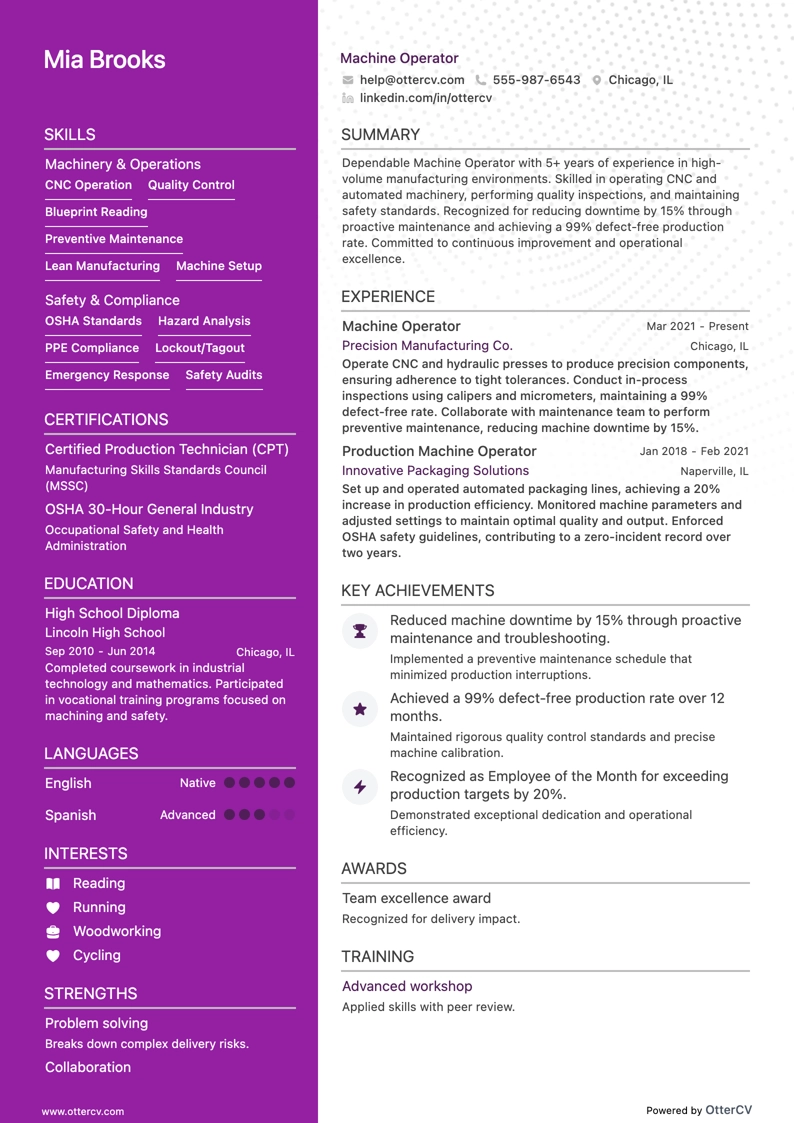
Machine Operator resume example

Machine Operator

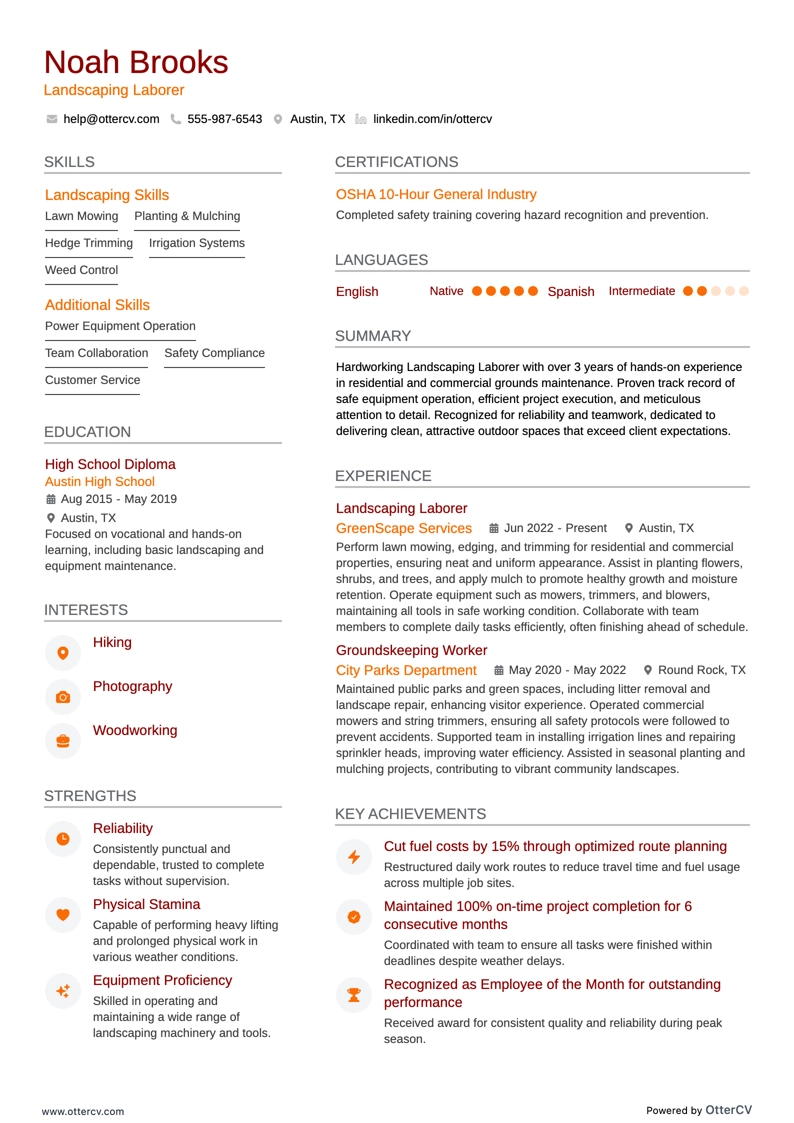
Landscaping Laborer resume example

Landscaping Laborer

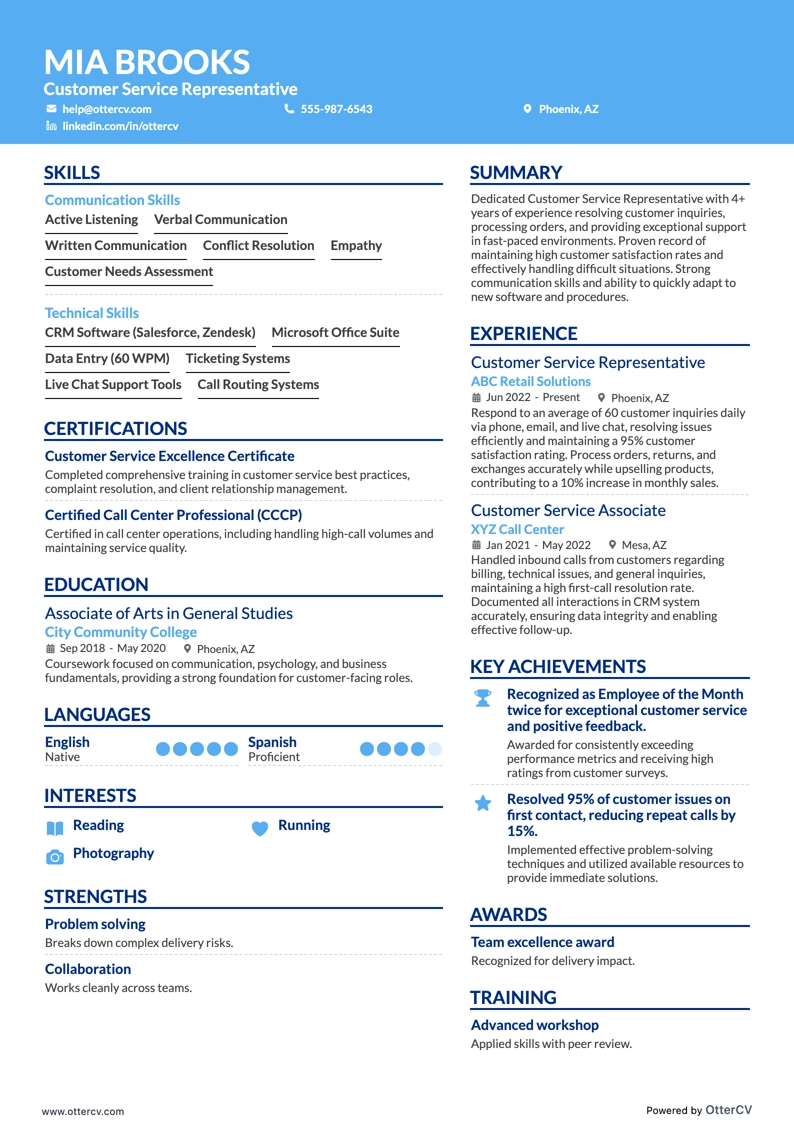
Customer Service Representative resume example

Customer Service Representative

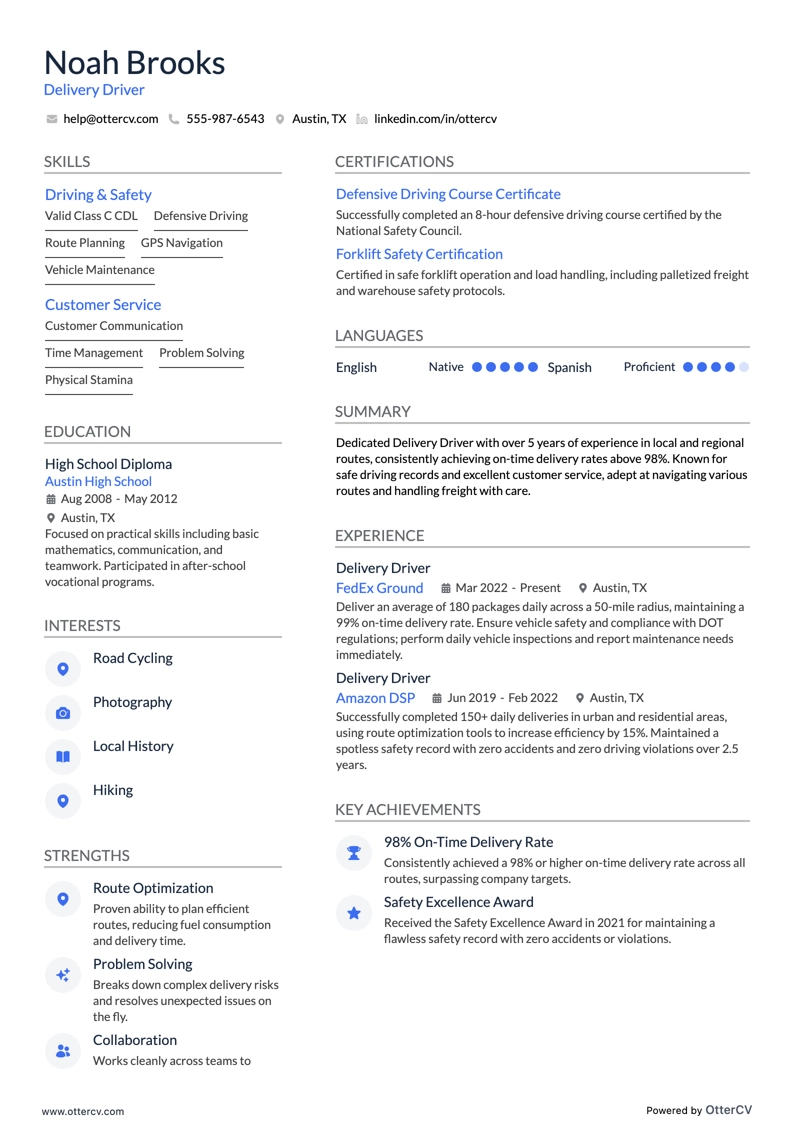
Delivery Driver resume example

Delivery Driver

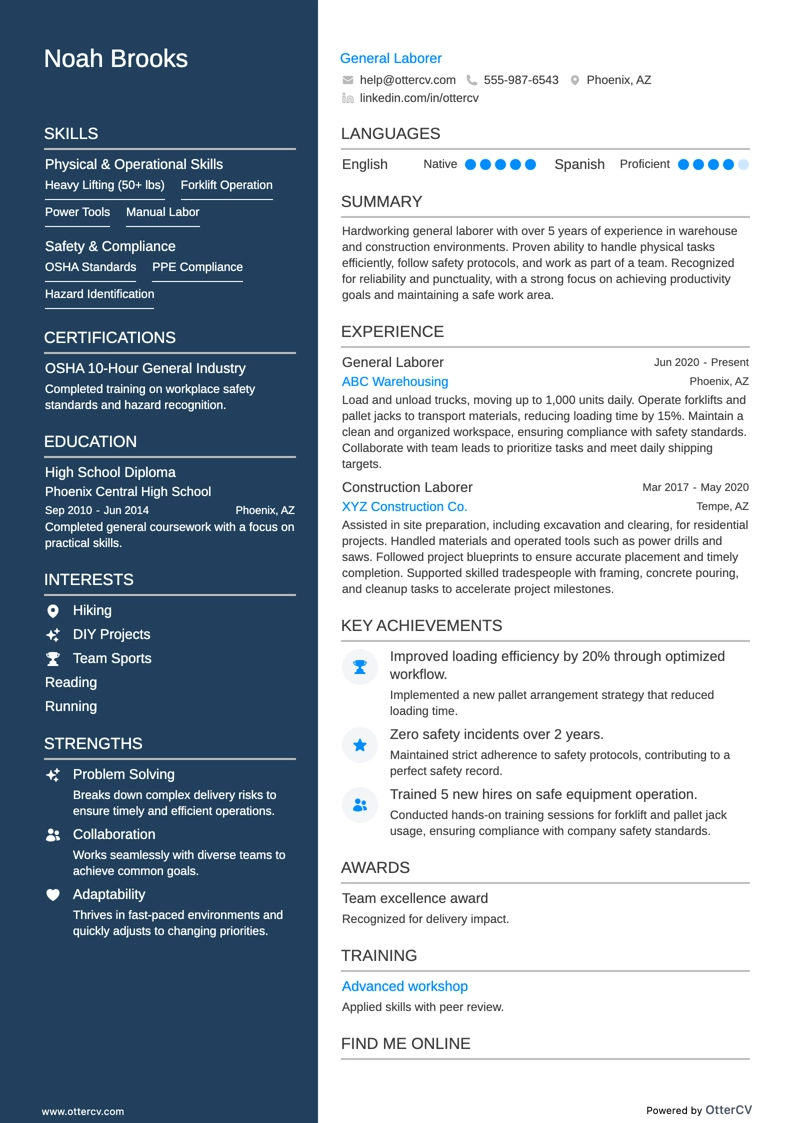
General Laborer resume example

General Laborer

Many project manager resumes without a degree fall short because they read like task lists and hide evidence of leadership. In ATS (applicant tracking system) filters and ten-second recruiter scans, that can cost you interviews in a crowded market.

This guide shows you how to lead with outcomes, including delivery speed, budget control, risk reduction, and stakeholder alignment. Highlight projects delivered on time, dollars saved, defects reduced, teams led, vendors managed, and gains in customer satisfaction. If you are not sure where to start, learning how to write a resume from the ground up can give you a solid foundation before you move into the no-degree specifics below.

Key takeaways

  • Start each experience bullet with measurable results so your achievements, not your degree, become the main credibility signal.

  • Use a reverse-chronological resume if you have relevant experience; choose a hybrid format if you are changing careers.

  • Match the tools, terminology, and metrics in each entry to the specific job posting.

  • Connect skills to real projects and results, since unsupported claims are less likely to satisfy recruiter scrutiny.

  • Put certifications above education when they are more recent or more relevant to your target role.

  • Write a three- to four-line summary that highlights your tools, domain, and strongest quantified achievement.

  • Use Echocv to turn vague duties into quantified, recruiter-ready bullets for a stronger no-degree resume.

Job market snapshot for No Degrees

We analyzed 233 recent No Degree job ads across major US job boards to give you a quick view of role specialization trends, employer expectations, and the salary landscape.

What level of experience employers are looking for: No Degrees

Years of ExperiencePercentage found in job ads
1–2 years12.4% (29)
3–4 years3.0% (7)
5–6 years1.3% (3)
9–10 years0.4% (1)
10+ years2.1% (5)
Not specified80.3% (187)

No Degree ads by area of specialization (industry)

Industry (Area)Percentage found in job ads
Healthcare36.1% (84)
Finance & Banking32.2% (75)
Education20.2% (47)
Government5.2% (12)

Top companies hiring No Degrees

CompanyPercentage found in job ads
Universal Health Services10.7% (25)
BCG Digital Ventures9.4% (22)
New Season6.4% (15)
General Motors5.2% (12)
Marvell4.7% (11)
Accenture4.3% (10)
Applied Materials4.3% (10)

Role overview stats

These tables highlight the most common responsibilities and employment types for No Degree roles. Use them to align your resume with employer expectations and understand how the role is typically structured across the market.

Day-to-day activities and top responsibilities for a No Degree

ResponsibilityPercentage found in job ads
Python12.4% (29)
Linux8.2% (19)
C++6.9% (16)
Java6.9% (16)
Kubernetes4.7% (11)
Sql4.7% (11)
Aws3.9% (9)
Azure3.9% (9)
Gcp3.9% (9)
Ai3.4% (8)
Ansible3.4% (8)
Django3.4% (8)

Type of employment (remote vs on-site vs hybrid)

Employment typePercentage found in job ads
On-site88.8% (207)
Hybrid9.9% (23)

How to format a No Degree resume

Recruiters reviewing candidates without a degree focus most on demonstrated skills, relevant work experience, and measurable results that show job readiness. Choosing the right resume format helps present these strengths early and clearly, instead of emphasizing the lack of formal education.

I have significant experience in this role—which format should I use?

I have significant experience in this role—which format should I use?

Use a reverse-chronological format to emphasize your strongest and most recent experience while showing a clear progression in responsibility.

Do:

  • Start each role entry with scope and ownership details, such as team size, budget, or operational reach, so recruiters can quickly understand your level of accountability.
  • Include role-specific tools, technical skills, and domain expertise within each position instead of separating them into a standalone section, so your capabilities are proven in context.
  • Tie every bullet to a measurable outcome or business impact, making results your primary credibility signal rather than education.

Example bullet: “Managed end-to-end product launches across three regional markets, increasing annual revenue by $1.2M and reducing time-to-market by 22% through streamlined vendor negotiations.”

I'm junior or switching into this role—what format works best?

I'm junior or switching into this role—what format works best?

A hybrid format works best because it lets you lead with a focused skills section while still providing a chronological work history for context.

  • Place a targeted skills section above your work history, grouping core competencies and tools relevant to the role so they appear within the first third of the page.
  • Include freelance projects, volunteer work, internships, or self-directed projects as transitional experience entries, formatted the same way as traditional job entries.
  • Connect every listed skill to a specific action and a concrete result so recruiters see application, not just claims.

Example scaffold: Data analysis (skill) → Built automated sales dashboards using Excel and Power BI for a nonprofit client (action) → Reduced monthly reporting time by 40% and surfaced a $15K budget discrepancy (result).

Why not use a functional resume?

Why not use a functional resume?

A functional resume removes the timeline and context recruiters use to verify your abilities, which can make your claims harder to trust when there is no degree to provide added credibility.

  • A functional format may be acceptable if you are making a significant career change, have limited formal work history, or need to address extended resume gaps—but only if every listed skill is tied to a specific project, volunteer role, or measurable outcome instead of standing alone as a claim.
  • Avoid a functional format entirely if you have any relevant work history, because even minimal chronological context usually strengthens your candidacy more than a skills-only layout.

Once your resume format shifts attention to your strengths instead of your education, the next step is choosing sections that support that focus.

What sections should go on a No Degree resume

Recruiters want clear proof that you can do the job through relevant experience, skills, and results, even without a degree. Knowing what to put on a resume helps you include the right building blocks for maximum impact.

Use this structure for clarity:

  • Header
  • Summary
  • Experience
  • Skills
  • Projects
  • Education
  • Certifications
  • Optional sections: awards, open-source work, volunteering

In your experience section, make each bullet focus on measurable impact, outcomes, scope, and the results you delivered.

Once you’ve organized your resume with the right building blocks, the next step is describing your experience so employers can see your impact without relying on a degree.

How to write your No Degree resume experience

Your work experience section matters even more when you don’t have a formal degree because it becomes your clearest proof of professional capability. Hiring managers reviewing candidates without degrees focus on demonstrated impact—shipped work, role-relevant tools and methods you’ve used, and measurable outcomes—rather than task lists that only describe daily duties.

Each entry should include:

  • Job title
  • Company and location (or remote)
  • Dates of employment (month and year)

Add three to five concise bullet points that show what you owned, how you executed, and the outcomes you delivered:

  • Ownership scope: the products, platforms, systems, markets, or teams you were directly accountable for, framed to show that your responsibilities matched or exceeded what a degree-holding candidate would typically manage.
  • Execution approach: the tools, frameworks, technologies, or methods you used to make decisions and deliver work, showing that you built fluency through hands-on practice rather than coursework.
  • Value improved: the changes you drove in quality, performance, efficiency, accessibility, reliability, or risk—evidence that your contributions produced tangible, role-relevant progress without relying on credentials as a proxy.
  • Collaboration context: how you worked with cross-functional teams, clients, vendors, or external stakeholders, demonstrating that you earned trust and operated effectively across organizational boundaries regardless of educational background.
  • Impact delivered: the outcomes you produced, expressed through results, scale, or business impact rather than activity, giving hiring managers concrete evidence that your work moved meaningful metrics forward.

When you lack a degree, every bullet in your experience section needs to do double duty by establishing both competence and credibility. Anchor each point in what you owned, how you executed, and the result that followed. This structure shifts attention away from what’s missing on your resume and toward what’s clearly present: a track record of real, verifiable contribution.

Experience bullet formula

Experience bullet formula

Action verb + technology + what you built or fixed + measurable result

A No Degree experience example

IT Support Specialist

Northbridge Dental Group | Remote

2022–Present

Supported a multi-location dental network with 150 staff across eight clinics using a cloud-based practice management stack.

  • Resolved 40 to 50 tickets per week in Jira Service Management, reducing average first-response time from four hours to 50 minutes by standardizing triage, macros, and vendor escalation paths.
  • Automated new-hire onboarding in Microsoft Intune and Microsoft Entra ID (Azure Active Directory), cutting setup time from two hours to 35 minutes per employee and improving first-day readiness to 98%.
  • Deployed and maintained Windows 11 endpoints with PowerShell and Microsoft Defender for Endpoint, lowering recurring malware incidents by 40% and improving device compliance to 95%.
  • Partnered with clinic managers and the security lead to roll out phishing simulations and security awareness training in KnowBe4, increasing reporting rates from 12% to 34% and reducing click-through rates by 21%.
  • Documented 50+ troubleshooting runbooks in Confluence and led monthly lunch-and-learns with front-desk teams, decreasing repeat tickets for common workflows by 27%.

Now that you’ve seen how to structure your experience entries, the next step is to customize them for the specific job you want.

How to tailor your No Degree resume experience

Recruiters review resumes through applicant tracking systems and manual screening, and both look for relevance to the role. Tailoring your resume to the job description helps ensure your strongest qualifications match what the employer values most.

Ways to tailor your No Degree experience:

  • Match the specific tools and technologies listed in the job description.
  • Use the same terminology for processes and workflows.
  • Reflect the KPIs or success criteria the employer emphasizes.
  • Include relevant industry or domain experience that strengthens your fit.
  • Emphasize compliance or quality standards when the role requires them.
  • Highlight collaboration models or team structures mentioned in the posting.
  • Include accessibility or reliability responsibilities if the job calls them out.
  • Prioritize hands-on skills and applied knowledge over formal credentials.

Tailoring means aligning your real accomplishments with each job’s requirements, not stuffing unrelated keywords into your experience section.

Resume tailoring examples for No Degree

Job description excerptUntailoredTailored
"Seeking a warehouse associate experienced with RF scanners, inventory cycle counts, and SAP WM to maintain 99%+ inventory accuracy across 50,000+ SKU facility."Helped with warehouse tasks and kept track of inventory.Conducted daily cycle counts using RF scanners and SAP WM across a 50,000+ SKU warehouse, maintaining 99.2% inventory accuracy over 18 months.
"Looking for a customer support specialist to handle 60+ daily Zendesk tickets, troubleshoot SaaS billing issues, and maintain a 95%+ CSAT score."Answered customer questions and resolved complaints in a timely manner.Resolved 70+ daily Zendesk tickets focused on SaaS billing troubleshooting, consistently exceeding the 95% CSAT target with a 97.1% average over two quarters.
"Hiring an HVAC service technician to perform preventive maintenance on commercial rooftop units, diagnose refrigerant leaks using electronic detectors, and document all work orders in ServiceTitan."Performed maintenance and repairs on heating and cooling systems.Executed preventive maintenance on 15+ commercial rooftop HVAC units weekly, diagnosed refrigerant leaks with electronic leak detectors, and logged all service details in ServiceTitan to ensure compliance documentation.

Once your experience aligns with the role’s requirements, quantify your no degree achievements to show measurable impact and strengthen your fit.

How to quantify your No Degree achievements

Quantifying your achievements helps show that you deliver results without relying on credentials. Focus on output volume, cycle time, accuracy, customer satisfaction, and the revenue or cost impact of your work.

Quantifying examples for No Degree

MetricExample
ThroughputHandled 60–80 customer emails per day in Zendesk while maintaining a first response time under four hours.
Cycle timeCut onboarding turnaround from five days to two by standardizing checklists and automating reminders in Google Sheets.
AccuracyReduced order entry errors from 3.2% to 0.9% by adding validation rules and a second-pass review process.
Revenue impactRecovered $18,500 in overdue invoices in one quarter by prioritizing accounts and tracking follow-ups in HubSpot.
Risk reductionPassed two internal compliance audits with zero findings by updating documentation and enforcing a weekly access review.

Once you’ve written strong experience bullet points, highlight the hard and soft skills that show you’re qualified without formal education.

How to list your hard and soft skills on a No Degree resume

Your skills section helps show that you can do the job without a degree. Recruiters and ATS often scan it to confirm role fit and keyword match, so include a balanced mix of hard skills and job-relevant soft skills.

No Degree roles require a blend of:

  • Product strategy and discovery skills.
  • Data, analytics, and experimentation skills.
  • Delivery, execution, and go-to-market discipline.
  • Soft skills.

Your skills section should be:

  • Scannable with bullet-style grouping.
  • Relevant to the job post.
  • Backed by proof in your experience bullets.
  • Updated with current tools.

Place your skills section:

  • Above experience if you’re junior or switching careers.
  • Below experience if you’re mid/senior with strong achievements.

Hard skills

  • Customer discovery interviews.
  • User stories and acceptance criteria.
  • Jobs-to-be-Done framework.
  • Roadmap planning and prioritization.
  • Agile, Scrum, and Kanban.
  • Jira and Confluence.
  • Figma and Miro.
  • SQL querying basics.
  • Excel and Google Sheets.
  • Google Analytics 4.
  • A/B testing and hypothesis design.
  • PRD writing.

Soft skills

  • Translate goals into requirements.
  • Ask sharp discovery questions.
  • Align stakeholders on priorities.
  • Communicate tradeoffs clearly.
  • Write concise documentation.
  • Run focused standups and reviews.
  • Make decisions with limited data.
  • Take ownership of outcomes.
  • Manage scope and expectations.
  • Give and receive direct feedback.
  • Escalate risks early.
  • Follow through on commitments.

How to show your No Degree skills in context

Skills should not live only in a dedicated skills list. You can explore common resume skills by role to see how other candidates present them effectively.

Show your skills in:

  • Your summary, to communicate your high-level professional identity
  • Your experience, to prove them through outcomes

Here is what both look like in practice.

Operations leader with 12 years of experience streamlining logistics workflows using Lean methodology and SAP. Reduced fulfillment costs by 31% across three distribution centers while mentoring cross-functional teams through process transitions.

Why it works

  • Signals senior-level expertise immediately.
  • Names specific tools and methods.
  • Leads with a measurable cost reduction.
  • Highlights mentoring as a soft skill.

Experience example

Senior Operations Coordinator

Bridgewell Distribution Co. | Denver, CO

March 2018–January 2024

  • Redesigned warehouse pick-and-pack workflows in SAP, cutting order processing time by 22% across two facilities.
  • Worked with procurement and IT teams to implement automated inventory tracking, reducing stock discrepancies by 17%.
  • Trained 40+ associates on Lean principles, improving shift productivity scores by 14% within six months.

Why it works

  • Every bullet includes measurable proof.
  • Skills surface naturally through outcomes.

Once you’ve shown your strengths through real examples, the next step is to organize them into a no degree resume when you have no experience.

How do I write a No Degree resume with no experience

Even without full-time experience, you can still show that you’re ready through:

  • Volunteer roles with tracked results
  • Freelance gigs for real clients
  • Personal projects that solve specific problems
  • Online courses with capstone projects
  • Open-source contributions and pull requests
  • Internship-style shadowing or job simulations
  • Community leadership with deliverables
  • Certifications with hands-on labs

If you're starting from scratch, our guide on building a resume without work experience walks you through each of these approaches in detail.

Focus on:

  • Measurable outcomes and scope
  • Tools, methods, and workflows
  • Role clarity and ownership
  • Proof links such as a portfolio, GitHub, or demos

Resume format tip for entry-level No Degree

Resume format tip for entry-level No Degree

Use a skills-based resume format because it puts projects and proof of work first, which matters most when you do not yet have full-time experience.

Do the following:

  • Place a Projects section above work history.
  • Match keywords from the job posting.
  • List tools next to each project.
  • Add numbers, dates, and scope.
  • Link to proof for each project.

Example project bullet:

  • Built a Google Sheets budget tracker with pivot tables and data validation, reducing monthly reconciliation time by 30% for a family of four.

Once you’ve structured your resume around skills and experience, the next step is presenting your education clearly.

How to list your education on a No Degree resume

Your education section helps hiring teams confirm your foundational knowledge. It shows that you have the academic background relevant to your No Degree role and helps validate your qualifications quickly.

Include:

  • Degree name
  • Institution
  • Location
  • Graduation year
  • Relevant coursework (for juniors or entry-level candidates)
  • Honors and GPA (if 3.5 or higher)

Skip the month and day—list the graduation year only.

Here’s a strong education entry tailored to a No Degree resume:

Example education entry

Bachelor of Arts in Communication Studies

University of Wisconsin–Madison, Madison, WI

Graduated 2021

GPA: 3.7

  • Relevant coursework: Organizational Communication, Persuasion Theory, Professional Writing, Research Methods
  • Honors: Dean's List (six consecutive semesters), Cum Laude

How to list your certifications on a No Degree resume

Certifications show your commitment to learning, demonstrate tool proficiency, and signal industry relevance on a No Degree resume, especially when formal education is limited or still in progress.

Include:

  • Certificate name
  • Issuing organization
  • Year
  • Optional: credential ID or URL
  • Place certifications below education when your education is recent, relevant, and your certifications mainly support it.
  • Place certifications above education when they are more recent than your education or more relevant to the roles you are targeting.

Best certifications for your No Degree resume

  • Google Data Analytics Professional Certificate
  • AWS Certified Cloud Practitioner
  • CompTIA A+
  • CompTIA Security+
  • Certified ScrumMaster (CSM)
  • HubSpot Content Marketing Certification
  • Meta Social Media Marketing Professional Certificate

Once your certifications are easy to spot and supported with key details, use your no degree resume summary to reinforce those qualifications early and connect them to the role.

How to write your No Degree resume summary

Your resume summary is often the first thing a recruiter reads, so it needs to capture attention quickly. A strong opening highlights your skills and experience before education becomes a question.

Keep it to three to four lines and include:

  • Your current title and total years of relevant experience.
  • The domain or industry where you have built your expertise.
  • The core tools, technologies, or skills you use every day.
  • One or two achievements supported by real numbers.
  • Soft skills shown through actual outcomes.

PRO TIP

At the entry level, lead with specific skills, tools, and early wins that show you can deliver.

Avoid vague phrases like "passionate self-starter" or "eager to learn." Recruiters want evidence, not enthusiasm.

Name the technologies you know and the results you’ve produced, including work from freelance or volunteer projects.

Example summary for a No Degree

Detail-oriented junior web developer with two years of experience building responsive websites using JavaScript and React. Reduced page load times by 30% across three client projects through optimized front-end code.

Now that your summary highlights the value you bring, make sure your header presents your contact details clearly so recruiters can actually reach you.

What to include in a No Degree resume header

Your resume header lists your key identifiers and contact details, helping your No Degree resume stay visible, credible, and easy to screen quickly.

Essential resume header elements:

  • Full name
  • Tailored job title and headline
  • Location
  • Phone number
  • Professional email
  • GitHub link
  • Portfolio link
  • LinkedIn

A LinkedIn link helps recruiters verify experience quickly and supports faster screening.

Don't include a photo on a No Degree resume unless the role is explicitly front-facing or appearance-dependent.

Match your header job title to the posting, and keep every link current, professional, and easy to read.

Example

Once your header clearly identifies you and makes it easy to contact you, use additional sections to reinforce those same strengths throughout the rest of your no degree resume.

Additional sections for No Degree resumes

Extra resume sections help No Degree candidates stand out by showing real-world credibility, practical skills, and role-specific strengths beyond formal education. For example, listing language skills can highlight your ability to work across markets and communicate with diverse teams.

  • Certifications and licenses
  • Languages
  • Volunteer experience
  • Professional development and training
  • Portfolio or projects
  • Hobbies and interests
  • Awards and achievements

Once you’ve strengthened your resume with these additional sections, pairing it with a well-crafted cover letter can further offset the lack of a formal degree.

Do No Degree resumes need a cover letter

A cover letter isn’t required for a No Degree resume, but it can help when roles are competitive or employers expect one. If you’re unsure where to start, understanding what a cover letter is and how it complements your resume can help you decide when it’s worth writing one. It can make a difference when your experience needs more context or your fit for the role isn’t immediately obvious.

Use a cover letter to add value in these situations:

  • Explain your fit for the role and team by aligning your strengths with the job’s core tasks and the team’s workflow.
  • Highlight one or two relevant projects or outcomes, focusing on results, tools used, and what you owned end to end.
  • Show understanding of the product, users, or business context by referencing a specific feature, customer need, or metric.
  • Address career transitions or less obvious experience by connecting your past work to the role’s requirements and impact.

Once you’ve decided how to address your background without a cover letter, you can use AI to strengthen your no degree resume more quickly and consistently.

Using AI to improve your No Degree resume

AI can improve clarity, tighten structure, and strengthen impact. It works well for drafting and refining specific sections, but overusing it can make your resume sound less authentic. Once your content feels clear and aligned with the role, step away from the tool. If you want a head start, explore these ChatGPT resume writing prompts for resume improvement.

Here are 10 practical prompts you can copy, paste, and customize:

  1. Strengthen your summary: “Rewrite this No Degree resume summary to highlight relevant skills and measurable results in three sentences or fewer.”
  2. Quantify experience bullets: “Add specific metrics or outcomes to these No Degree resume experience bullets without inventing any details I haven't provided.”
  3. Tighten skills formatting: “Reorganize the skills section of my No Degree resume into grouped categories that match this job description.”
  4. Clarify project descriptions: “Rewrite this project entry on my No Degree resume to clearly state my role, tools used, and the outcome delivered.”
  5. Align with job postings: “Compare my No Degree resume experience section against this job posting and flag missing keywords or skills gaps.”
  6. Improve action verbs: “Replace weak or repetitive verbs in my No Degree resume experience bullets with stronger, more specific alternatives.”
  7. Reframe education section: “Restructure the education section of my No Degree resume to emphasize completed coursework, certifications, and relevant training.”
  8. Highlight certifications clearly: “Rewrite the certifications section of my No Degree resume so each entry states the credential, issuer, and relevant skill gained.”
  9. Remove filler language: “Identify and remove vague or unnecessary words from every section of my No Degree resume.”
  10. Polish for consistency: “Review my full No Degree resume for inconsistent tense, formatting errors, and misaligned bullet structure.”

Stop using AI once your resume sounds accurate, specific, and grounded in real experience. AI should never invent experience or inflate claims—if it didn’t happen, it doesn’t belong here.

Conclusion

A strong No Degree resume should emphasize measurable results, role-specific skills, and a clear, easy-to-scan structure. Lead with outcomes, back them up with relevant abilities, and make each section simple to review.

Hiring teams want proof that you can perform now and adapt to what comes next. A focused No Degree resume shows that you are ready for today’s roles and competitive for future opportunities.

No Degree resume examples

Explore additional No Degree resume samples and guides and see what works for your level of experience or role.

By Role

Machine Operator

Machine Operator resume preview

Landscaping Laborer

Landscaping Laborer resume preview

Customer Service Representative

Customer Service Representative resume preview

Delivery Driver

Delivery Driver resume preview

General Laborer

General Laborer resume preview