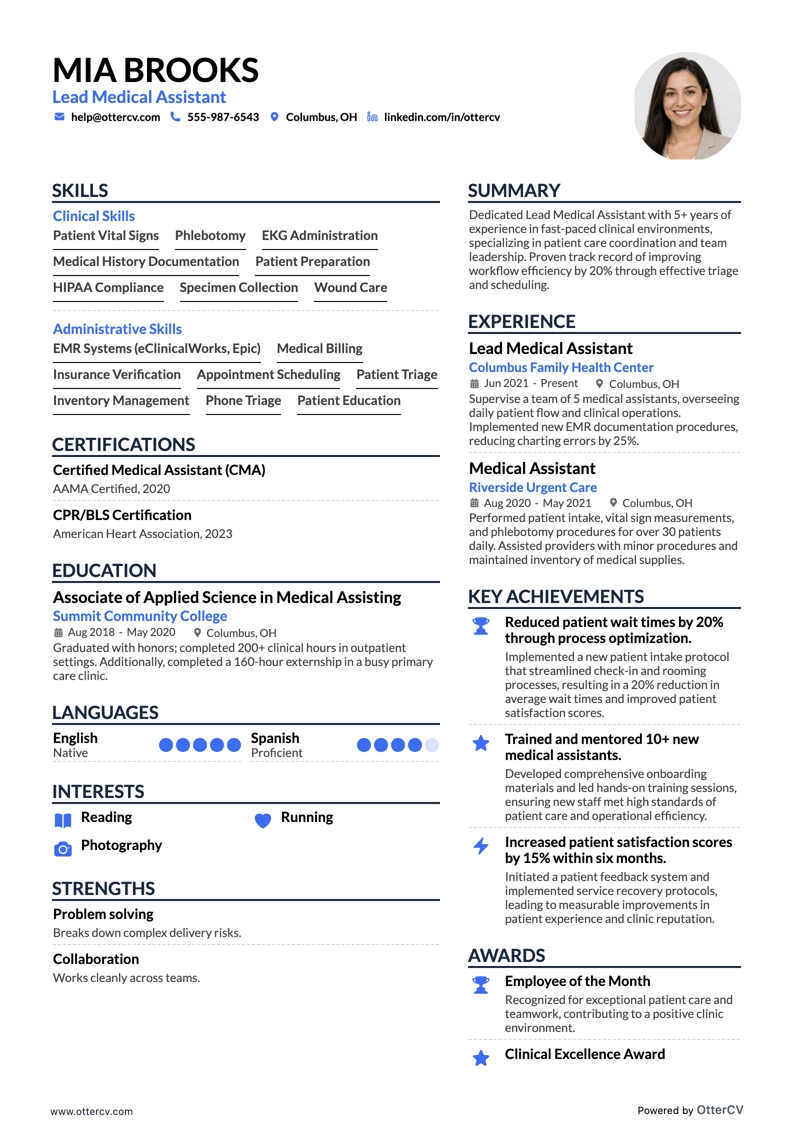
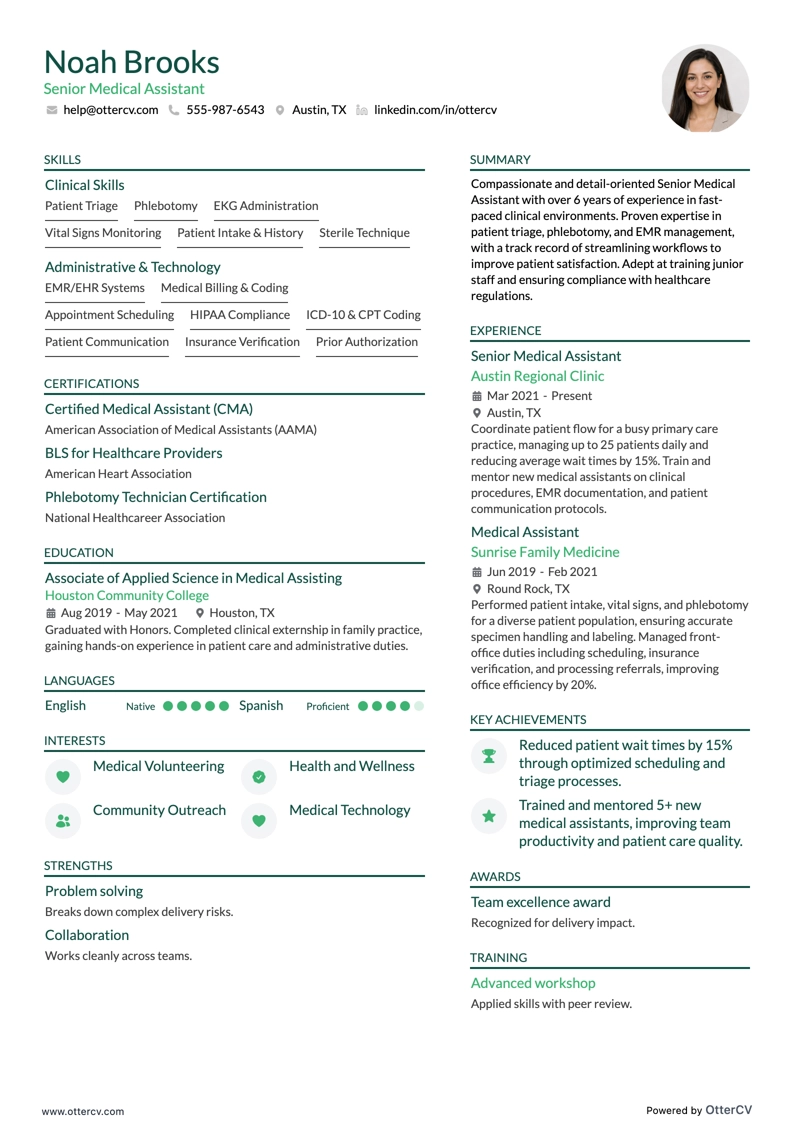
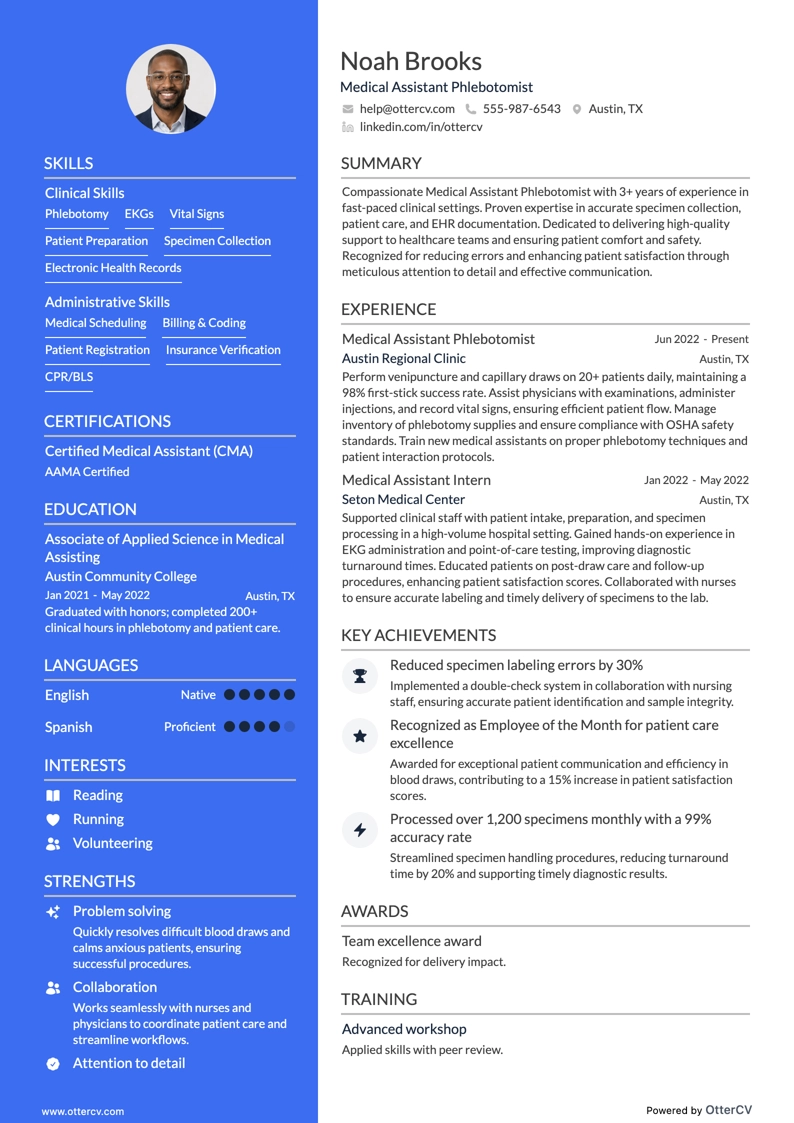
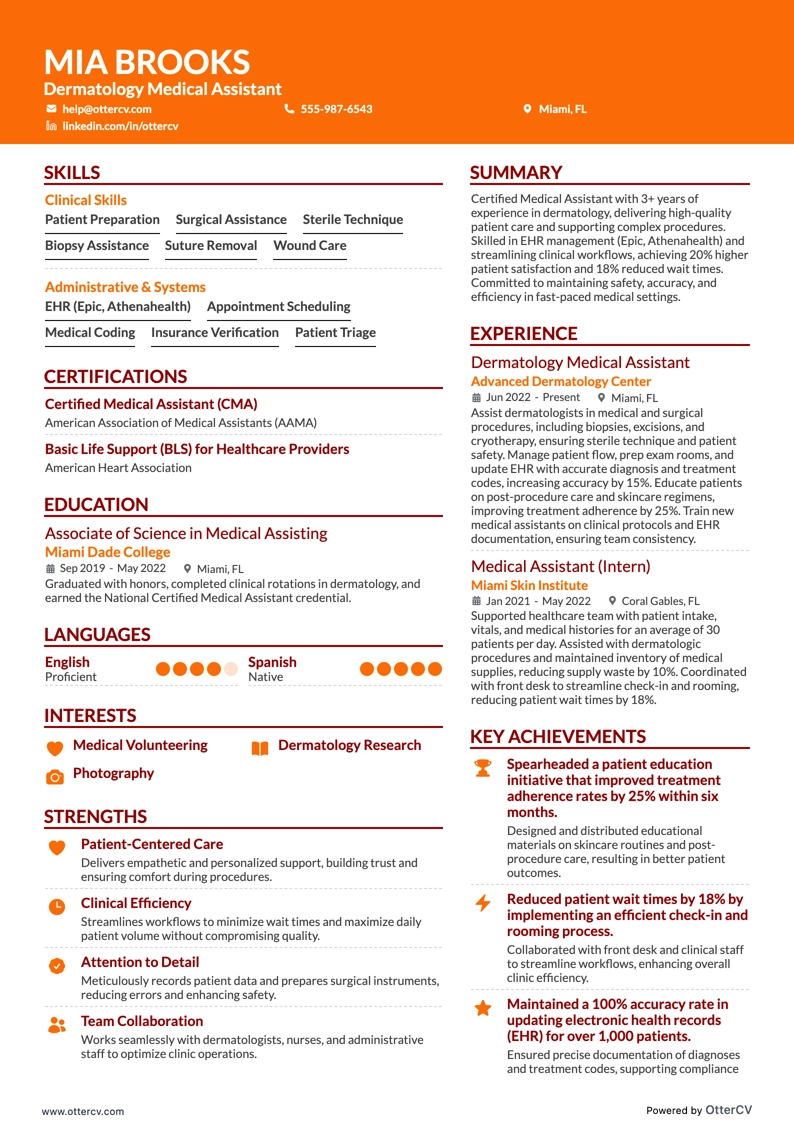
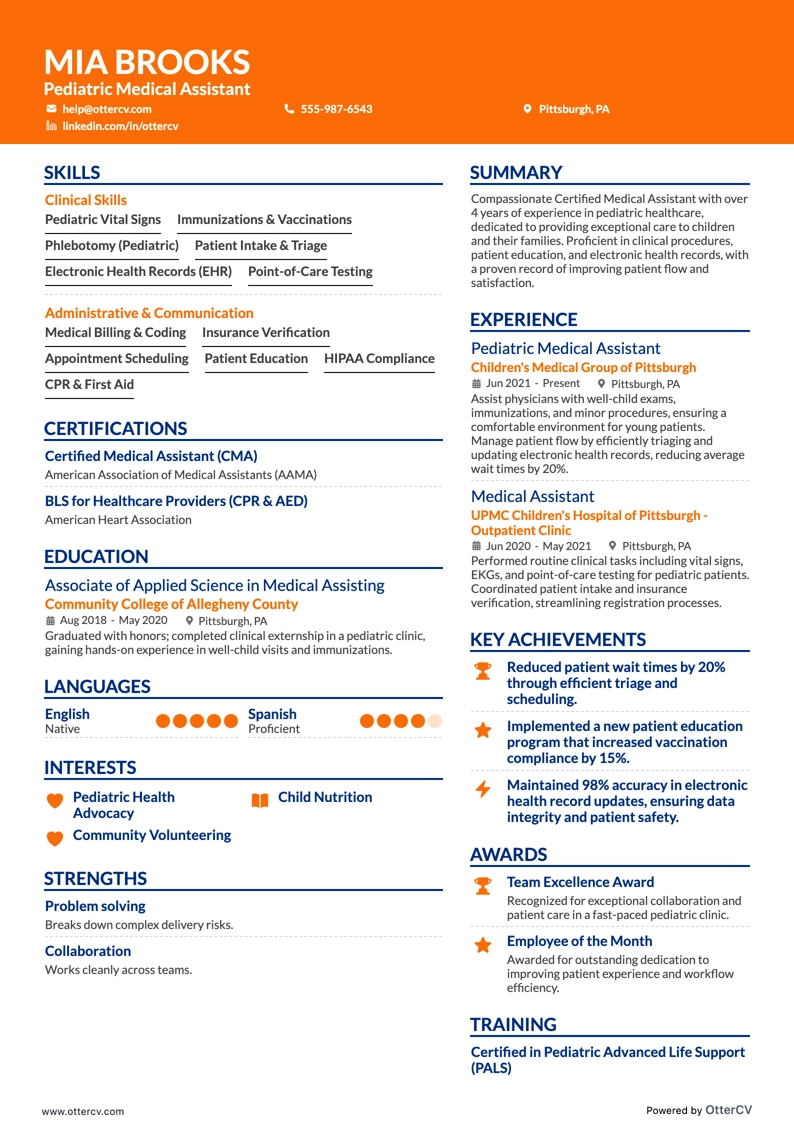
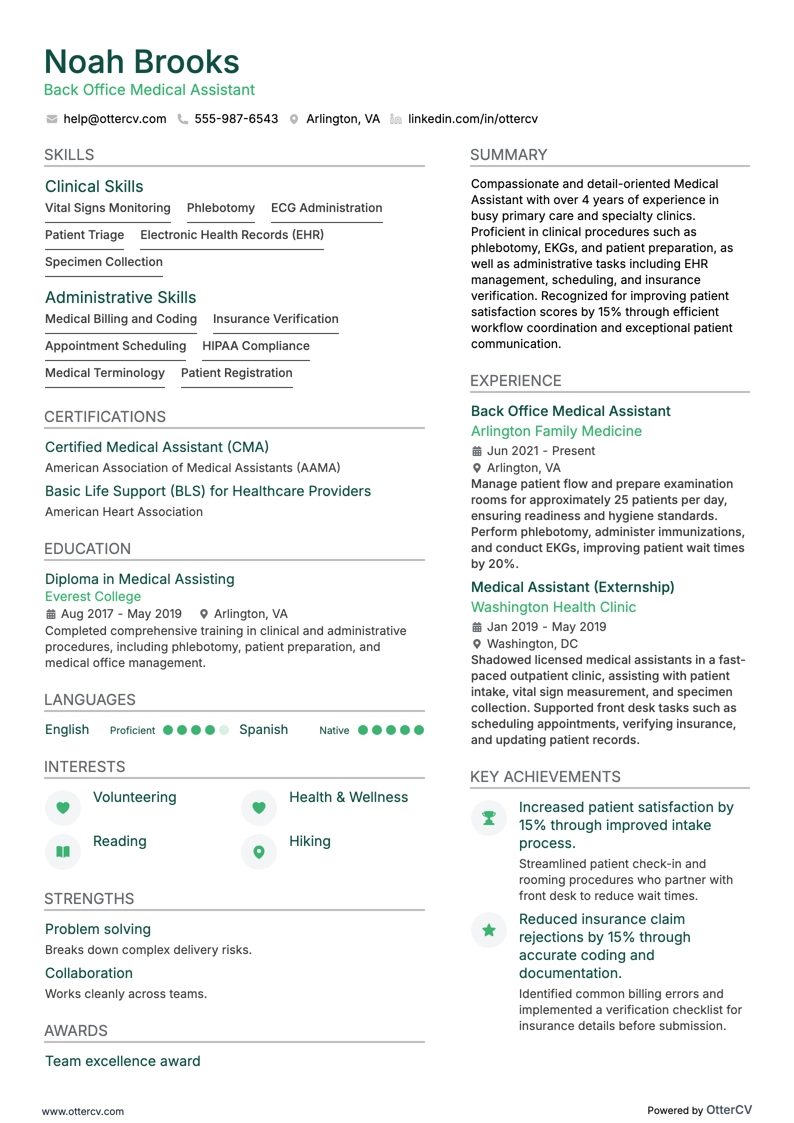
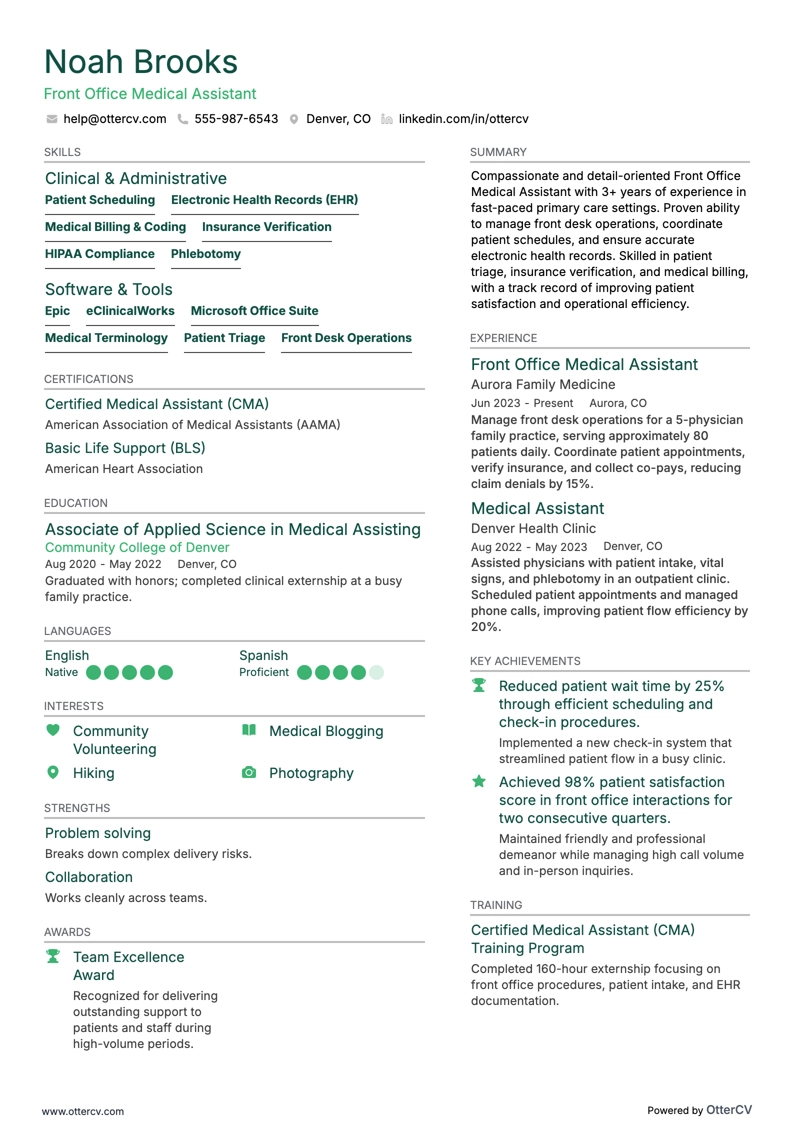
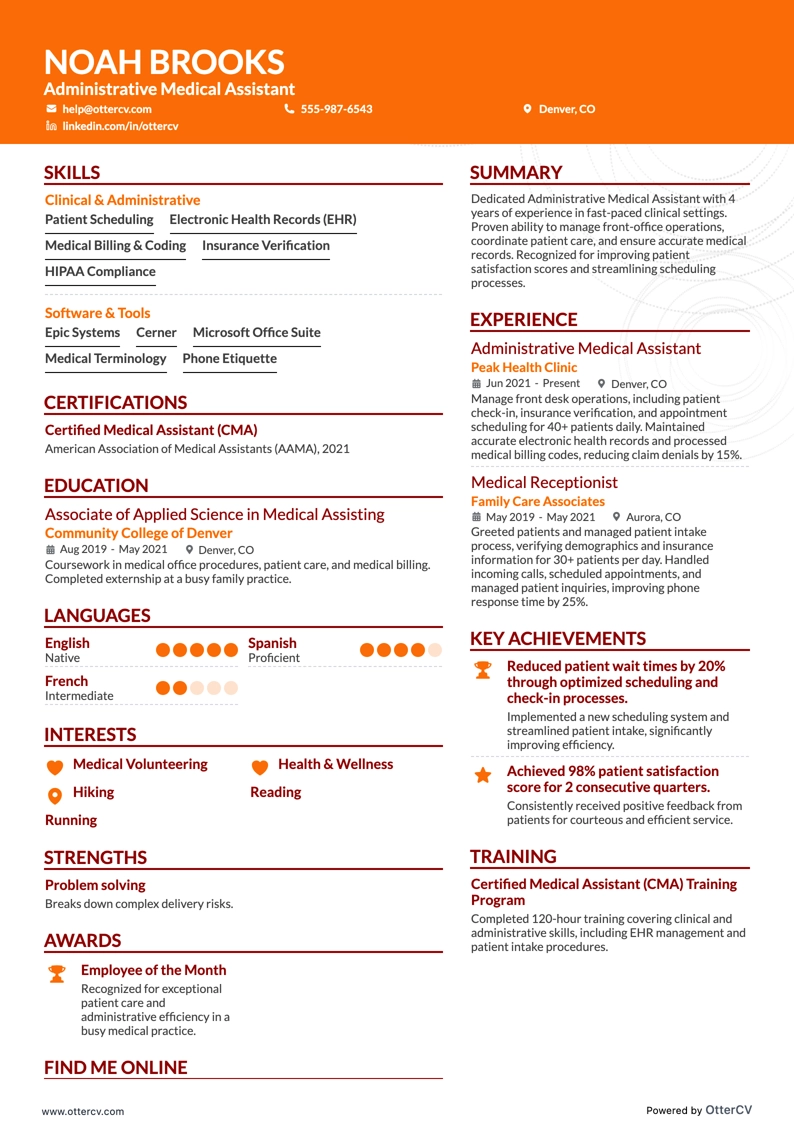
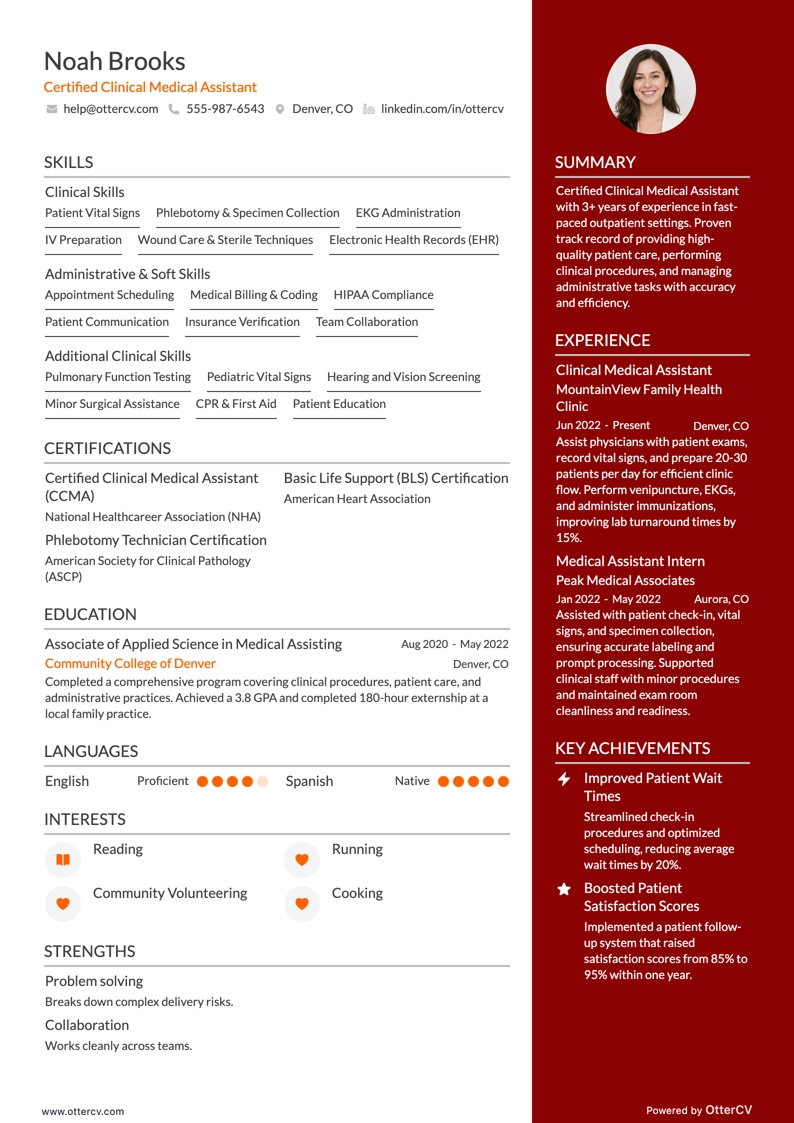
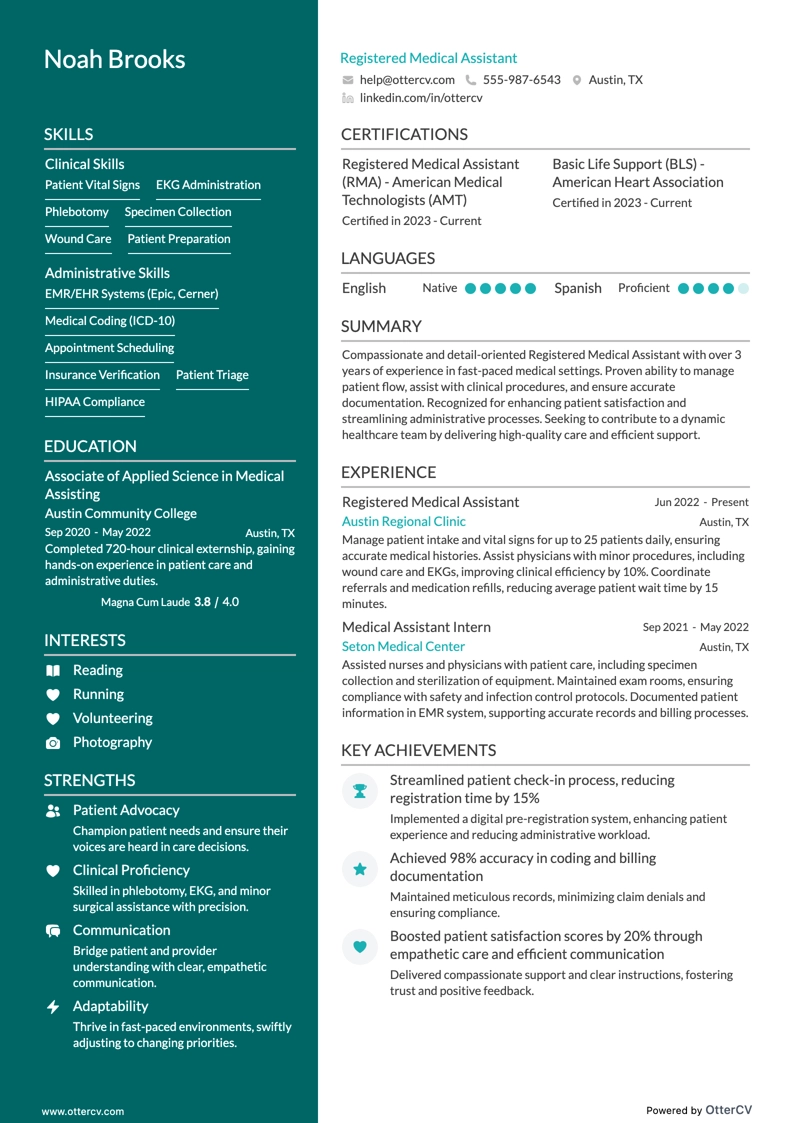
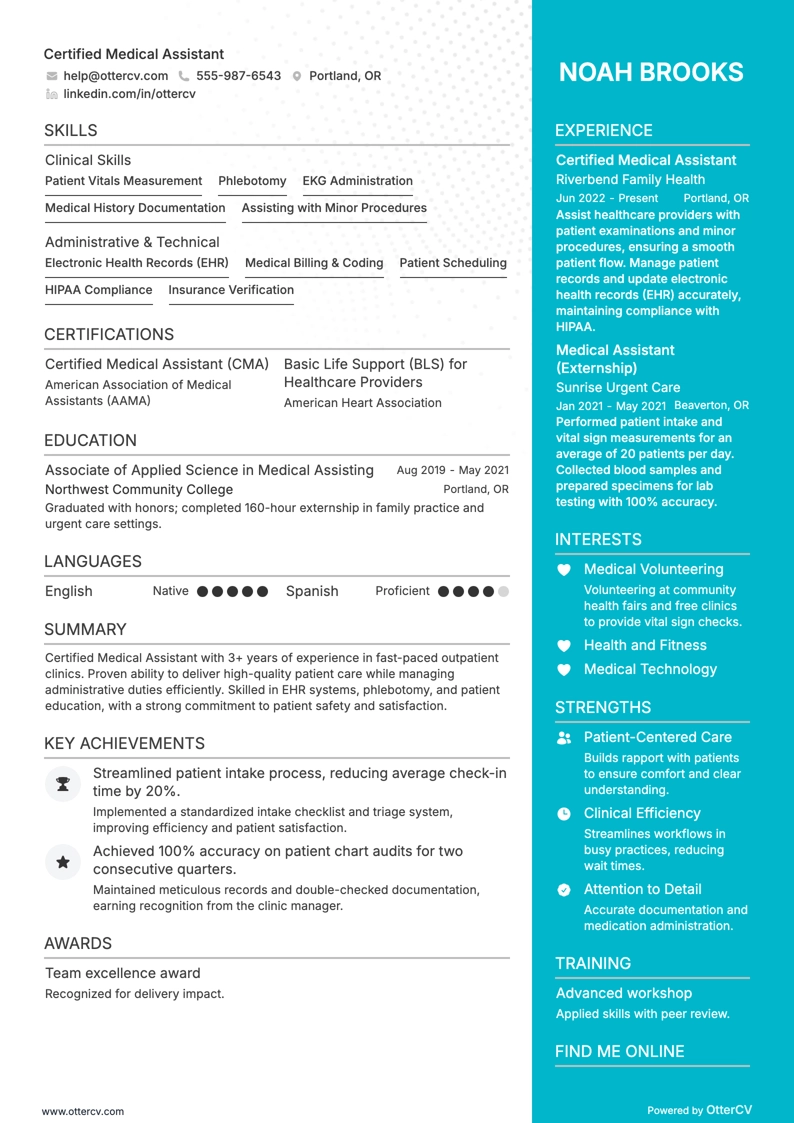
There are many paths to becoming a medical assistant. Some people enter the field through formal education, such as degree programs or certified medical assistant (CMA) programs. Others have substantial hands-on experience but no formal training. Because many employers also provide on-the-job training, some candidates start with no direct experience but a strong willingness to learn.
With so many different backgrounds, and no required degree or licensure, it can be difficult to know what to include on a medical assistant resume and how to present your most relevant qualifications. This guide is designed to help you overcome those challenges and create a resume that earns interview callbacks. Here’s what you’ll learn:
- How to present your varied duties and responsibilities across specialties and offices on your resume.
- Which medical assistant certifications and training programs to highlight.
- How to demonstrate your expertise in your medical assistant specialization.
- Key terms to include for Applicant Tracking Systems (ATS) optimization.
- How to write a resume that shows your potential for success in the role, even without direct medical experience.