Recent insights from GetApp show an encouraging trend for aspiring marketers in small and medium-sized businesses. Despite the rapid rise of artificial intelligence, the demand for marketing interns remains strong. Even better, 71% of SMBs are willing to offer higher salaries to novice marketers who bring fresh ideas about current marketing trends. That creates a real opportunity for newcomers to stand out in a changing digital marketing landscape.
The takeaway is clear: AI is not replacing marketing interns anytime soon. But if you want to land a marketing internship, your resume needs to stand out. It should show that you stay current with industry trends and are eager to strengthen your analytical skills.
This guide covers:
- The best resume format for digital marketing interns
- How to present your experience, even if it is limited
- Ways to use keywords and numbers to make your resume stronger
- The key skills to highlight on a marketing intern resume
- How to write an attention-grabbing objective statement
If you want to explore related roles, review these examples:
- Marketing Assistant Resume
- Marketing Specialist Resume
- Entry-level Digital Marketing Resume
- Marketing Manager Resume
- PR Intern Resume
- Intern Resume
- Marketing intern Cover Letter
The right format for a marketing intern resume
Internships are a valuable way to build skills and gain hands-on experience in your field. With 60% of internships being paid and most interns securing permanent roles after their programs, the opportunity is significant.
To win a marketing internship, you need a resume that presents your strengths like a strong campaign: strategic thinking, creativity, and comfort with data.
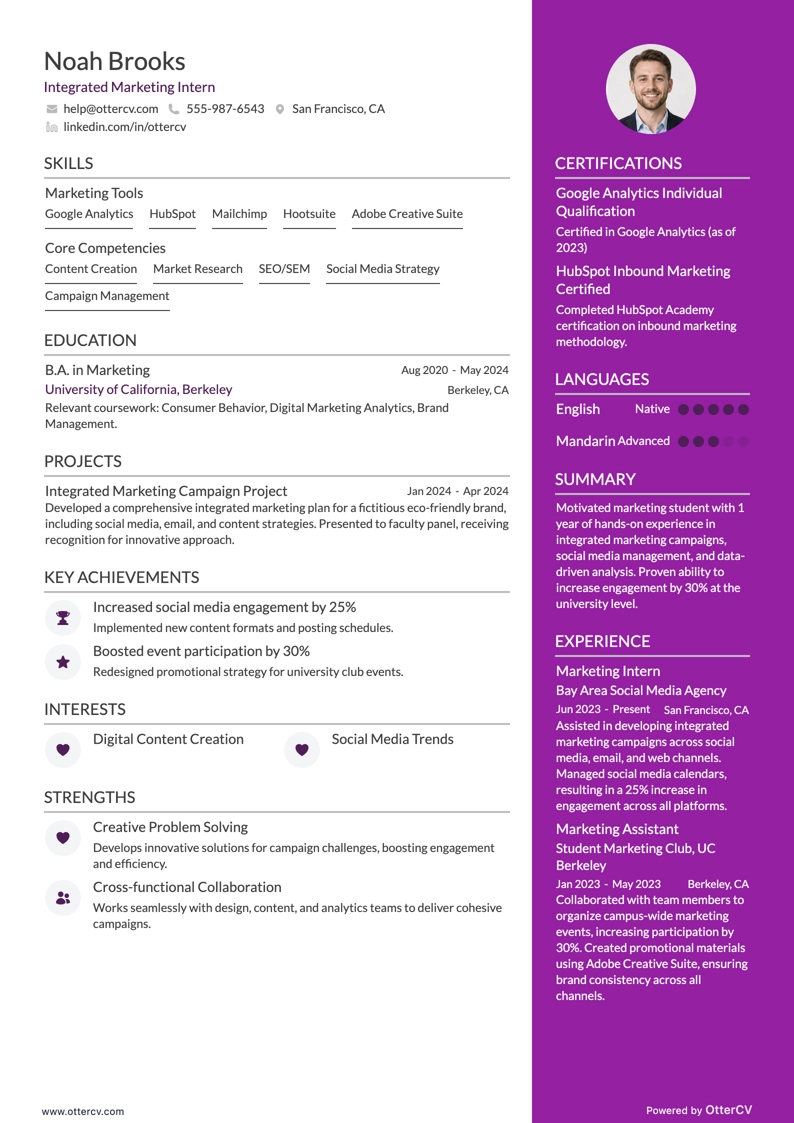
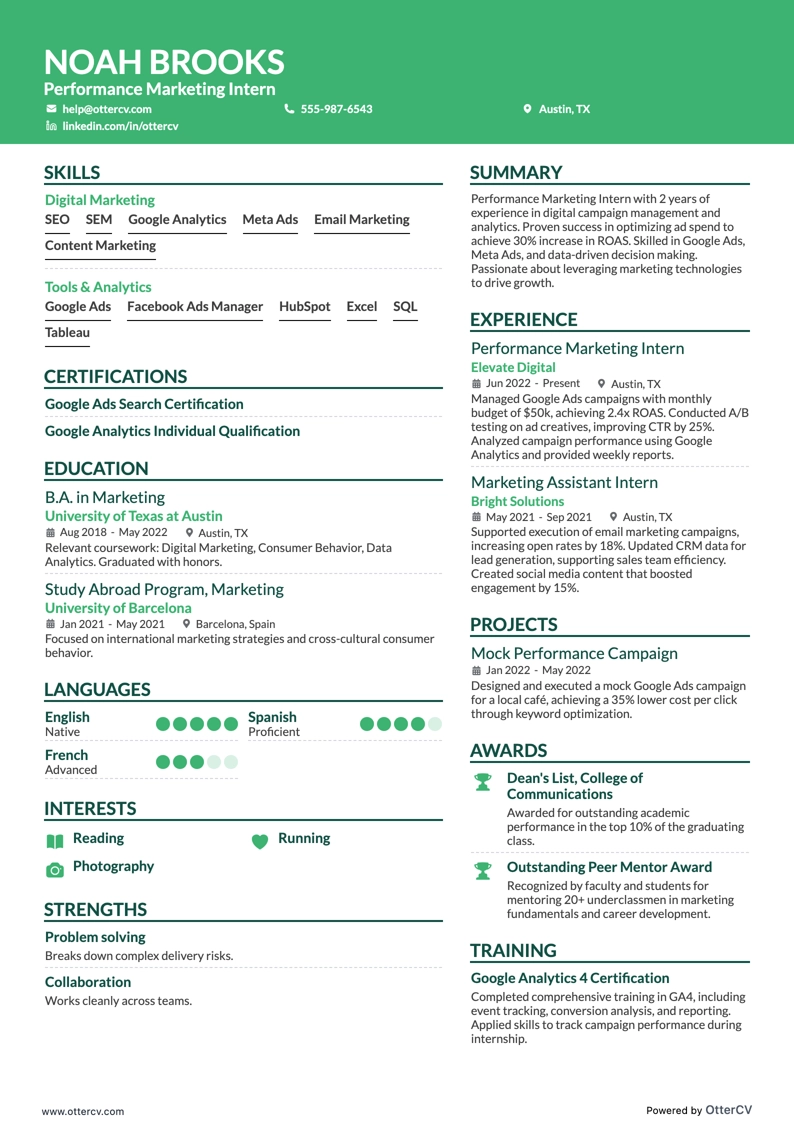
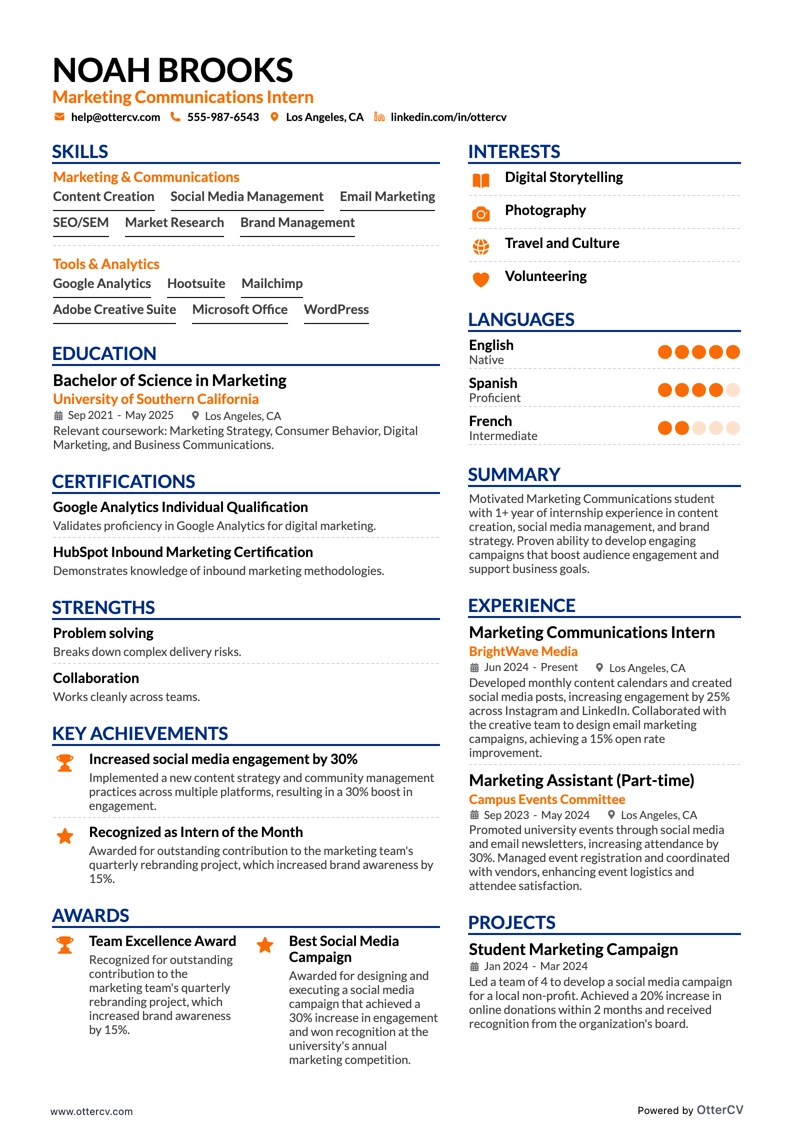
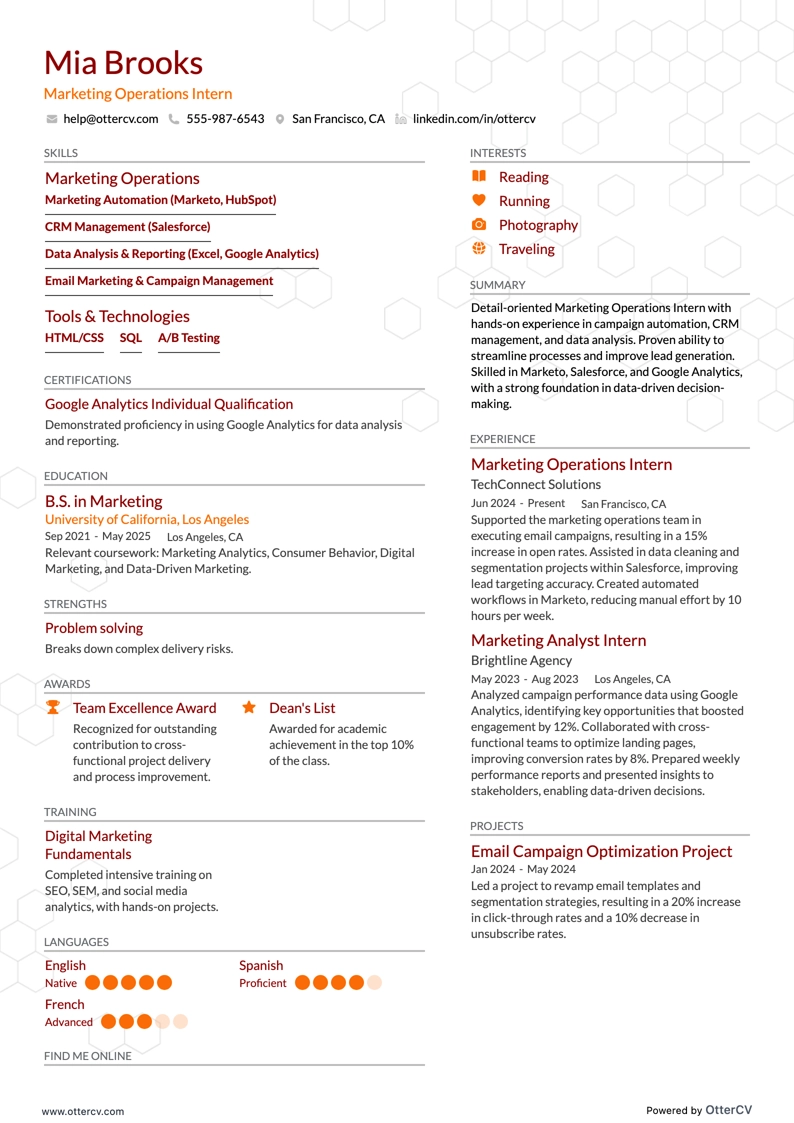
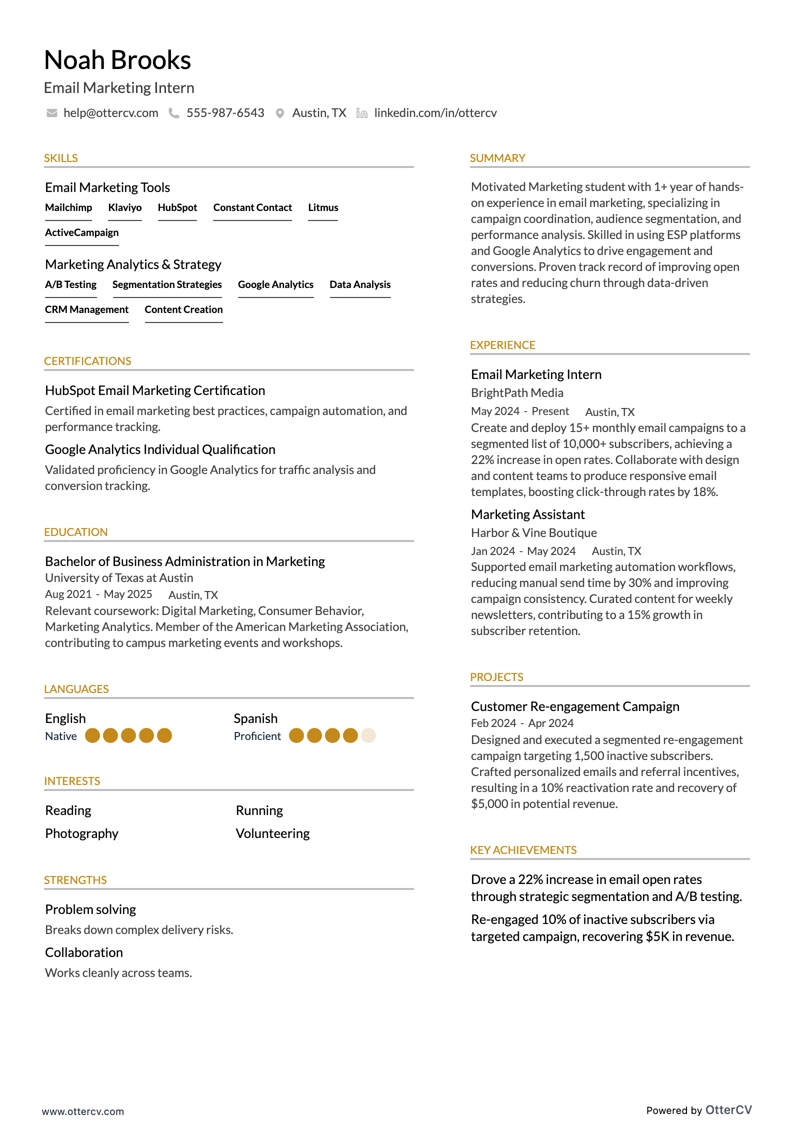
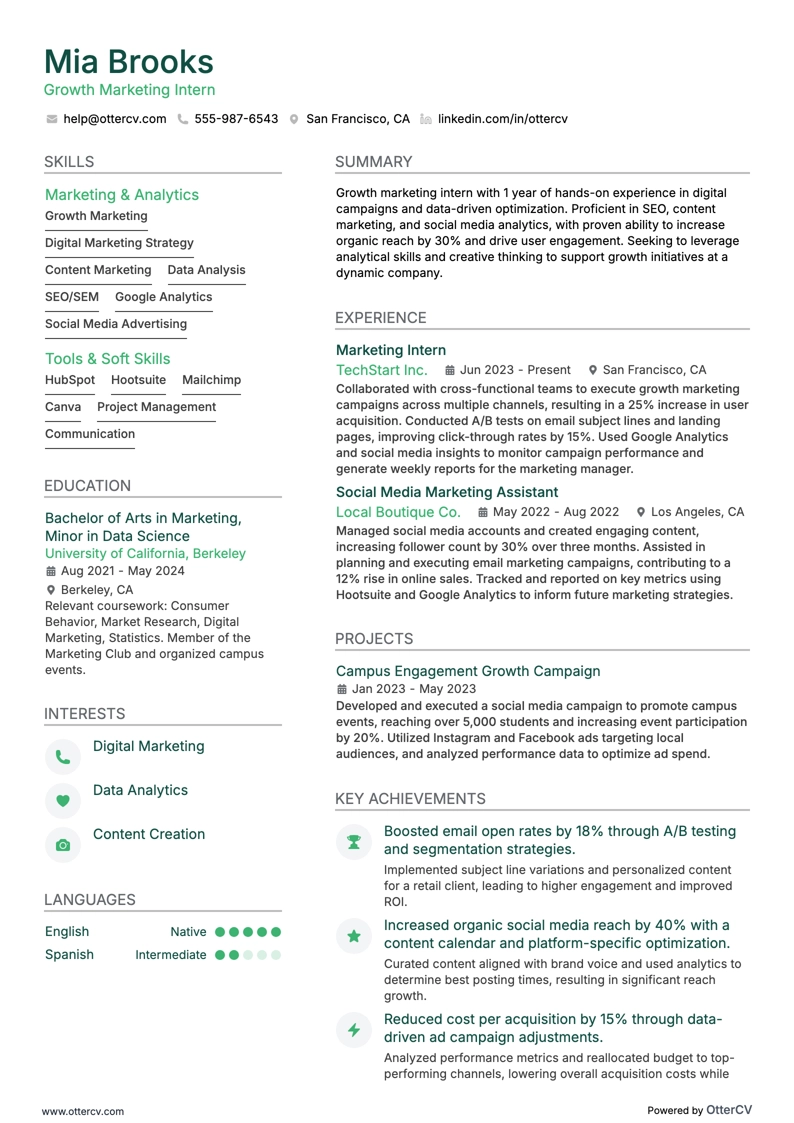
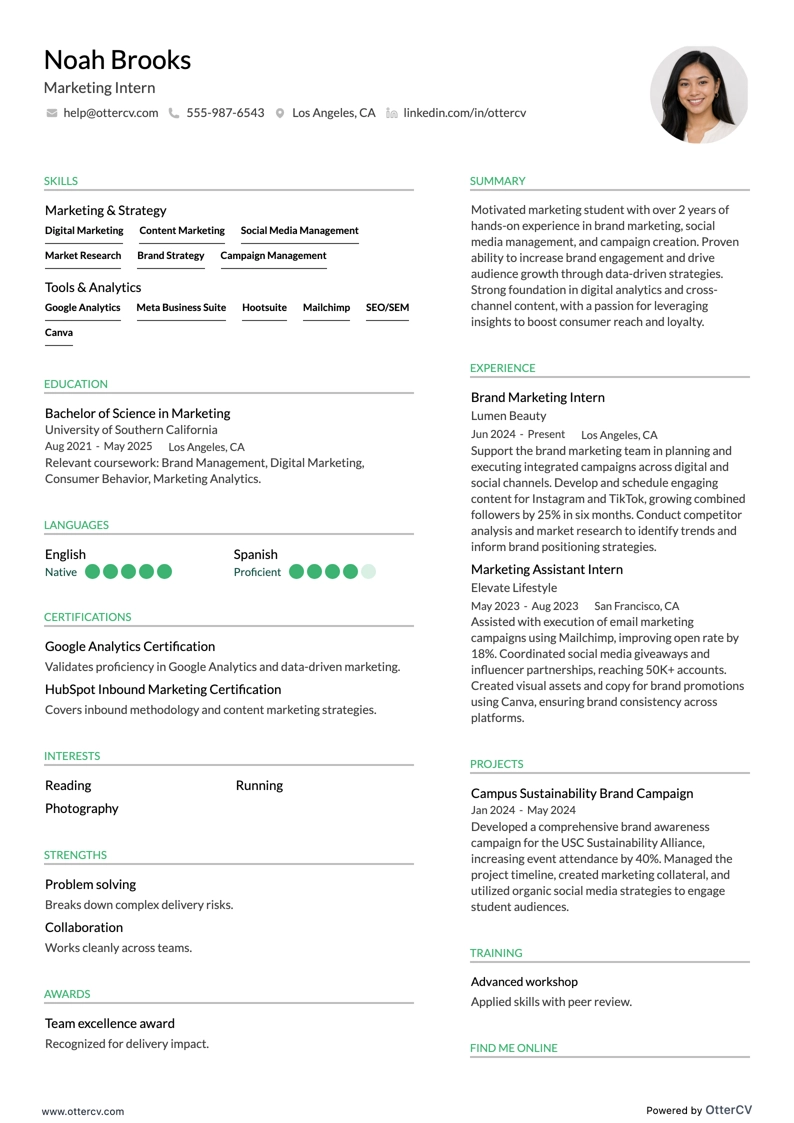
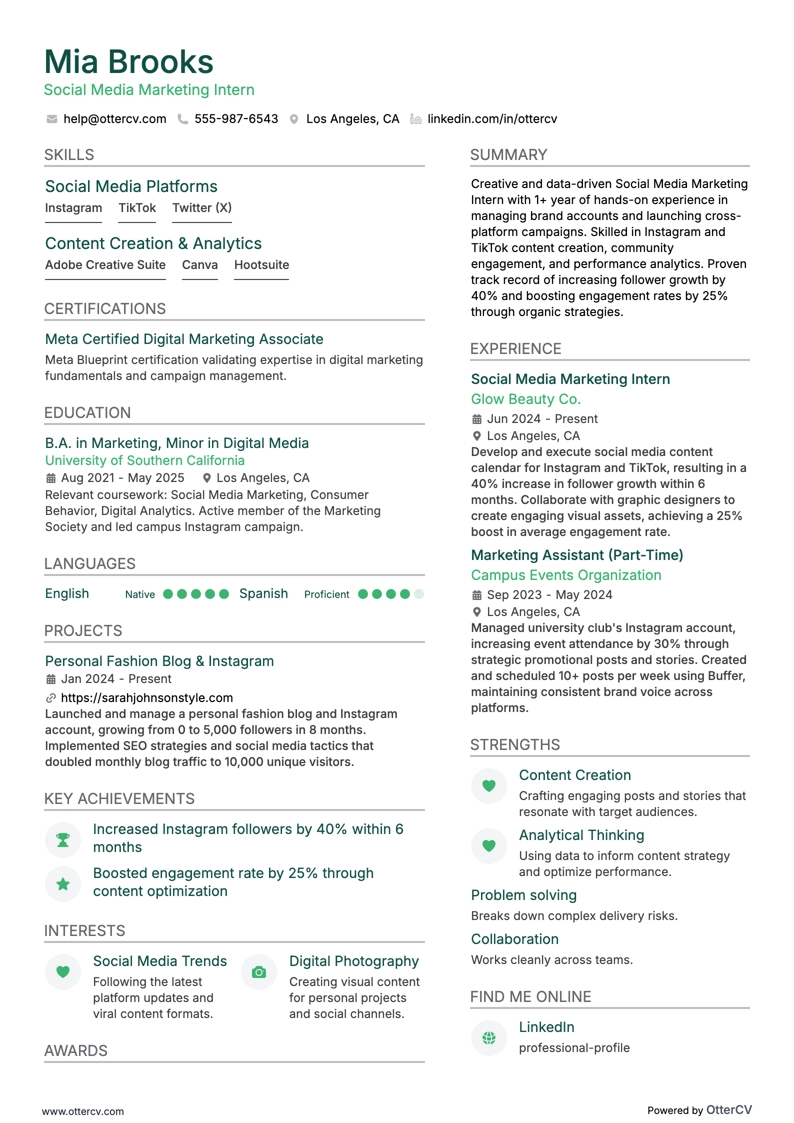
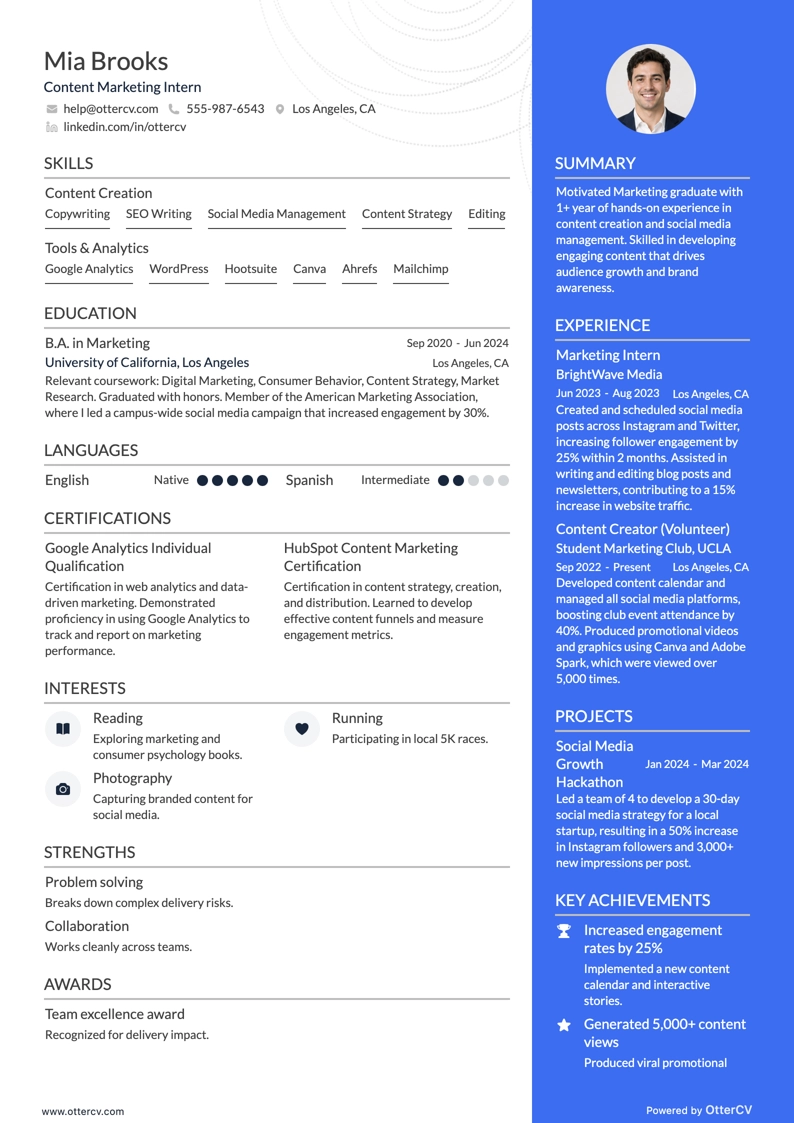
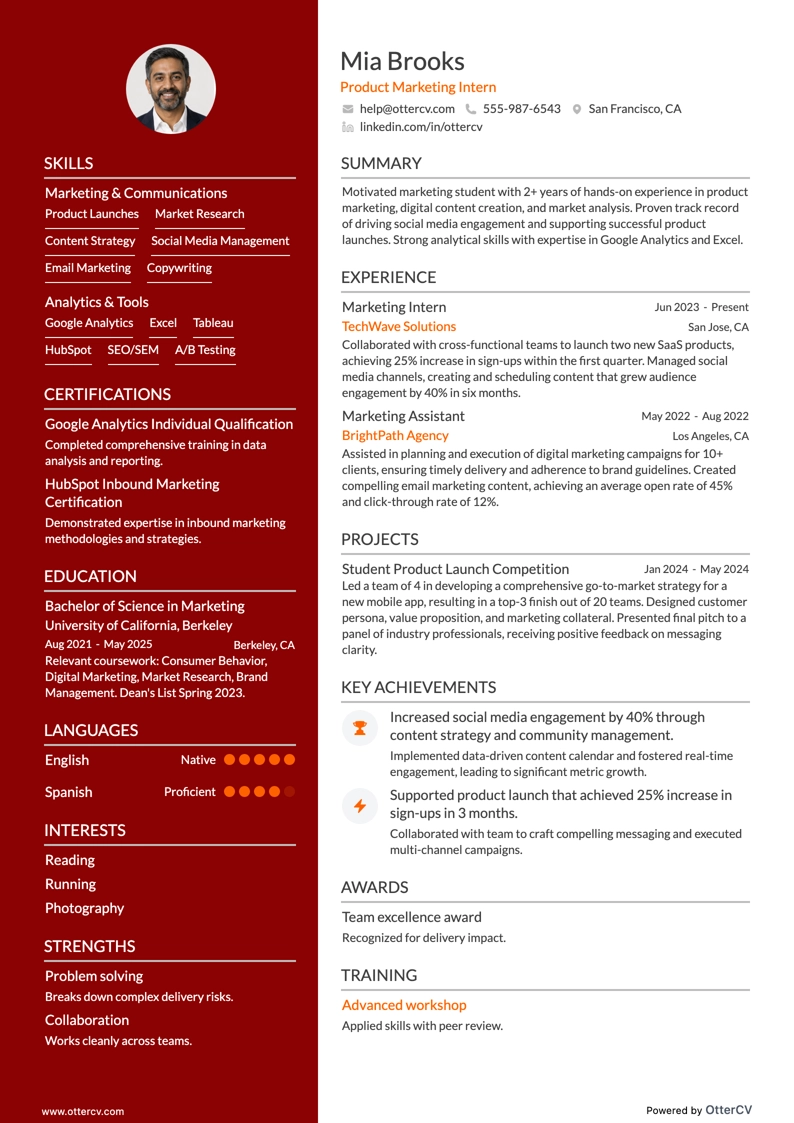
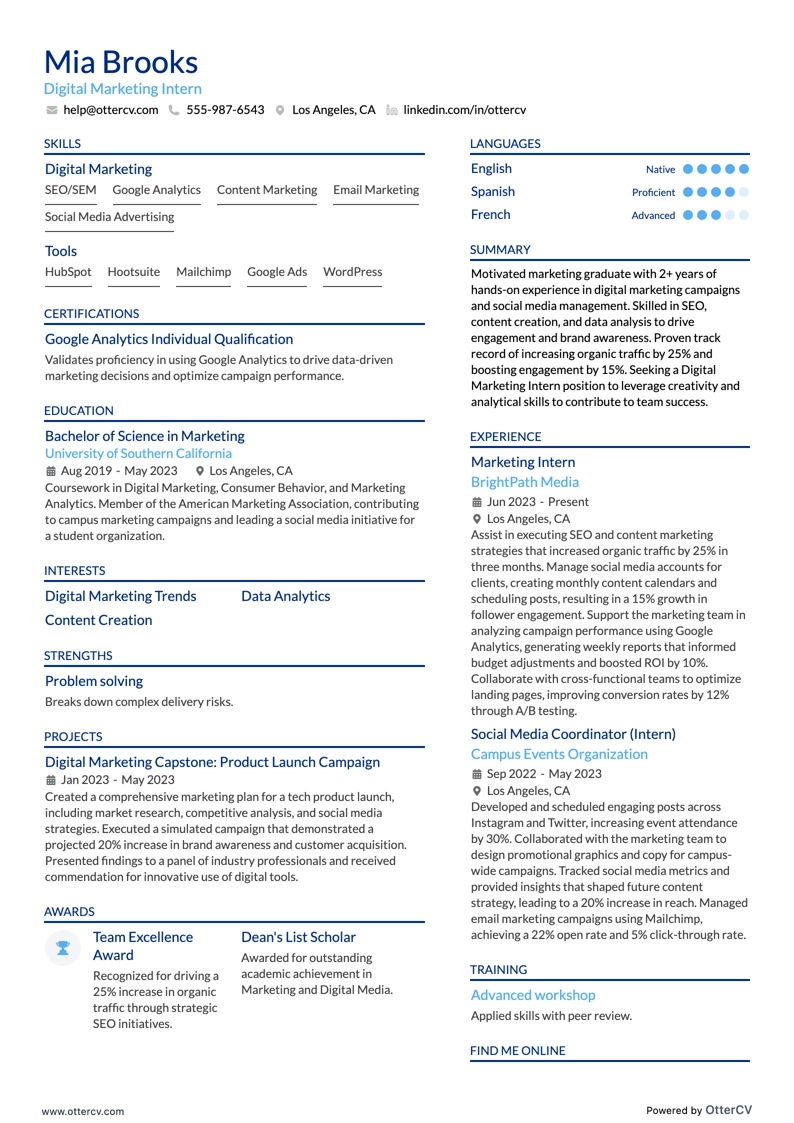
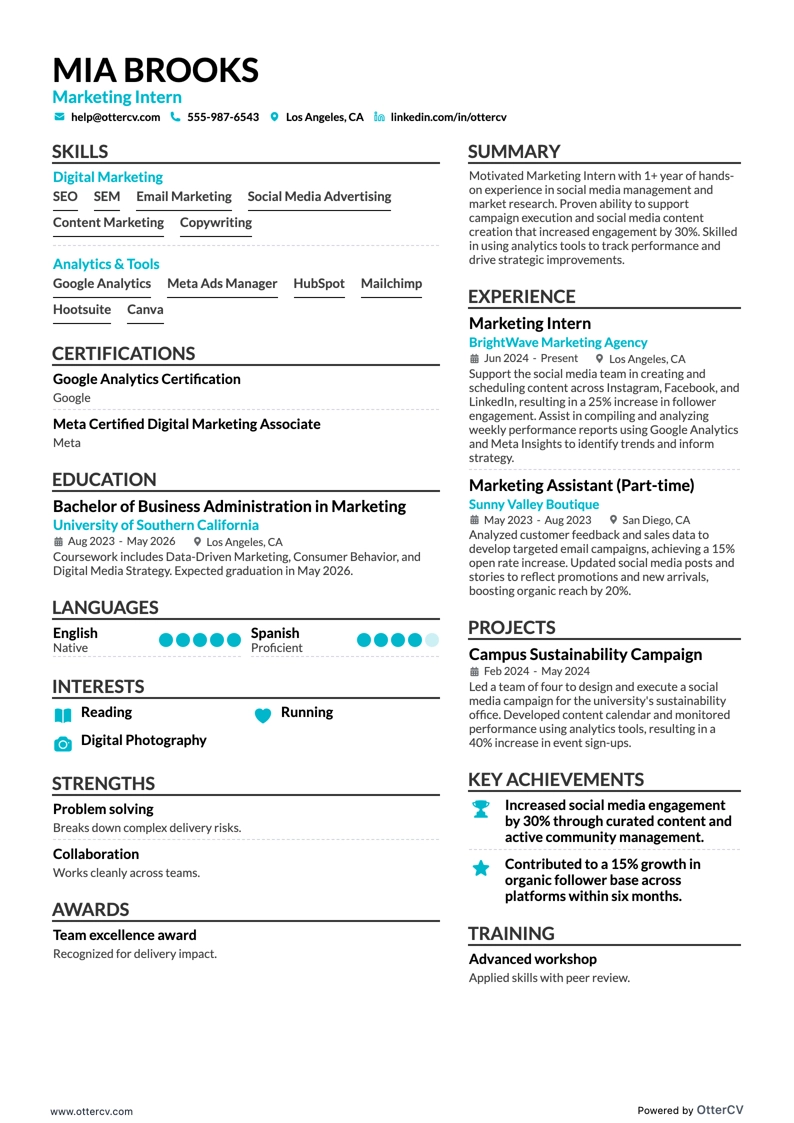
Start with the structure of your resume. For marketing interns, the hybrid resume format is usually the best option. It helps you emphasize the marketing skills needed for the role while also showing your education and any internship or work experience in a clear timeline.
Two other common resume formats are:
- Reverse-chronological resume: This format lists your work history in reverse chronological order, making it easy for hiring managers to review your most recent experience. However, if you are entering the workforce for the first time, it can draw attention to limited experience.
- Functional resume: This format focuses on skills and abilities instead of work history by date. It can work well if you are new to the field or have employment gaps, but some hiring managers may see it as an attempt to hide limited or inconsistent experience.
Choose the format that best fits your background, including summer jobs and other early experience, then consider using a resume template that showcases your strengths effectively.
Your resume should also match the market. For example, Canadian applications may use a different layout.