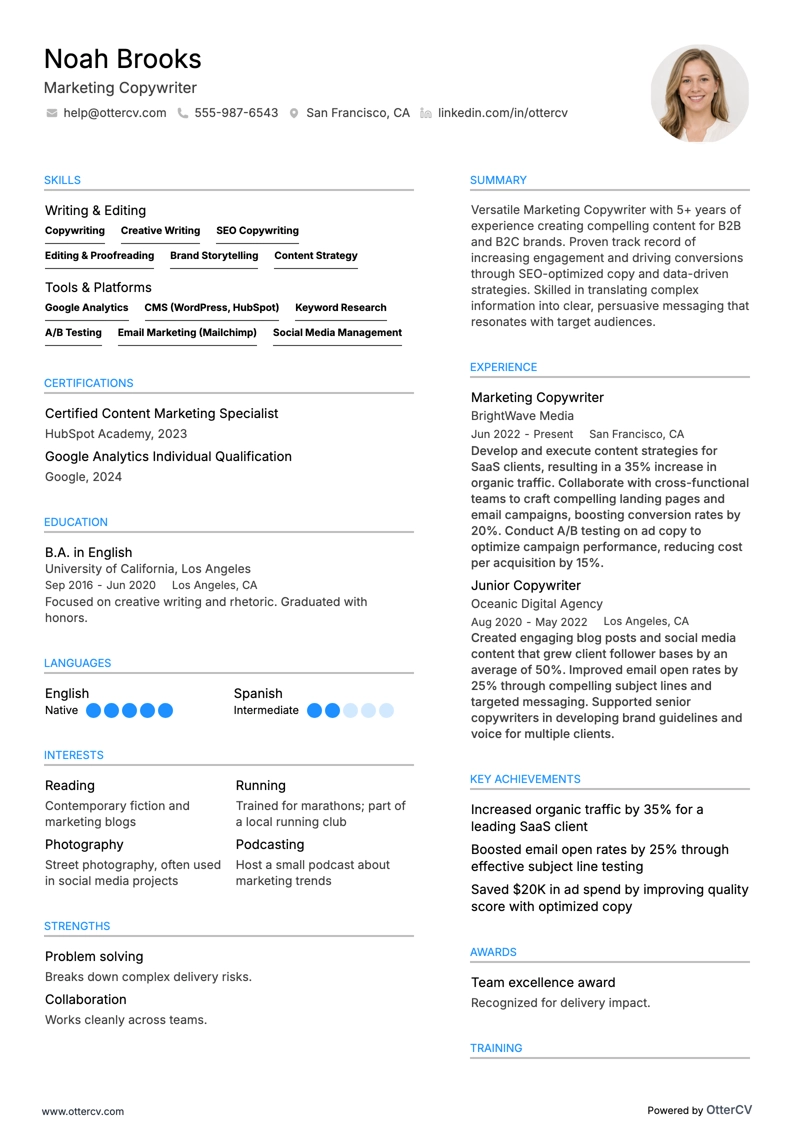
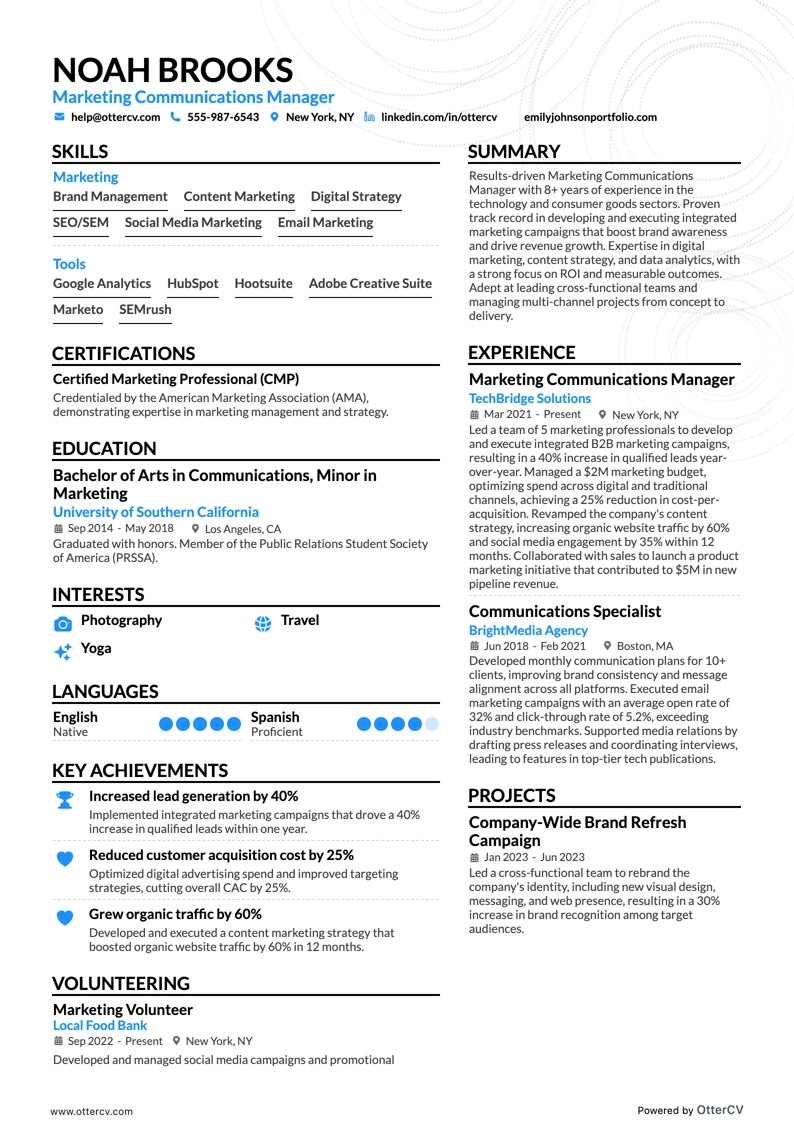
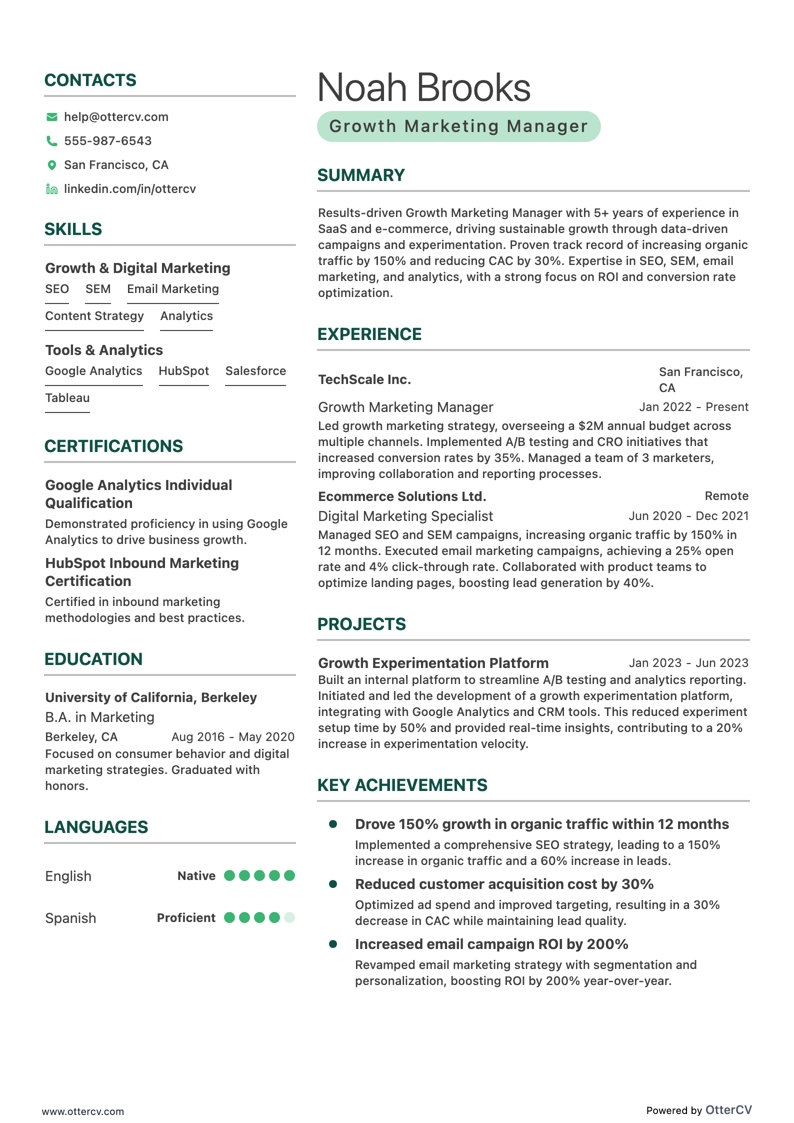
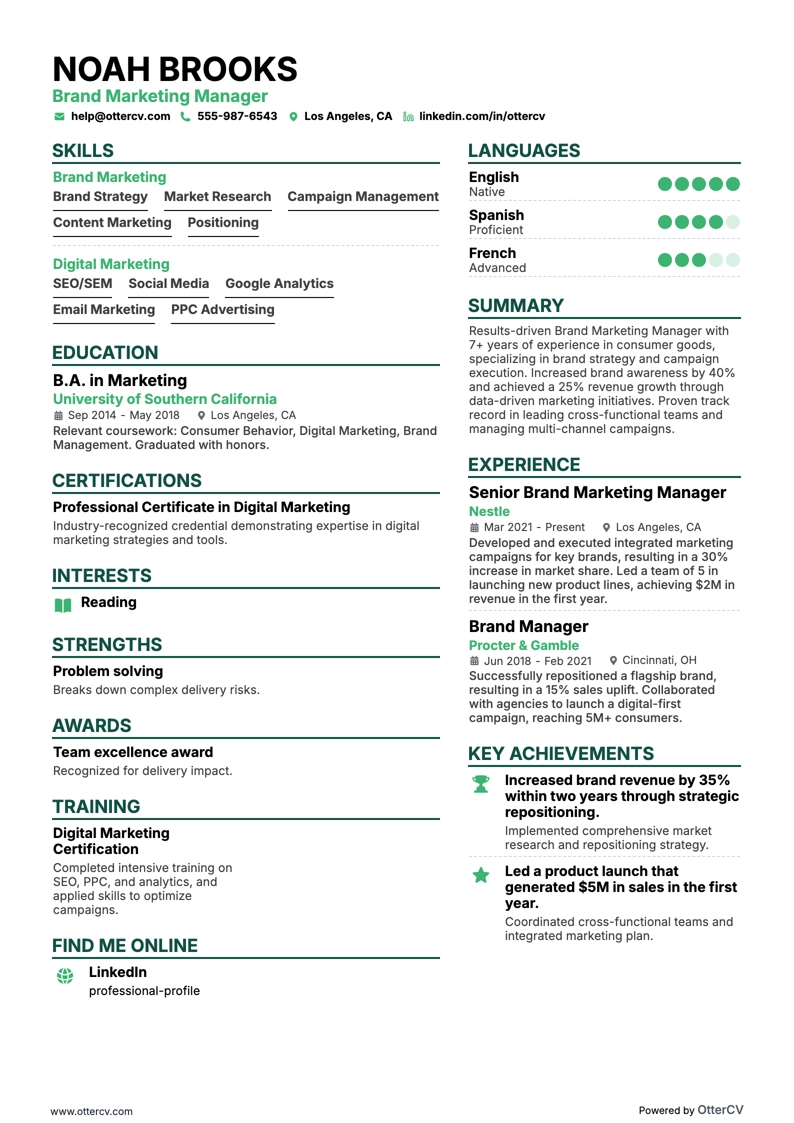
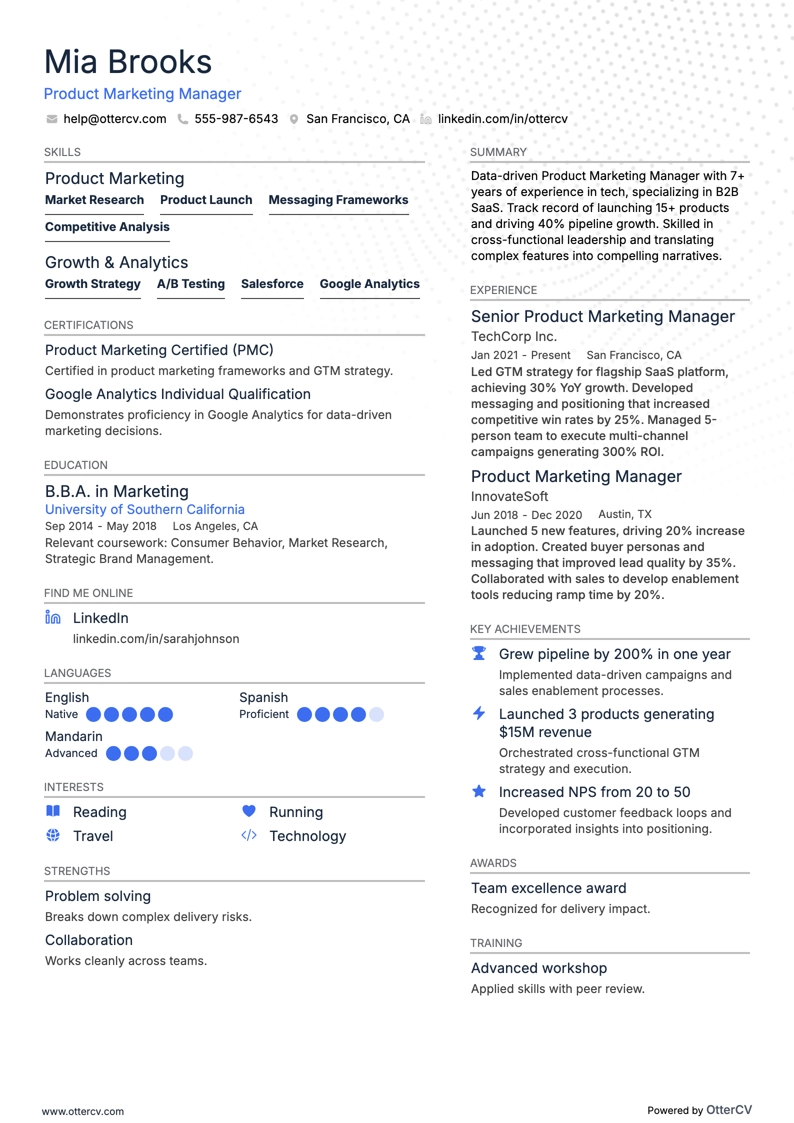
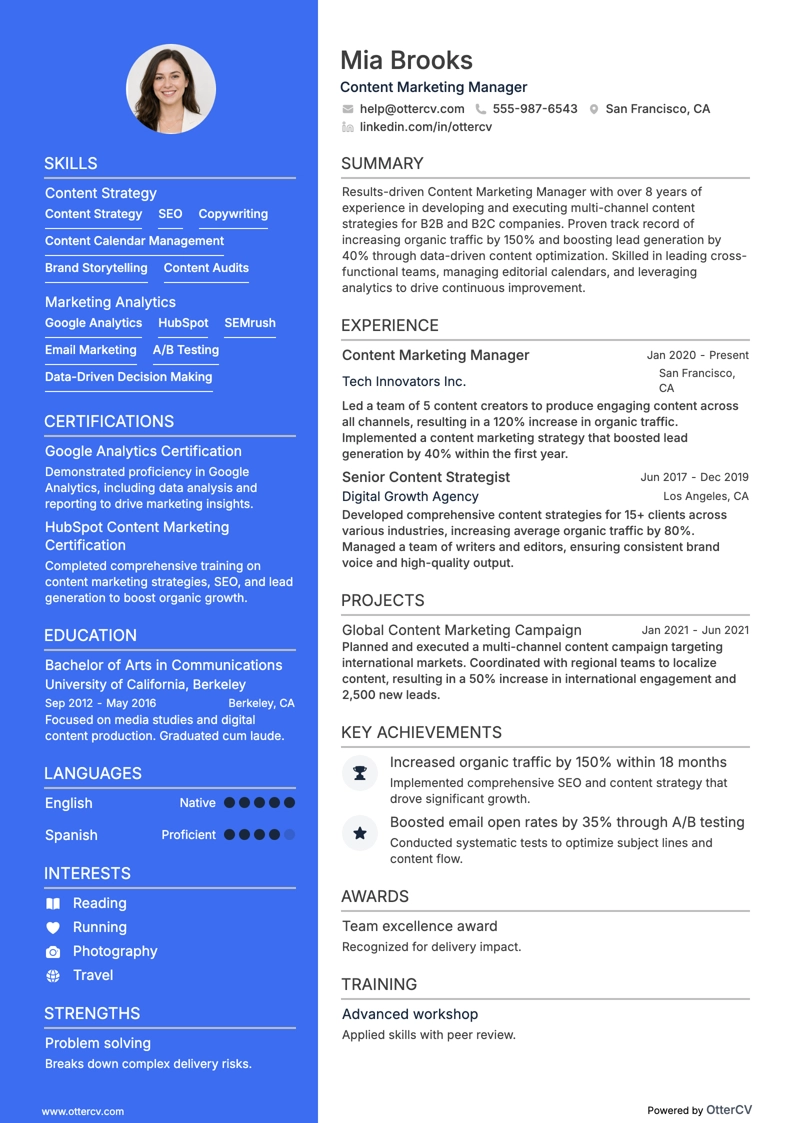
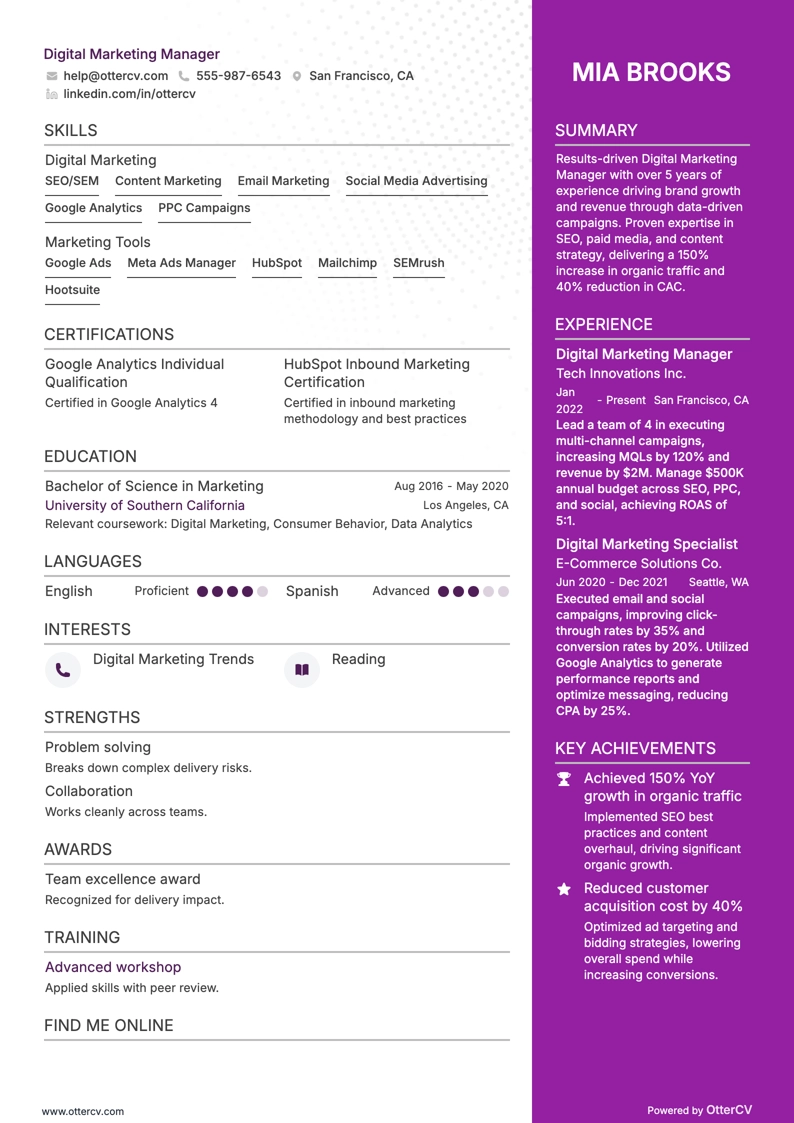
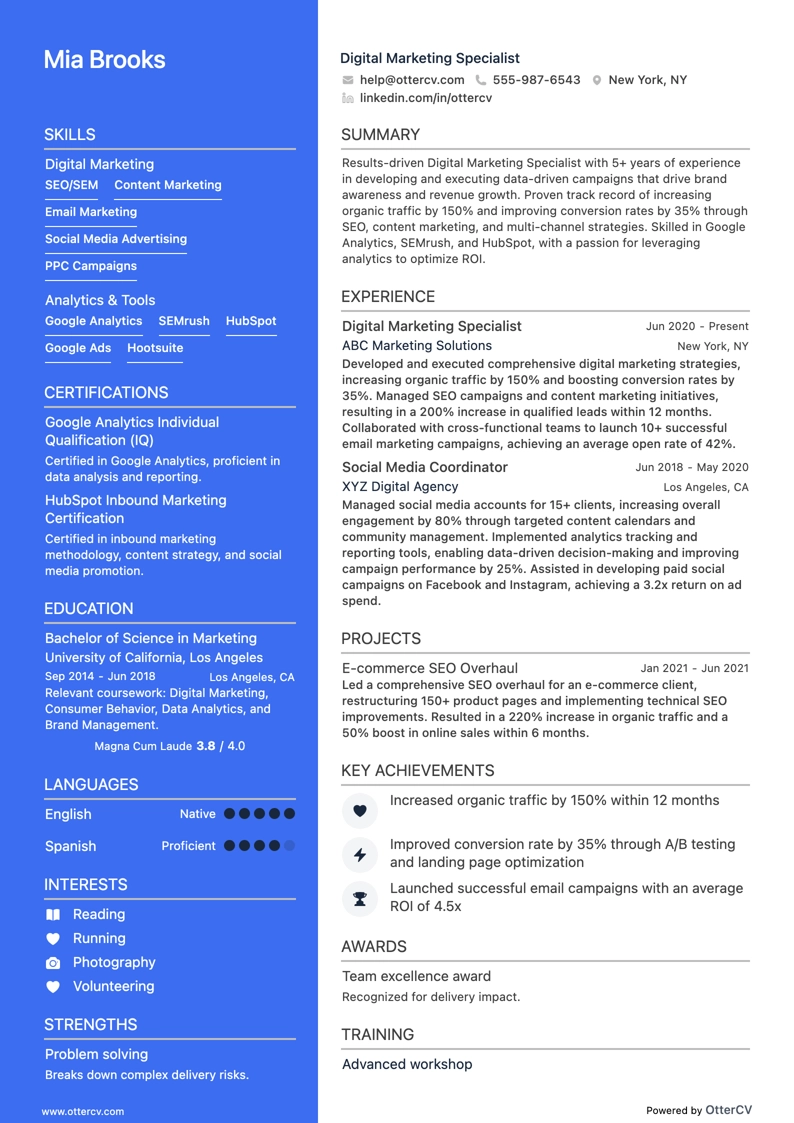
That’s much better. Instead of only listing job duties, this example adds important context about the scope of the work and the results achieved.
- The impact of developing new email marketing campaigns to bring in new customers.
- Experience with a specific marketing tool, Salesforce, to show knowledge of industry software.
- The amount of workload they can handle.
- Experience improving workflow and reducing production errors.
- The ability to work with employees at every level, from support staff to upper management.
It also mentions the company’s industry, vacation rentals, which helps recruiters decide whether the candidate has relevant experience in the right marketing field.
How many jobs should you include in this section? Because space is limited, include no more than three jobs. Any more than that can push your resume past two pages, and many recruiters stop reading at that point.
Now it’s time to focus on one area where over 80% of job seekers fail to take full advantage of their resume.
How to quantify impact on your resume
As we saw in the resume experience section, using numbers and percentages can make a major difference. Marketing professionals are at a unique disadvantage here because customer acquisitions, conversion rates, and cost-per-lead reductions from targeted campaigns are not always easy to measure.
Here are some marketing metrics that can make your resume more impactful:
- Total revenue generated: “Directed the launch of a campaign for a new educational product, resulting in revenue of $5.4M in the first year.”
- Customer/Client acquisition: “Planned client relationship cultivation events to promote growth, resulting in expansion of clientele base by 53%”
- Number of marketing campaigns: “Created 35+ content marketing initiatives to drive traffic, increasing revenue by 12% with a 6% boost in donor retention.”
- Conversion rate increases: “Analyzed sales funnels while measuring online campaign performance, resulting in a 17% improvement in customer conversion rates.”
- Budgetary savings: “Worked with local shelters to build a paid advertising campaign on Facebook and Instagram, resulting in a 55% cost reduction per lead.”
- Increases in social media engagement: “Worked with local restaurants to grow their online search presence, leading to an increase in organic search traffic from 100 to 1,000 users per month on average.”
- SEO ranking improvements: “Achieved 1st position on the Google Search Page for selected keywords (5000+ set).”
- Email marketing metrics: “Developed and executed a targeted email campaign resulting in a 25% increase in open rates and a 15% increase in click-through rates.”
Apps like Google Analytics and Hubspot can help you find these and other marketing metrics.
How do I write a marketing resume with no experience
If you are applying for your first marketing job, don’t worry. You do not need formal marketing experience to qualify, but you do need to show that you have the skills and background to be an effective marketer.
For first-time marketers, recruiters like to see past work experience in:
- Content creation
- Sales or general retail experience
- Social media management
- Freelance design work
- Marketing internships
If you manage several personal social media accounts with the same type of content, you can use that as marketing experience. If you volunteered to help an organization expand its market reach, include that on your resume as well.
Ideally, list jobs that show a steady progression toward a marketing career. Take a look at this real-world resume example from someone interested in a marketing career: