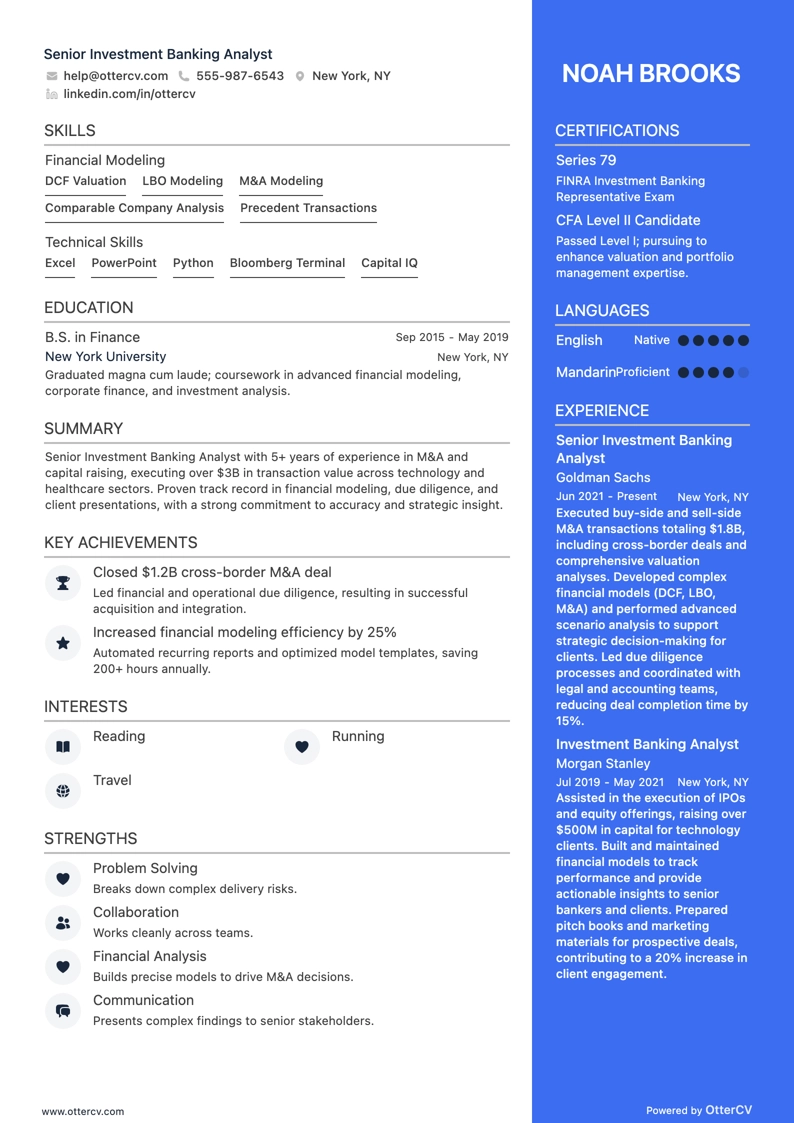
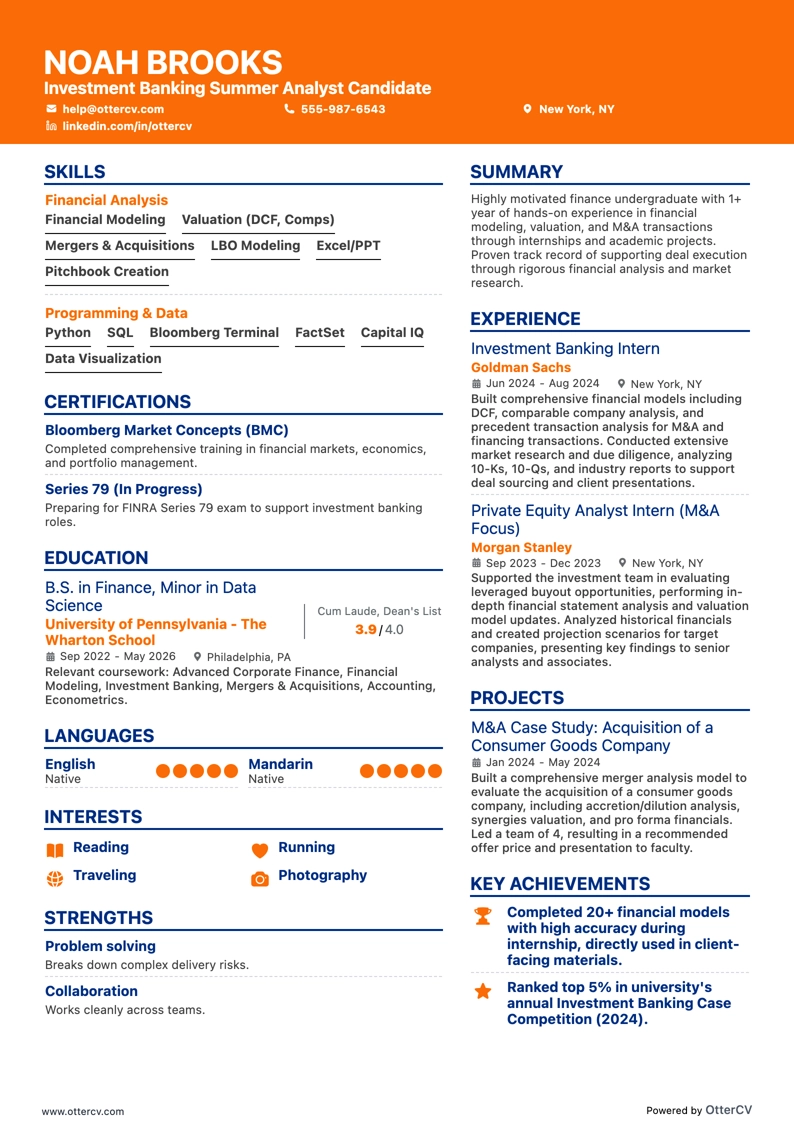
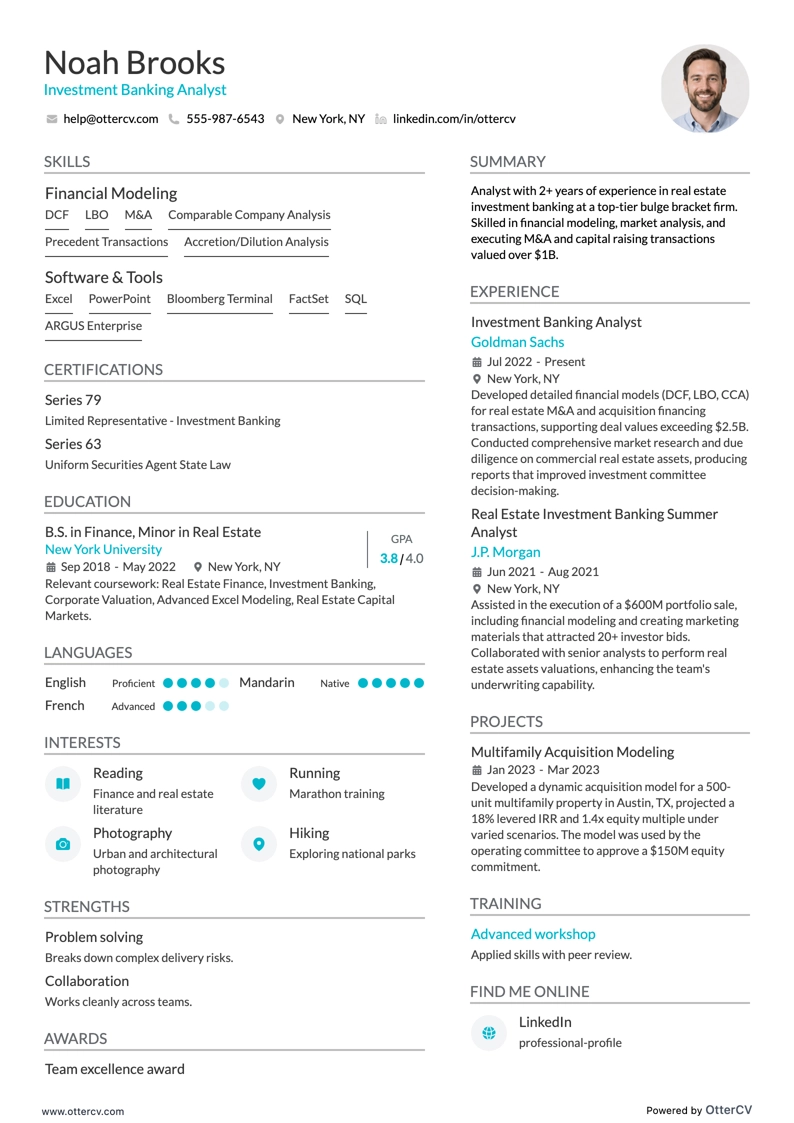
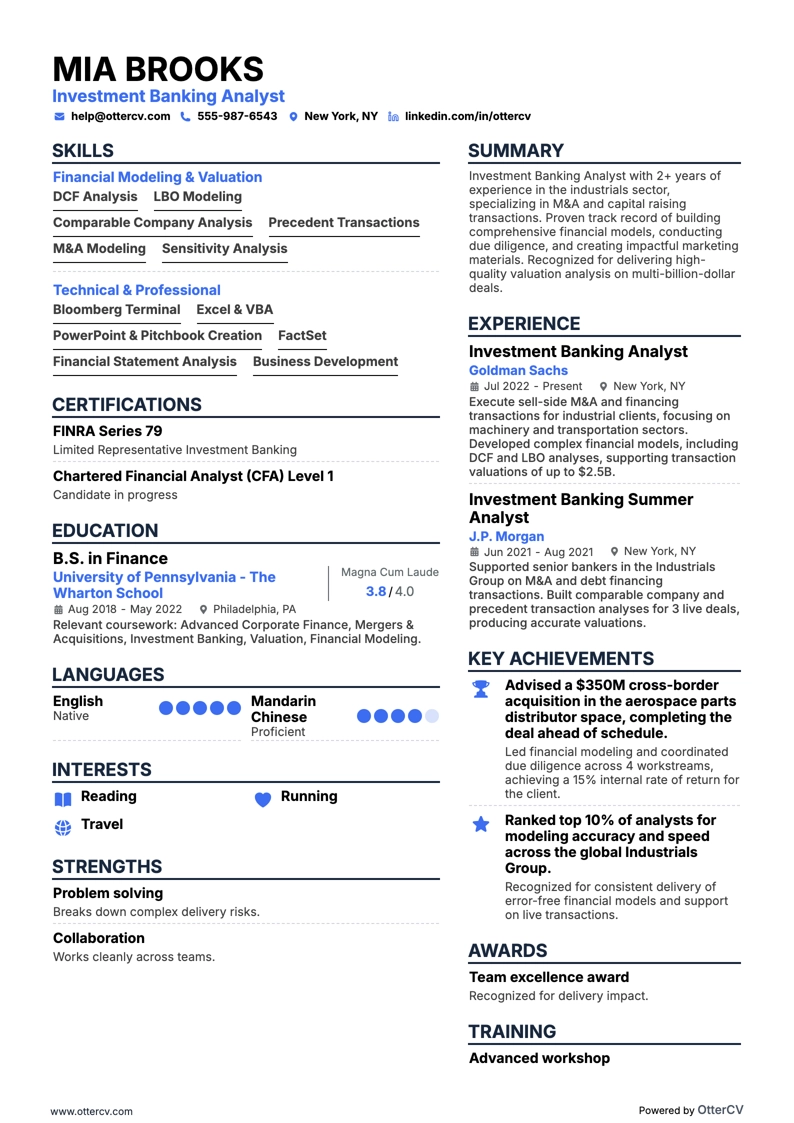
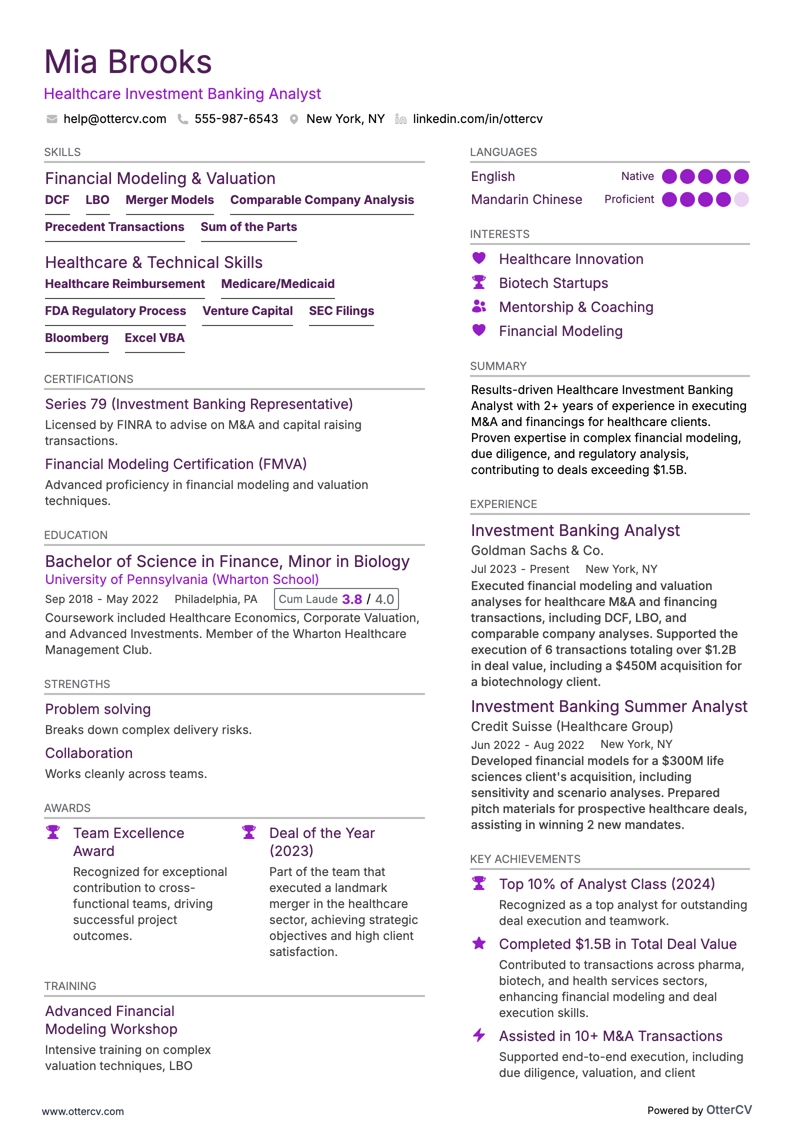
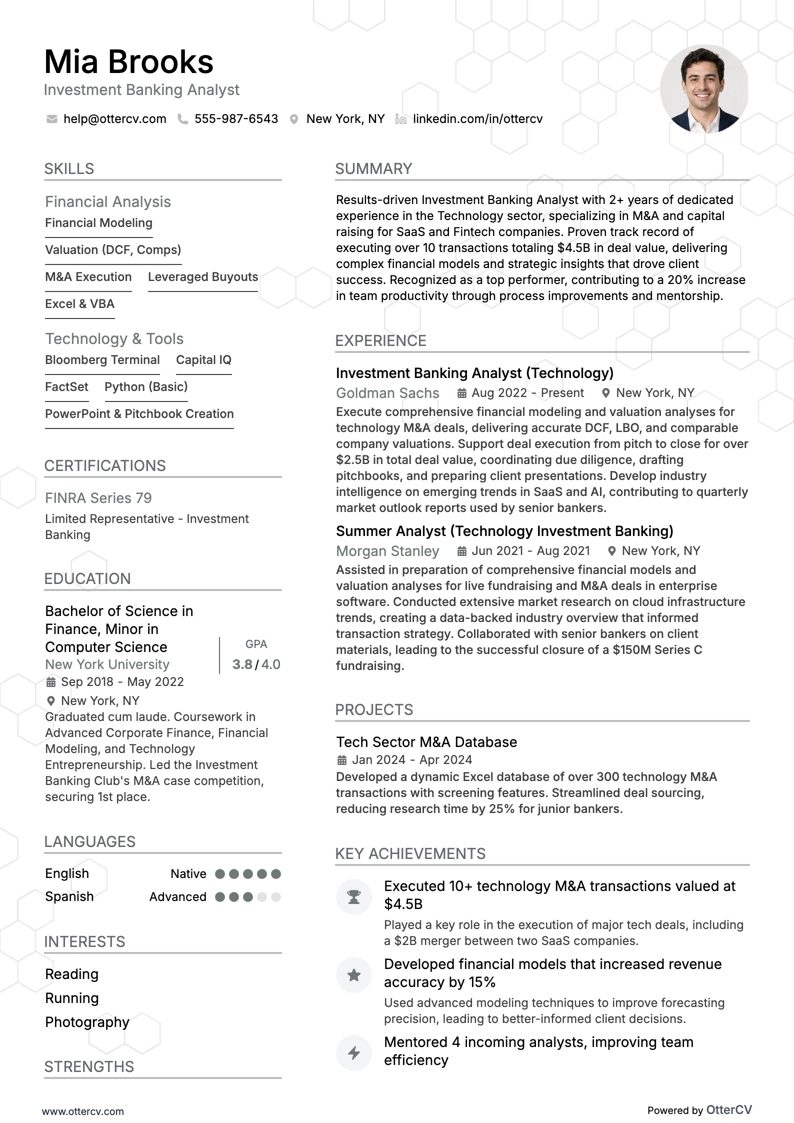
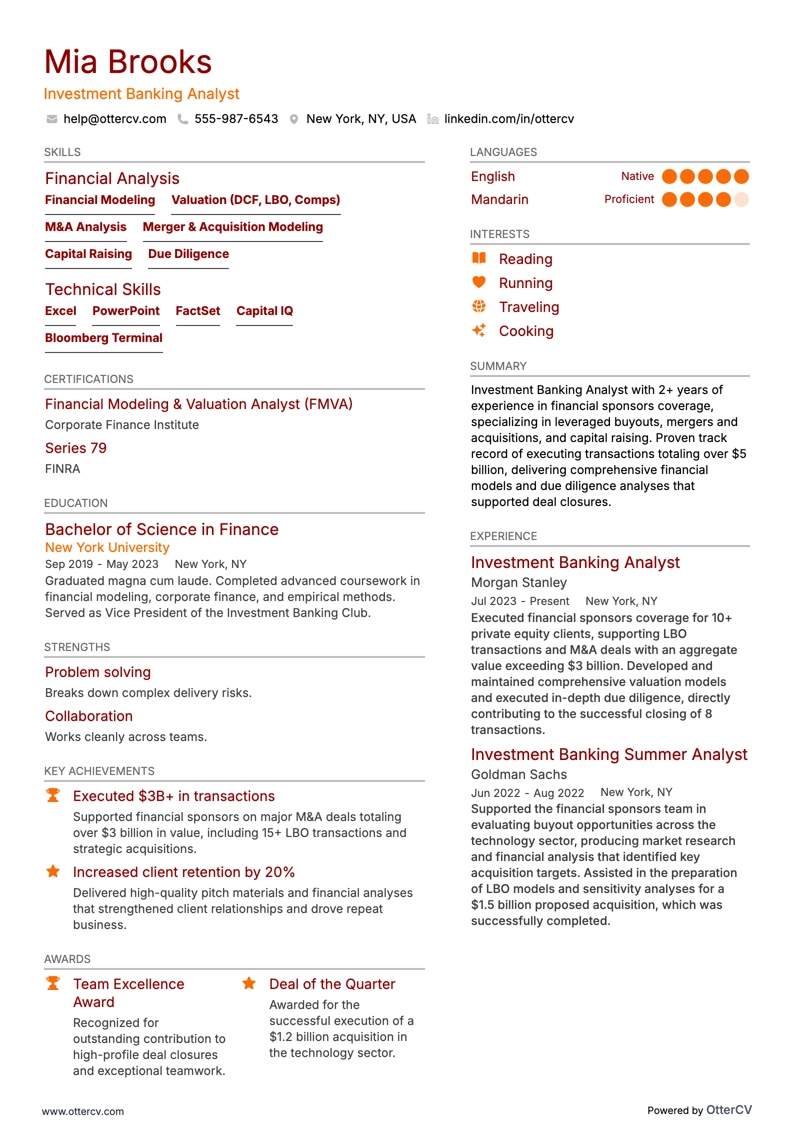
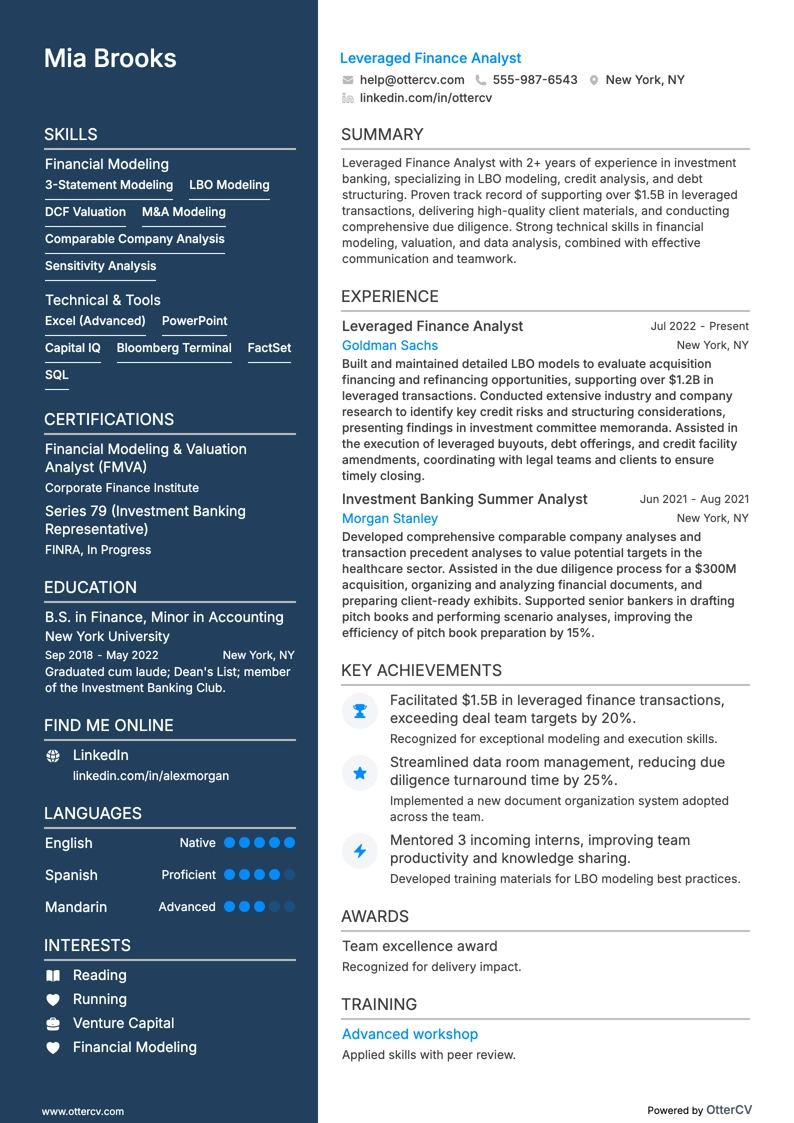
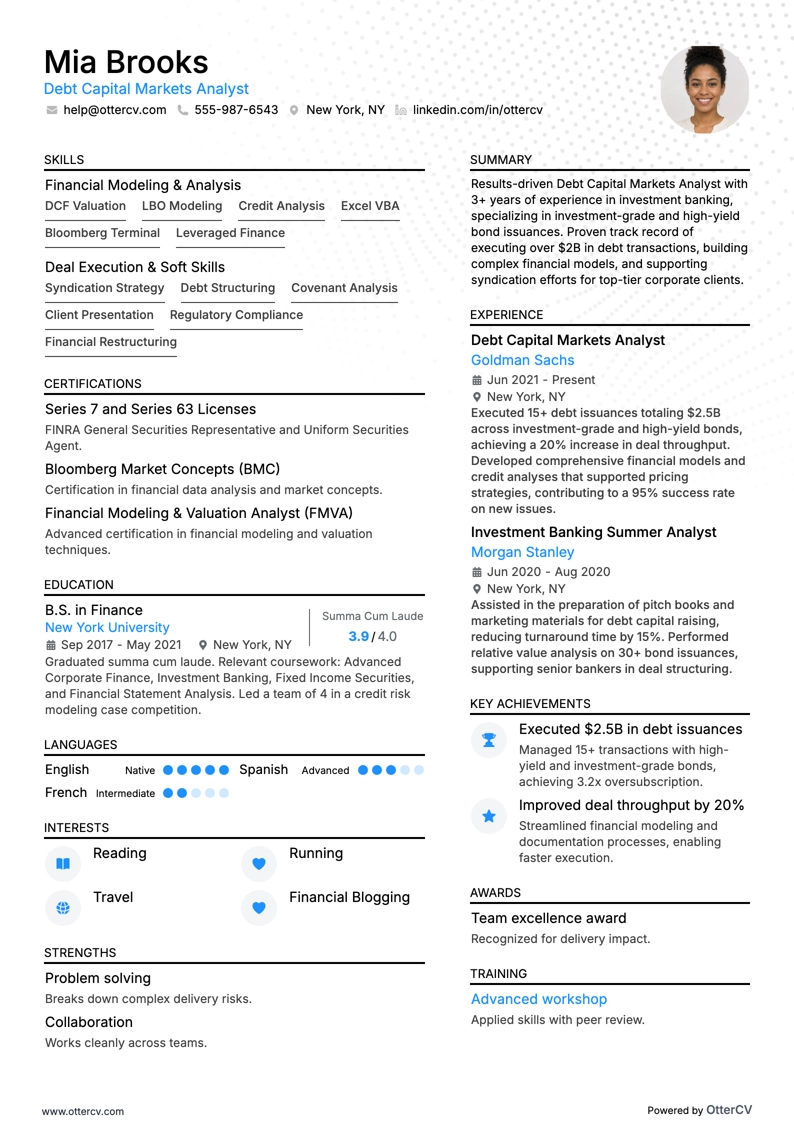
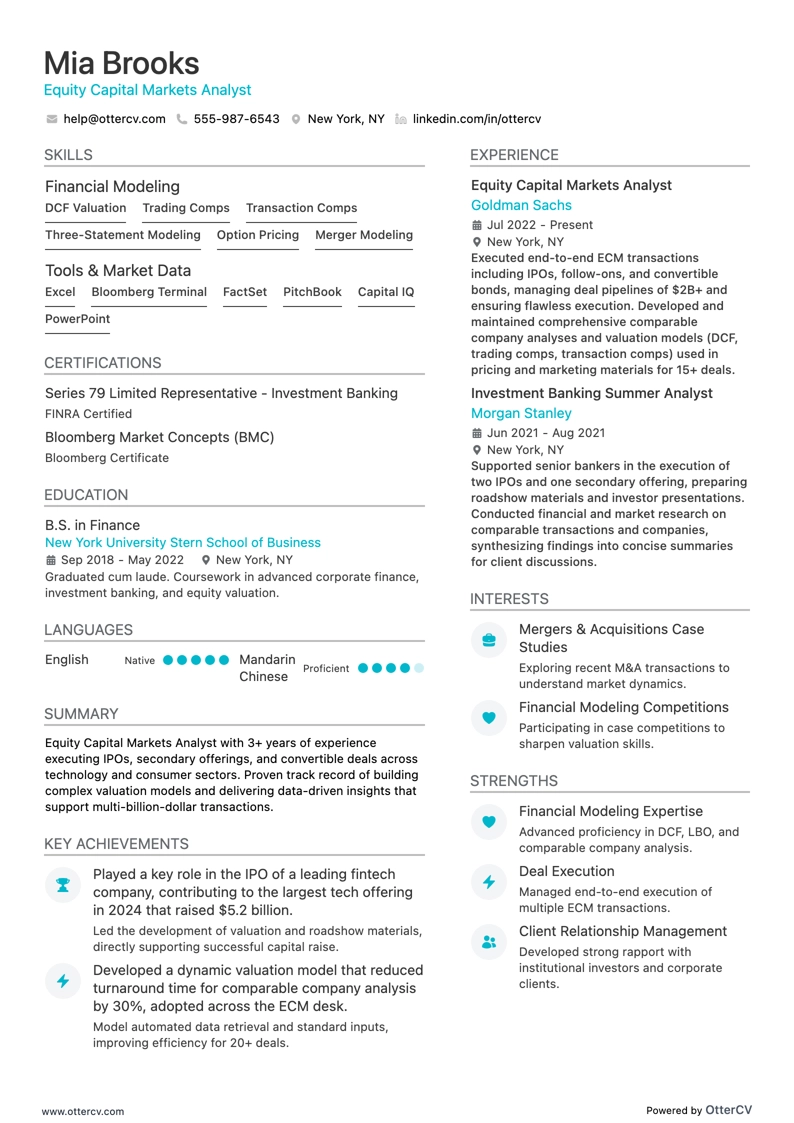
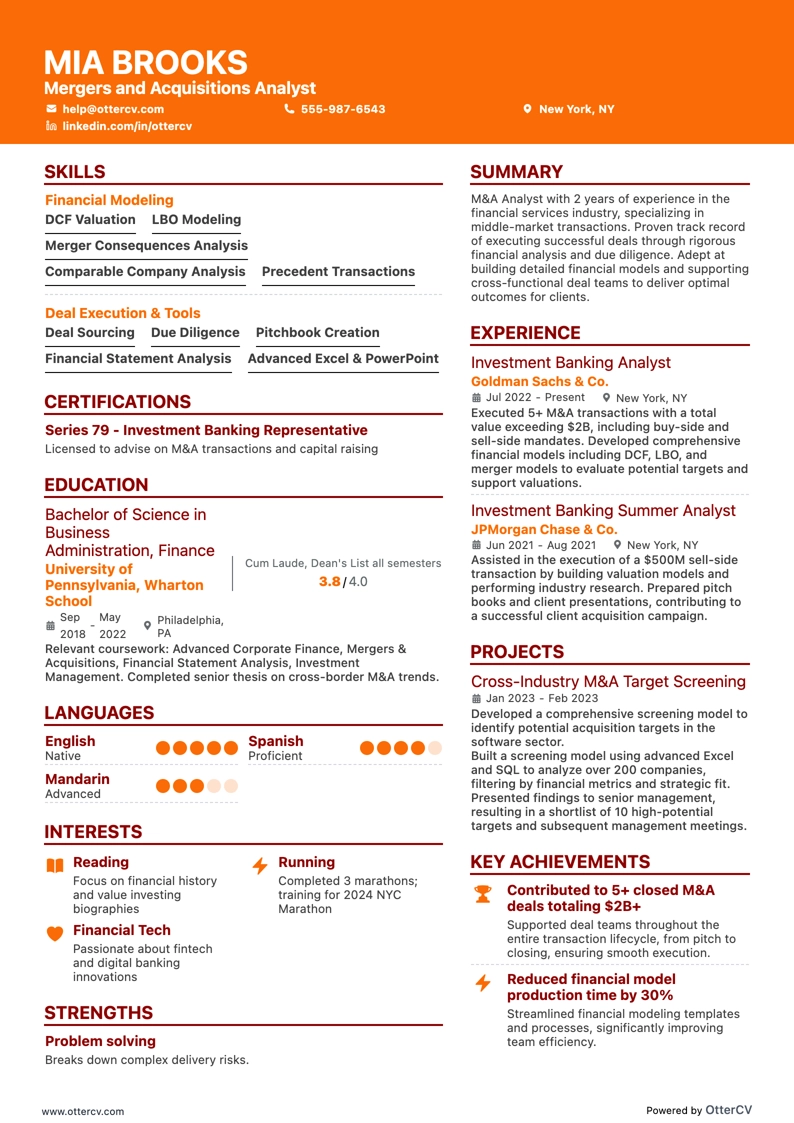
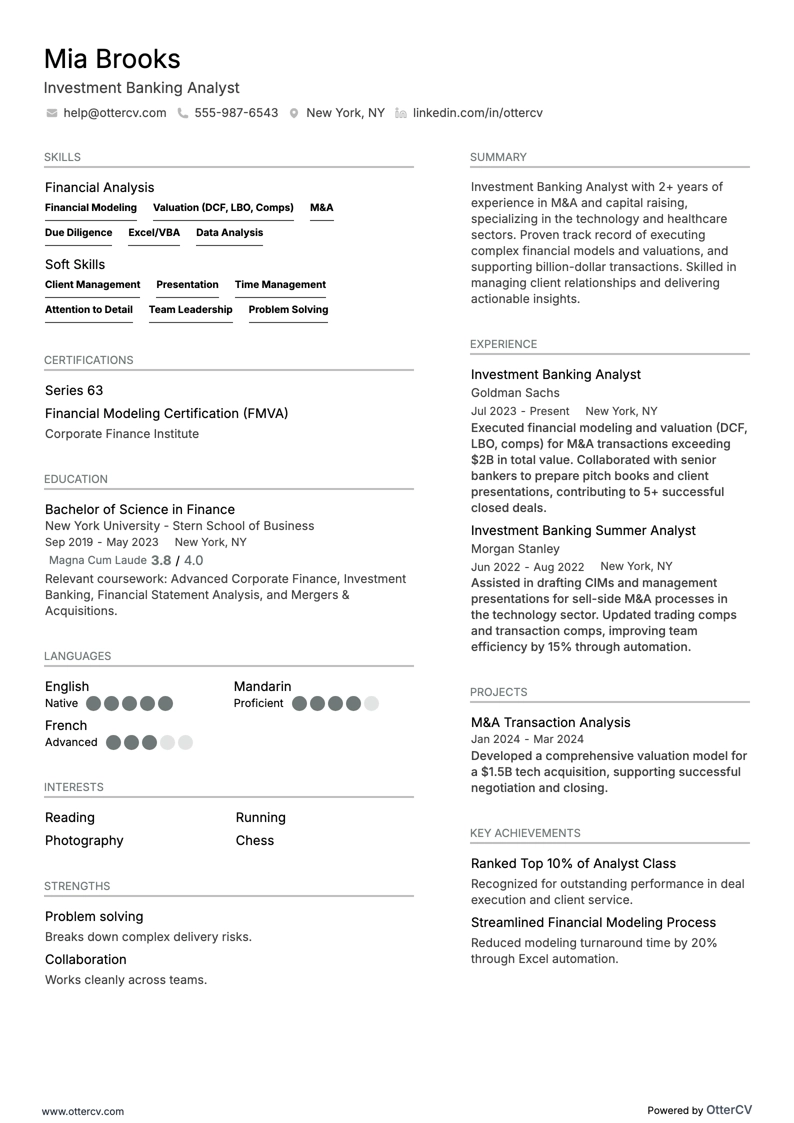
This candidate shows her value to the bank by highlighting achievements such as exceeding monthly goals.
Recruiters want candidates who are motivated to succeed, and she demonstrates that drive with quantitative results like a 95 percent approval rate.
How do you explain your job duties on your investment banking analyst resume?
Investment banking analysts do substantial preparatory work to support senior bankers. Common responsibilities include:
- Assessing client needs
- Reviewing and analyzing financial data
- Preparing presentations and pitch books
- Building financial models for different corporate situations
- Performing administrative tasks
Candidates for entry-level investment banking roles often come from backgrounds such as financial analyst or chartered accountant.
On your resume, include duties that closely match what an investment banking analyst does. Review the job description carefully and highlight responsibilities from your experience that align with the role.
Many investment banking analysts begin with internships or roles such as summer analyst. If you have not had that kind of opportunity, connect your current or past work to the position. For example, have you analyzed financial data, prepared reports, or pitched deals to clients?
Investment banking is highly competitive, and landing a job can be extremely difficult. Your chances improve when you have the right experience and education. In some cases, the right education alone can help you land an investment banking analyst role.
Let’s look at how to impress recruiters with your education.
Frame your investment banking analyst education on your resume
You can become an investment banking analyst straight out of college if you have the right education.
Hiring managers typically look for candidates with at least a bachelor’s degree in finance, accounting, business, or economics. A master’s degree in business administration or finance may give you an edge.
Your education section should be especially strong if you lack experience. Many aspiring investment bankers pursue internships while in college, but you may still have a chance even without a business-related degree.
Recruiters may choose well-rounded students they believe can quickly learn the required skills. Many investment banks offer their own training programs.
If accepted, these programs provide preparation for licensing and registration exams along with on-the-job experience. You may learn how to build financial models and prepare client pitches.
Much of the training also focuses on the bank’s culture, since you will be part of a team working to convince clients to do business with the bank.
You may also want to pursue a professional certification to improve your chances of being hired as an investment banker.
A highly respected option is the Chartered Financial Analyst certification from the CFA Institute. It signals a strong understanding of advanced investment analysis and portfolio management.
The main goal of presenting your education well is to show how you developed your skills. Those skills can become your closing pitch to the recruiter.
List your must-have investment banking analyst resume skills
Making the deal is central to investment banking, but first you need to show that you can recognize a strong opportunity.
Investment banking analysts need strong analytical skills. You must evaluate every angle of a potential deal, including transactions such as mergers.
This analytical work often includes building financial models such as:
- Discounted Cash Flow
- Comparable Companies and Comparable Transactions
- Merger and Acquisition models
- Leveraged Buyout models
Soft skills such as communication and relationship building are also important. You may need to connect buyers and sellers and help persuade both sides of a deal.
Under communication, you can also include linguistic skills. Knowing another language can be an advantage in investment banking.
The field also requires strong math and accounting skills. A math mistake can hurt a deal, so your hard skills need to be strong.
You should also mention experience with Excel and PowerPoint, which are essential for analyzing deals and creating pitch books. These fall under technical skills.
Discipline is another important skill. There may be times when the workload is so heavy that you get very little sleep.
If you can handle an 80-hour week while still paying close attention to detail, that discipline matters. Here is a list of skills you can use for your resume skills section.