Where you should put your portfolio link
Placing your portfolio link in a prominent spot on your interior designer resume is important because it helps potential employers notice it quickly. The most effective places to include it are:
- Header: Put it alongside your contact information. This is one of the first places employers look, so it helps ensure visibility even if they only scan your resume briefly.
- Top of your resume: Add it just below your name and contact details. This invites readers to view your work before they move into your experience or skills.
- Summary or objective section: If your resume opens with a summary or objective, place the portfolio link at the end of that section. It gives readers a natural next step after learning about your background.
- End of your resume: Include it in your closing remarks or in a separate section titled Portfolio or Online Portfolio. This can help leave a lasting impression.
Wherever you place it, make sure the link is easy to read and easy to type into a browser. If needed, consider using a URL shortener.
Design projects or achievements section
Separate section: You may want to create a dedicated section for significant projects that sit outside your employment history or for achievements that stand on their own, such as awards, recognitions, or independent contracts.
Place this section after your Work Experience and before your Education, especially when those projects are highly relevant to the roles you are targeting. It can be especially useful for freelance or contract work that does not fit neatly into a traditional employment timeline.
Within the Work Experience section: The most common approach is to include your design projects and achievements directly within your work experience entries.
For each relevant role, list key projects and achievements as bullet points. Describe the project scope, your role, the skills you used, and any notable outcomes. This approach highlights your accomplishments while also showing how you applied your skills in a professional setting.
How to write your interior designer resume experience
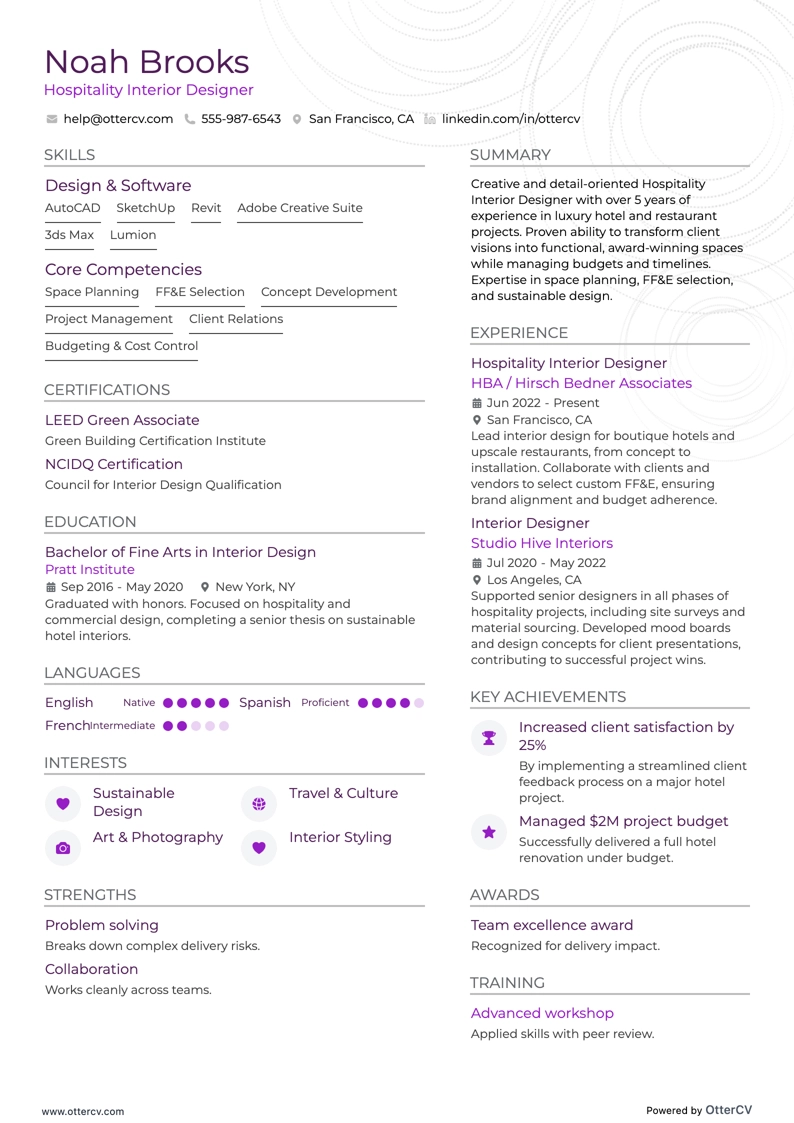
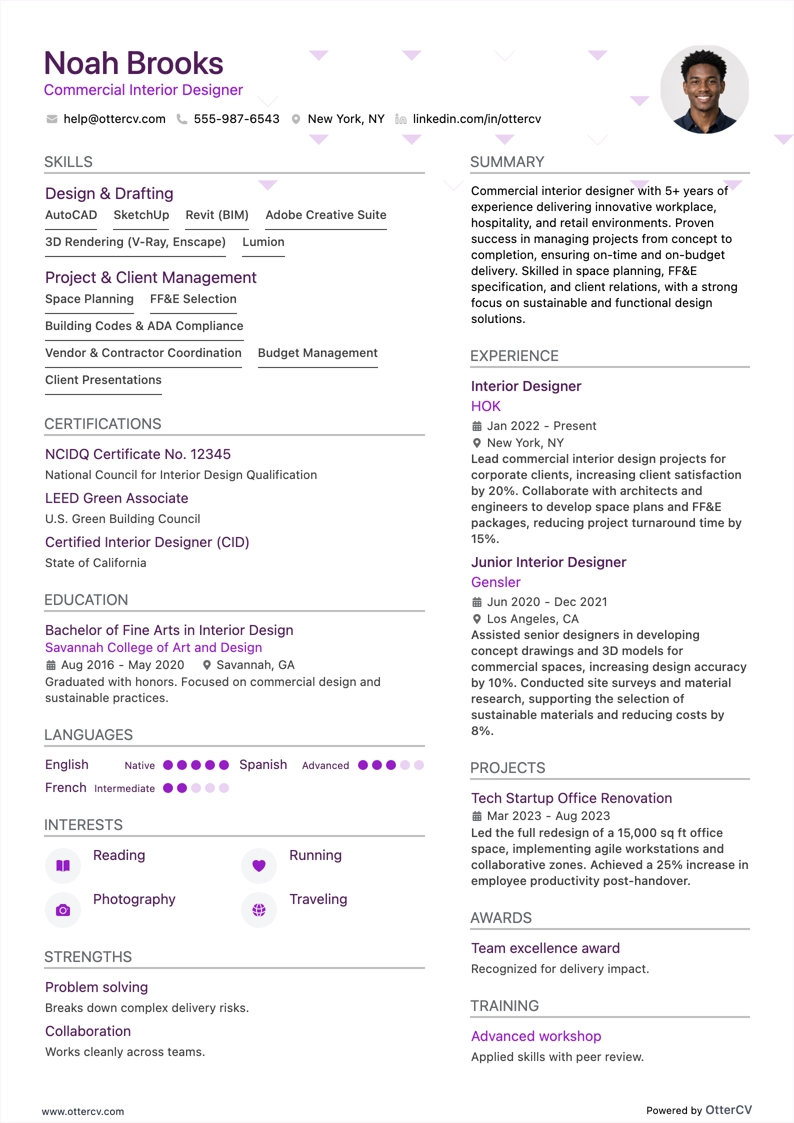
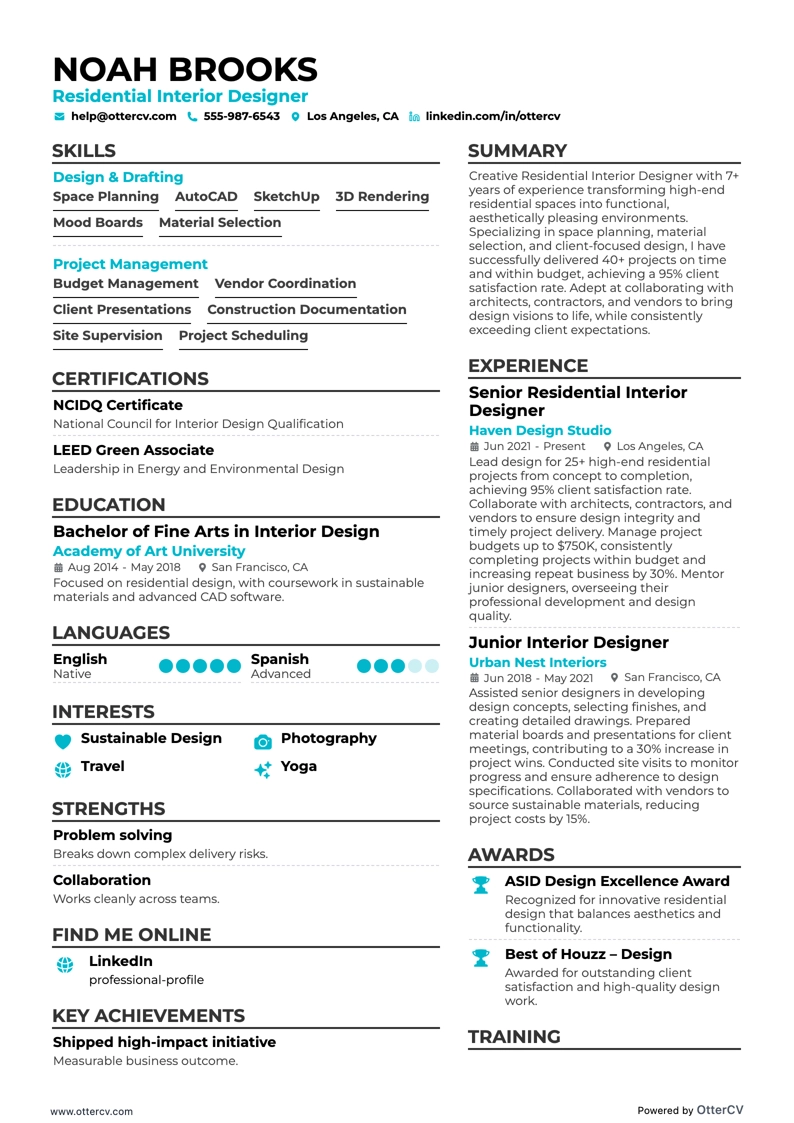
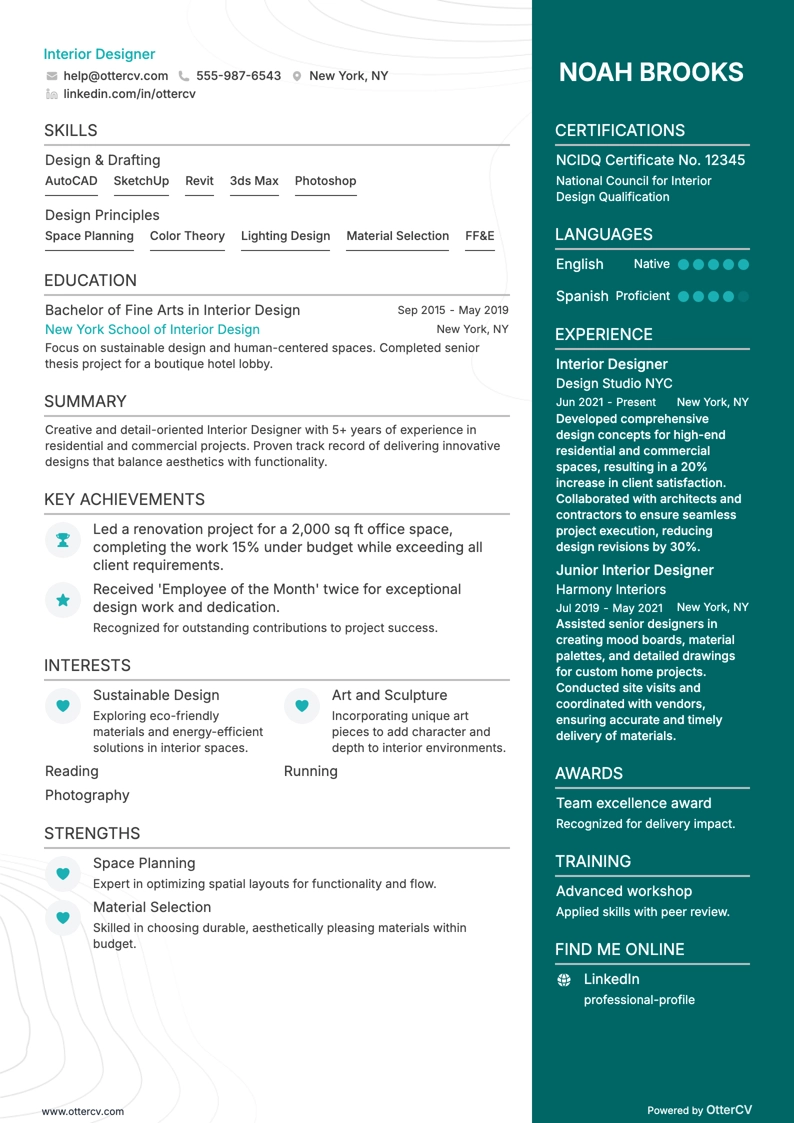
Listing work experience on an interior designer resume is essential because it shows your practical skills, project management abilities, and capacity to create visually appealing and functional spaces. It gives concrete examples of how you have applied your design knowledge in real-world settings.
Each entry should include your job title, company name, location, dates of employment, and key responsibilities and achievements. Use bullet points to highlight major projects you contributed to, specific design skills you used, and any client or employer recognition you received. This structure shows your impact and professional growth, helping present you as a strong candidate.
Tailor your experience to the job description. Identify keywords and required skills, and include experience that demonstrates them.
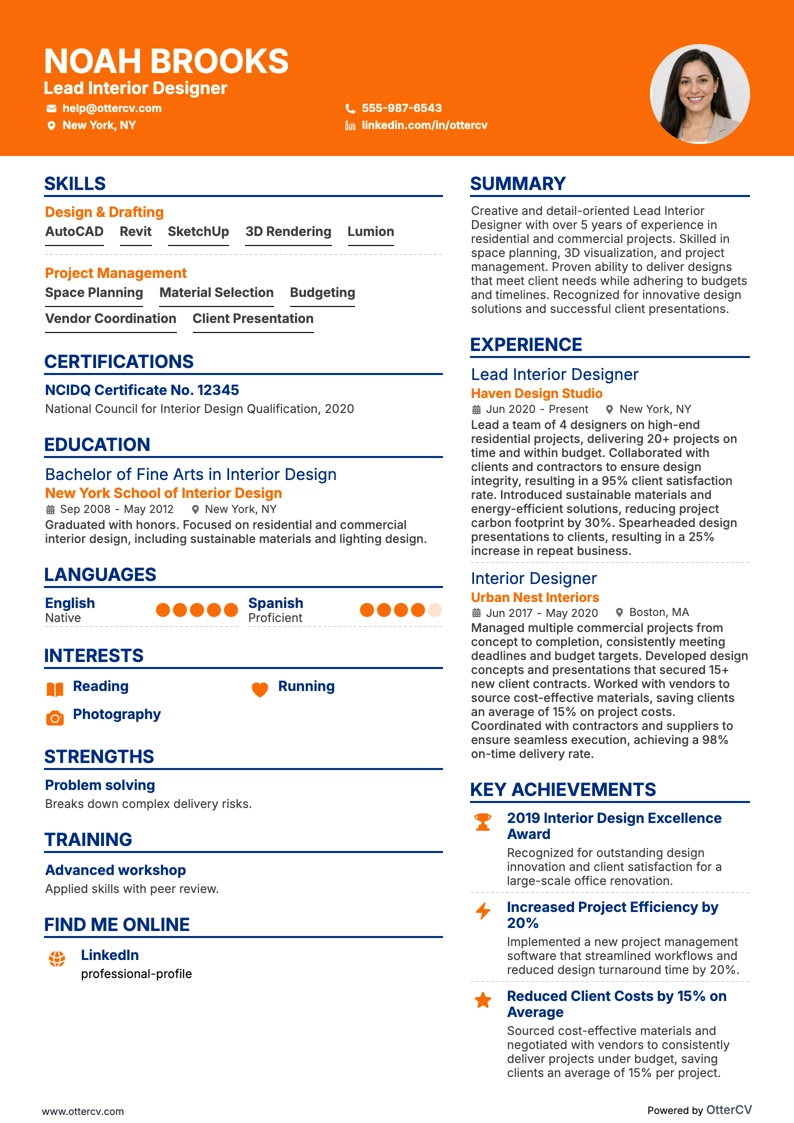
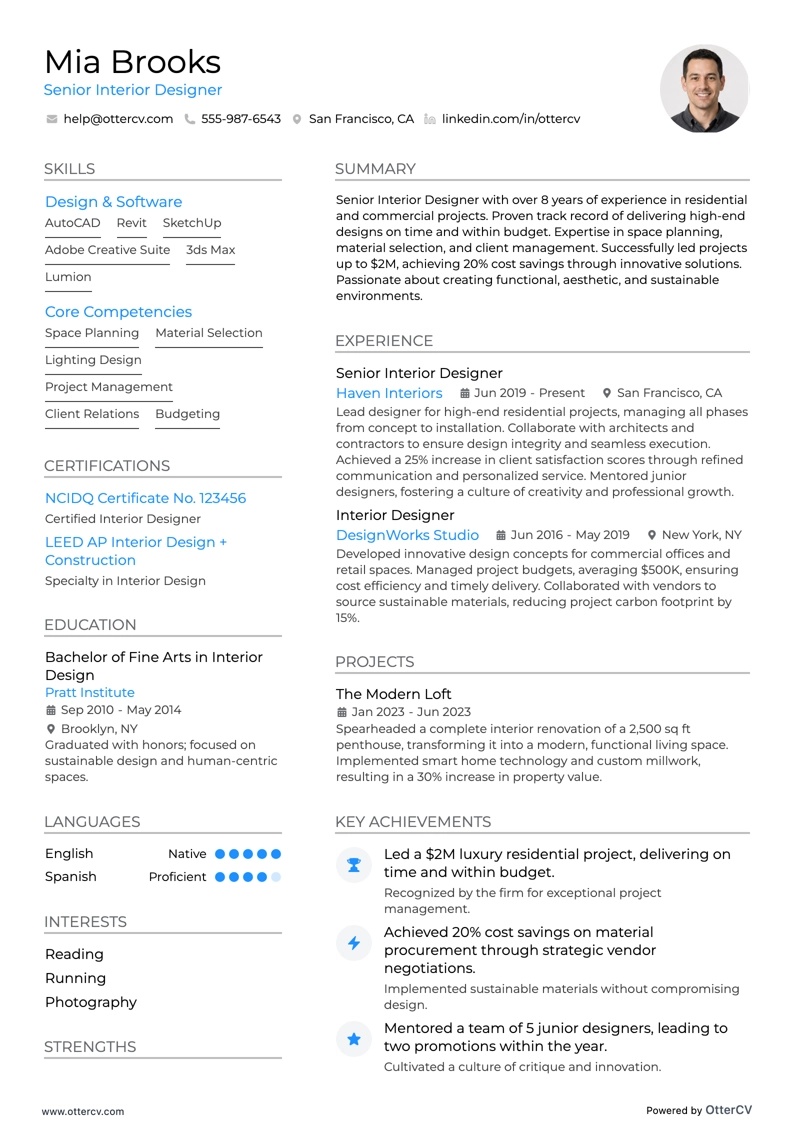
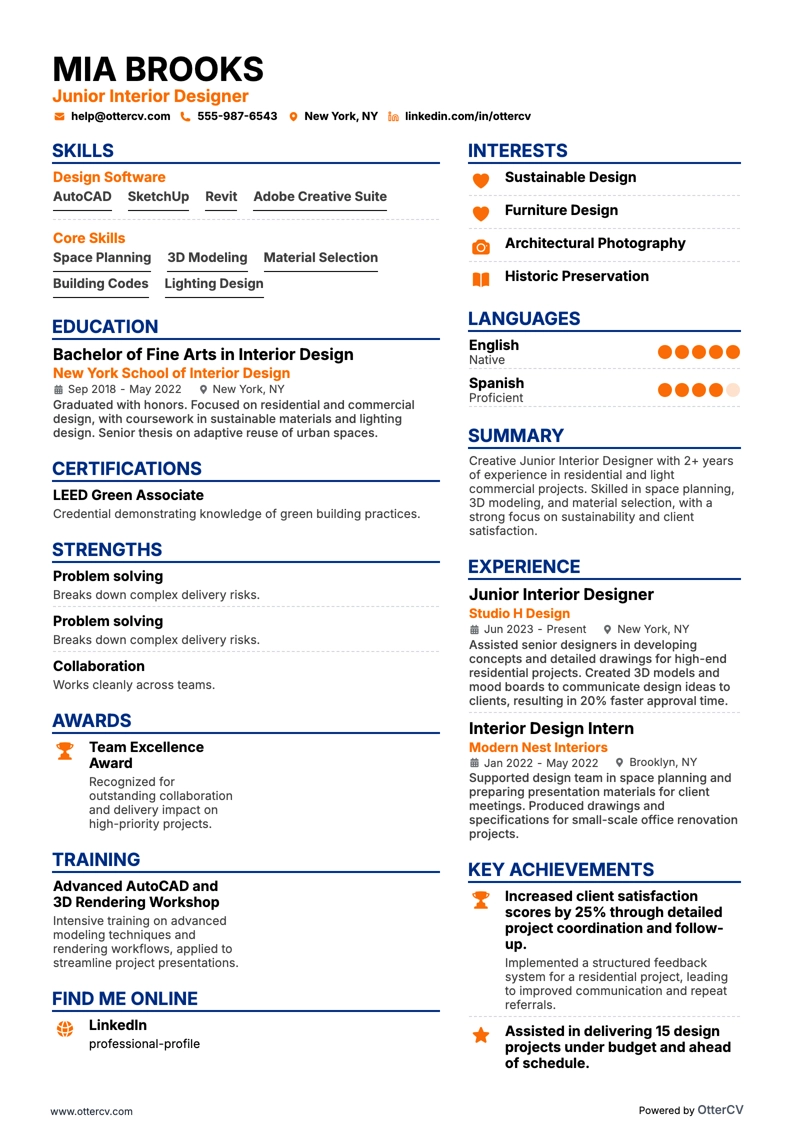
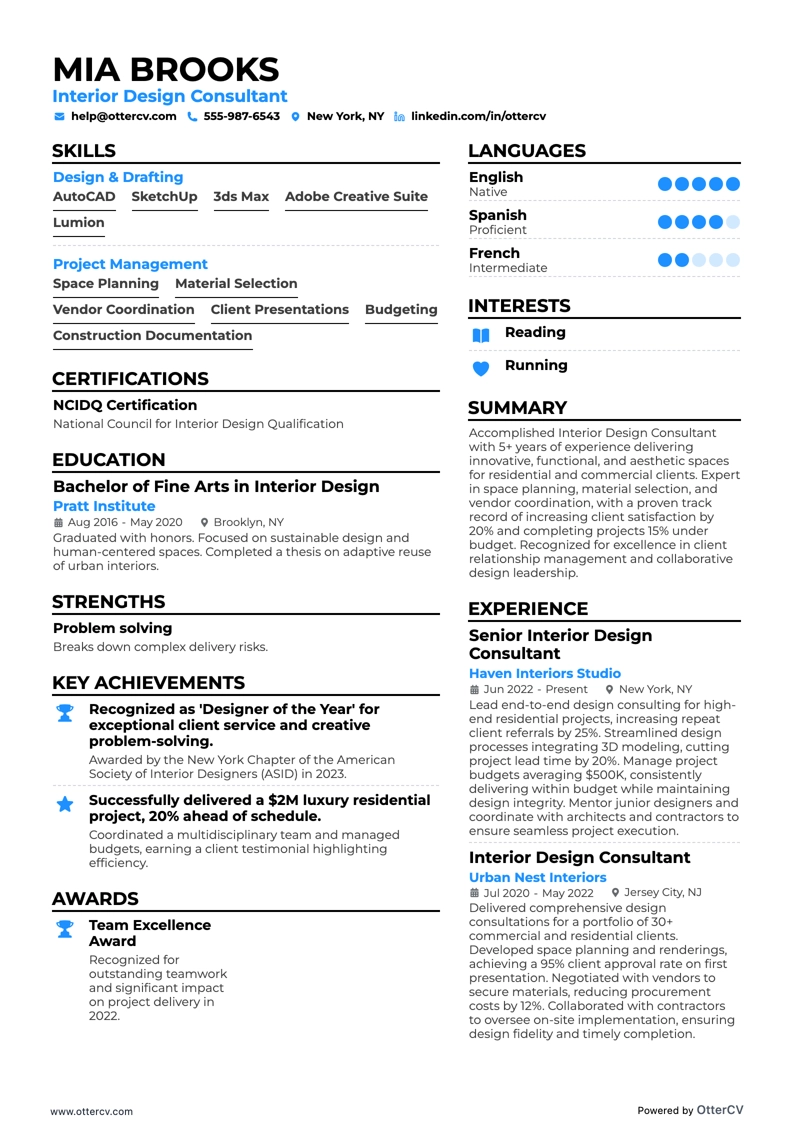
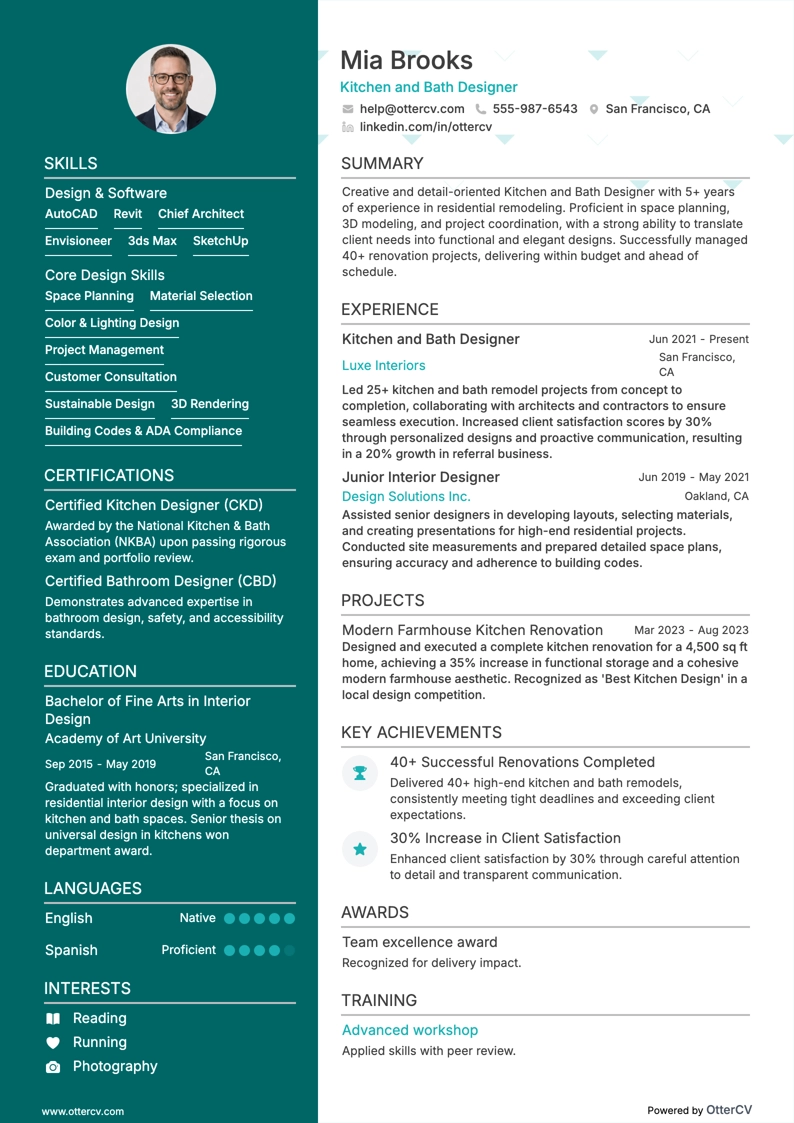
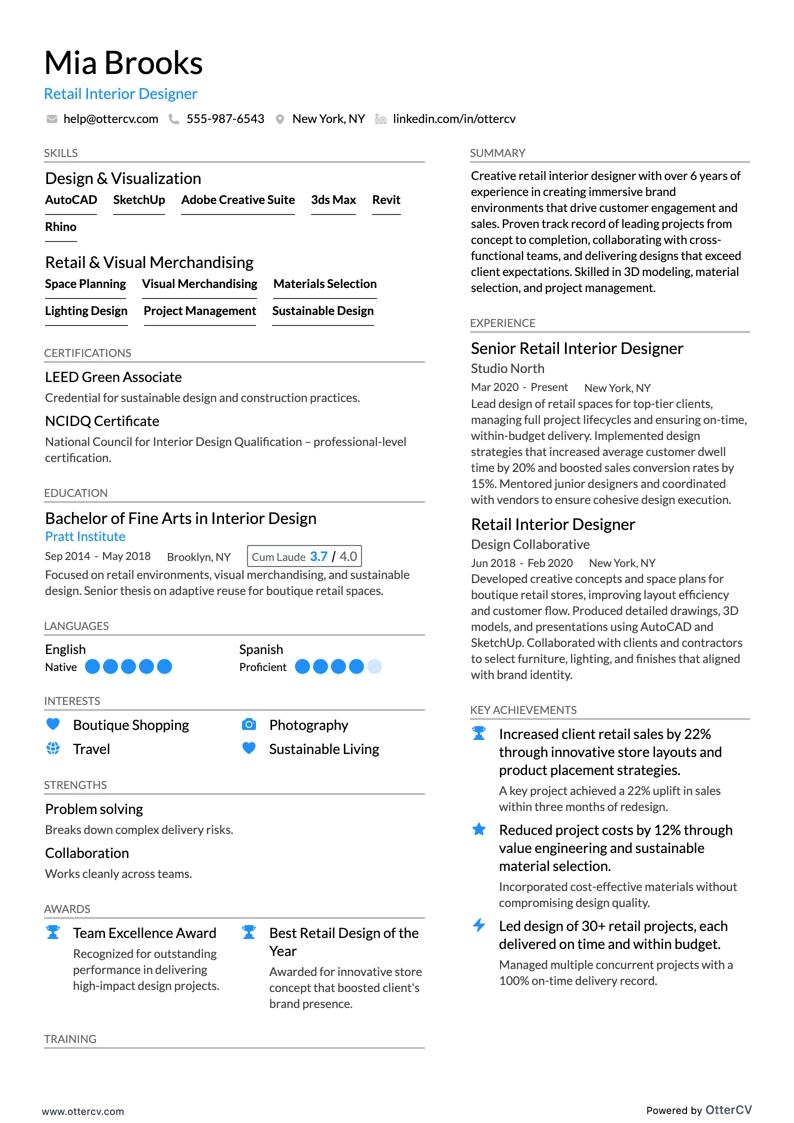
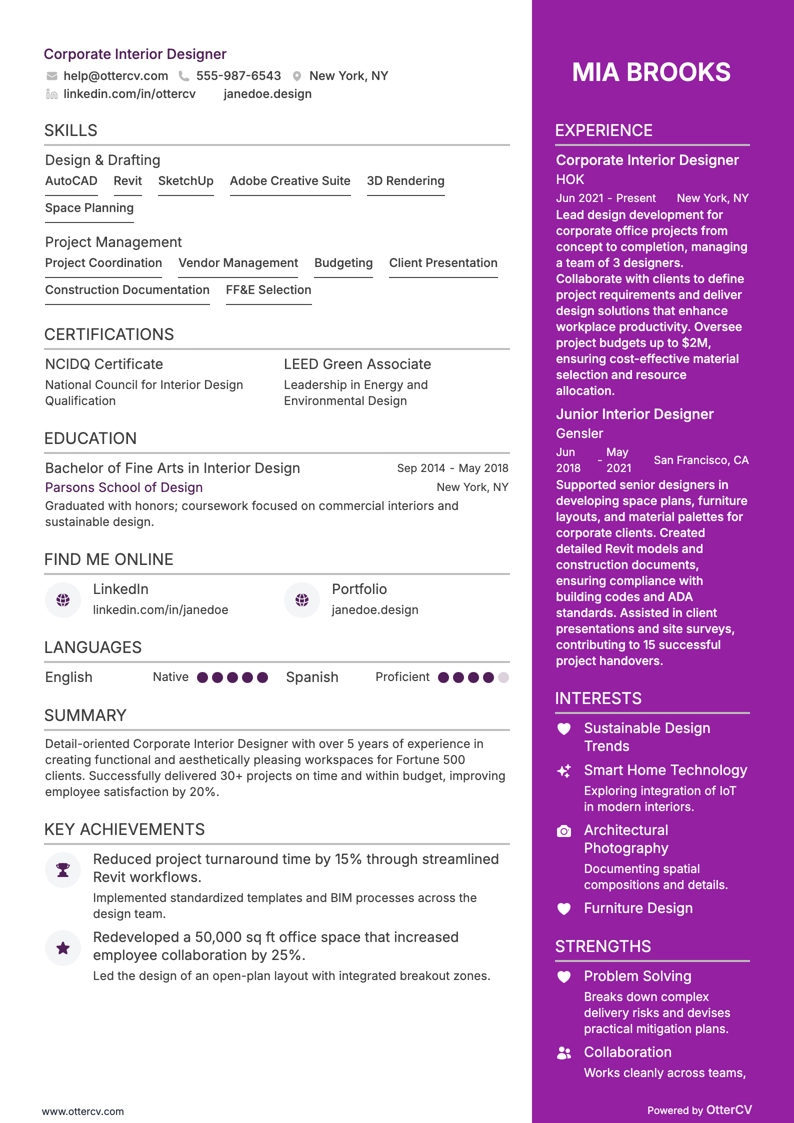
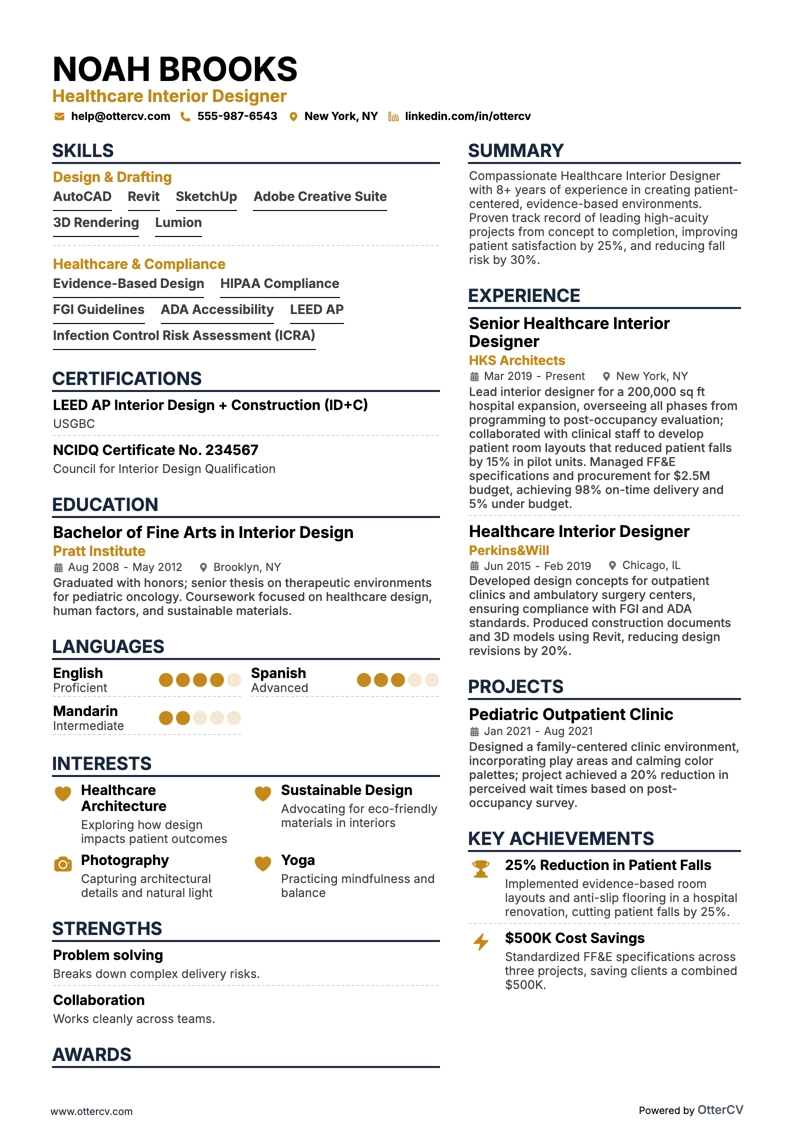
Here’s an example of an entry.