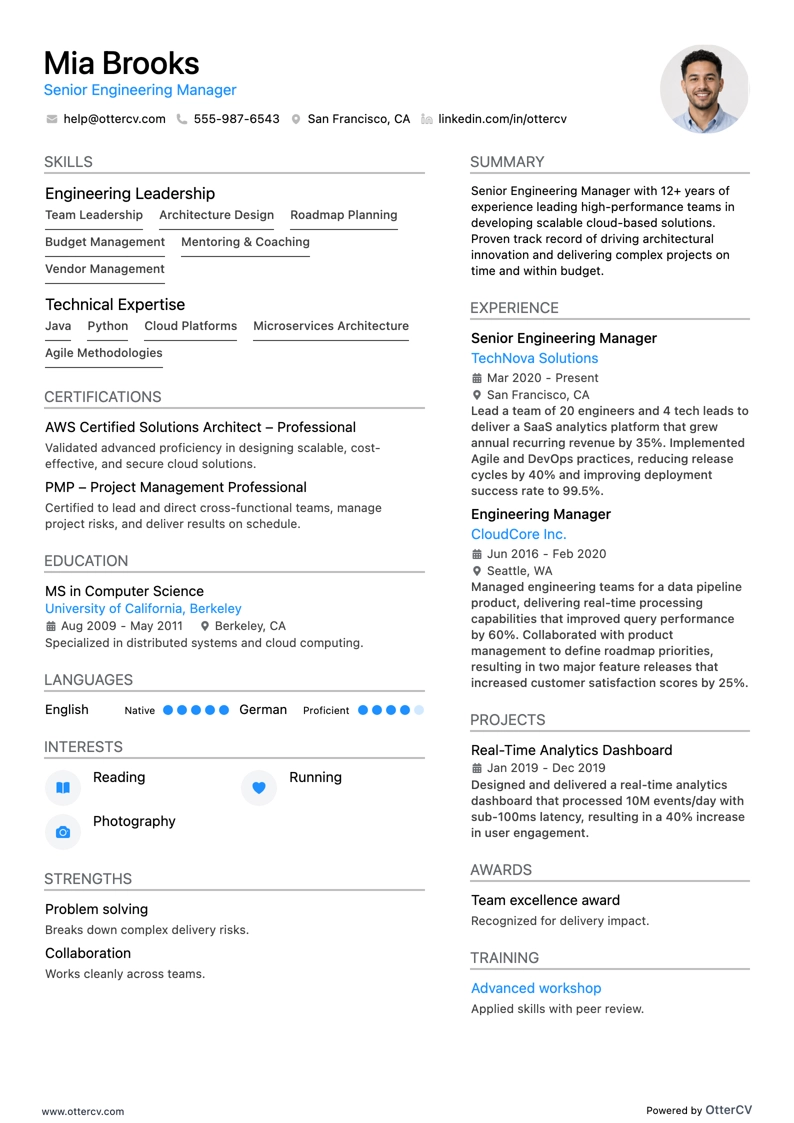
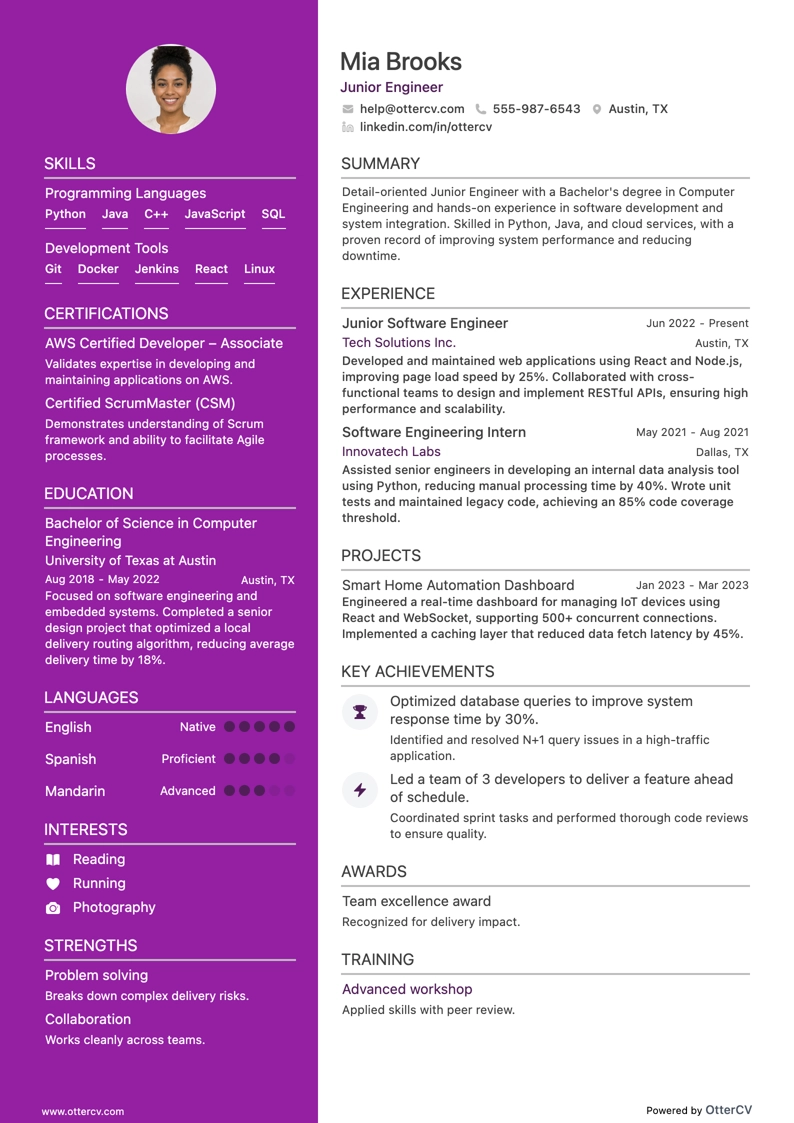
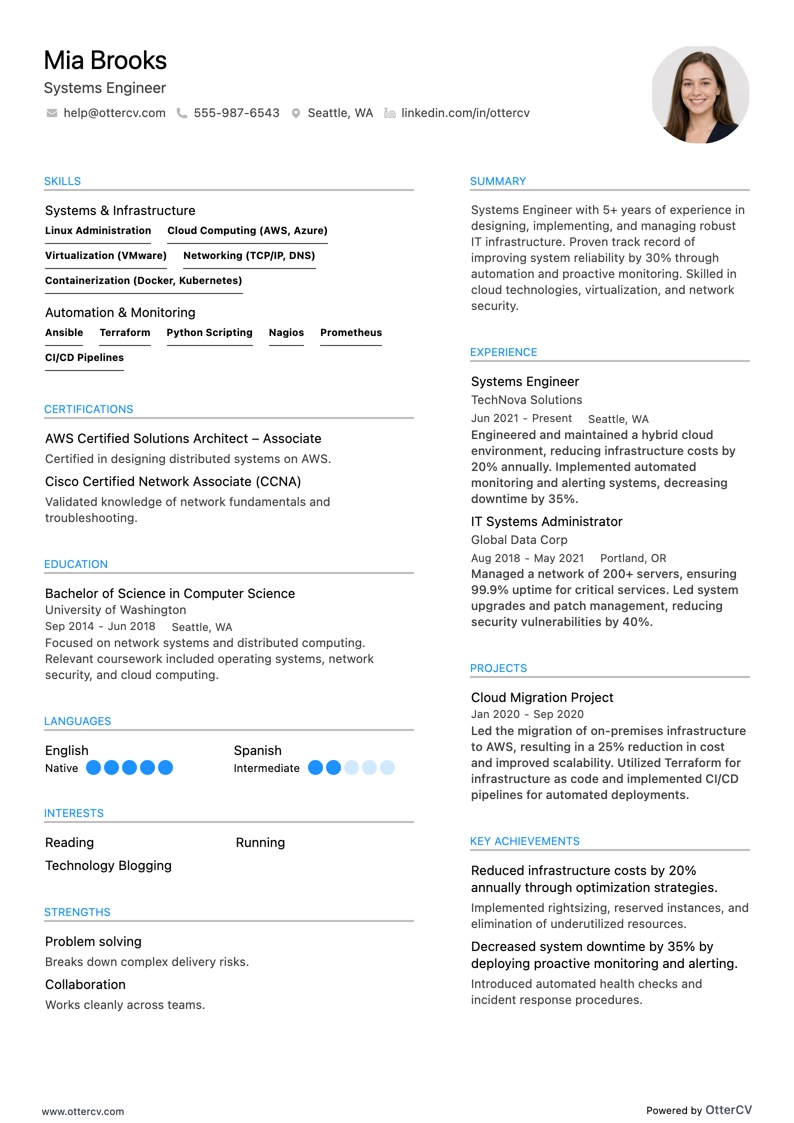
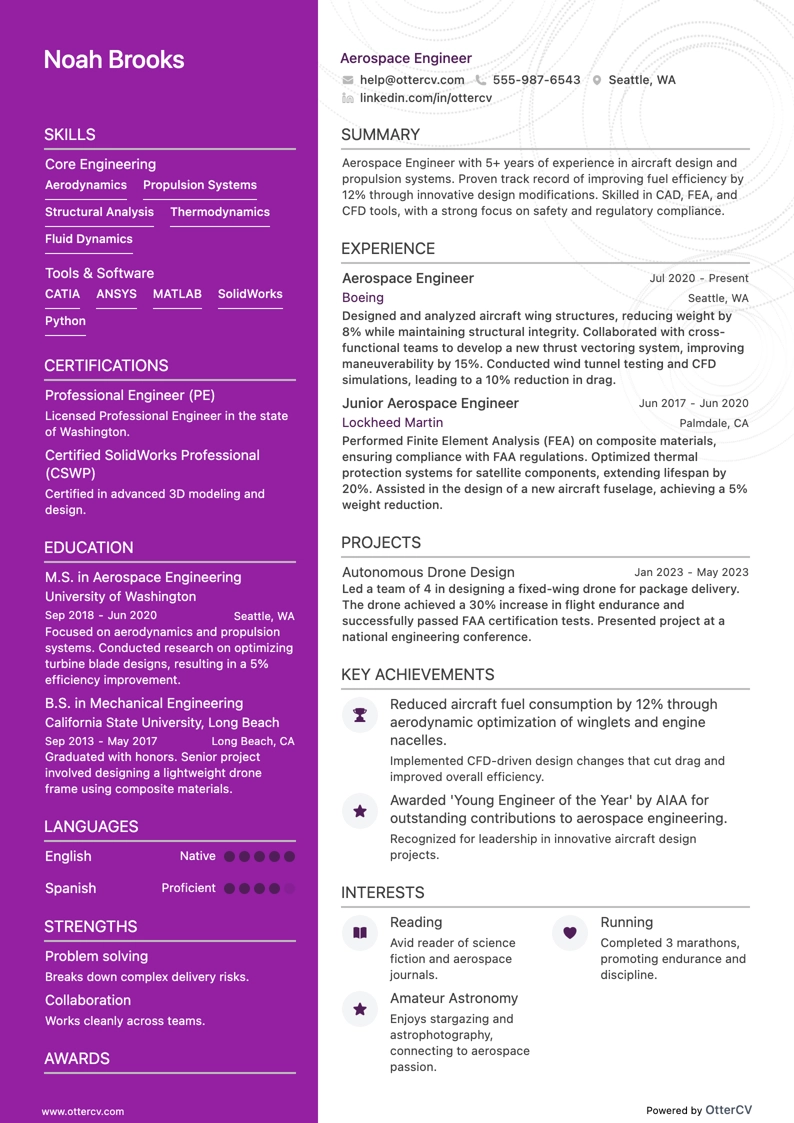
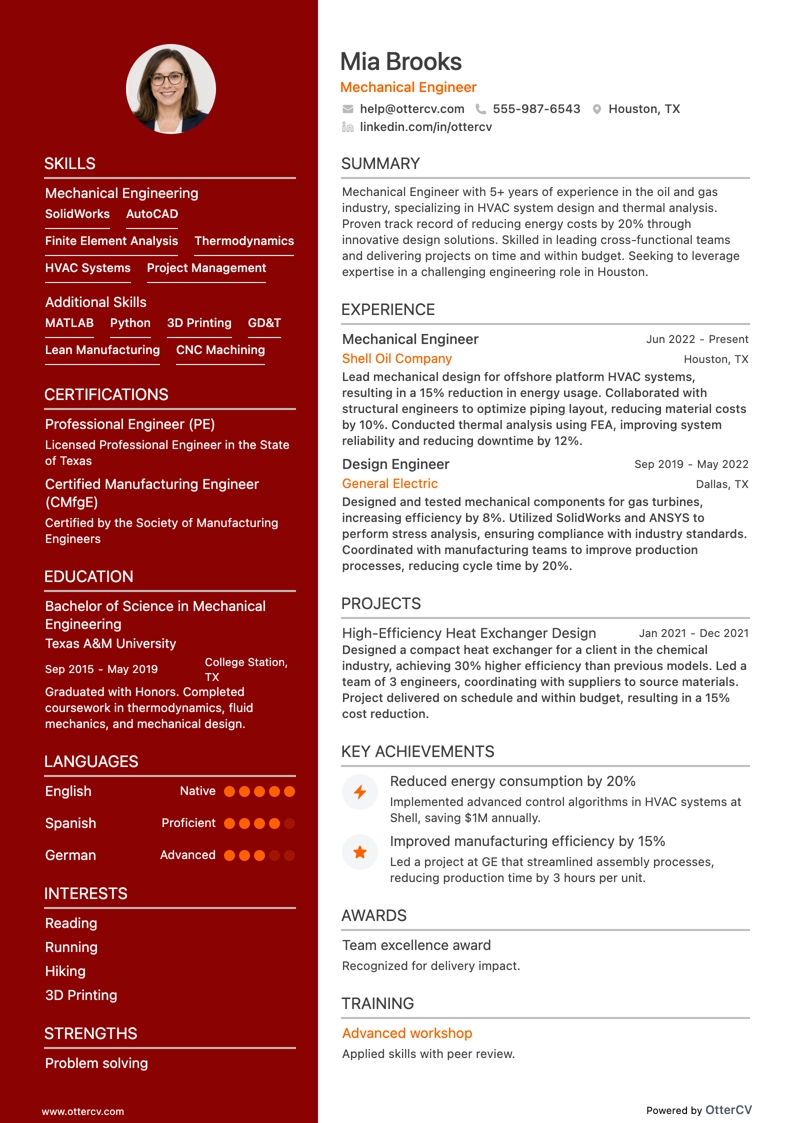
Engineering Resume Guide
A successful engineering career starts before the first blueprint is drafted or the first line of code is written. It begins with a strong resume. In today’s competitive job market, visibility matters more than ever. An analysis of Bureau of Labor Statistics (BLS) data forecasts that demand for engineering skills will grow by approximately 13% from 2026 to 2031.
Many engineers face the same challenge: they can build complex systems, but struggle to create a resume that clearly shows their expertise and how it contributes to business value or team success.
This guide is designed to help bridge that gap between technical ability and communication. By focusing on soft skills, tailored applications, clear writing, and effective networking, engineers can improve their job prospects significantly.
In this guide, you’ll learn how to:
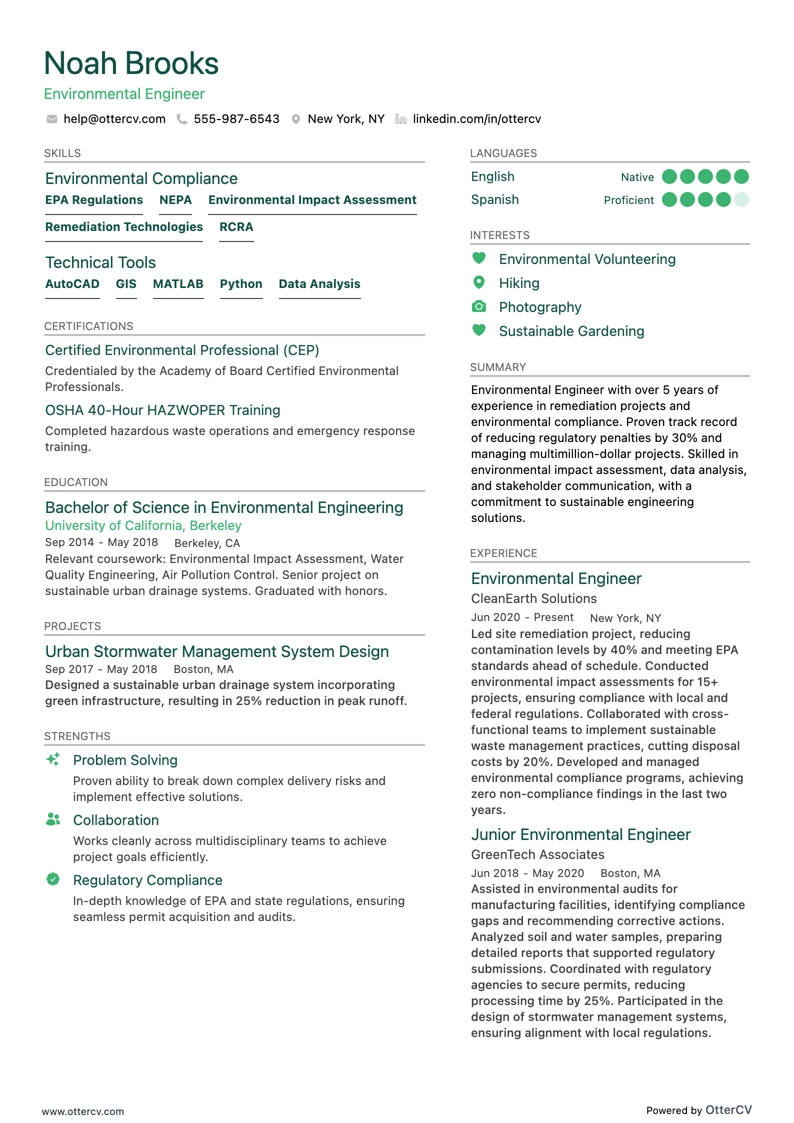
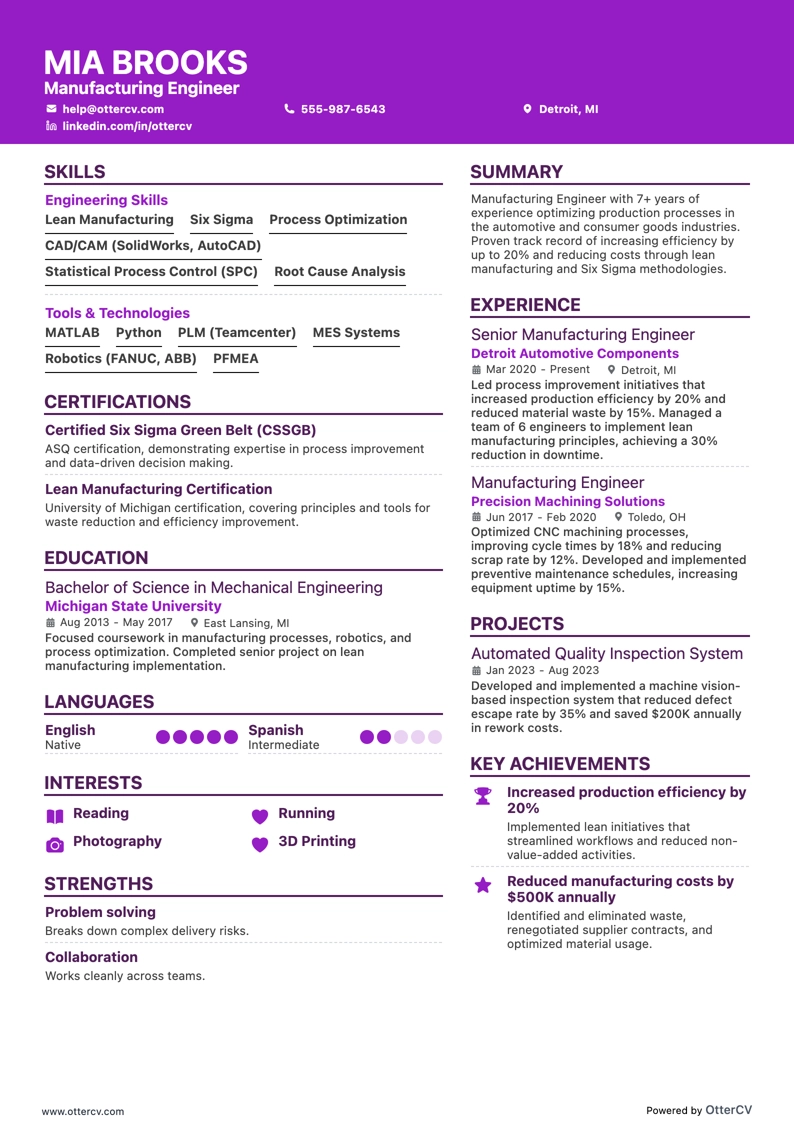
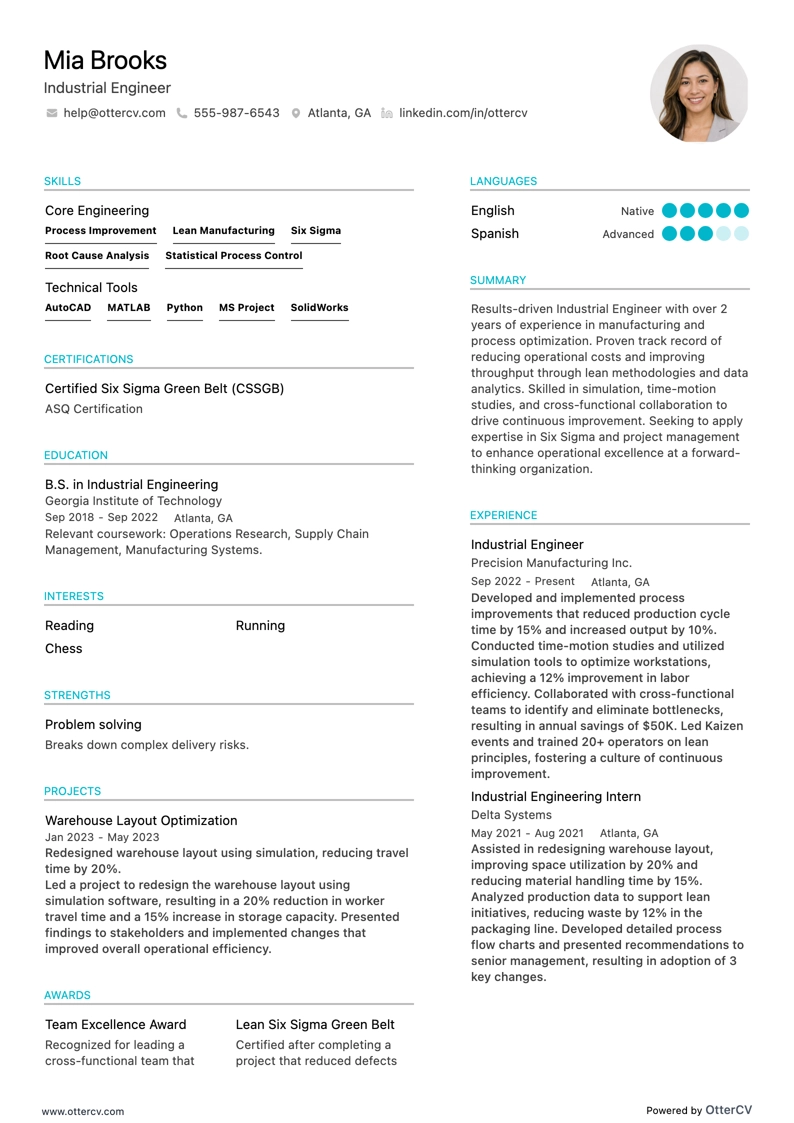
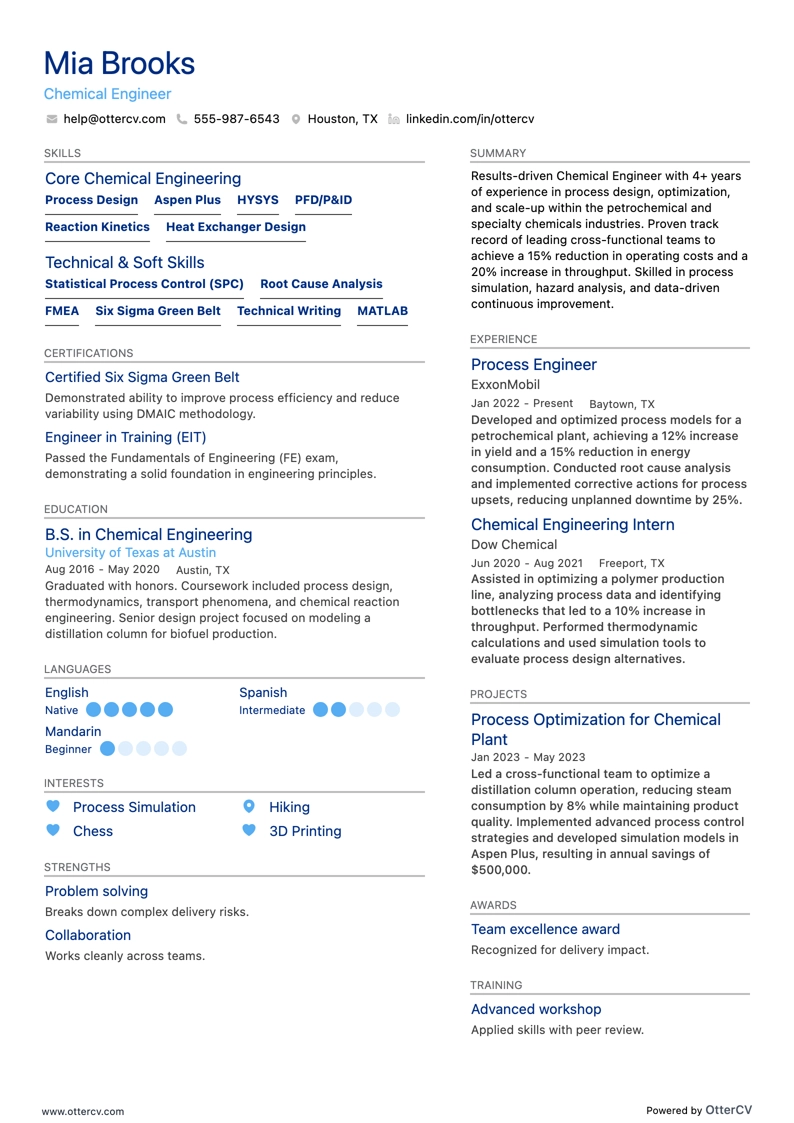
- Format your resume properly for an engineering role.
- Include the key resume sections recruiters expect to see.
- Present your professional experience in a way that is both targeted and informative.
- Choose the right skills for the job you’re applying for and present them effectively.
- List your education, certifications, and licensure as an engineer.
- Write a compelling resume summary or, if you have less experience, an objective statement.
- Add possible additional resume sections that can strengthen your application.
Let’s get the gears turning and build a resume that’s as innovative as the engineers it represents.
For more role-specific help, explore these resume guides:
- Hardware Engineer Resume Guide
- Chemical Engineer Resume Guide
- Manufacturing Engineer Resume Guide
- Audio Engineer Resume Guide
- Electrical engineering Resume Guide
- Design Engineer Resume Guide
- Infrastructure Engineer Resume Guide
- Engineering Manager Resume Guide
- Software engineering Manager Resume Guide
Need a cover letter for your engineering resume? Check out this guide: