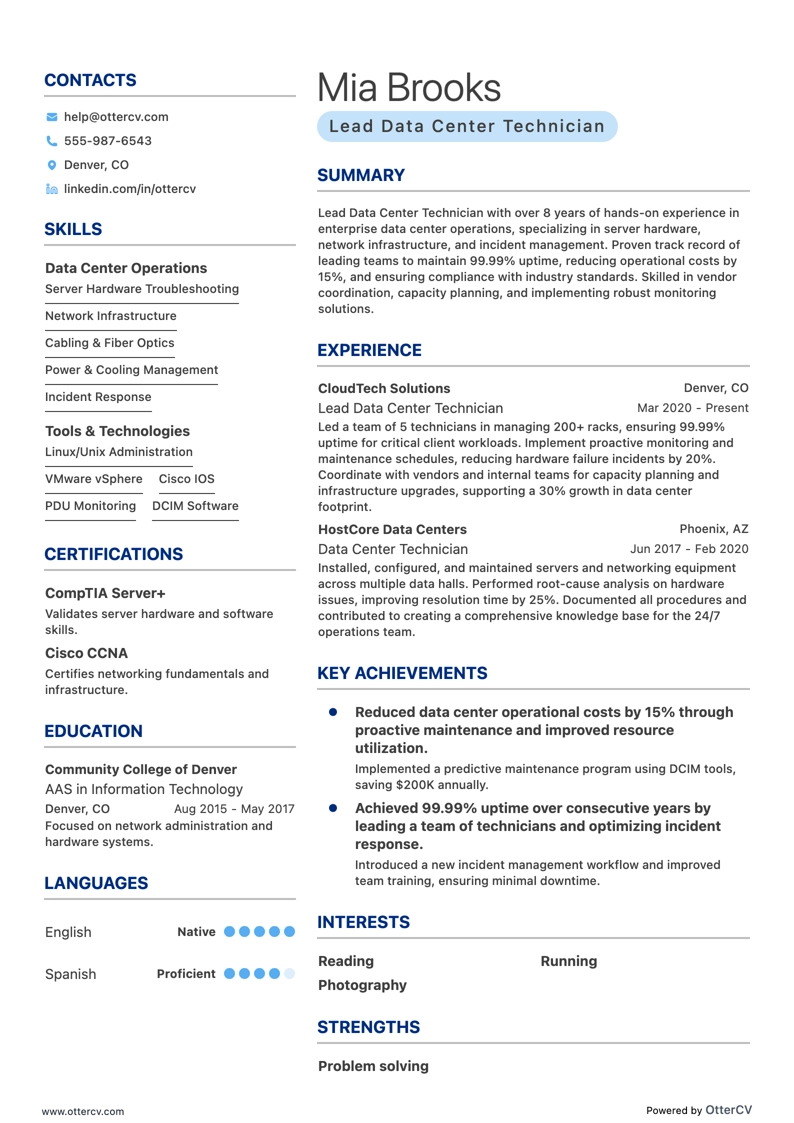
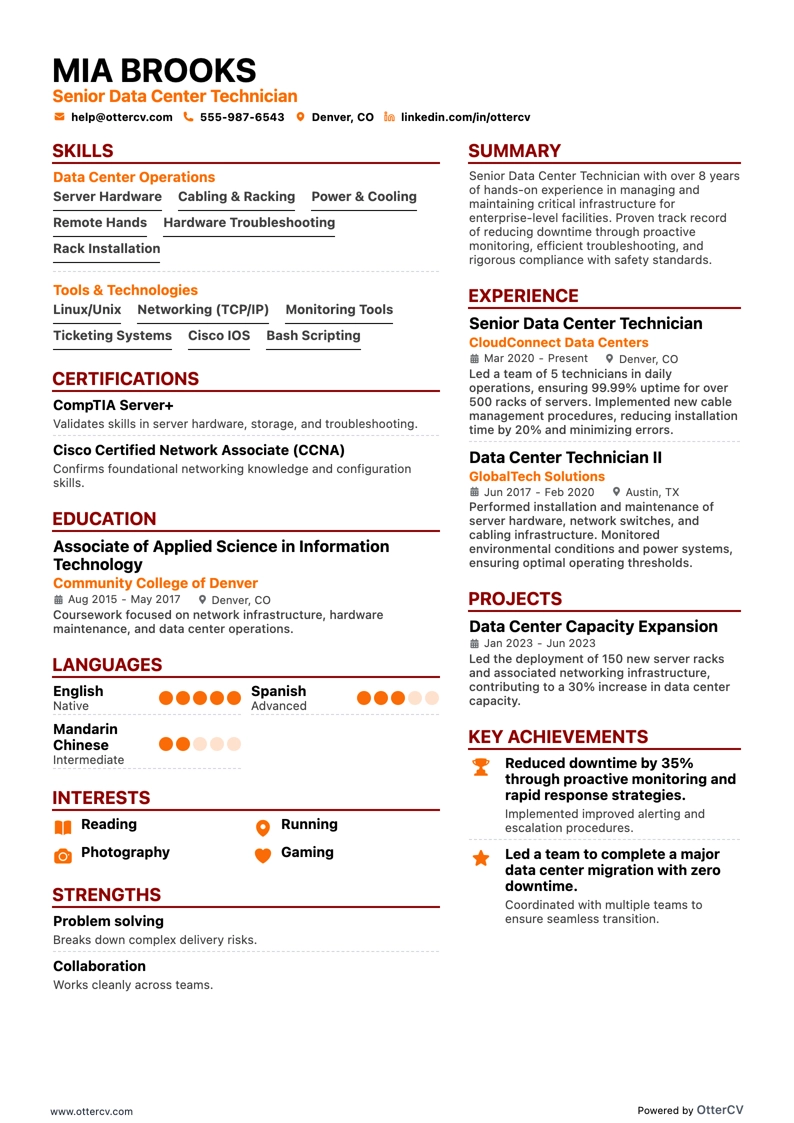
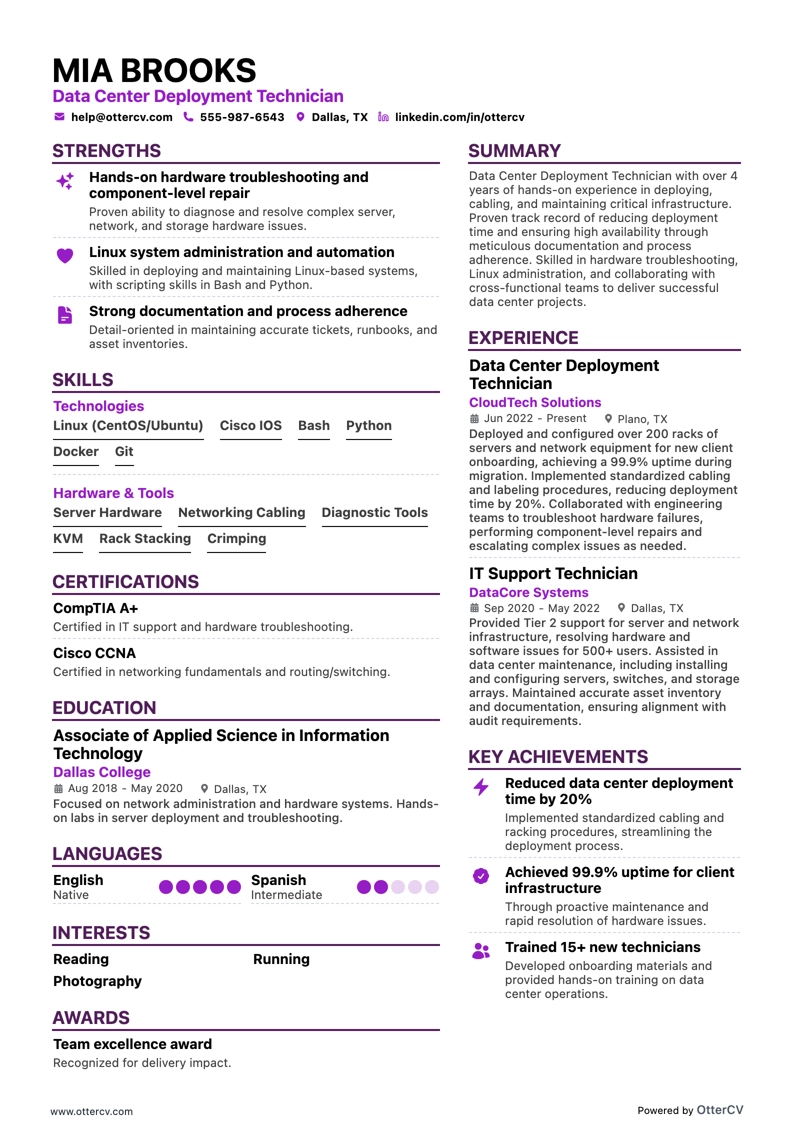
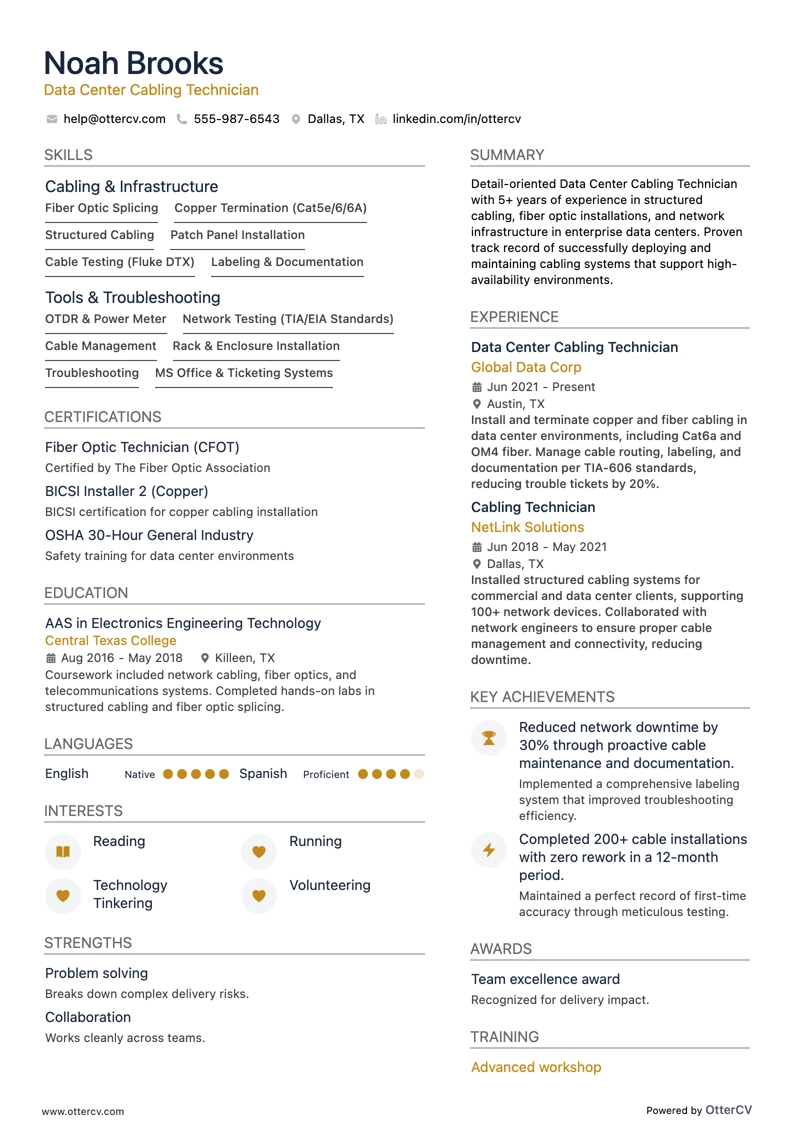
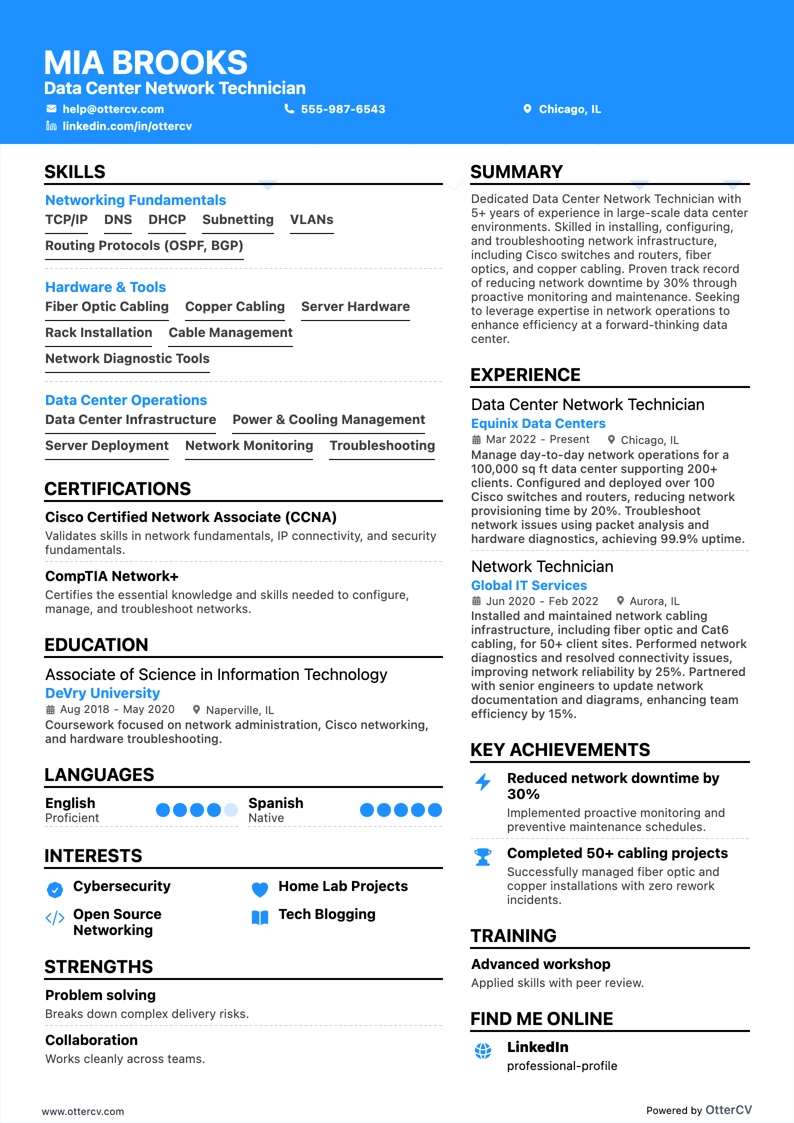
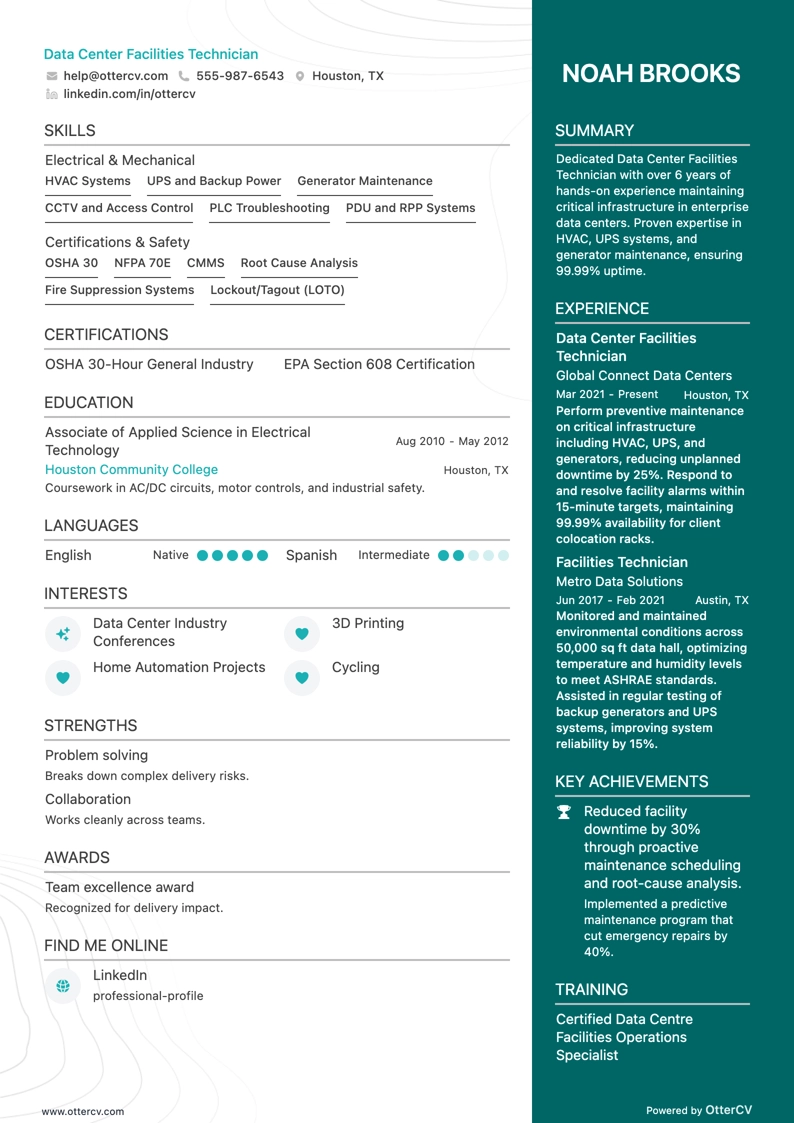
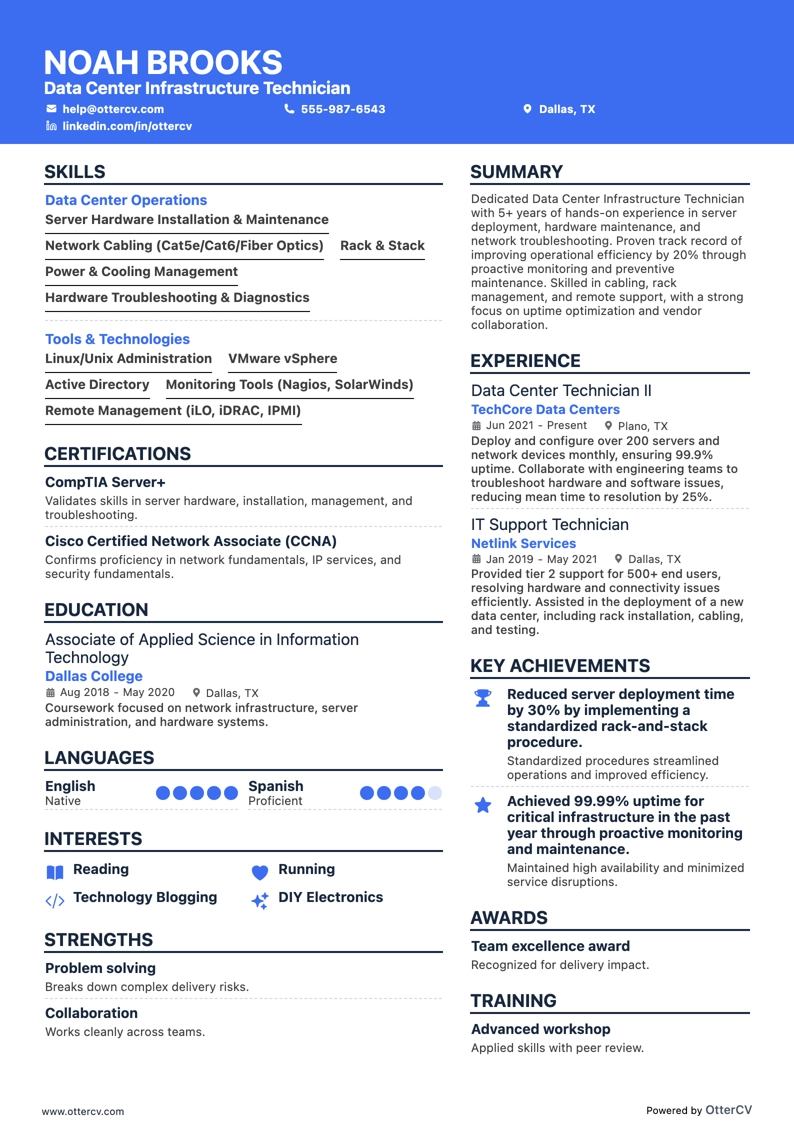
This version is clearly stronger. Beyond a better-defined position, it improves the resume in three important ways:
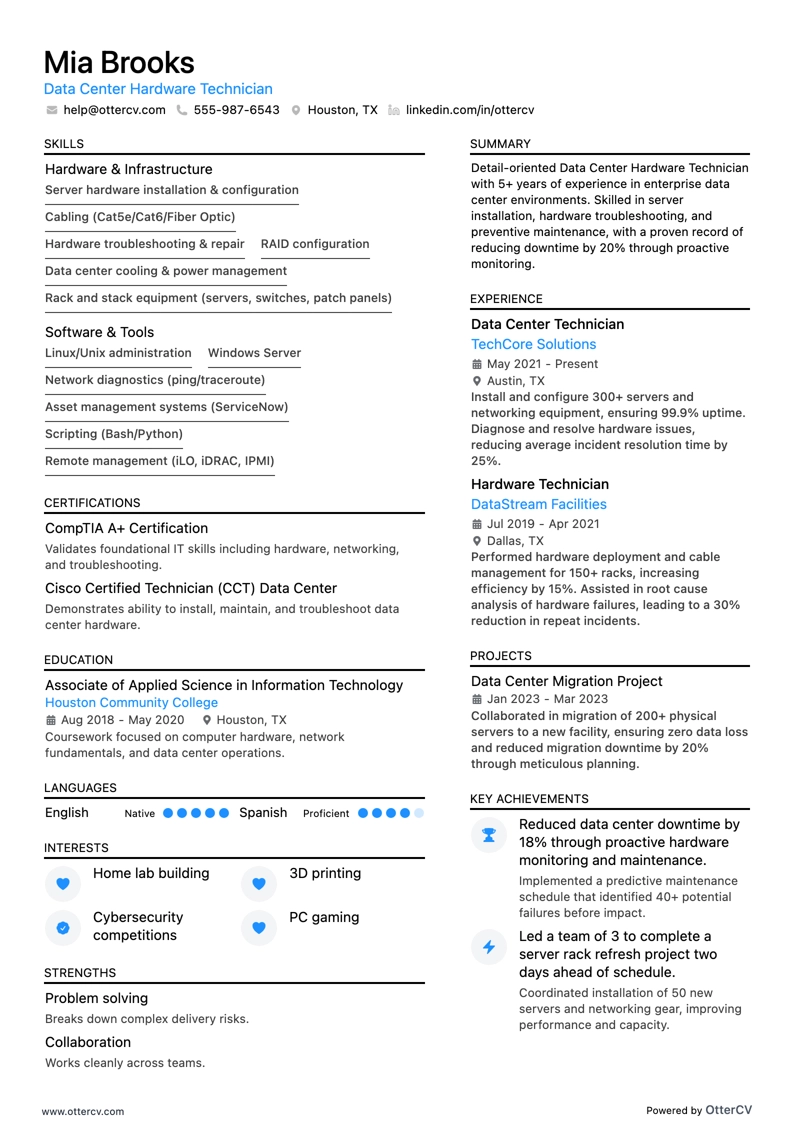
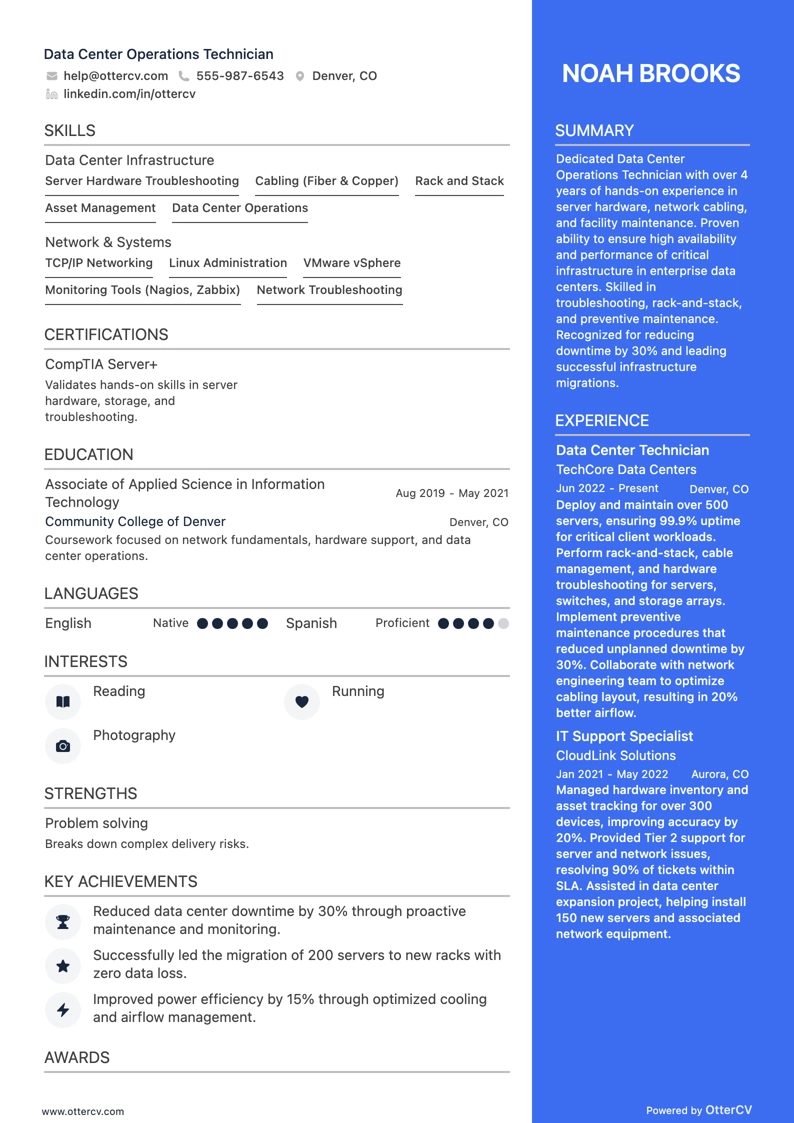
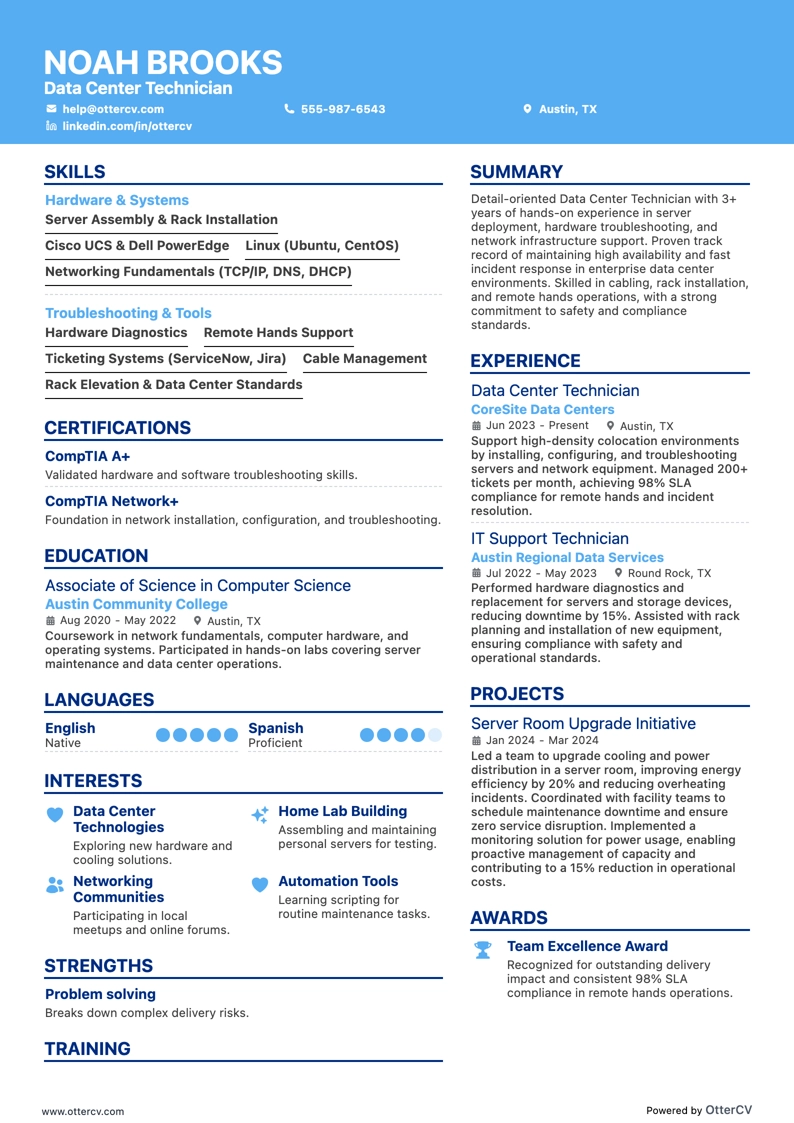
- Quantifiable achievements: It includes specific metrics, such as “30% faster processing speed,” to show the candidate’s measurable impact.
- Varied skills and responsibilities: It covers a broad range of duties, from emergency planning to technical support, which highlights adaptability and a well-rounded skill set.
- Leadership and problem-solving: Phrases like “Initiated emergency planning” emphasize initiative, leadership, and a strategic approach to complex challenges.
To build a resume this strategically, you need to know how to measure your impact so you can stand out. The next section explains how to do that.
How to quantify impact on your resume
Quantifying impact means backing up your experience with concrete examples. No fluff and no exaggeration—just real results. Here are some ways to do it:
- Uptime percentage: Show the uptime you maintained to demonstrate reliability and operational consistency.
- Data volume: Mention the amount of data you managed, whether in terabytes or petabytes, to show experience with large-scale environments.
- Servers upgraded: Include how many servers you set up or upgraded to highlight hands-on technical ability.
- Faster responses: Note improvements in response times to show speed and efficiency.
- Saving money: Describe cost savings from improved efficiency or greener operations.
- Security compliance: List the number of security audits you passed to show your commitment to protecting data.
- Energy efficiency: Share measurable improvements in energy use to demonstrate a focus on sustainability.
- Learning and leading: Mention training sessions you completed or led to show growth, initiative, and support for team development.
If you support your resume with real numbers, it will make a much stronger impression.
Starting out fresh? The next section covers tips for newcomers to the field.
How to write an entry-level data center technician resume
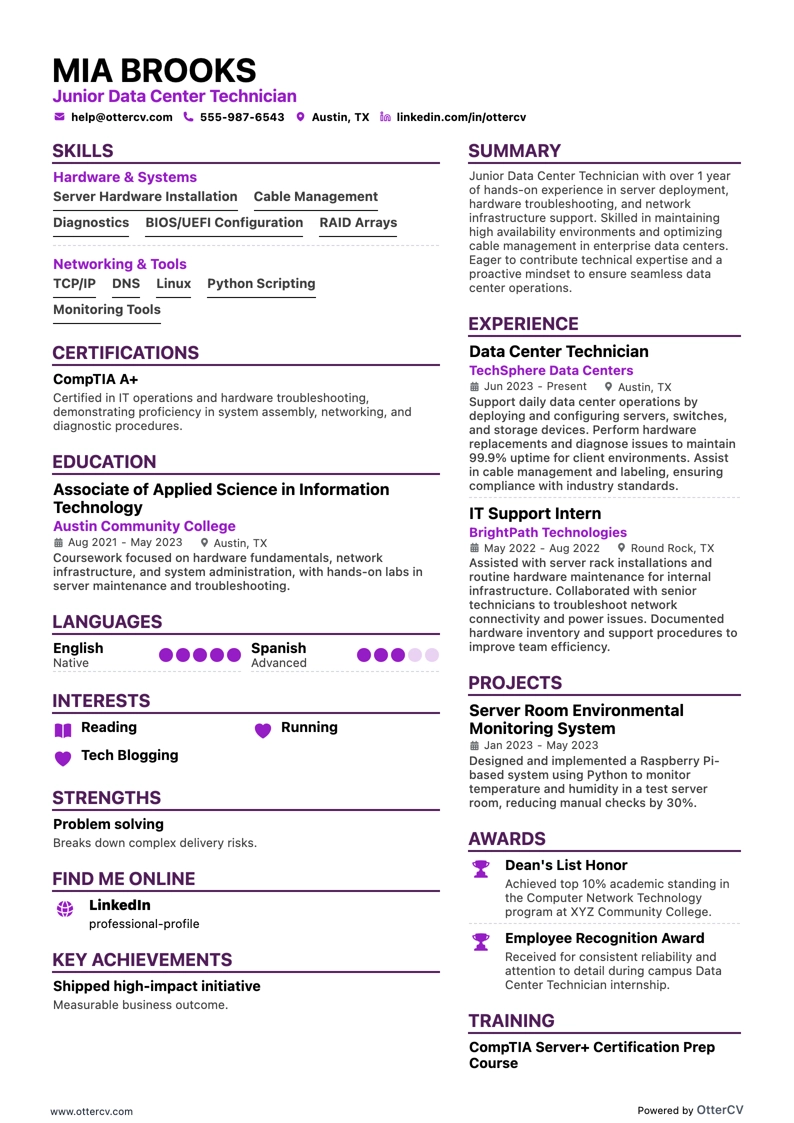
Everyone starts somewhere. If you’re preparing for your first data center job, focus on showing your willingness to learn, your adaptability, and your IT fundamentals. Breaking in without prior experience can feel intimidating, but it is possible.
To make your resume stand out, focus on the following:
- A strong objective statement that highlights your career goals and enthusiasm for the field.
- A detailed education and training section, especially if you have relevant coursework or certifications in IT, networking, or computer science.
- A proven skill set, ideally paired with the tools or technologies you have used, even in a learning environment.
- Transferable experience, such as internships, part-time jobs, or volunteer work related to IT. Be sure to describe the projects or tasks you completed.
- Relevant certifications, such as CompTIA A+ or Cisco’s CCNA, along with any training courses related to data center operations. Some employers may even cover certification costs as part of your compensation while you train and work with them.
You can also include class projects or personal tinkering to show hands-on ability and genuine interest in technology. Then follow the formatting guidelines above and you’re set.
Junior data center technician resume sample