How to quantify impact on your resume
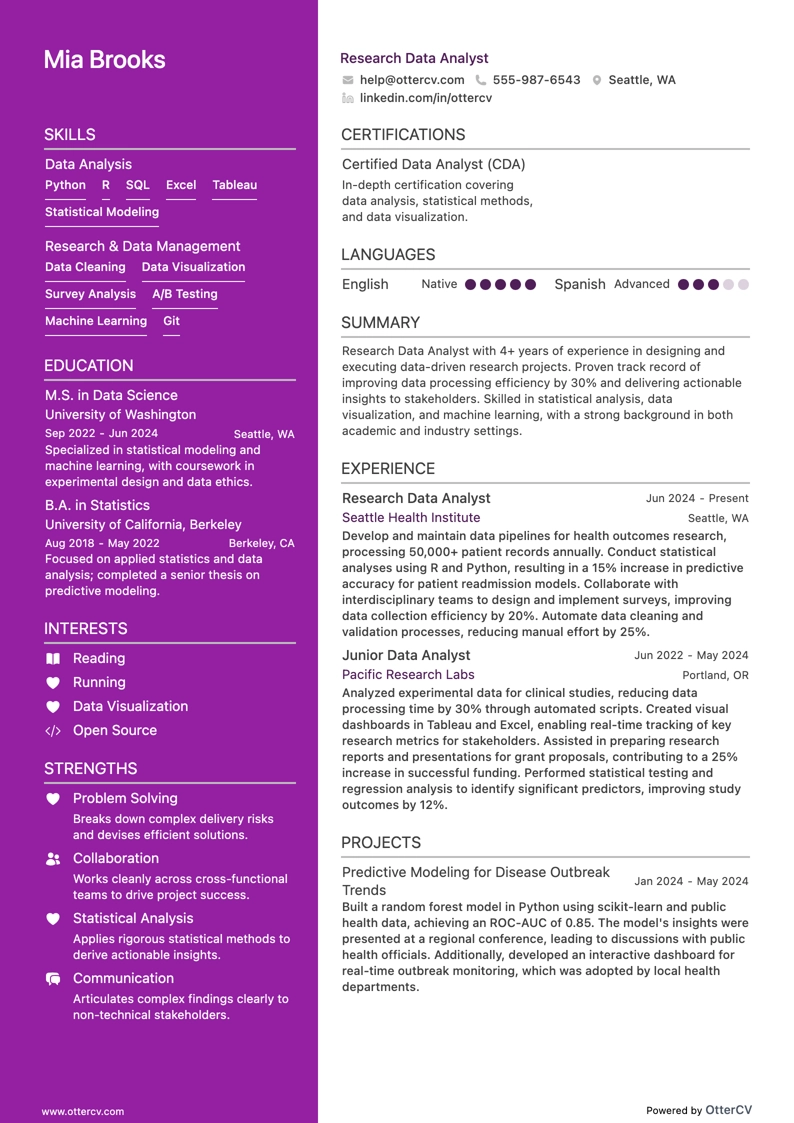
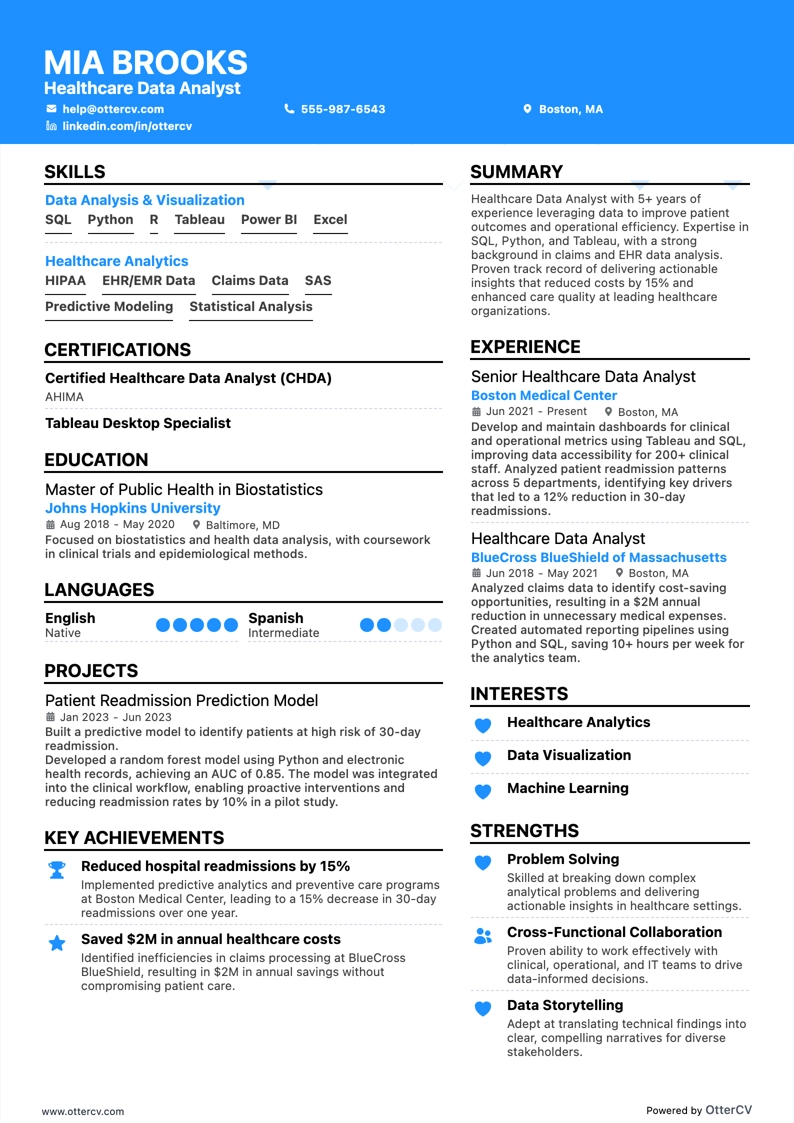
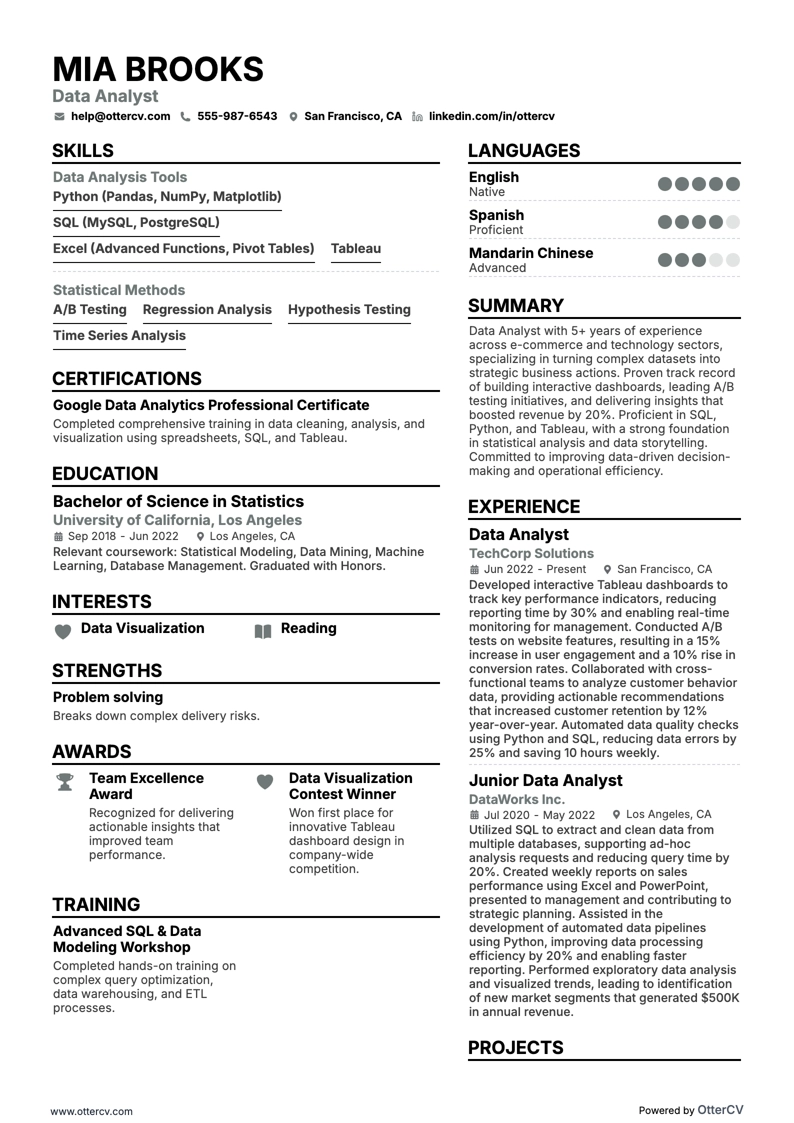
Quantitative metrics help you make a stronger impression on recruiters because they provide clear evidence of your abilities. Numbers, percentages, and specific results turn broad statements into convincing proof of your effectiveness.
Here are some of the best quantifiable results to show the scope of your impact:
- Increased sales through data analysis: Quantify the percentage or amount your data analysis strategies contributed to sales growth.
- Enhanced efficiency in data processing: Show how your improvements or innovations reduced the time or resources needed for data processing tasks.
- Achieved cost reduction: Include the cost savings realized through your data-driven optimizations, whether in percentage or dollar amount.
- Boosted customer satisfaction: Mention any increase in customer satisfaction scores or ratings driven by your analytical insights.
- Accelerated project completion: Describe time saved in project delivery, such as finishing ahead of schedule, due to your management or analytical skills.
- Influenced decision-making: Explain how your data insights shaped key business decisions and what changes in market share or business growth followed.
- Improved data accuracy: Quantify improvements in data accuracy or reductions in errors achieved through validation or cleaning processes.
- Enhanced predictive model accuracy: State the percentage improvement in the accuracy of the predictive models you developed.
- Streamlined reporting processes: Estimate the hours or resources saved each week or month through more efficient reporting systems or tools you implemented.
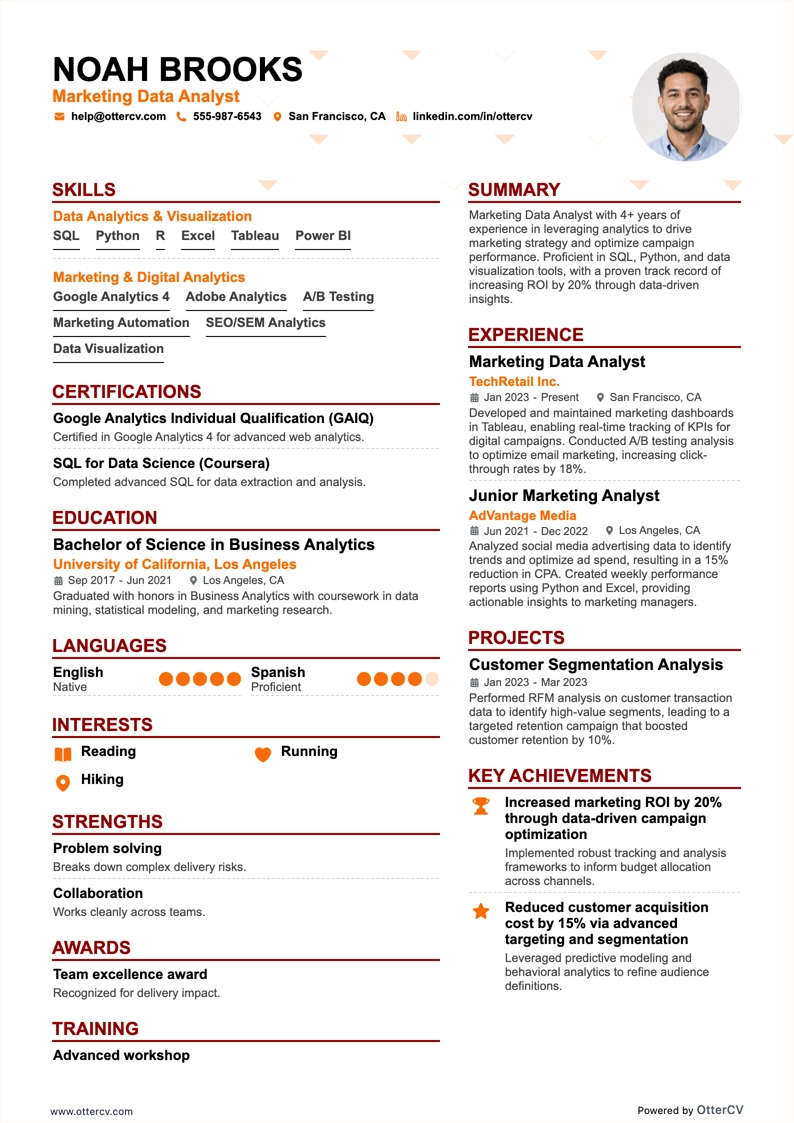
- Optimized marketing campaigns: Highlight improvements in outcomes such as lead generation or conversion rates resulting from your data-driven strategies.
How do I write a data analyst resume with no experience
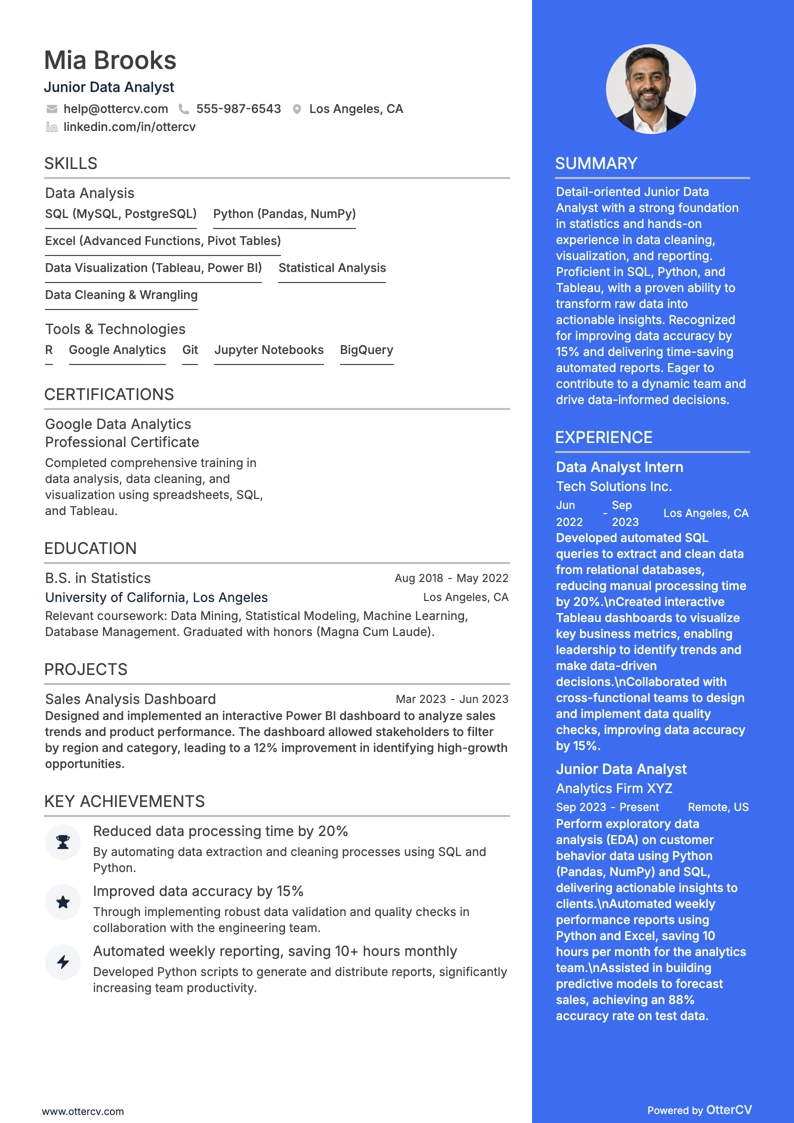
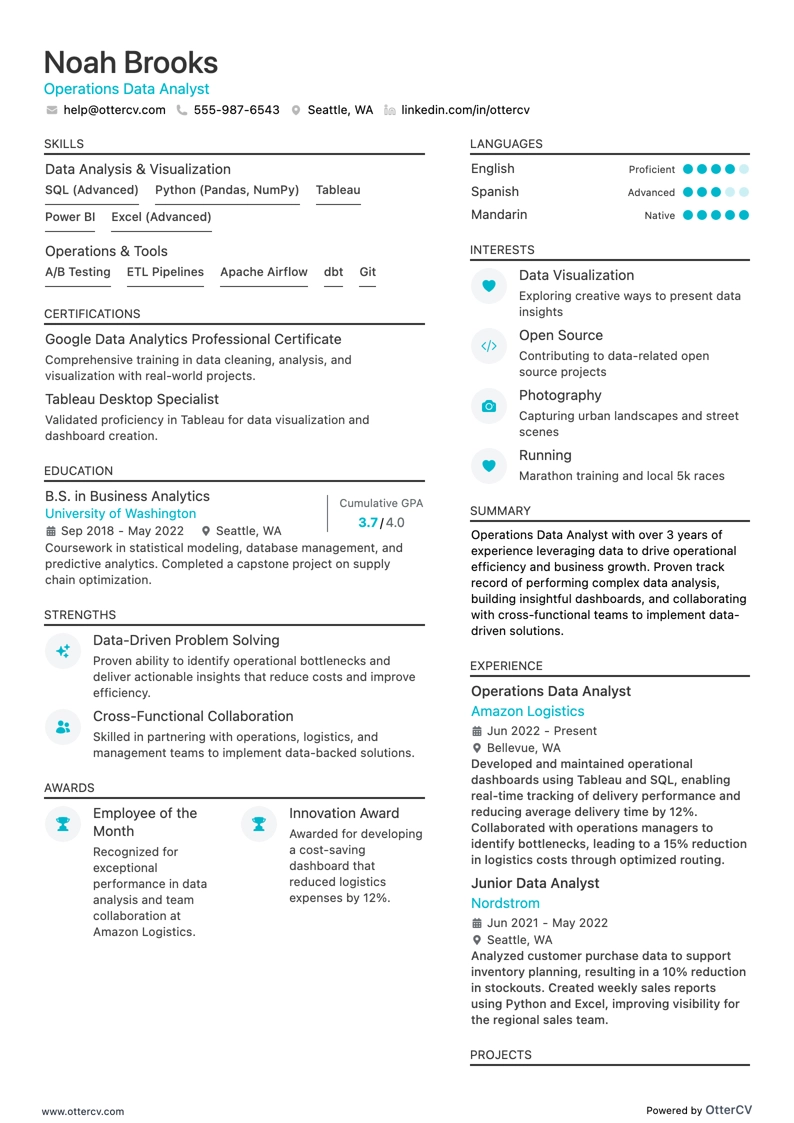
Starting a career as a data analyst can feel both exciting and intimidating, especially when you are just beginning. A lack of experience may seem like the reason you are missing out on roles you want, but every experienced data analyst started in the same position.
The key to breaking into the field is building a resume that showcases your potential and presents you in the best possible light. That is your first step toward landing a data analysis role.
Here are a few ways to build a strong resume without direct experience:
- Highlight educational achievements: Emphasize relevant coursework, degrees, or certifications related to data analysis.
- Showcase transferable skills: Skills from other fields, such as problem-solving and attention to detail, can be highly relevant to data analysis.
- Include relevant projects: Add academic or personal projects that involved data analysis.
- Demonstrate enthusiasm for learning: Show your commitment to growth through courses, self-teaching, or continued study.
- Leverage internship experience: Use internships to demonstrate adaptability and workplace skills.
- Craft a compelling resume objective: Write an objective that highlights your passion and career goals in data analysis.
How to list your hard skills and soft skills on your resume
When hiring data analysts, recruiters look for candidates with a strong mix of technical skills and interpersonal strengths. These abilities are essential for handling daily responsibilities and succeeding in the role.
Before deciding how to present skills on a resume, it helps to understand the difference between soft skills and technical skills.
Soft skills are personal and interpersonal abilities that shape how you work with others and handle challenges in a professional environment. For data analysts, these can include problem-solving, communication, and teamwork.
Technical skills are the specific capabilities needed to perform the job. In data analysis, these include tools and languages such as SQL, Python, R, and Excel, as well as data visualization platforms like Tableau or Power BI.
Combining both soft and technical skills can help your resume stand out. Here is how to present them effectively:
- Read the job description carefully to identify the skills the employer values most.
- Match your skill set to those requirements, highlighting both technical and soft skills.
- Place your strongest and most relevant skills at the top of your skills section.
- Give those skills context by showing how you applied them in your summary, experience, and achievements sections.