Taylor makes every resume section work harder by adding industry-specific keywords that reflect the skills and knowledge needed for the job. He uses the header and summary especially well, including terms that recruiters and applicant tracking systems often search for.
He also lists “Home fragrance enthusiast” in the Passions section, which reinforces his experience in the fragrance industry. This is a strong example of tailoring each section of a resume to the industry you work in.
Here are a few more reasons Taylor’s resume stands out:
- Tailored experience and achievements: The resume highlights accomplishments that are directly relevant to e-commerce and product development, such as leading a D2C platform launch that resulted in a 40% revenue increase and managing the development and launch of 10 innovative products. This shows a clear impact on business growth and product innovation.
- Quantifiable results: Several bullet points include measurable outcomes, such as a “40% year-over-year increase in revenue” and “SEO strategies that improved organic search rankings by 50%.” These metrics make the resume more credible and persuasive.
- Relevant skills and certifications: The resume includes skills and certifications closely tied to an e-commerce specialist role, including “E-Commerce Management,” “SEO,” “Digital Marketing,” and “Advanced Shopify Techniques.” This highlights both expertise and a commitment to professional development.
A two-column format can work especially well for someone with many years of experience and a wide mix of technical, business, and creative skills.
To create a resume like this, start by formatting it to meet industry standards.
How to Format a Brand Manager Resume
Formatting a resume today is less about manually adjusting margins, line spacing, and font size, and more about choosing the right sections and a clean, appealing design. Most word-processing programs already use standard document settings.
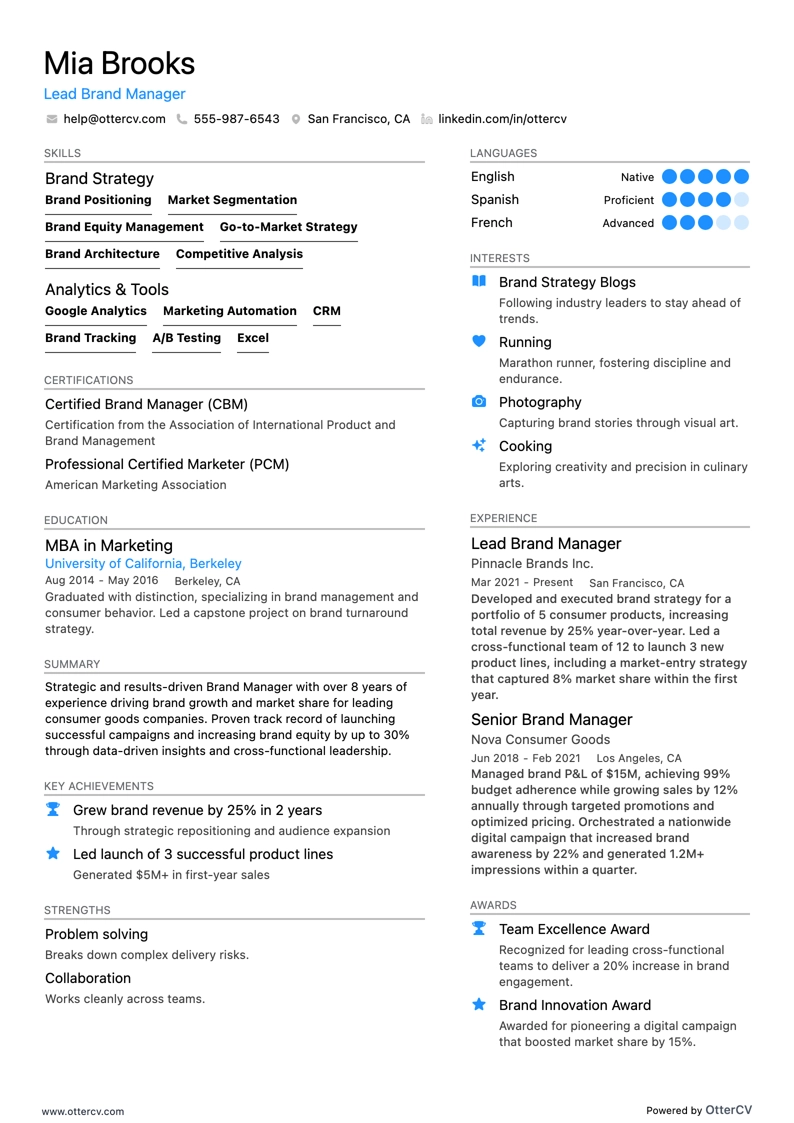
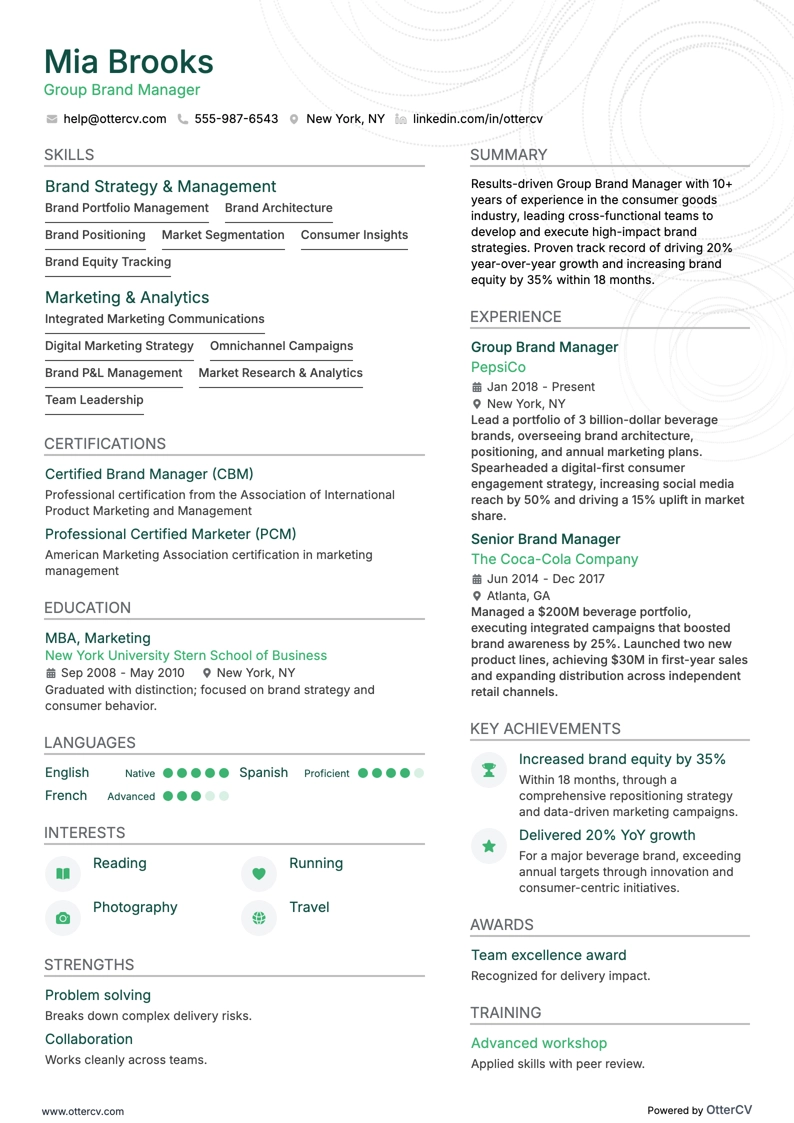
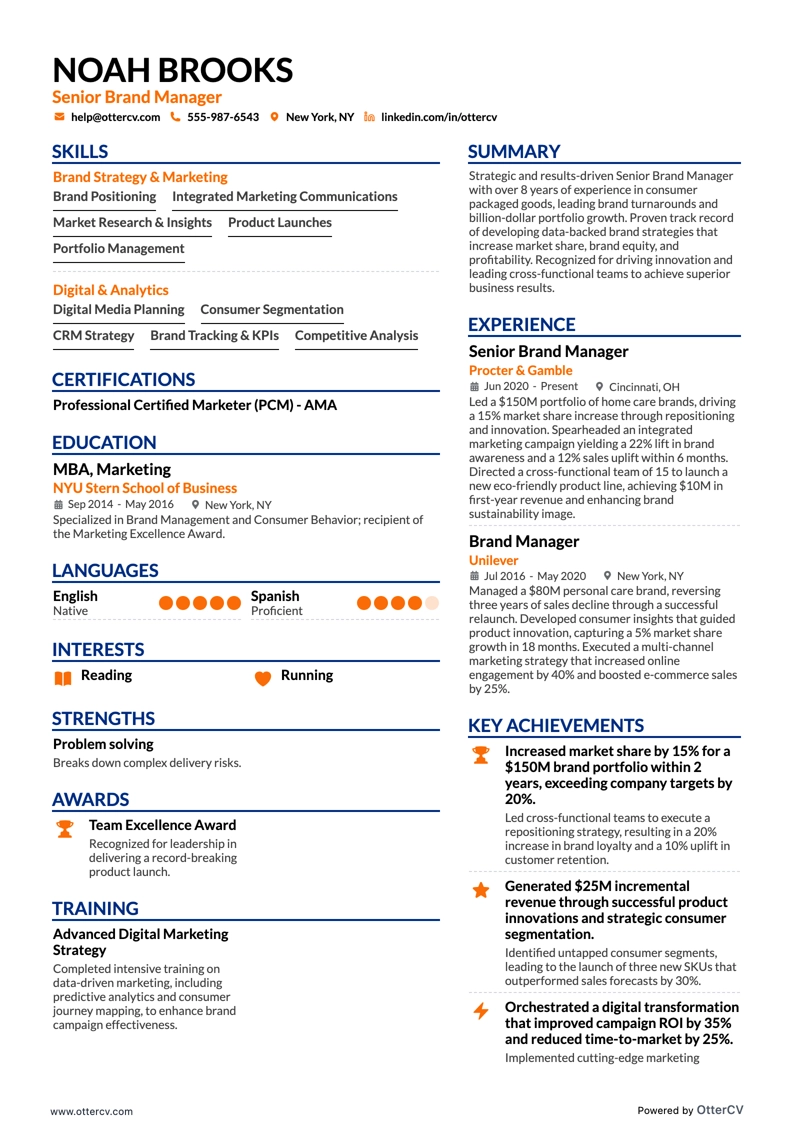
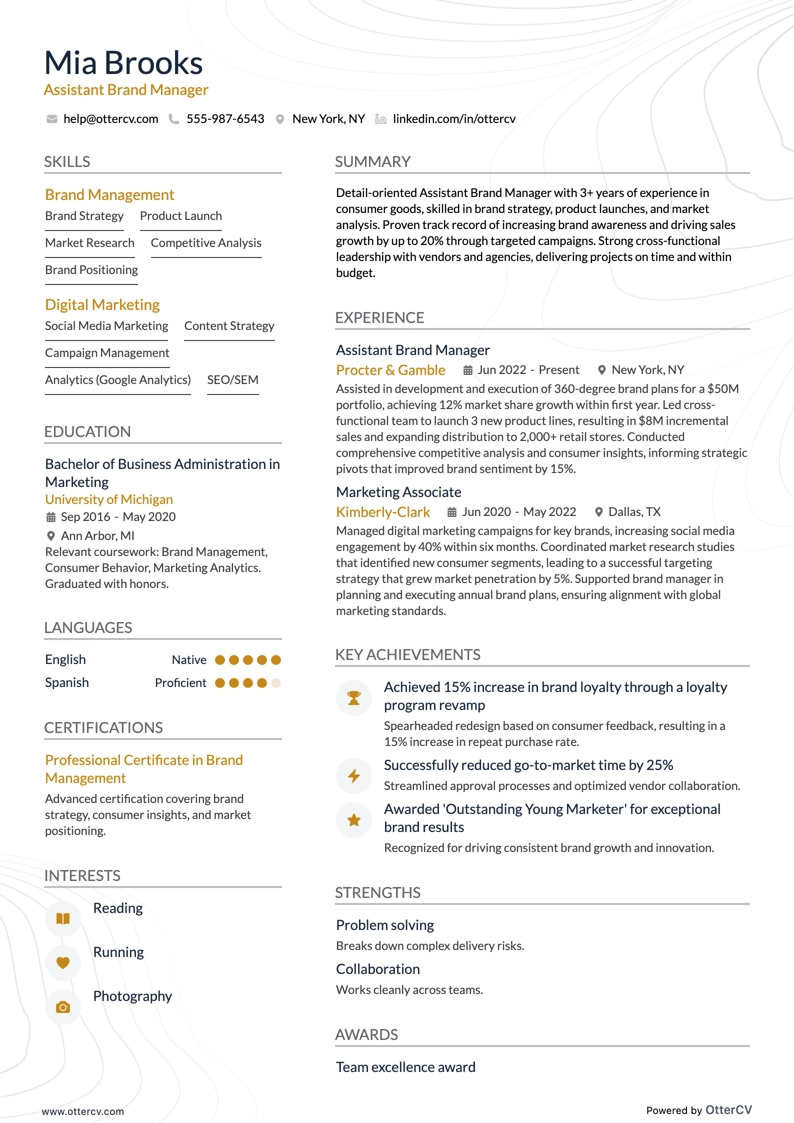
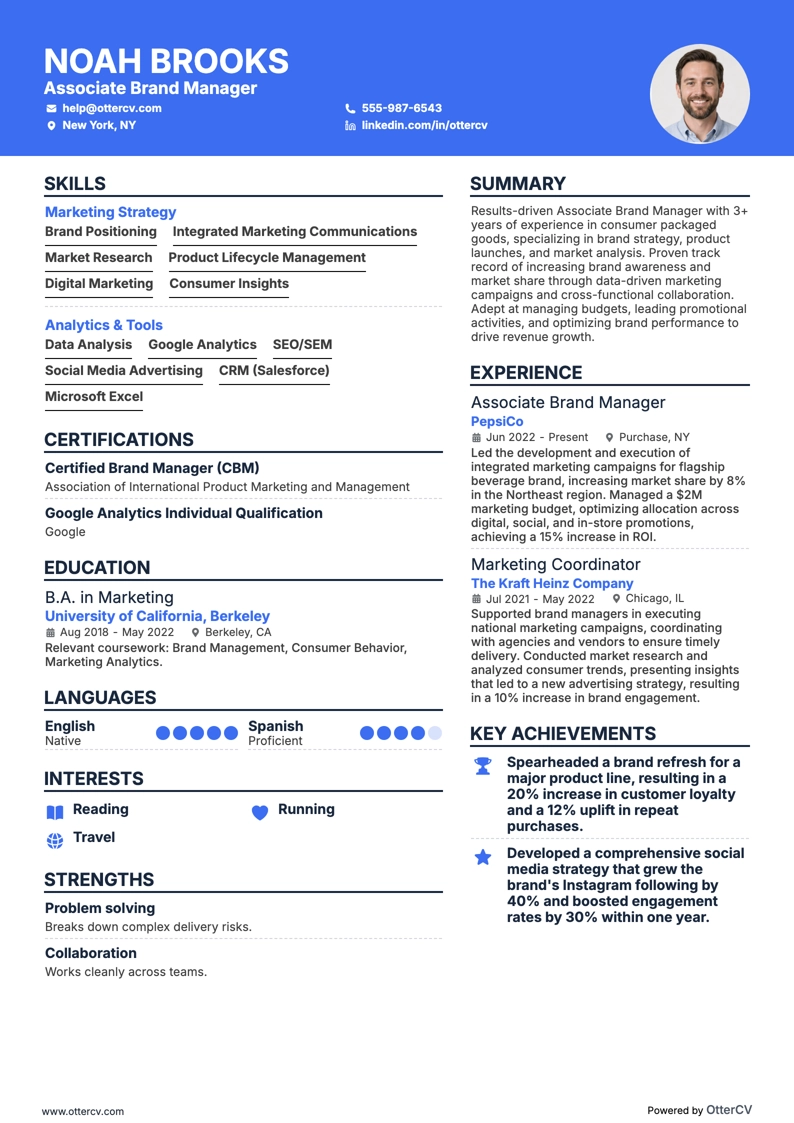
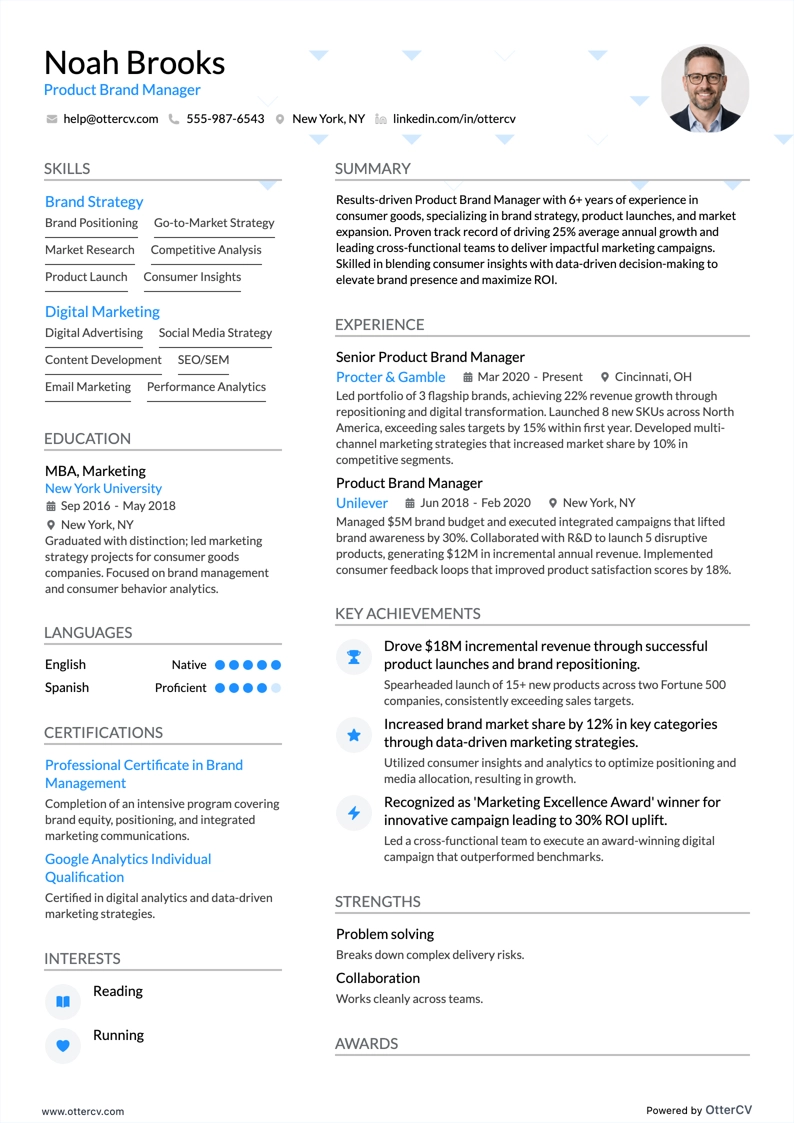
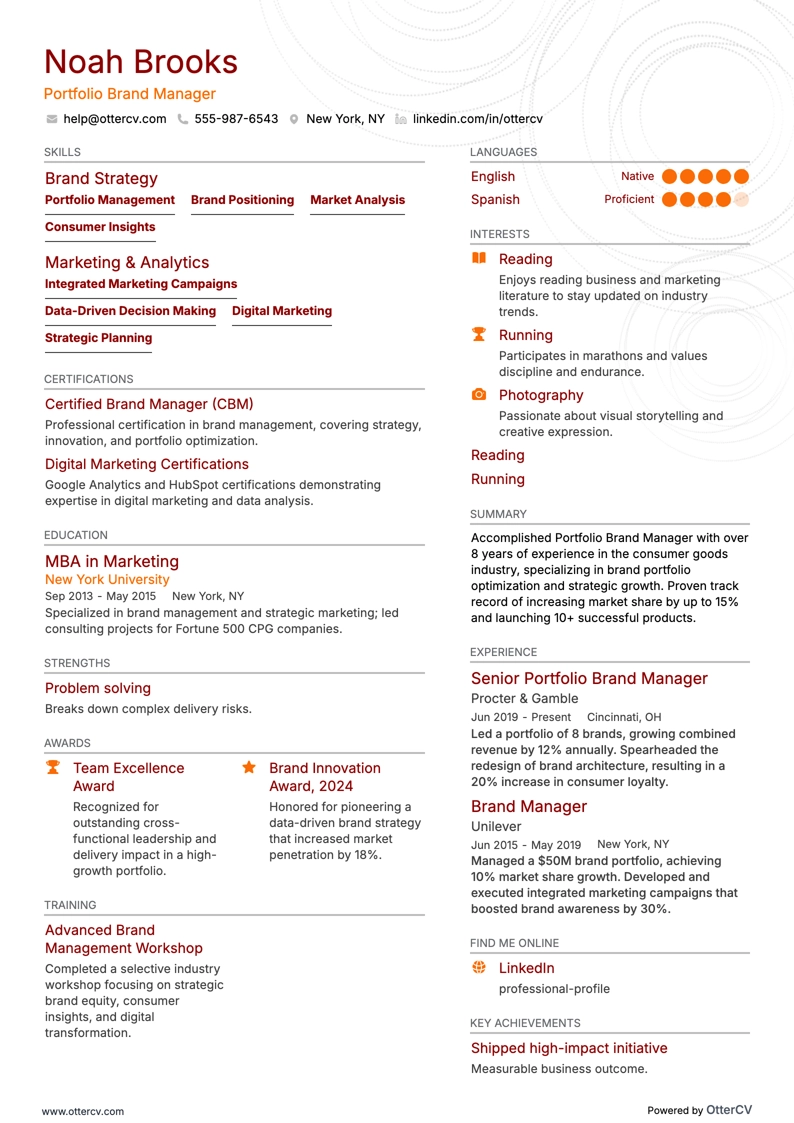
Most resumes today use either a single-column or two-column layout. When deciding which format to use, keep these points in mind:
- The maximum page length for all resumes is two pages.
- A two-column layout allows more information to fit on a single page.
- Applicant tracking systems (ATS) accept two-column formats.
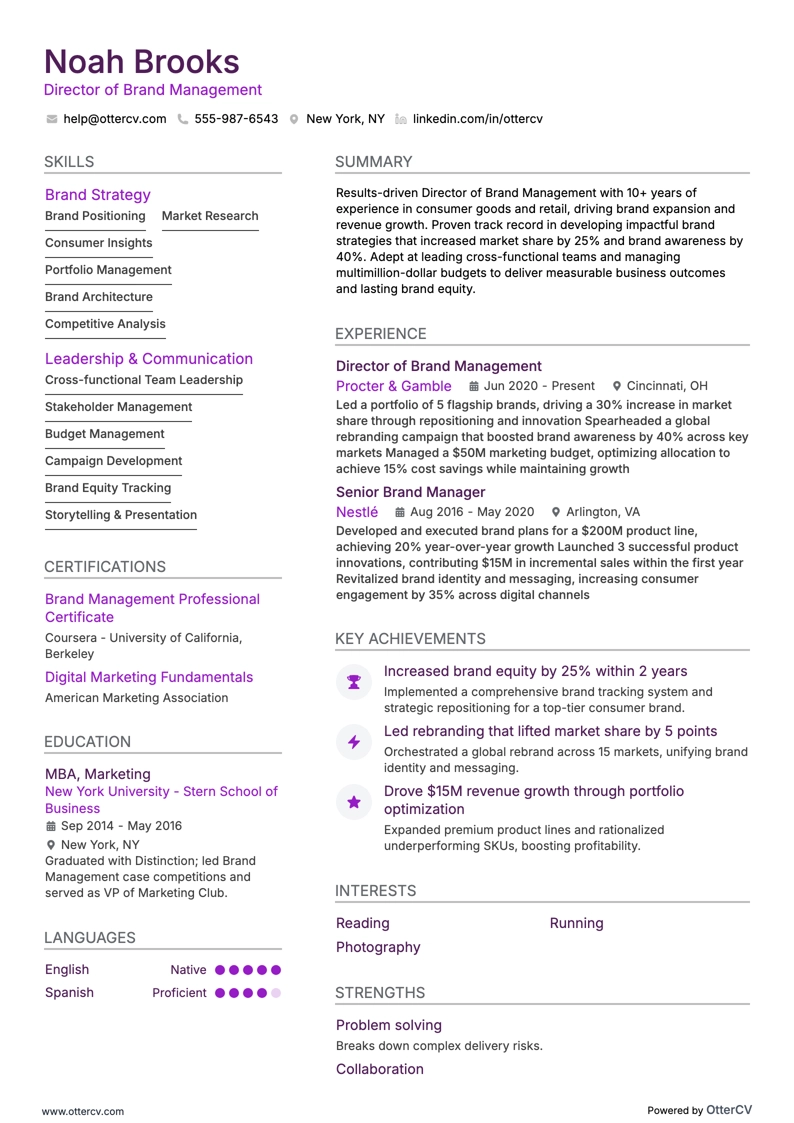
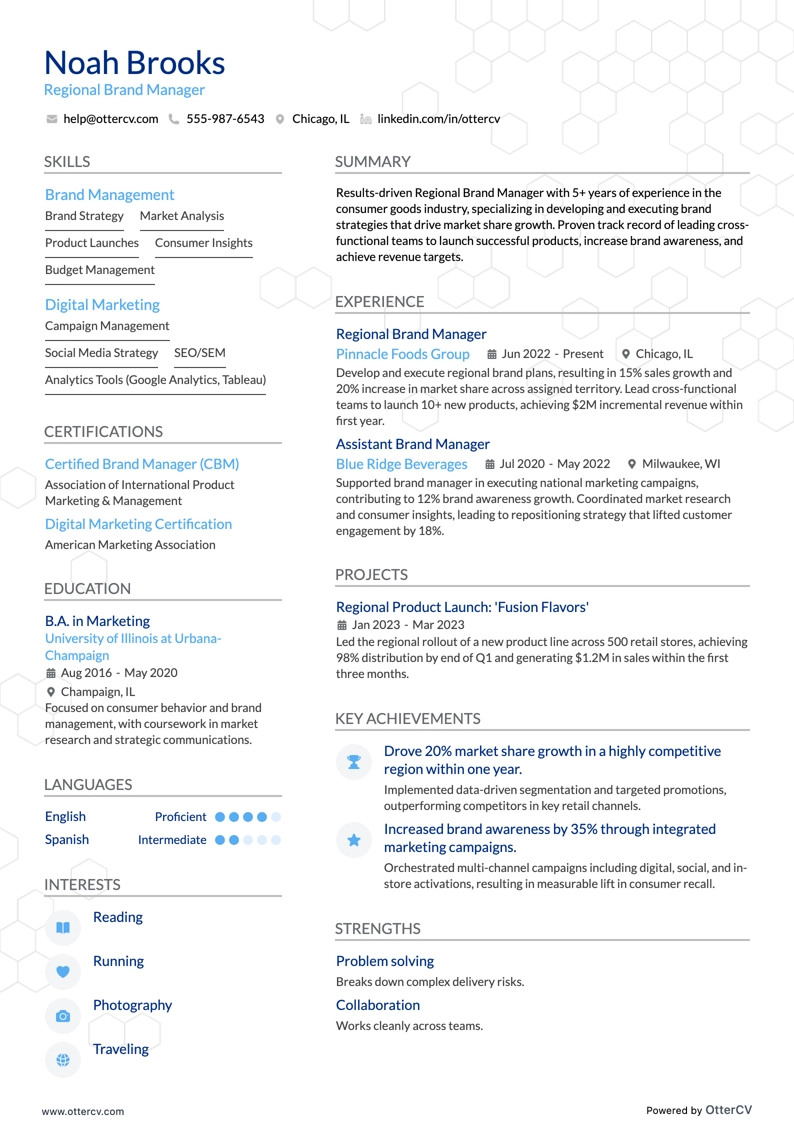
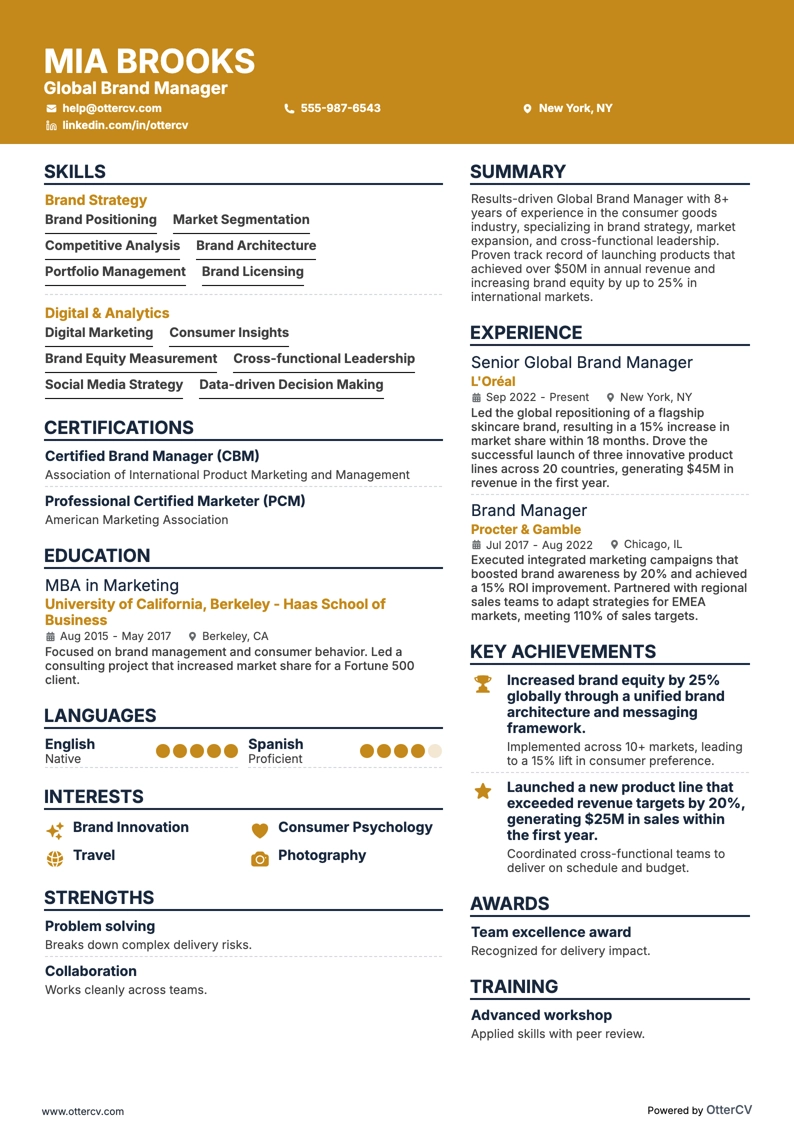
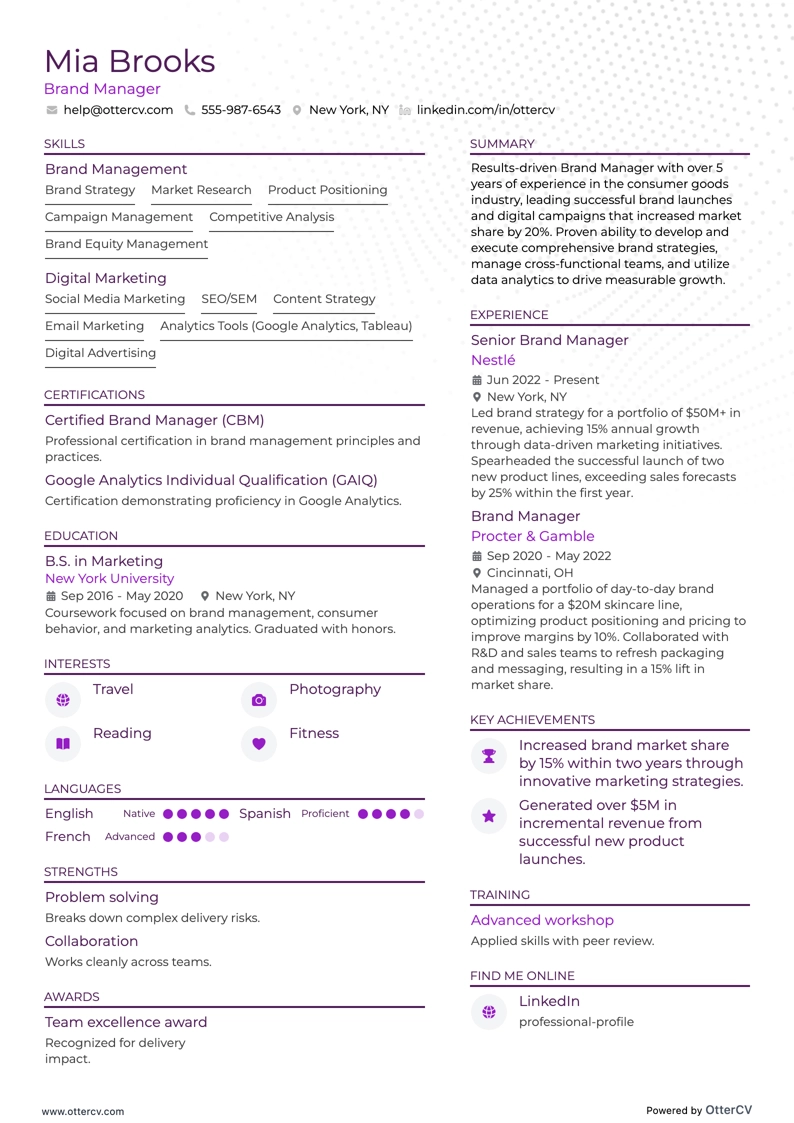
Brand managers often have 5-10 years of relevant work experience to include, so a two-column format may be better suited to candidates with a longer work history and a broad range of technical, business, and creative skills.
The final layout is your choice. Try both single-column and two-column resumes to see which one you prefer.
Whichever format you choose, save your resume as a PDF document (.pdf) unless a different file type is specifically requested. A PDF helps preserve the appearance of your resume across operating systems and screen sizes.
Choosing the right brand manager resume font
There are over 200,000 fonts available, but most are not appropriate for resumes. For a resume or other professional document, the best choice is usually a serif or sans serif font. Common options include Arial, Courier, and Times New Roman. That narrows the field to a more manageable 450 fonts.
Serif and sans serif fonts offer a modern, professional look and are widely used today. Echocv resume templates include several modern sans serif fonts, such as Volkhov, Rubix, Exo 2, Lato, Raleway, and Montserrat.
Different markets may also expect different resume formats. For example, a Canadian resume could vary in layout.
Is your brand manager resume ready to go? Before sending it to recruiters and hiring managers, run it through our resume checker for an in-depth analysis and tips on how to improve it.
Here are the five main resume sections that you want to include: