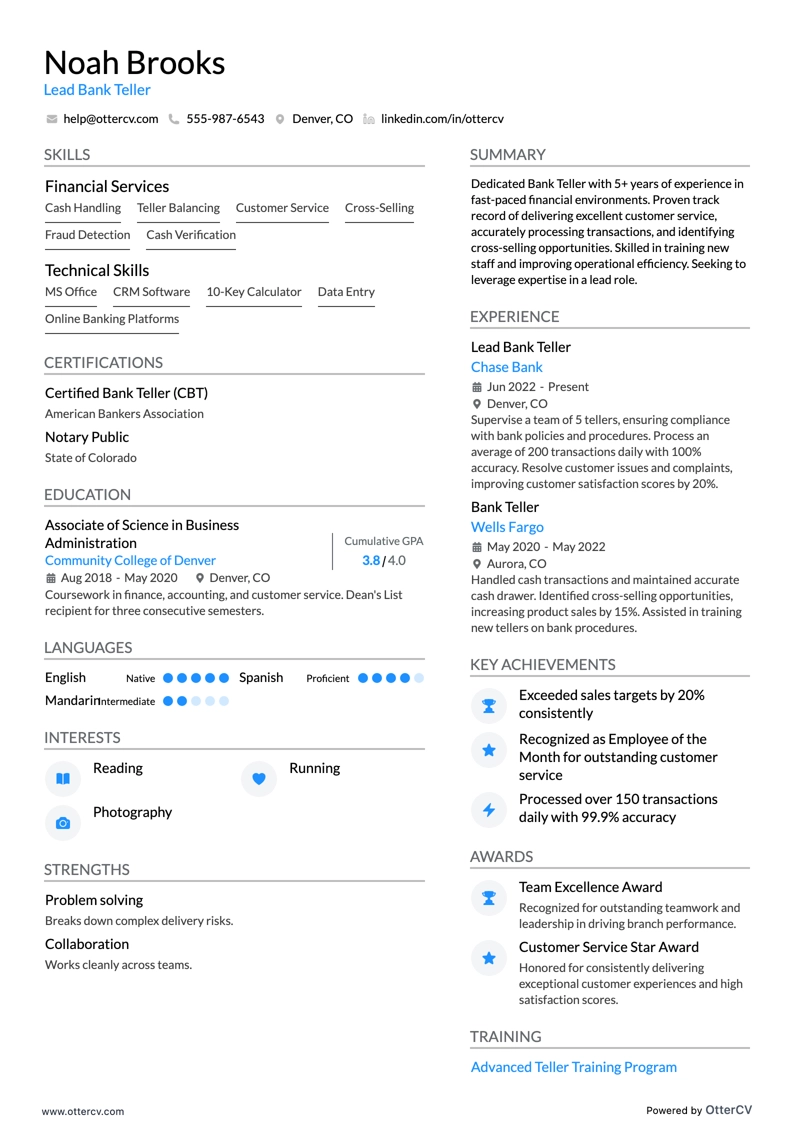
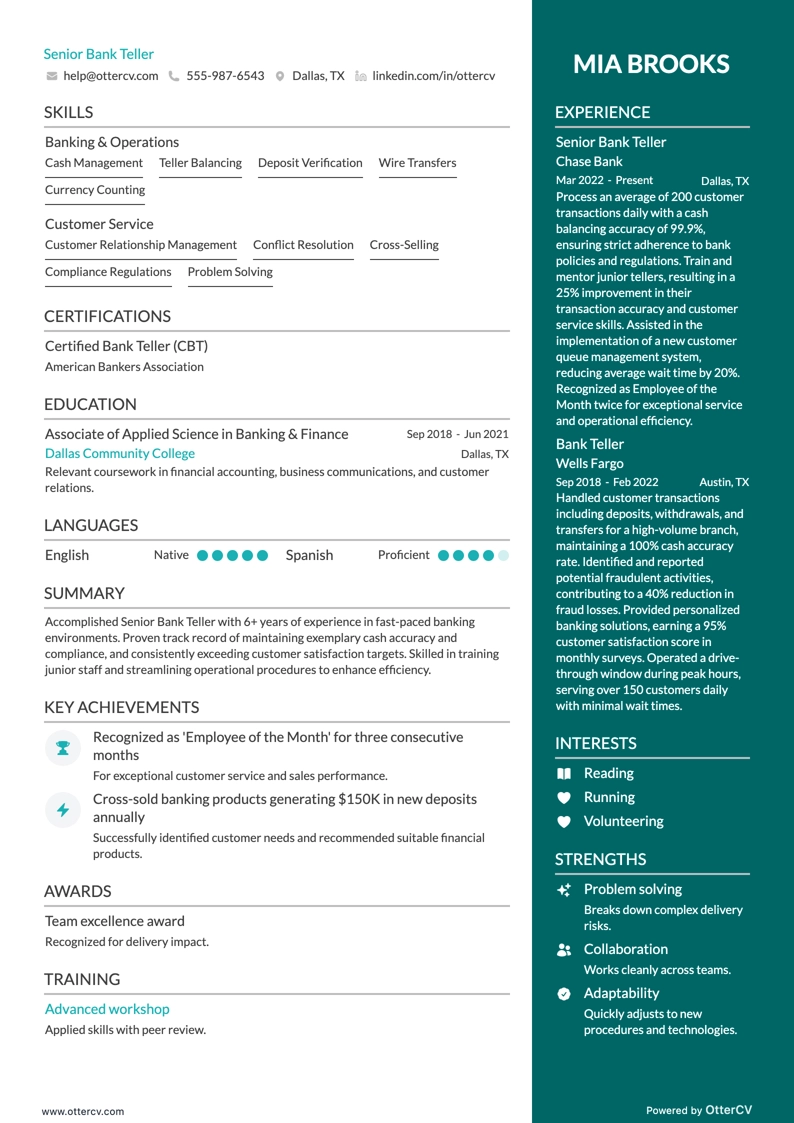
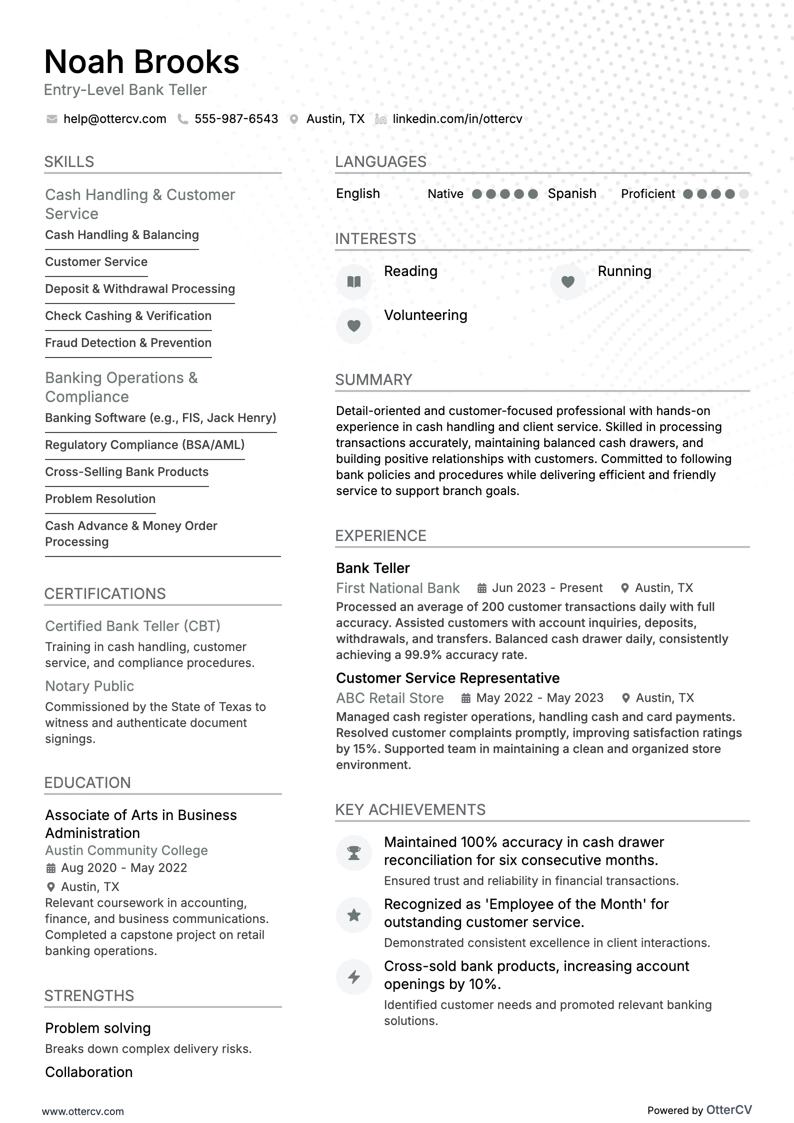
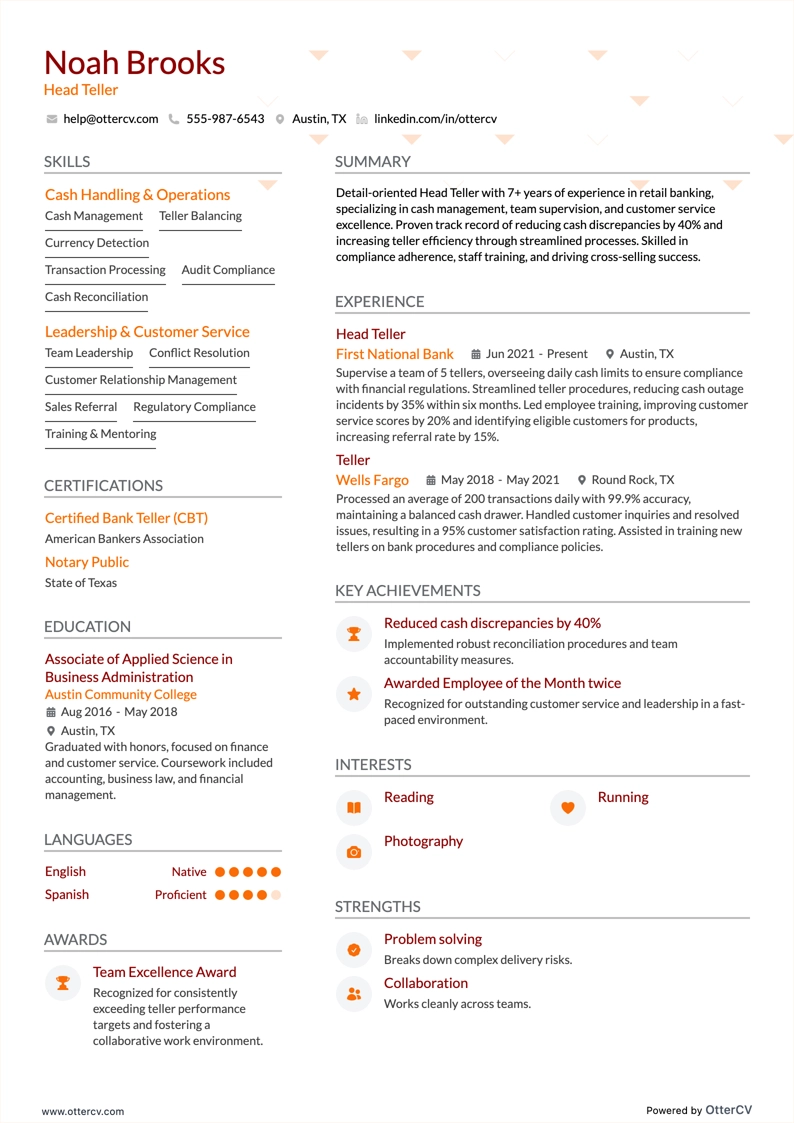
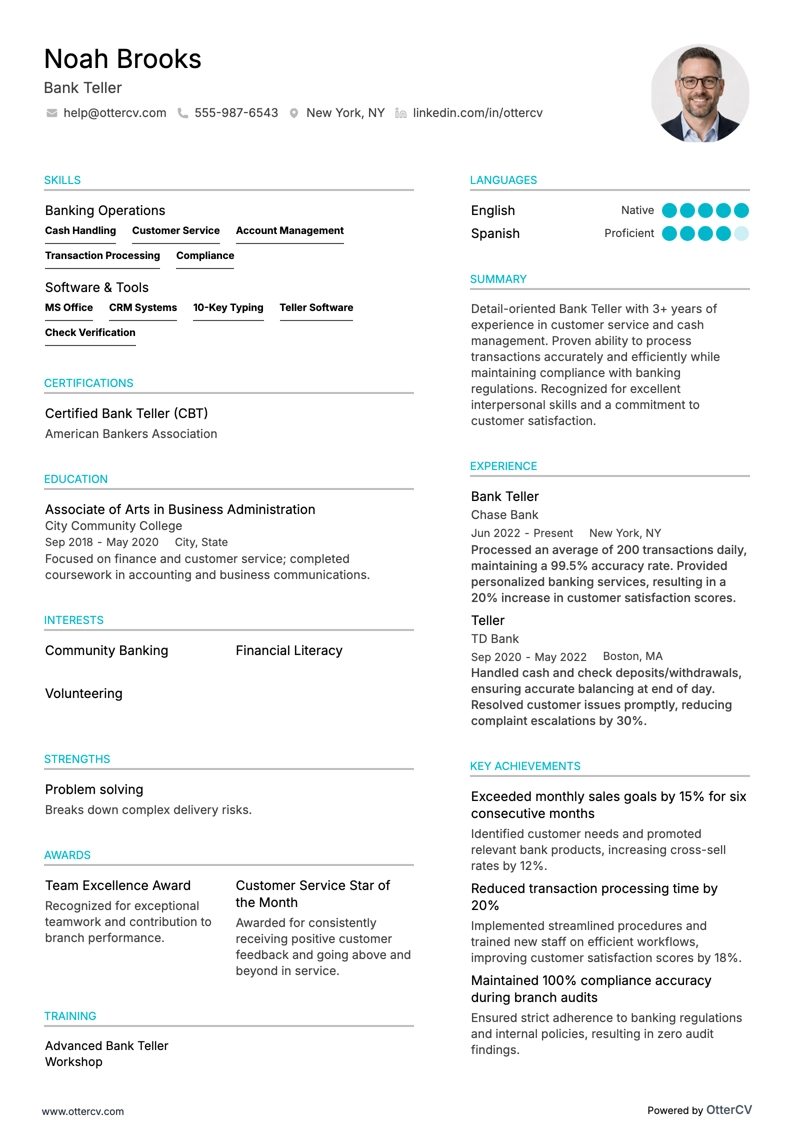
Writing a strong bank teller resume can be challenging because the role involves handling sensitive information. You need to present your skills and experience clearly without compromising confidentiality. Bank tellers often manage delicate financial conversations and resolve complex issues, so your resume should communicate that value while respecting privacy protocols.
Bank telling is expected to see about 29,000 openings each year. In a competitive job market, your resume needs to stand out. This guide offers practical examples and strategies to help you write each section effectively, describe your experience, showcase your skills, and stay discreet.
You’ll also learn how to:
- Format your resume to reflect professionalism and seriousness
- Tailor your experience section to match a real bank teller job description
- Describe your education and certifications
- Include an incomplete degree on your resume
- List abilities that reflect both technical knowledge and people skills
- Write a strong bank teller summary
- Show proactivity and dedication with thoughtful additional sections
Related guides:
- Banking resume example
- Loan officer resume example
- Loan processor resume example
- Phone banking resume example
- Credit analyst resume example
- Personal banker resume example
- Bank manager resume example
- Call center representative resume example
- Entry-level customer service resume example
How to format a bank teller resume
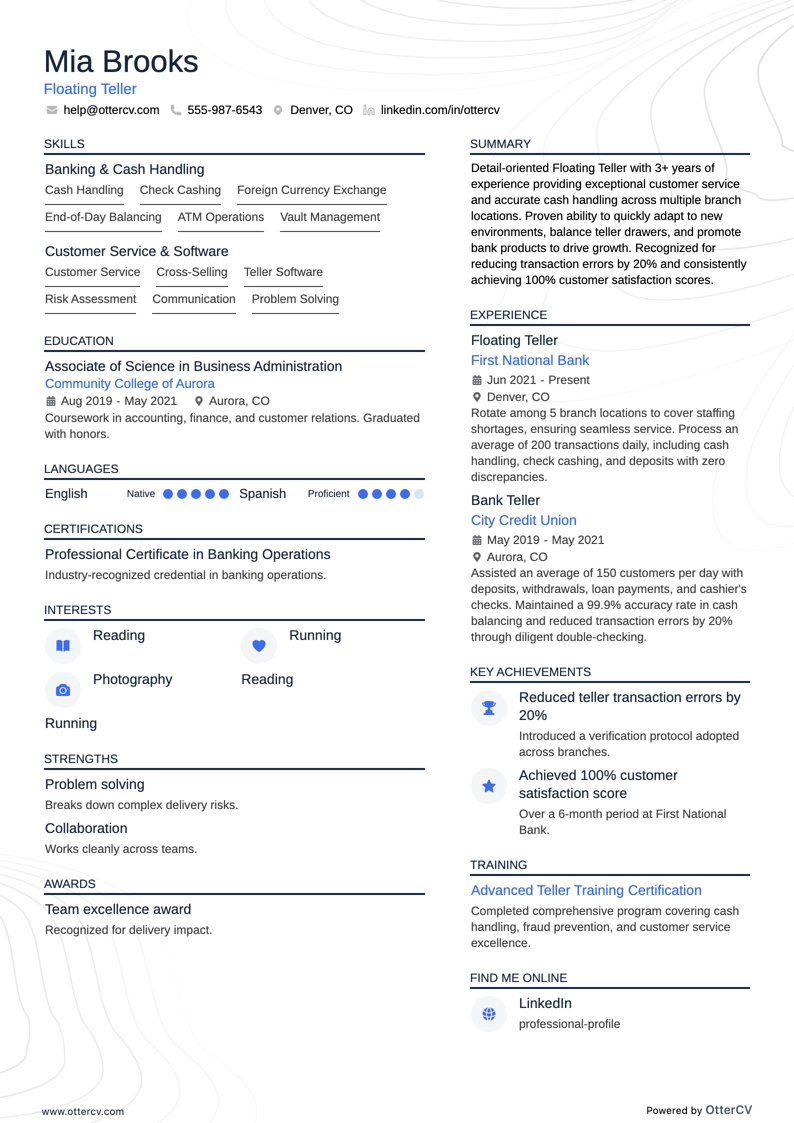
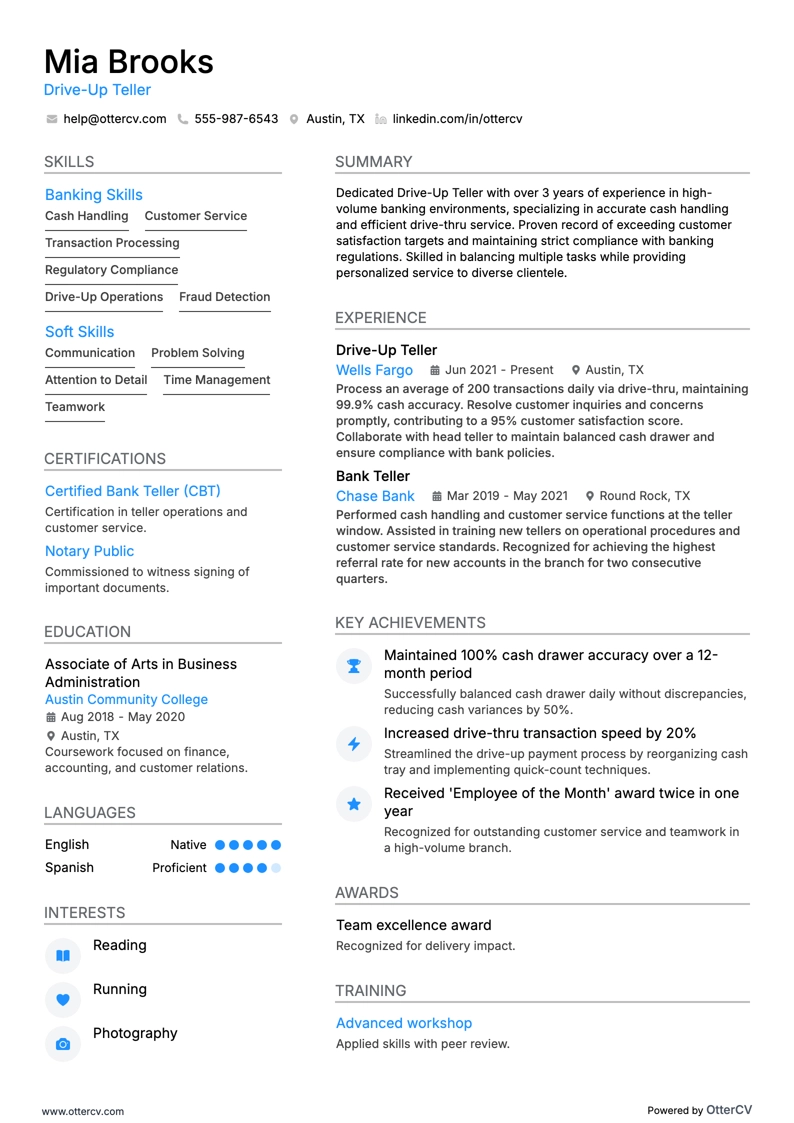
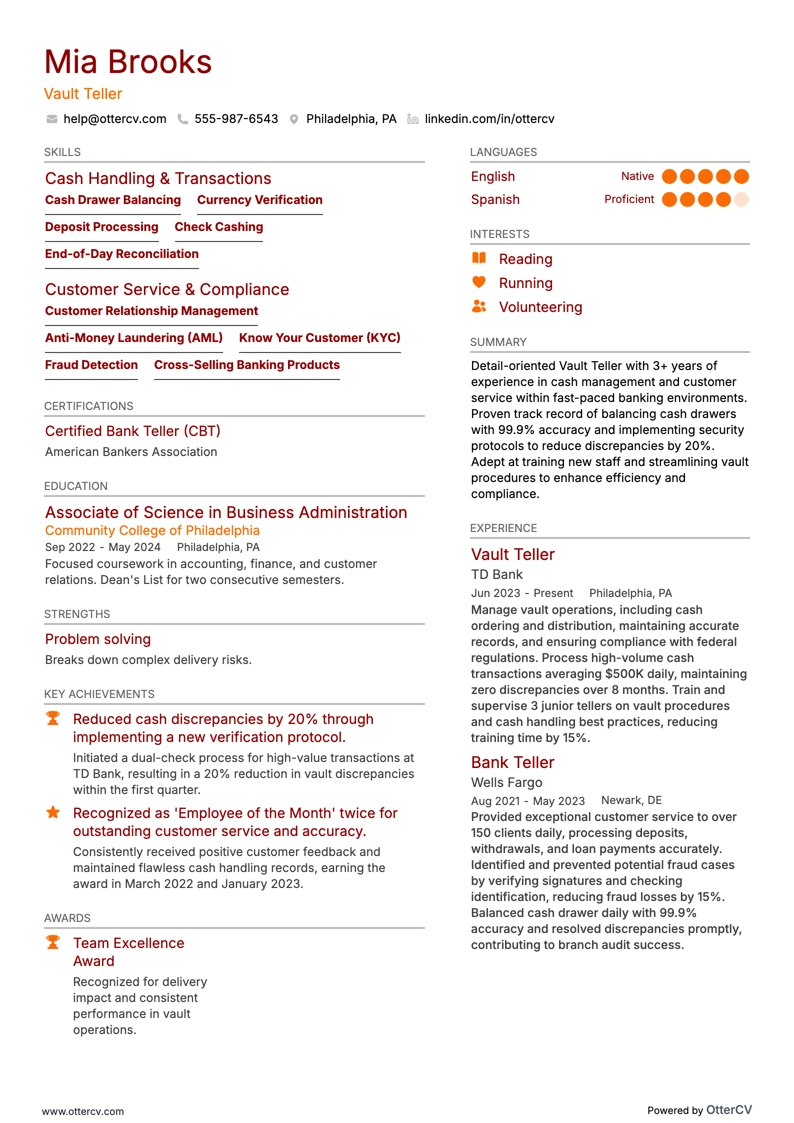
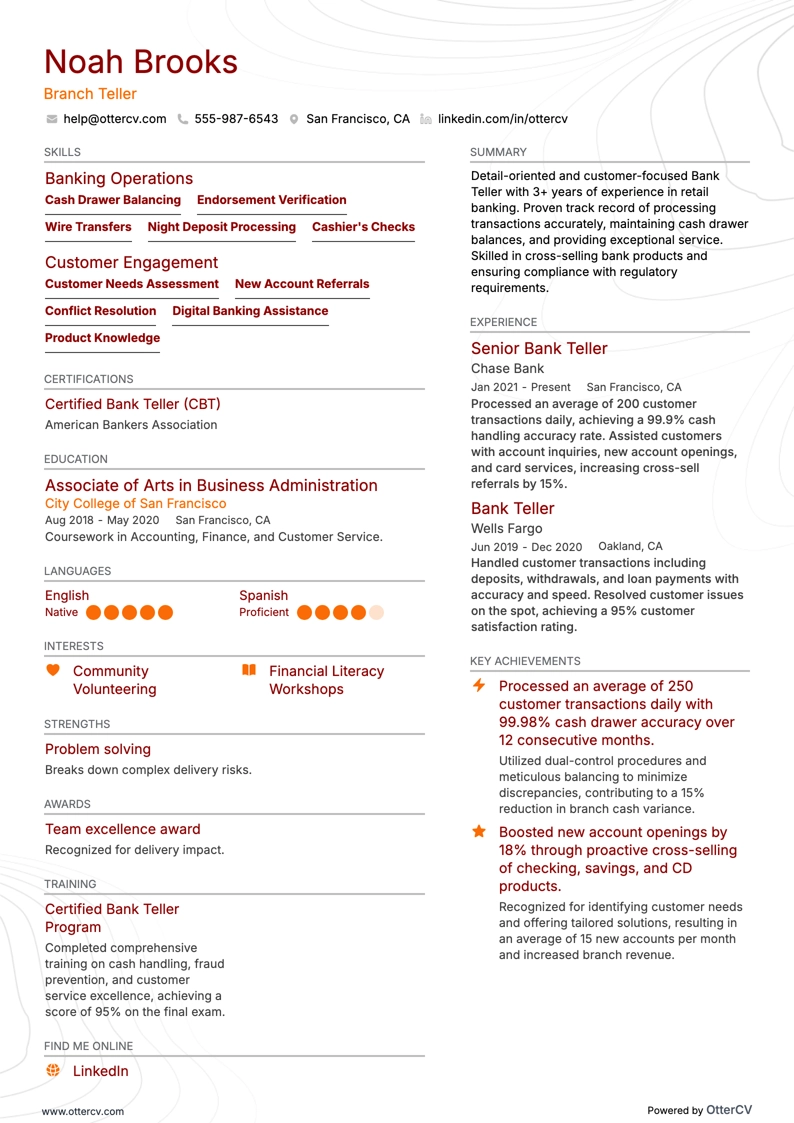
The first step in creating an effective bank teller resume is choosing the right layout. Your resume should be easy to read, scan, and remember. Choose between the three main resume formats: reverse chronological, functional, and hybrid. The best option depends on your goals and background.
- For candidates with bank teller experience, a reverse chronological resume is a strong choice. It lists your experience starting with the most recent role and gives employers a clear view of your career path.
- A functional resume emphasizes skills and abilities over work history, which makes it well suited for entry-level applicants or career changers.
- A hybrid resume, also called a combination resume, gives equal weight to skills and experience. If both are equally strong, this format may be the best fit.
Follow these resume writing guidelines to create a stronger application:
- Design, colors, fonts: Both 1- and 2-column designs work with ATS (Applicant Tracking Systems), so the choice comes down to preference. A small amount of color can help, but keep it professional with blue, dark green, or gray. Avoid too many color variations. For typefaces, choose modern sans-serifs such as Rubik, Lato, or Arial, and use a font size between 10 and 12 pt, with slightly larger headings.
- Resume length: Most professionals can present their experience on a 1-page resume. If you have extensive experience, a 2-page resume may be appropriate. Put the most important information on the first page and keep the header on both pages.
- Header and photo: Place your header at the top of your resume and include basic contact information such as your full name, email, and phone number. Whether to include a photo and your physical address depends on the job posting requirements.
- Resume format and naming: A PDF format is usually preferred because it preserves your design and is readable by ATS. For file naming, use your name, the word “resume,” and the job title. Avoid special symbols such as :, / or .
Also consider the location of your application. Canadian resumes, for instance, might follow a different structure.
Concerned about typos on your resume? Make sure it’s proof-ready with our free ATS resume checker.