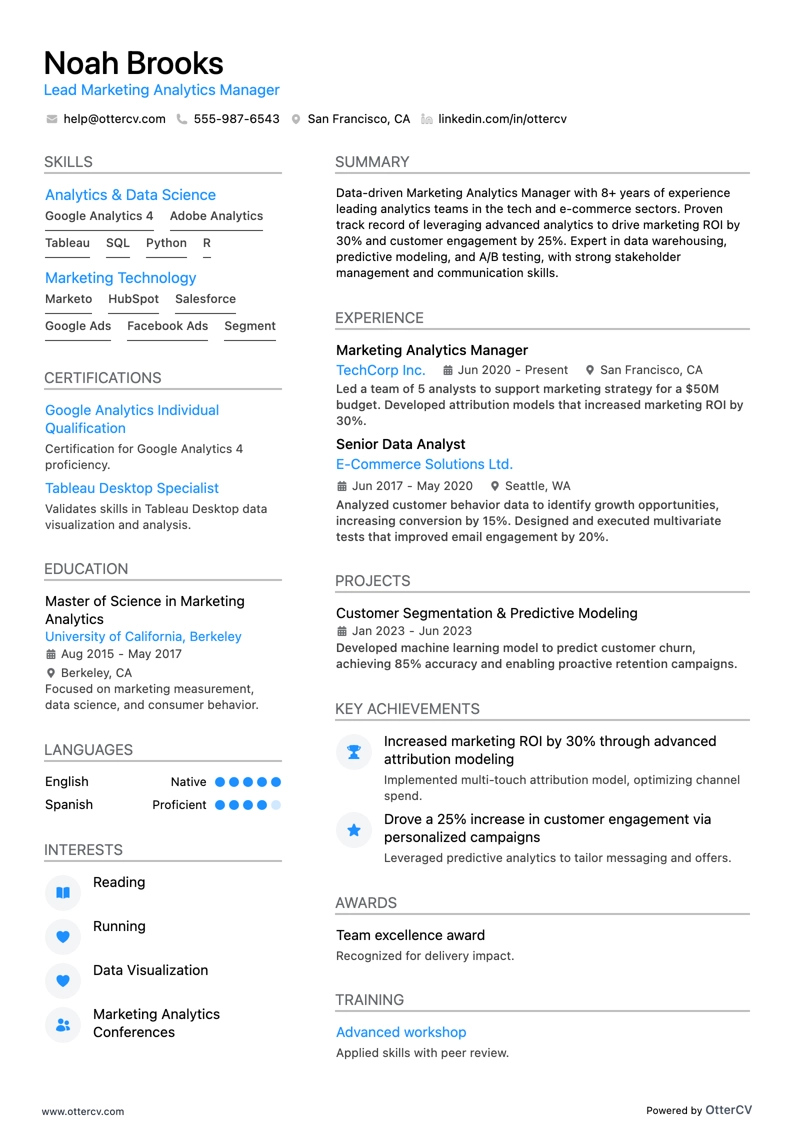
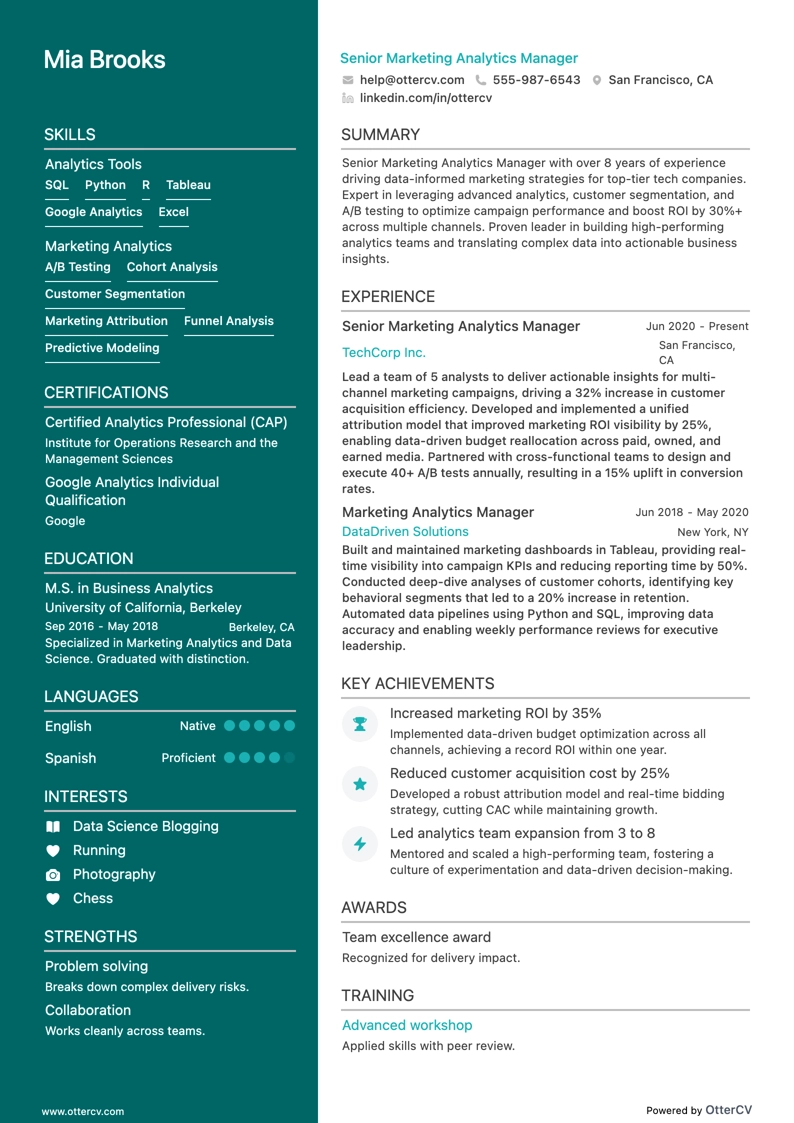
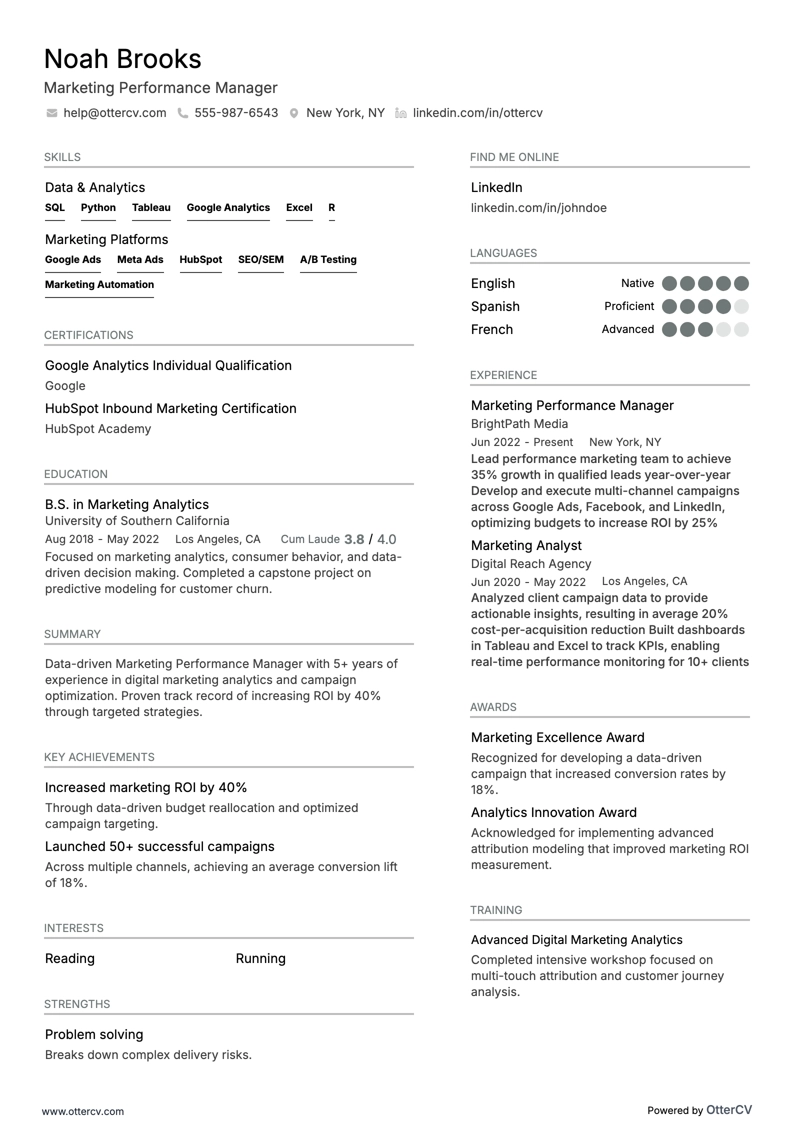
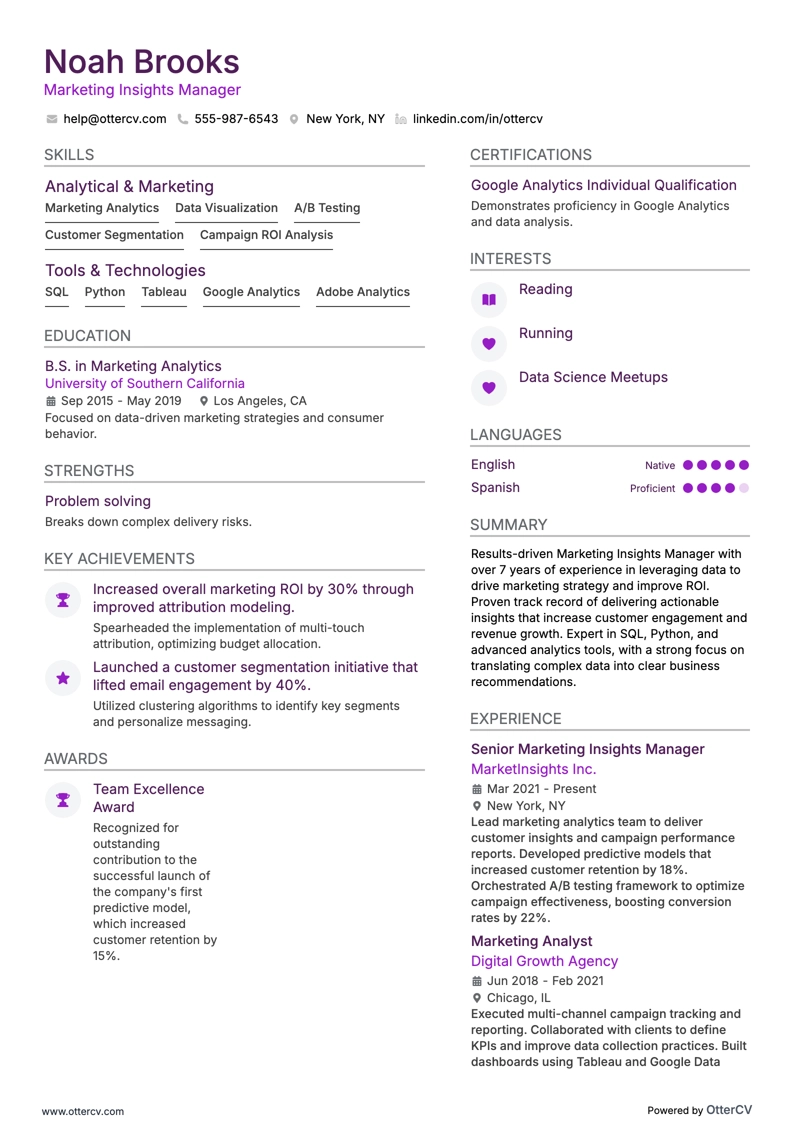
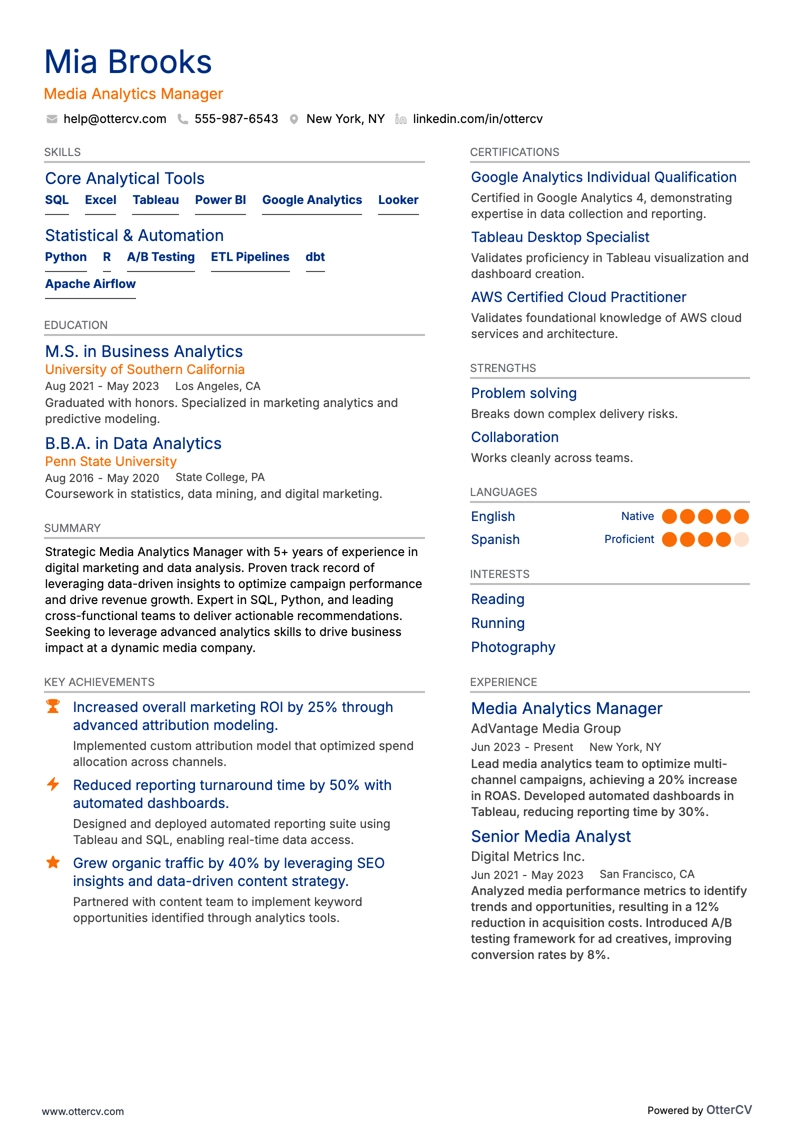
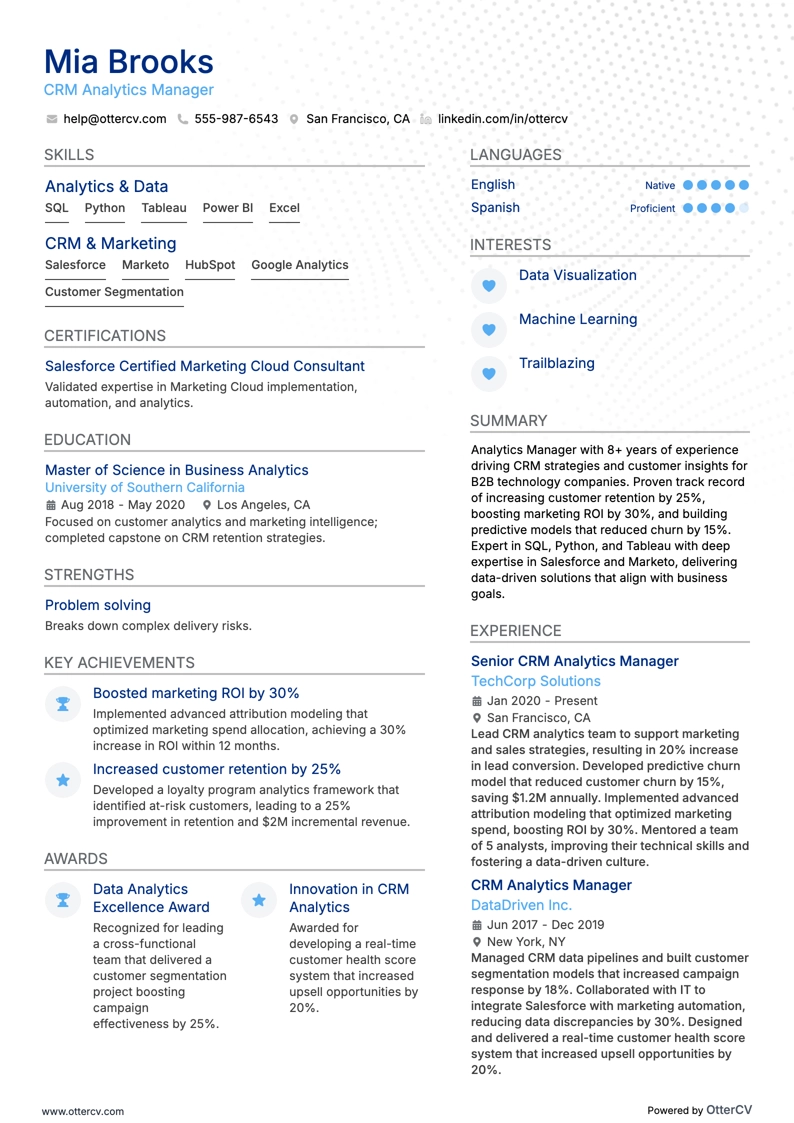
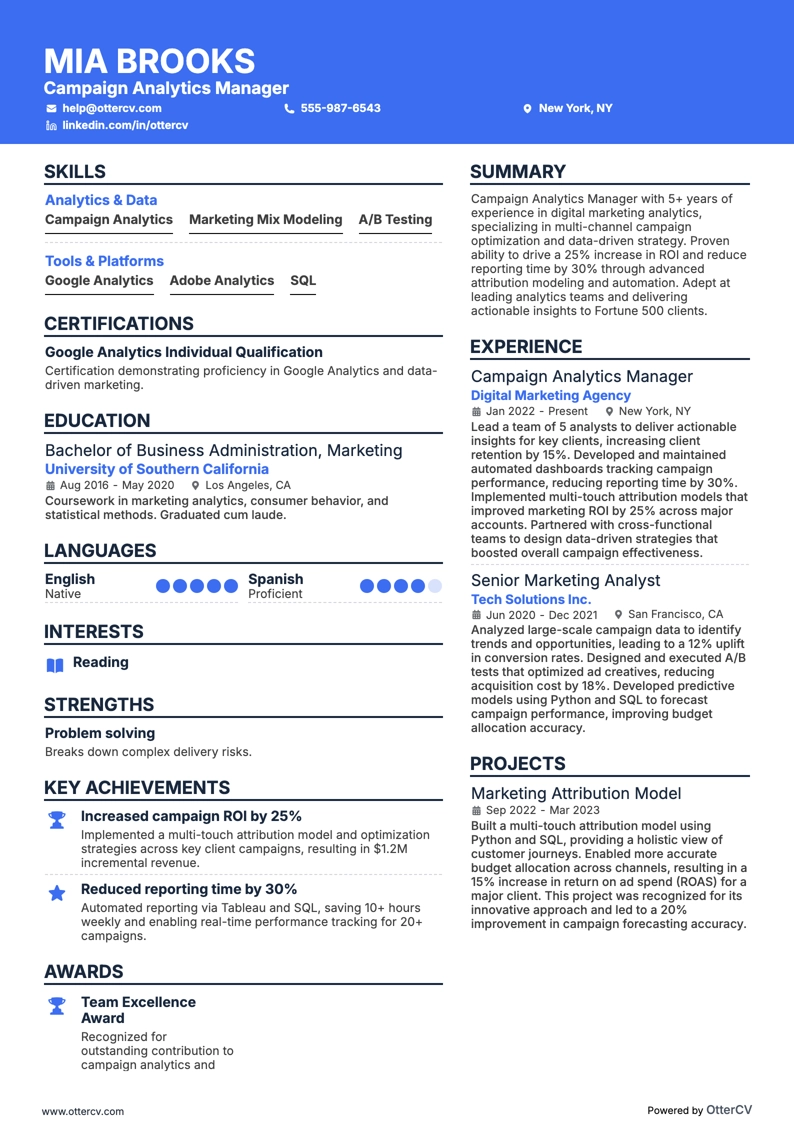
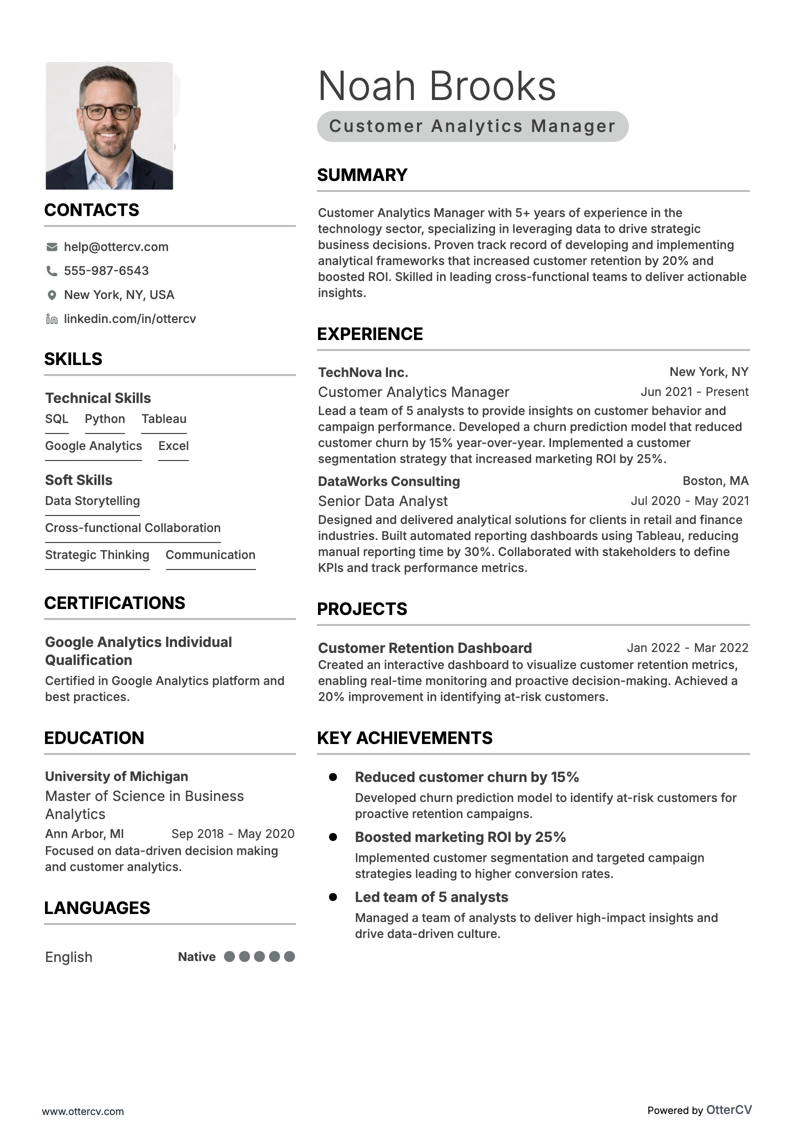
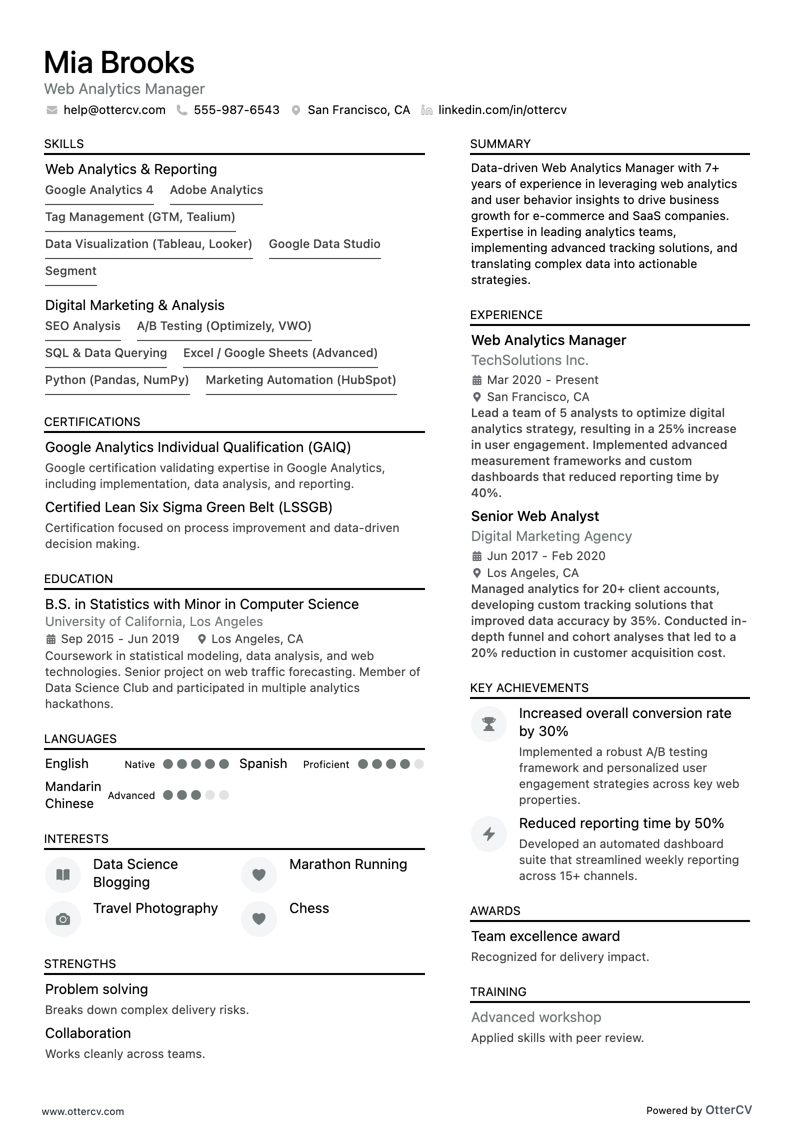
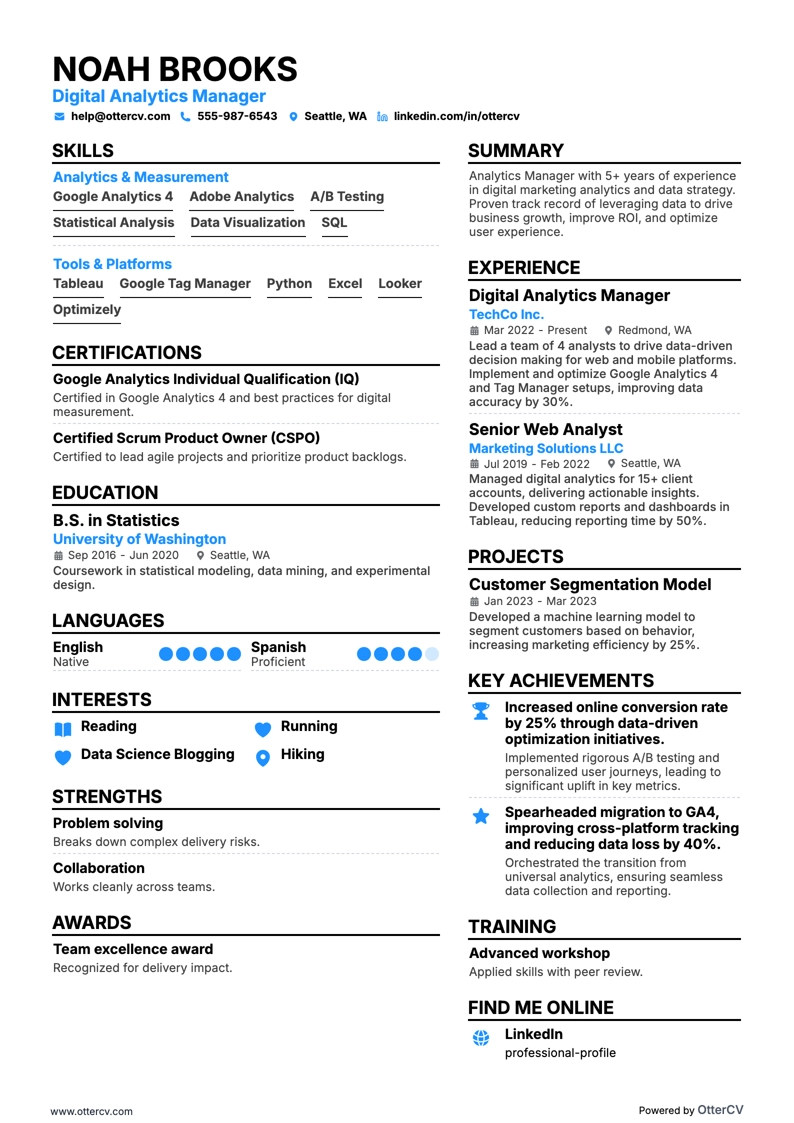
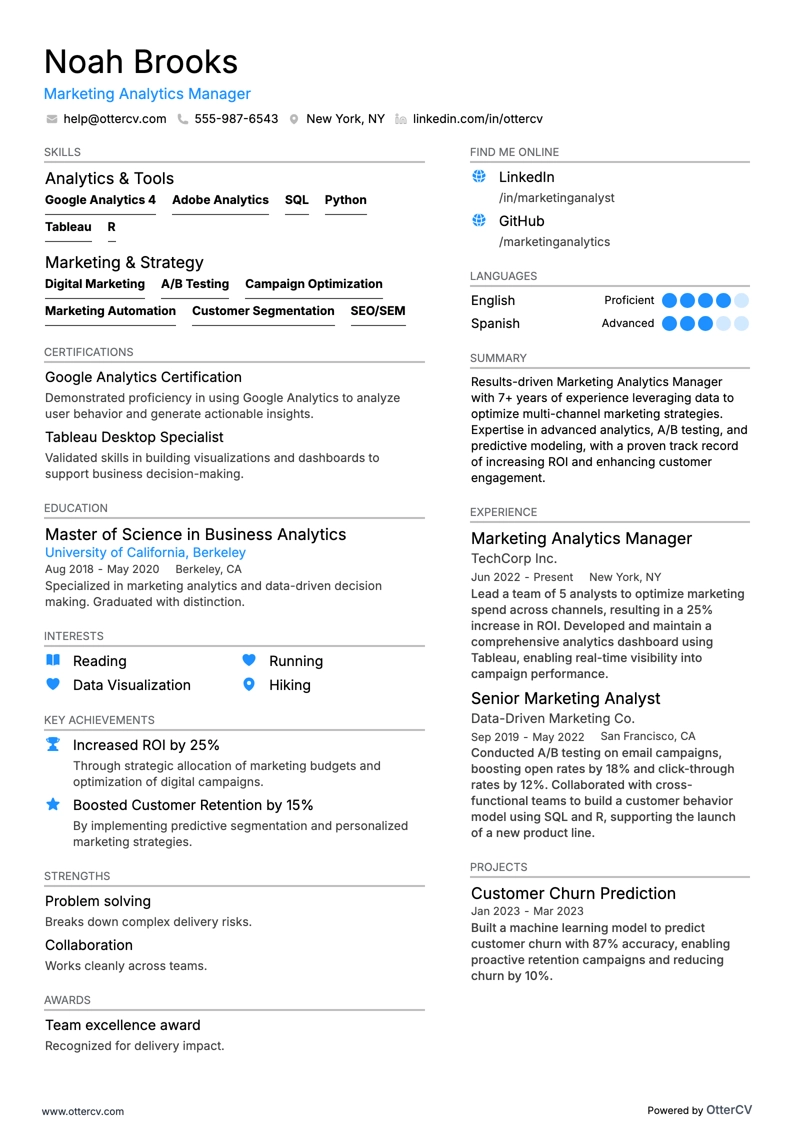
As an analytics manager, fitting complex technical expertise and measurable achievements into a limited resume space can be challenging. This guide provides structured methods and tailored examples to help you present your analytical strengths and leadership results clearly and concisely.
Our analytics manager guide will help you improve your resume by:
- Aligning the top one-third of your resume with the role you are applying for.
- Curating your analytics manager experience to capture recruiters' attention.
- Listing relevant education in a way that appeals to hiring managers.
Explore more professional resume examples to help you write a job-winning application:
- Content Manager Resume Example
- Creative Digital Marketing Resume Example
- Event Marketing Resume Example
- Director of Communications Resume Example
- Brand Director Resume Example
- Entry Level Digital Marketing Resume Example
- Email Marketing Manager Resume Example
- Public Relations Director Resume Example
- Marketing Project Manager Resume Example
Simple guide to your analytics manager resume format and layout
Successful analytics manager resumes share one key trait: a simple layout. It should be easy to read, create a strong first impression, and match your level of professional experience.
There are three main resume formats, depending on what you want to emphasize:
- Professional experience: use a reverse-chronological resume format.
- Skills and achievements: use a functional, skill-based resume format.
- Experience and skills: use a hybrid resume format.
Also keep in mind that your resume may first be reviewed by an ATS (Applicant Tracker System), the software many companies use during hiring. An ATS-friendly analytics manager resume should:
- Include a header with either a role keyword or the job title you are applying for.
- Be no longer than two pages.
- Be submitted as a PDF, unless the employer requests another format.
Consider your target market. For example, resumes in Canada follow different layout conventions.