Faculty Fellow full preview

26 Academic Resume Examples, Templates

OtterCV

Written by The OtterCV Team

Updated: 2/19/2024•8 min read

See all resume examples in this guide, or generate your own resume example with your personalized prompt

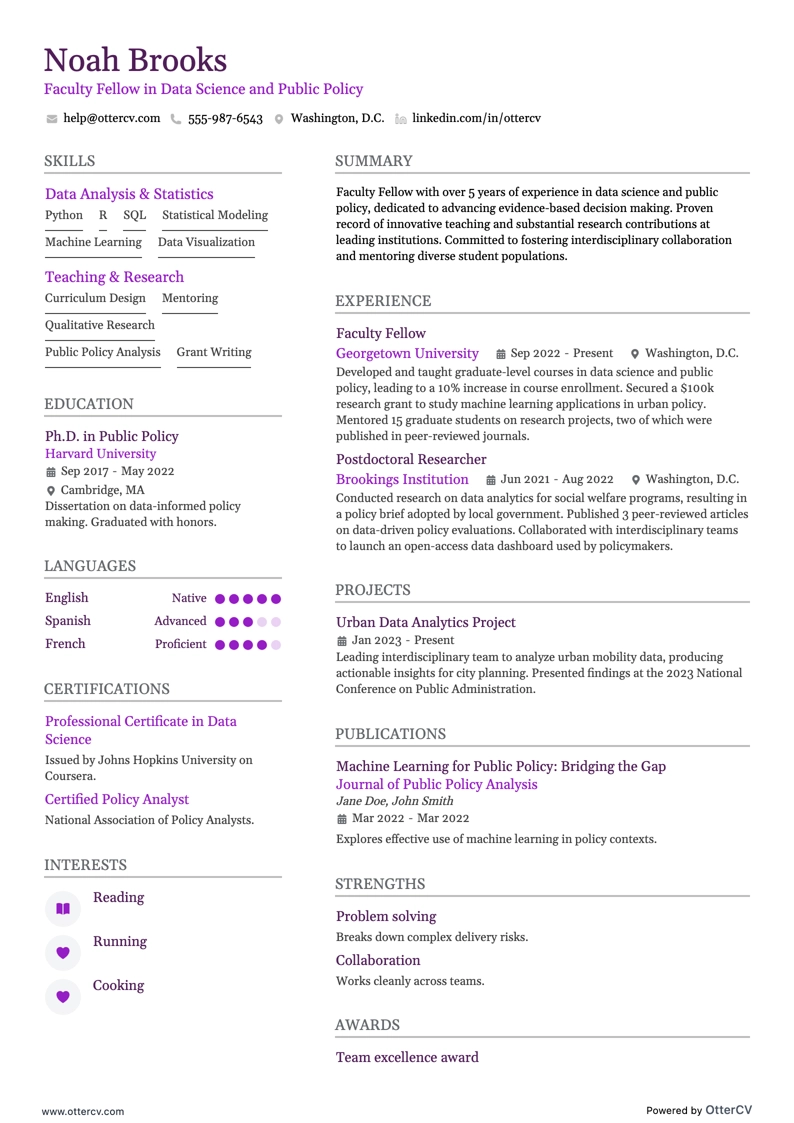
Faculty Fellow resume example

Faculty Fellow

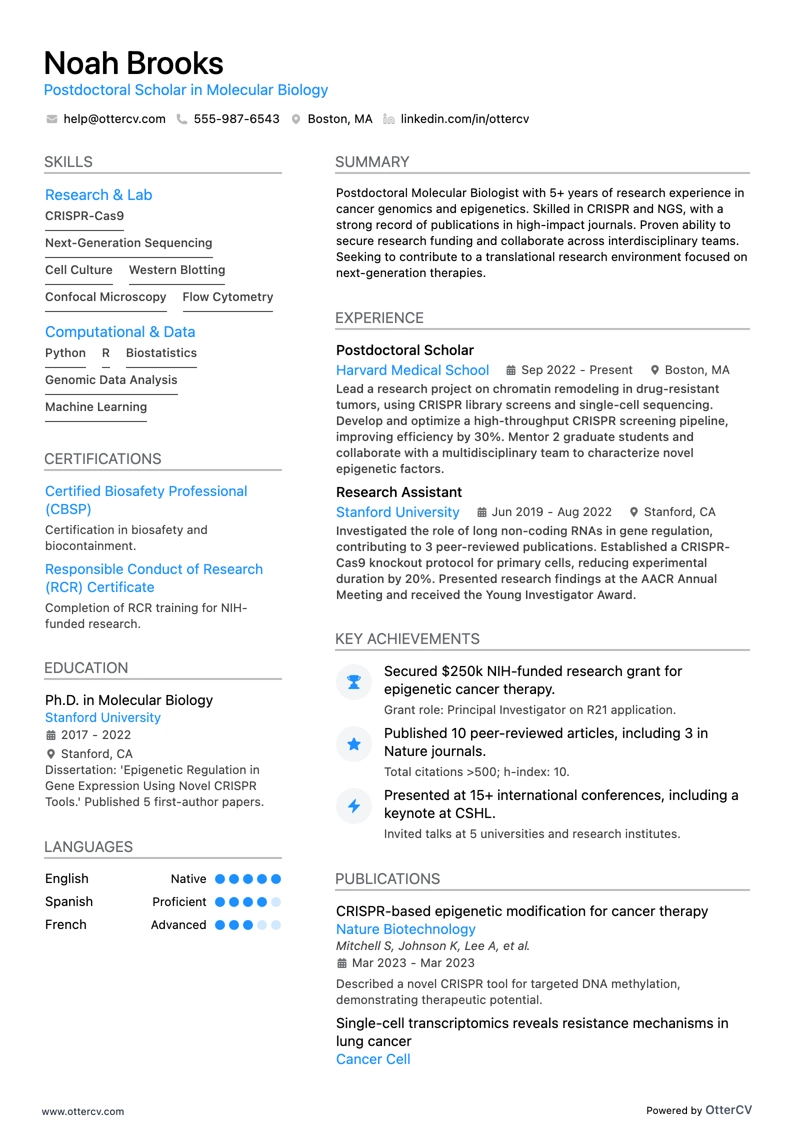
Postdoctoral Scholar resume example

Postdoctoral Scholar

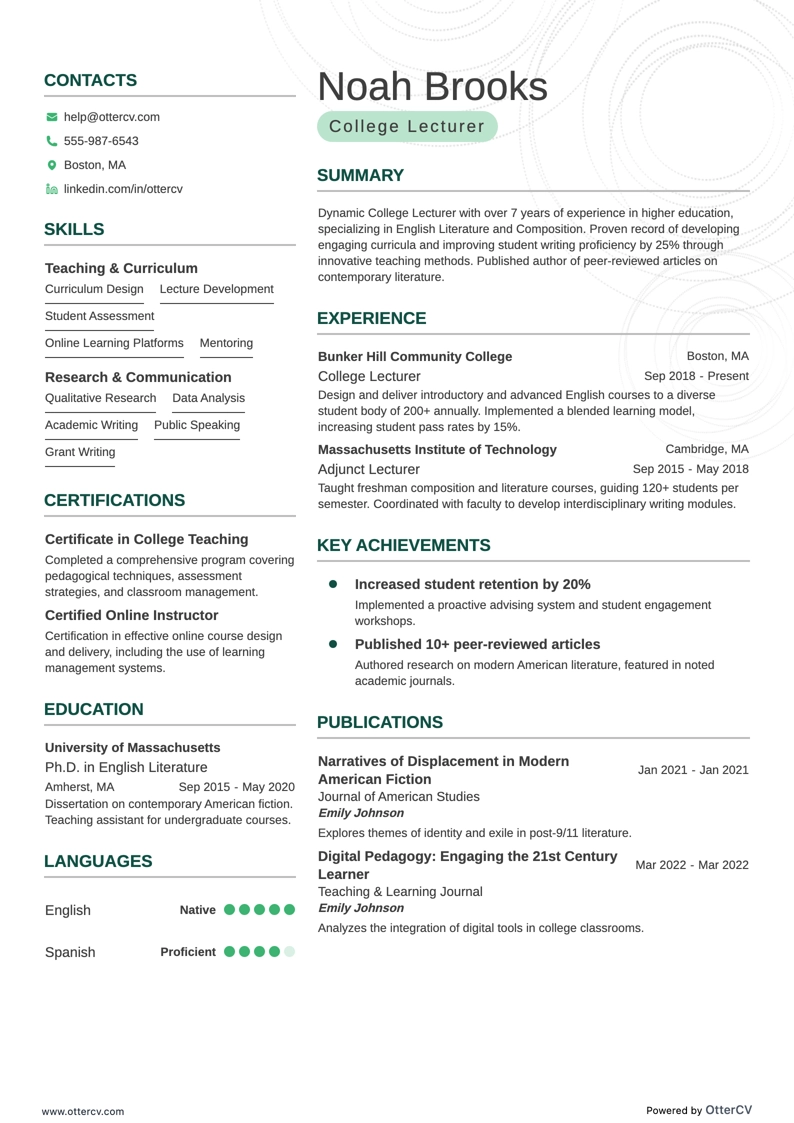
College Lecturer resume example

College Lecturer

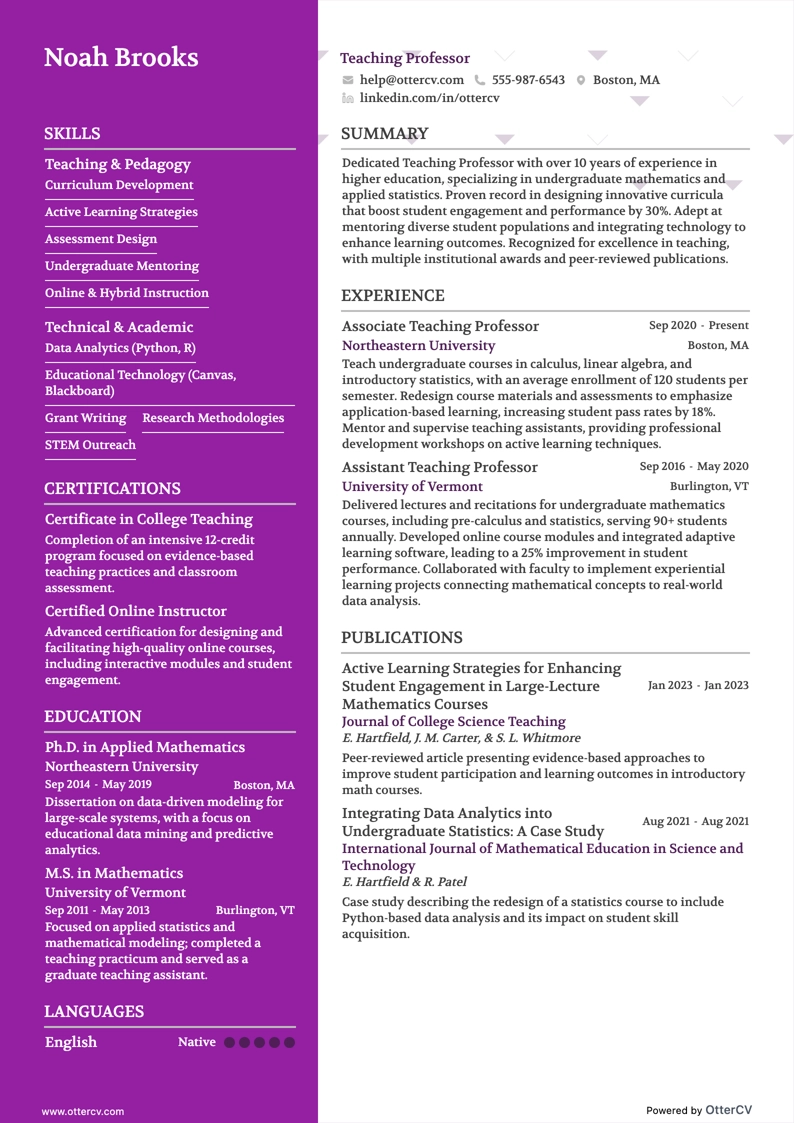
Teaching Professor resume example

Teaching Professor

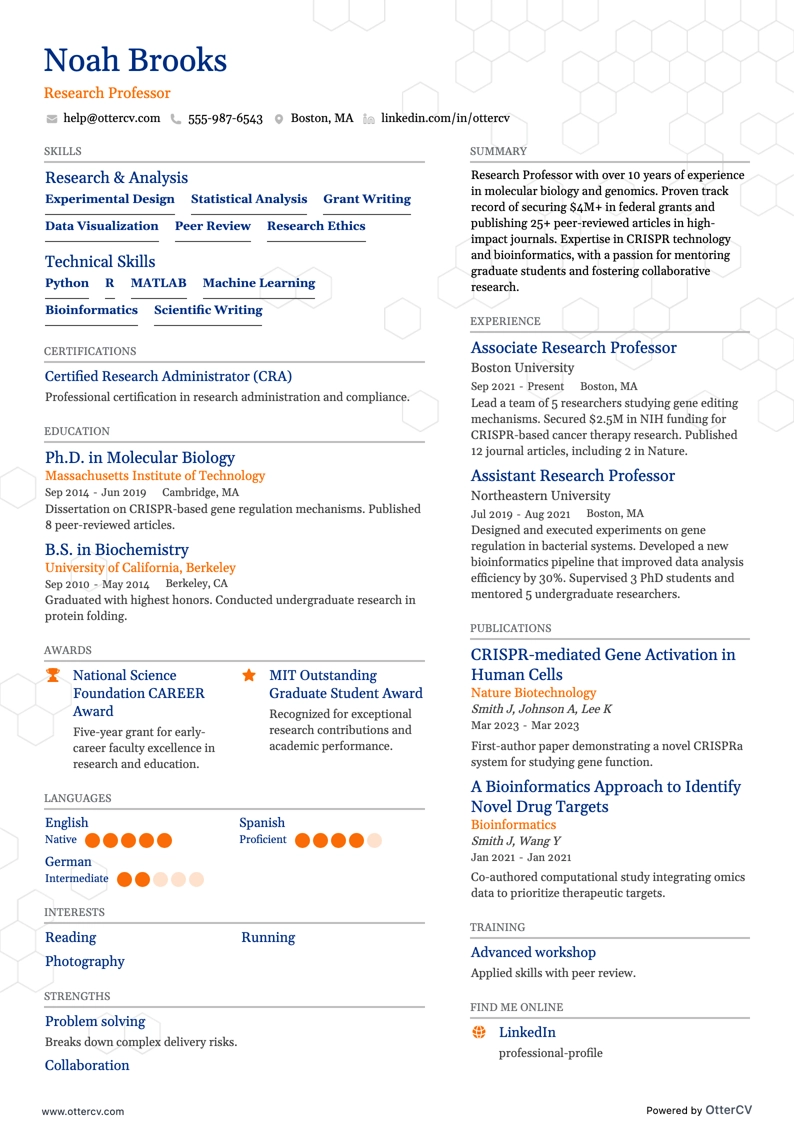
Research Professor resume example

Research Professor

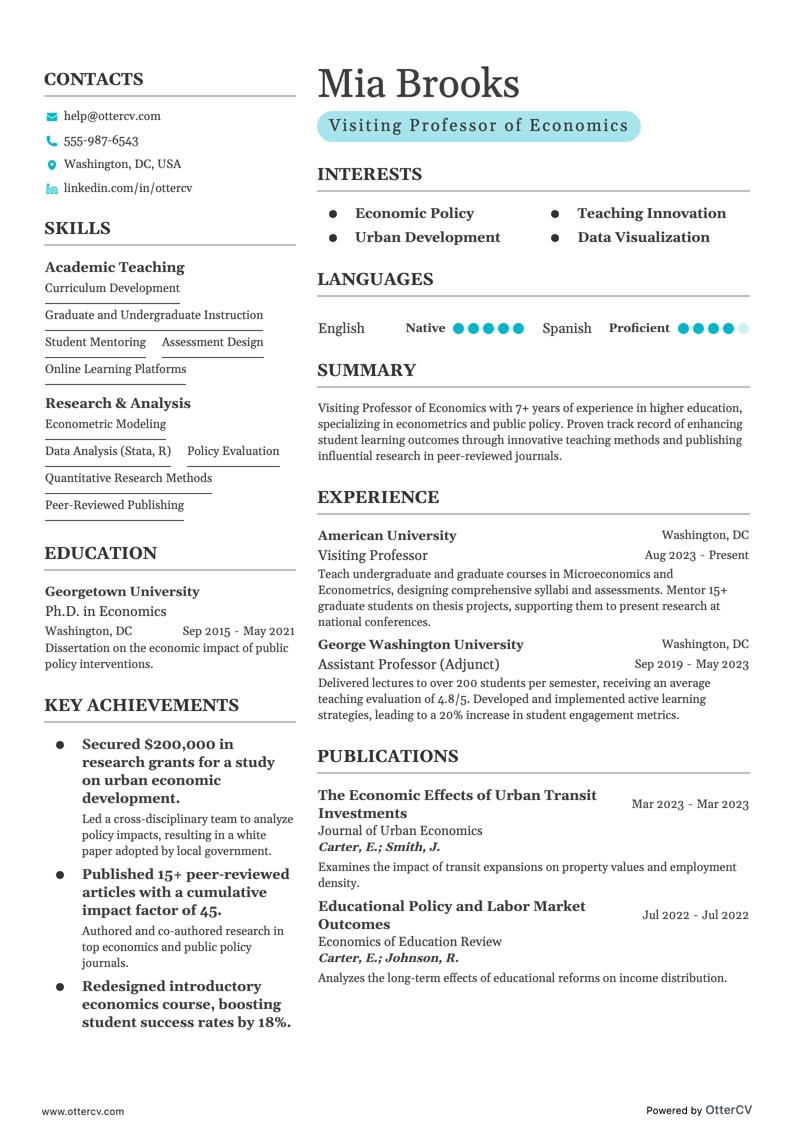
Visiting Professor resume example

Visiting Professor

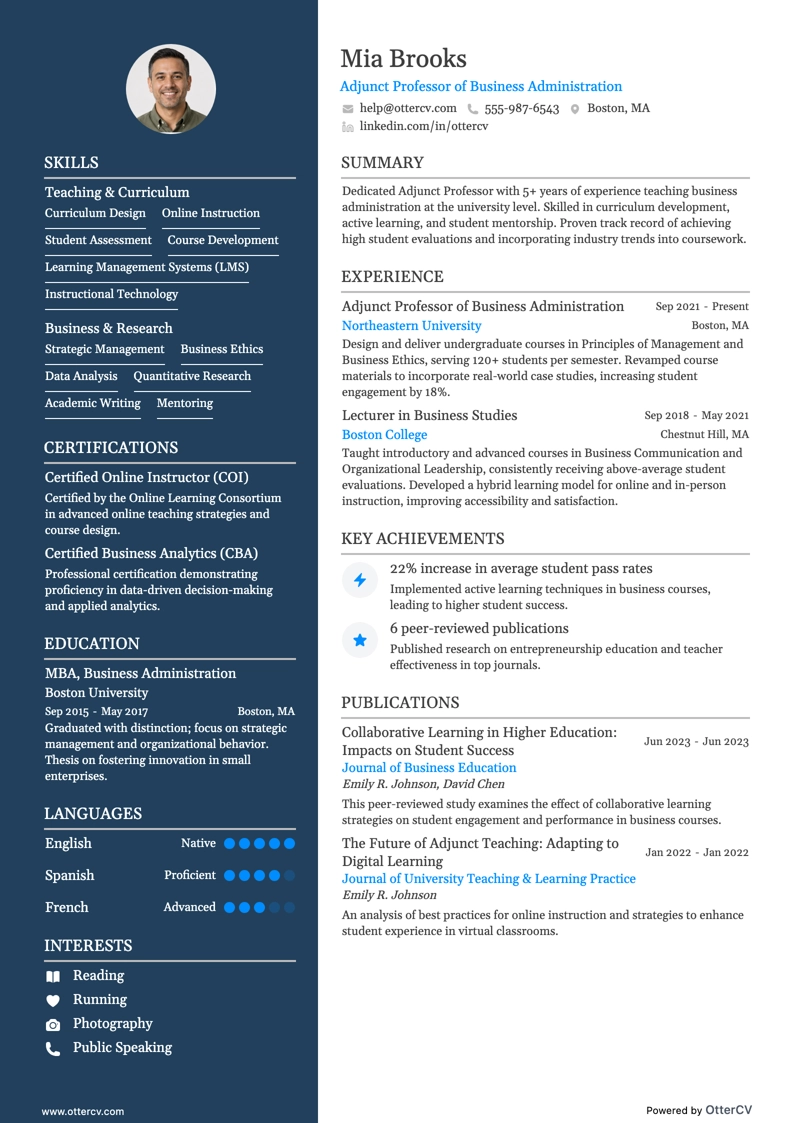
Adjunct Professor resume example

Adjunct Professor

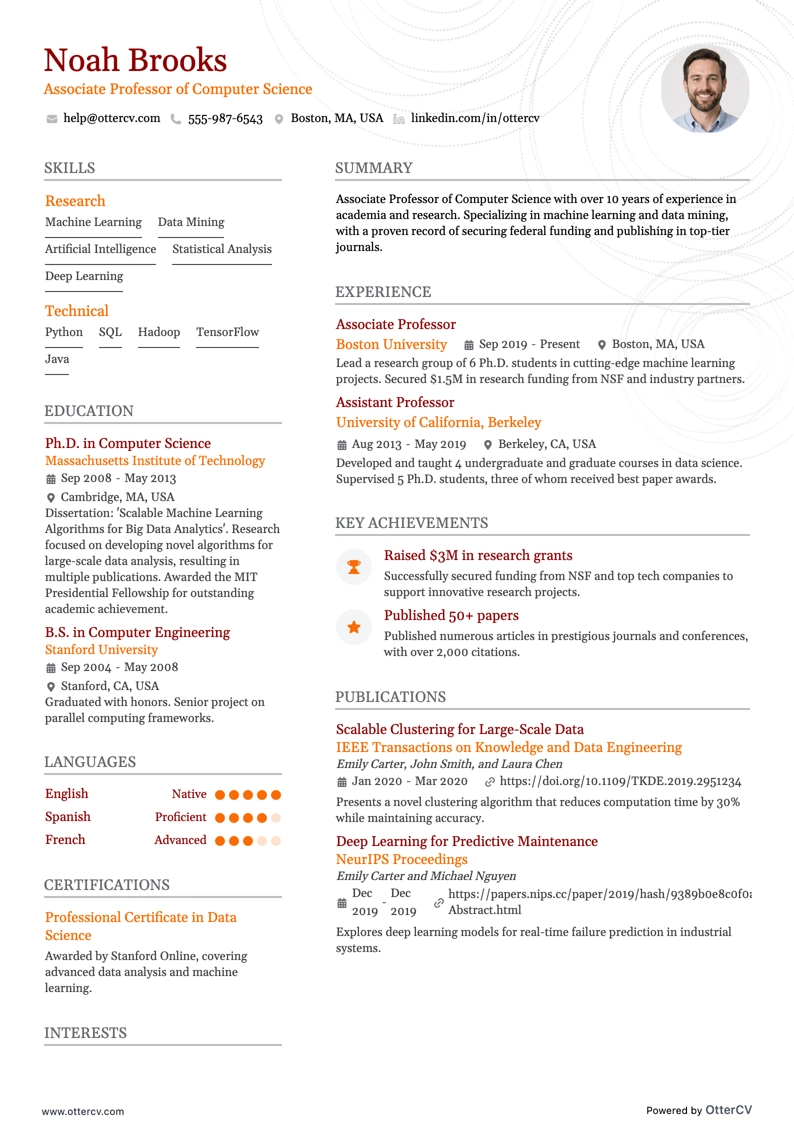
Associate Professor resume example

Associate Professor

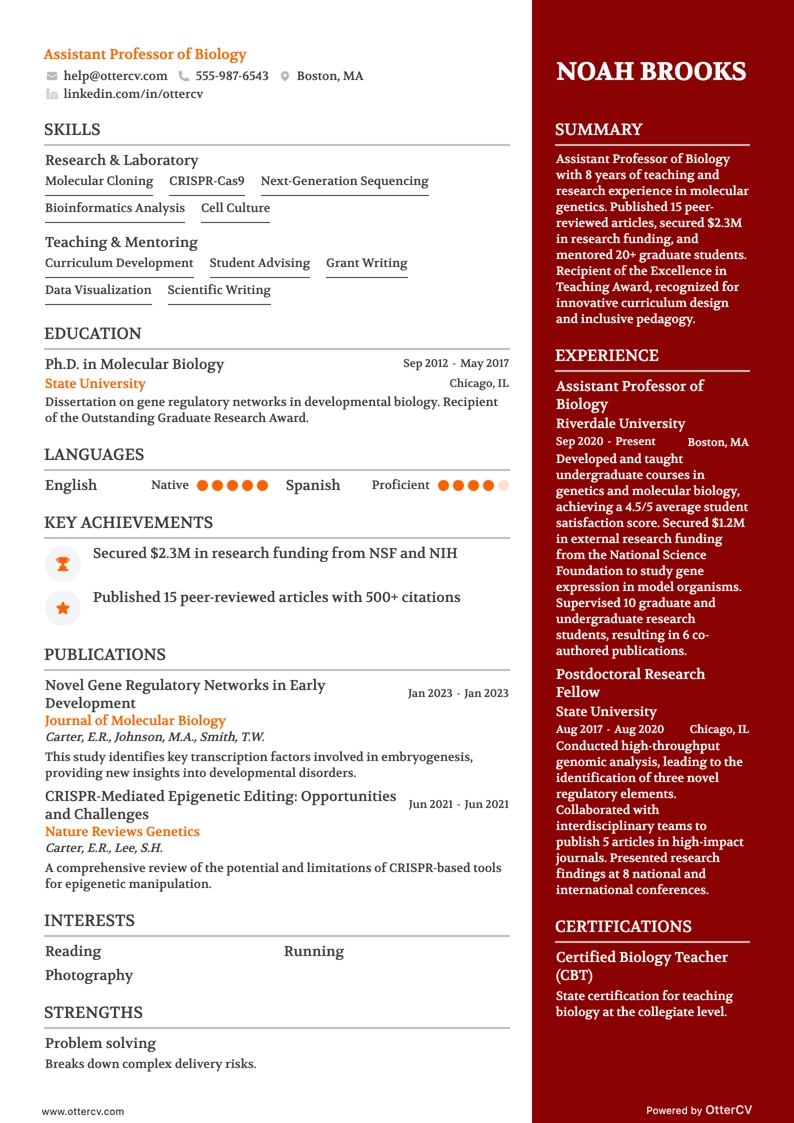
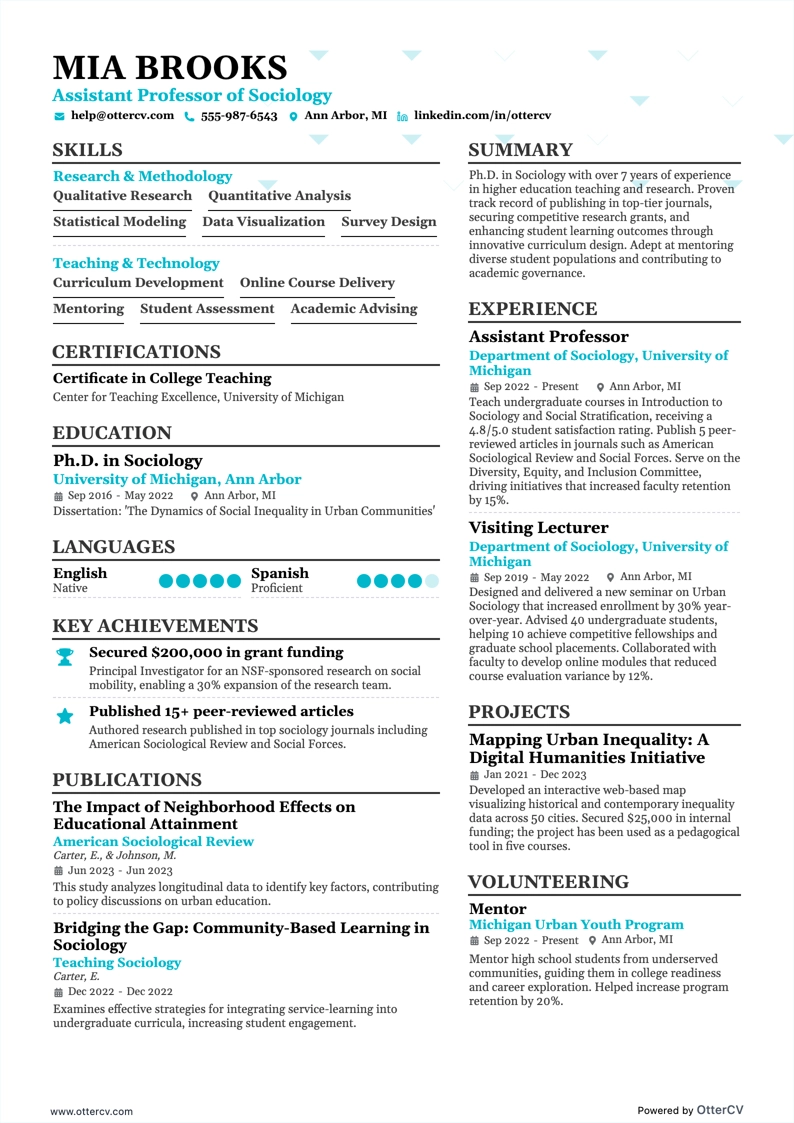
Assistant Professor resume example

Assistant Professor

Professor resume example

Professor

The academic job market has become increasingly complex, with tenure-track positions growing at a fraction of the rate of PhD graduates entering the field. As demand for secure positions continues to outpace supply, crafting a standout academic resume is more important than ever.

This guide will help you highlight your achievements and align your experience with academia’s shifting landscape, so your academic resume—an innovative hybrid between a traditional job-seeking resume and an academic CV—shows your qualifications clearly while meeting the demands of today’s environment.

More concise and tailored to specific faculty roles, this academic resume guide is a strong first step toward securing tenure, whether you are pursuing a faculty position or a research role.

Key takeaways

  • Use the new format to present a concise, comprehensive overview of qualifications tailored to the academic role.

  • Customize the resume to match the institution’s requirements and the job description.

  • Put education, employment history, and publications first.

  • Choose a clear, organized layout with professional fonts and appropriate spacing for readability.

  • Include numbers and metrics, especially for administrative roles, to show impact.

  • Add sections such as professional affiliations, conferences, and references to round out academic contributions.

As you prepare to navigate the postsecondary job market, this academic resume template offers a solid starting point for your journey.

Academic resume sample

An academic resume, a sub-genre of the academic CV, is a specialized document used when applying for positions in academia. Unlike a standard job resume, it emphasizes your academic experience and achievements through sections such as publications, research, teaching experience, and professional affiliations.

Here’s how a traditional academic resume example can look:

Diane A. Caesar

Assistant Professor of Political Science

diane.caesar@email.com @LinkedIn Chicago, IL

Professional Profile

Dedicated scholar and researcher specializing in Black Politics, with a focus on race, social movements, and political engagement within African American communities. Committed to fostering an inclusive academic environment and mentoring diverse students. Experienced in both qualitative and quantitative methodologies, with a strong publication record that advances understanding of racial dynamics in American politics.

Education

Ph.D. in Political Science, University of Chicago, Chicago, IL, June 2018

  • Dissertation: Resistance and Resilience: African American Political Mobilization in Urban Spaces

Master of Arts in Political Science, University of Chicago, Chicago, IL, June 2014

Bachelor of Arts in African American Studies, Northwestern University, Evanston, IL, June 2012

  • Honors Thesis: The Legacy of the Civil Rights Movement in Contemporary Black Political Thought

Professional Experience

Postdoctoral Fellow in Black Politics, University of California, Berkeley, Berkeley, CA, August 2018 – Present

  • Conducted research on Black political participation and voter suppression in the United States.
  • Taught graduate seminars on race and American politics while mentoring a diverse group of students.
  • Collaborated on interdisciplinary projects examining the intersection of race, policy, and urban governance.

Instructor, Political Science, University of Chicago, Chicago, IL, September 2016 – June 2018

  • Developed and taught undergraduate courses on Black Political Thought and the Civil Rights Movement.
  • Led discussions on contemporary issues in Black politics, encouraging critical analysis and student engagement.
  • Supervised undergraduate research projects and provided academic advising to political science majors.

Research Assistant, Political Science Department, Northwestern University, Evanston, IL, September 2012 – June 2014

  • Assisted research on the political behavior of African American voters, contributing to multiple publications.
  • Conducted data analysis for a study on the impact of social movements on local politics.

Publications

  • Caesar, D. A. (2023). Mobilizing for Justice: Black Political Power in the 21st Century. New York: Oxford University Press.
  • Caesar, D. A. (2021). Voter Suppression and the New Jim Crow: A Study of Black Political Disenfranchisement. American Political Science Review.
  • Caesar, D. A. (2019). The Politics of Resistance: Black Lives Matter and the Rebirth of Civil Rights Activism. Journal of Race and Ethnic Politics.
  • Caesar, D. A. (2017). Urban Spaces, Urban Voices: Black Political Mobilization in Chicago. Urban Affairs Review.

Awards and Honors

  • Best Dissertation Award, American Political Science Association | 2019
  • Ford Foundation Postdoctoral Fellowship | 2018 - 2019
  • Best Graduate Paper Award, Midwest Political Science Association | 2017
  • Graduate Research Fellowship, National Science Foundation | 2014 - 2018

Languages

  • English (Native)
  • French (Intermediate)

Skills

  • R for Statistical Computing
  • STATA
  • NVivo for Qualitative Research
  • SPSS, GIS for Political Mapping
Now, let’s look at how to format your academic resume for the strongest impact.

How to format an academic resume

The best format for an academic resume is clear, well organized, and tailored to the institution’s requirements. As a hybrid of an American-style CV and a job-seeking resume, it brings together the strengths of both formats in structure and content.

For early-career academics, it is often best to highlight education and research interests. More experienced candidates may choose to lead with teaching appointments and publications. In every case, the structure should reflect what is most relevant to the role so your strongest qualifications appear first.

Here’s how the sections in an academic resume are commonly ordered:

Be sure to adapt your resume format to the job market. For example, a Canadian resume may differ in layout.

Section 8

  • Contact Information
  • Personal Profile or Research Objective
  • Education
  • Professional Experience
  • Publications
  • Awards and Honors
  • Skills
  • Languages (Optional)
  • References

Since an academic resume is a streamlined version of a curriculum vitae, it should highlight your academic milestones while staying clear and easy to read. Here are some practical tips.

Design and layout

Contact information

  • Start your resume header with your contact details, including your name, phone number, email address such as name@harvard.edu, home address, and, if relevant, your institutional address.
  • Use a job title that reflects your current academic position or research focus.
  • Include a link to your LinkedIn profile if your work spans academia and industry or if you want to show a broad professional network. Choose an ORCID link instead if your work is primarily focused on academic research, publications, and scholarly contributions.
  • Omit a photo to keep the focus on your academic qualifications.

File format

PRO TIP

Because academic resumes often include dense, varied information, prioritize clear and consistent formatting, especially for dates and bullet points, to prevent ATS confusion and help ensure your qualifications are accurately captured.

The right way to list your education on an academic resume

The education section is a cornerstone of an academic resume and usually appears near the top, since it establishes the foundation of your scholarly background.

Include the following details:

Including details such as your thesis title and advisor’s name can help employers better understand your academic credentials and qualifications from the start.

Here’s a strong example of a well-presented education section on a resume:

Education

PhD in Political Science

Harvard University

09/1995 - 06/2000 | Cambridge, MA | GPA: 3.9 / 4.0

  • Dissertation: 'Interdisciplinary Approaches to Political Theory and Ethics'
  • Graduated with distinction

MA in Political Science

Harvard University

09/1993 - 06/1995 | Cambridge, MA

BA in Political Science

University of Michigan

09/1989 - 06/1993 | Ann Arbor, MI | GPA: 3.8 / 4.0

  • Senior Thesis: 'The Role of Ethics in Contemporary Political Decision-Making'
  • Graduated summa cum laude
RIGHT

This education section presents the candidate’s academic history in a clear, reverse chronological order that is easy to follow. Emphasizing major achievements, such as dissertation titles and honors, helps the most important accomplishments stand out.

Next, let’s look at how the same approach applies to your academic experience.

How to write your academic resume experience

The employment section builds on the foundation of your academic background. It typically includes teaching and postdoctoral roles, research appointments, leadership activities, and administrative duties.

Professional Appointments vs. Teaching Experience

In an academic resume, the Professional Appointments section should include roles involving research, administrative responsibilities, or leadership positions within academic or related institutions, such as research fellowships or department chair roles.

The Teaching Experience section is specifically for describing your work as an educator. Keep these sections distinct.

What to include in each employment entry

When writing each employment entry, include the following:

  • Your position, including contracted roles only
  • The name and location of the institution
  • Your dates of tenure, using years only
  • A brief description of your responsibilities and achievements

PRO TIP

Bullet points are less common on academic resumes, but they can be useful for roles with diverse responsibilities, such as administrative positions or research-intensive jobs. Use them to highlight specific achievements or key projects, and keep them limited so important details stand out.

When deciding how to word your entries, focus on the position you are applying for. Scholars often face this challenge too. Unlike non-academic job seekers, who usually highlight only relevant experience, academic CVs often include every professional appointment, which can make entries feel overly dense.

To avoid that, try resume targeting by incorporating keywords from the job description into your resume. This can make your content more concise and ATS-friendly while aligning it more closely with what employers want.

Next, let’s look at a real-world academic job opening and how an experience section can be tailored to fit it.

Dean, College of Arts and Sciences

Dean, College of Arts and Sciences

Case Western Reserve University (CWRU) seeks a forward-thinking, highly ethical, and inspirational leader with a deep commitment to higher education and a record as an accomplished scholar to serve as the next dean of the College of Arts and Sciences.

The new dean will join CWRU and the college during a period of rapid advancement and accelerated accomplishment. This leader will advance the college within and beyond the university, foster interdisciplinary collaboration in research, creative works, and scholarship, and empower highly talented students to be nimble and collaborative in a rapidly changing world. The dean will build on the college's strong financial position, drive research advancements, contribute to record-breaking fundraising, expand and improve facilities, cultivate a culture of inclusion, elevate the college's national profile, attract top faculty and staff talent, and secure resources for continued growth.

Qualifications: The dean will possess stellar academic credentials, including a high degree of scholarship or research and a record of distinguished, recognized work in their area of expertise. The dean will hold a terminal degree and be qualified for a tenured appointment at the rank of full professor in a department within the college.

Here’s the candidate’s tailored resume experience:

Professional Experience

Associate Dean of Faculty Affairs, College of Arts and Sciences

University of Chicago | 07/2018 - 08/2024 | Chicago, IL

  • Led faculty development initiatives, including mentorship programs and workshops, resulting in a 25% increase in faculty retention.
  • Managed the recruitment and onboarding of over 50 faculty members, supporting the college's academic growth and diversity.
  • Worked with department chairs to align faculty activities with strategic goals, improving overall departmental performance.

Chair, Department of Political Science

University of Chicago | 09/2010 - 06/2018 | Chicago, IL

  • Increased department research output by 40% through strategic faculty recruitment and development initiatives.
  • Fostered interdisciplinary collaboration that led to joint programs with the Sociology and Economics departments.
  • Implemented curriculum reforms that improved student engagement and academic outcomes, resulting in higher retention and graduation rates.

Professor of Political Science

Princeton University | 02/2000 - 11/2010 | Princeton, NJ

  • Mentored over 30 Ph.D. candidates, many of whom went on to secure tenure-track positions at leading universities.
  • Coordinated national and international conferences, raising the department's profile and fostering global academic partnerships.
RIGHT

The candidate’s career path is clearly presented, with key highlights including:

  • The roles show career progression relevant to a Dean’s position, including experience at prestigious institutions such as the University of Chicago and Princeton University.
  • The bullet points highlight leadership in fundraising, diversity, interdisciplinary collaboration, research output, and mentoring, which align with the job description’s focus on advancing the college’s mission.
  • The resume format emphasizes major achievements in each role, helping hiring committees see how the candidate’s experience matches the demands of the position at CWRU.

PRO TIP

In academic resumes, major milestones such as peer-reviewed publications often speak for themselves. For more task-driven or administrative roles, however, it helps to include numbers and metrics—such as fundraising totals or percentage increases in research output—to quantify your impact and provide clear evidence of your success.

Next, let’s look at how to write an academic resume when you’re entering the field for the first time.

How do i write a postsecondary teacher resume with no experience

Earning tenure can take up to 7 years, with advancement through roles such as assistant professor, associate professor, and professor. Since tenure decisions depend heavily on your research and contributions to the institution, your resume should present these clearly.

Follow these guidelines:

  • Mention significant research projects and publications to demonstrate your expertise and contributions to the field.
  • Include teaching roles or assistantships to show your ability to teach and engage students.
  • List relevant academic awards and fellowships to highlight recognition of your potential and accomplishments.
  • Add a dedicated section for certifications, especially if you teach in a field where students need a license or certification. Having those credentials yourself is expected and strengthens your credibility.
  • Include relevant coursework that matches the job to show your preparation and knowledge in key subject areas.

PRO TIP

For professionals transitioning into academia, highlight how your industry expertise can strengthen academic programs by emphasizing relevant experience and transferable skills.

Also use your social presence to show engagement with the academic community on platforms like LinkedIn. This helps demonstrate thought leadership and readiness for an academic career.

Publications on an academic resume

List your academic publications on a resume near your employment history, and in some cases, place them before it. Publications often reflect substantial effort and serve as a strong indicator of your expertise and impact in the field.

You can include peer-reviewed journal articles, book chapters, conference papers, and edited volumes. Keep peer-reviewed and non-refereed publications, such as articles, essays, and opinion pieces, in separate sections.

When listing your peer-reviewed publications, keep these guidelines in mind:

  • Order entries in reverse chronological order so your most recent work appears first.
  • Use a consistent citation style, such as APA, MLA, or Chicago, that is standard in your discipline.
  • Include the key publication details: authors, title, journal or book name, volume, pages, and publication year.

Forthcoming publications are included in this section. If they are already in the printing stage, with the full citation and page numbers available, they may be listed like other published works at the very top, since their dates are furthest in the future. If they are in press, they can be listed here with “in press” in place of the year.

—Karen Kelsky, PhD, author of The Professor Is In

Awards and recognitions are equally important on an academic resume. The section below shows how to present them effectively.

Awards, honors, and grants on an academic resume

These key resume elements show your ability to secure funding, stand out in your field, and make meaningful contributions to academia.

Examples include:

  • Research grants from institutions such as the NIH (National Institutes of Health) or NSF (National Science Foundation).
  • Fellowships awarded for academic excellence or research potential.
  • Teaching awards recognizing outstanding contributions to student learning.
  • Conference awards for best paper or presentation.
  • Scholarships received for academic merit or specific research projects.

Awards and Recognitions

List your recognitions by relevance and present them in reverse chronological order. Include the award name, institution, and date for each entry. If you have many awards, group them into categories such as research grants or teaching awards to keep your resume organized.

Next, focus on how to present your academic skills on your resume.

How to list your academic skills on your resume

Although it is not very common, you can still include a skills section on an academic resume. This is especially appropriate in fields that require specific technical or methodological expertise, such as STEM, social sciences, and certain humanities disciplines.

Below is a list of hard skills that can strengthen your academic resume.

Key hard skills for your academic resume

  • Technical skills: List the software, programming languages, lab techniques, or equipment you are proficient in, especially for fields like engineering, computer science, or data analysis.
  • Research skills: Include methodologies, statistical analysis tools, or research techniques that are relevant to your field.
  • Teaching tools: Mention any experience with online teaching platforms, learning management systems (LMS), or curriculum development software.
  • Language proficiency: If relevant to your research or teaching, include languages you speak fluently or can read and write in an academic context.

Don’t list soft skills on your academic resume, as they can seem subjective and carry less weight than concrete achievements. Instead, emphasize quantifiable hard skills that are directly relevant to the role you’re applying for.

With the essential sections covered, you may be wondering whether to add a personal profile. Here’s our view.

Should i write a personal profile for my academic resume

Yes, include a personal profile on your academic resume to help capture the attention of search committees, who often review resumes before any other application materials.

Like a resume summary, a personal profile gives a brief overview of your academic focus, key achievements, and career goals. It can be especially useful for early-career academics or those transitioning into academia because it quickly highlights your strengths.

Look at an example tailored to the job description provided earlier:

Summary

Accomplished scholar with over 20 years of experience in higher education, with a record of securing more than $15M in research funding. Proven success in fostering interdisciplinary collaboration, leading to the creation of 5 cross-departmental research centers. Dedicated leader committed to empowering students and faculty, with a history of increasing graduation rates by 20% through innovative academic programs.

RIGHT

By contrast, a research objective is more specific and centers on your research interests and how they align with the position you are applying for.

It is especially useful for early-career researchers, postdoctoral fellows, and graduate students seeking to establish themselves in a defined research area.

Here is a strong example of a research objective you can use as a model as a new academic:

Research Objective

Ph.D. candidate in Molecular Biology at Anytown University, recognized with the Outstanding Research Award, seeking to apply three years of lab experience and a prestigious summer fellowship to postdoctoral research on the genetic mechanisms underlying disease resistance in plants.

RIGHT

A strong profile or objective on an academic resume should clearly communicate your academic focus and distinctive qualifications without being too wordy. To keep readers engaged, use keywords from the job description and let your accomplishments demonstrate your credibility.

Beyond the core sections, you can also include optional sections depending on the specific expectations of different institutions.

Optional sections for an academic resume

These additional sections can help you highlight strengths and experiences that closely match an institution’s priorities.

You may want to include:

  • Professional affiliations: List memberships in academic or professional organizations to show active involvement in the scholarly community.
  • Conferences and presentations: Include your participation in academic conferences and presentations to demonstrate how you share research and contribute to your field.
  • Service and leadership roles: Describe committee work or leadership in academic initiatives to show your commitment to the wider academic community.
  • Public engagement and outreach: Use this section to show how your academic work extends beyond the university through public or industry engagement, helping broaden the impact of your research.
  • References: Often required, this section gives immediate access to academic or professional contacts who can speak to your qualifications and character.

When listing references, include each person’s name, current title, institution, and contact information, including email and phone number. For example:

  • Typically, include 3-5 references, beginning with those most relevant to the position, such as your Ph.D. advisor or current department chair.
  • Always get permission from each reference before listing them on your resume so they are prepared to speak positively on your behalf.

In conclusion

Crafting an academic resume involves more than listing your credentials. It means aligning your aspirations and experience with the specific needs of the role and the standards of the institution. By tailoring your resume to reflect those expectations, you can present your qualifications clearly and effectively to search committees.

Academic resume examples

Explore additional Academic resume samples and guides and see what works for your level of experience or role.

By Experience

Postdoctoral Scholar

Postdoctoral Scholar resume preview

Associate Professor

Associate Professor resume preview

Assistant Professor

Assistant Professor resume preview

Academic resume examples

Explore additional Academic resume samples and guides and see what works for your level of experience or role.

By Role

Faculty Fellow

Faculty Fellow resume preview

College Lecturer

College Lecturer resume preview

Teaching Professor

Teaching Professor resume preview

Research Professor

Research Professor resume preview

Visiting Professor

Visiting Professor resume preview

Adjunct Professor

Adjunct Professor resume preview

Professor

Professor resume preview